Black holes usually bring to mind gigantic monsters lurking in the depths of space. They swallow stars, bend light, and contain enough gravity to trap almost anything. But what if the most dangerous black hole was not enormous at all?
Imagine a black hole smaller than a coin.
Despite its tiny size, it has the same mass as our entire planet. It is essentially all of Earth’s mass compressed into an object so small you could barely see it. Now imagine this cosmic bullet racing toward us.
At first, nothing would seem unusual. There would be no bright glow and no warning sirens. A black hole does not announce its arrival. It simply appears.
And then everything changes.
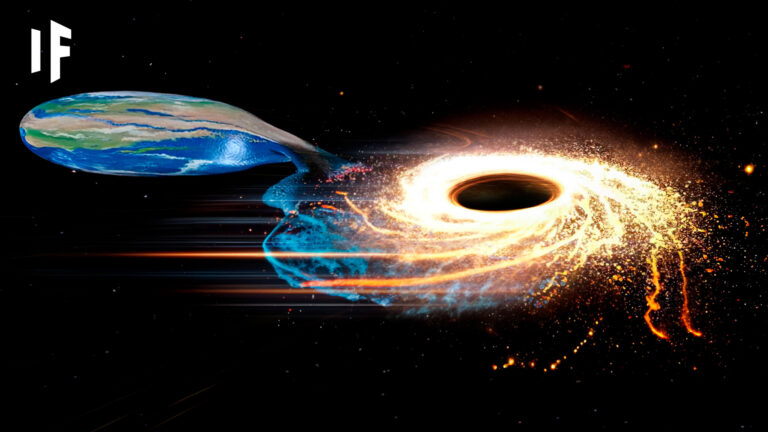
As the tiny black hole approached Earth, its gravity would begin pulling on our planet. The side closest to it would feel a stronger force than the side farther away. Scientists call these tidal forces.
The effects would be devastating.
The crust beneath your feet could start flexing and shifting. Earthquakes might erupt along major fault lines. Volcanoes could awaken in places that have remained quiet for centuries. Massive waves would race across the oceans as coastlines struggled under sudden changes in gravity.
Then the black hole reaches Earth.
Because it is moving at extraordinary speed, it would not stop and consume the planet like in science fiction movies. Instead, it would punch through our world almost instantly.
As it traveled through Earth, it would pull matter toward itself with incredible force. Rock and metal along its path would become superheated. Deep inside the planet, a narrow tunnel of destruction would briefly form.
When the black hole emerged on the opposite side, the damage would continue.
The violent disturbances within Earth could trigger more earthquakes and volcanic eruptions. Tsunamis would spread across the oceans. Dust and debris would rise into the atmosphere.
Yet remarkably, the planet itself might survive.
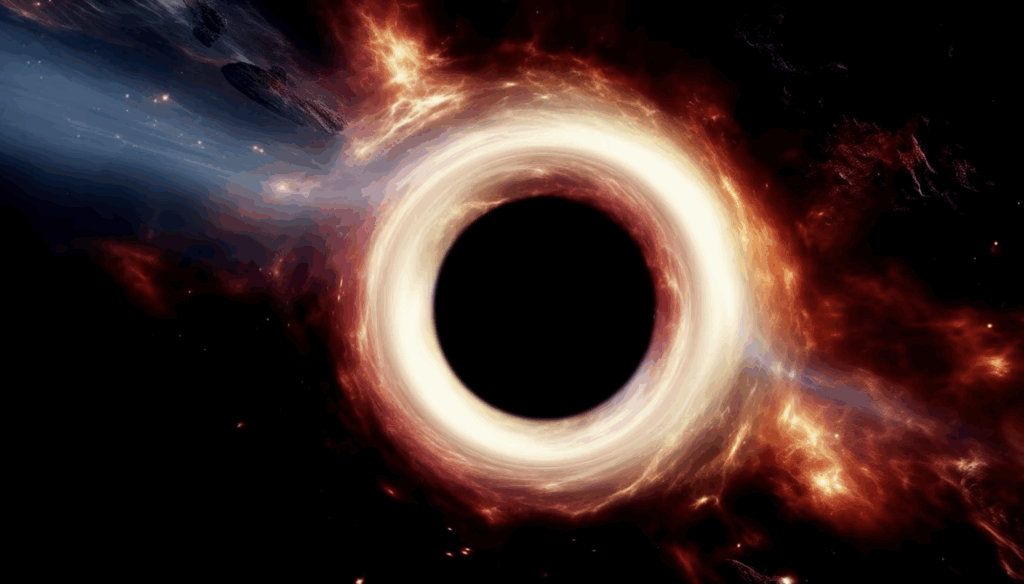
Now imagine something much worse.
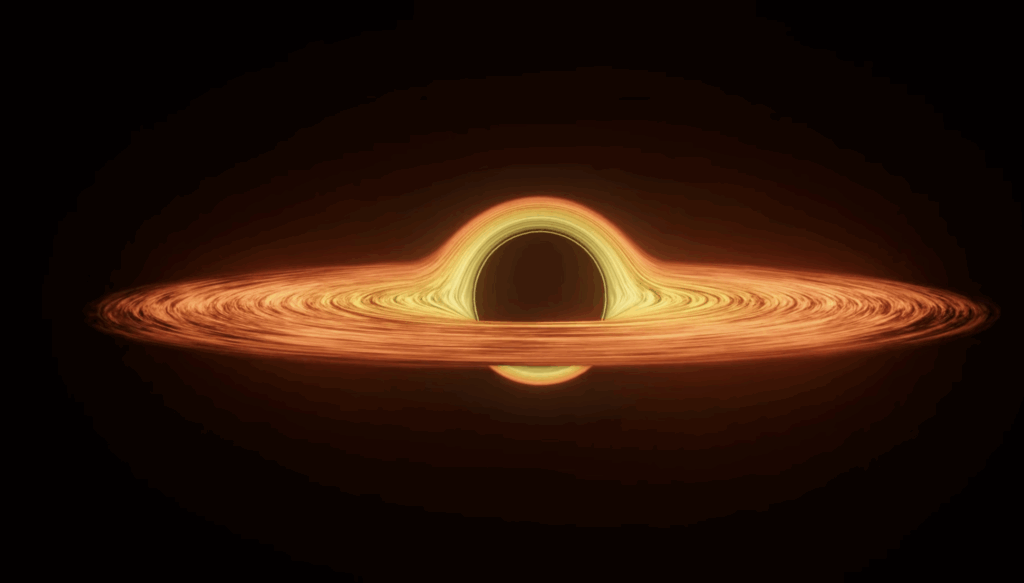
Instead of a black hole with Earth’s mass, suppose a gigantic black hole entered our Solar System.
Long before it reached Earth, its gravity would begin disturbing the planets. Outer worlds would drift from their normal paths. Comets and asteroids could be sent in entirely new directions.
Eventually, the inner Solar System would feel the effects.
Earth’s orbit around the Sun could change. The Moon might be pulled away or shifted into a new path. Satellites would become unstable, and the sky could fill with glowing streaks as space debris fell back toward the planet.
Even the atmosphere would struggle.
Powerful winds could sweep across continents. Weather systems would become chaotic. Regions around the world would face conditions unlike anything in human history.
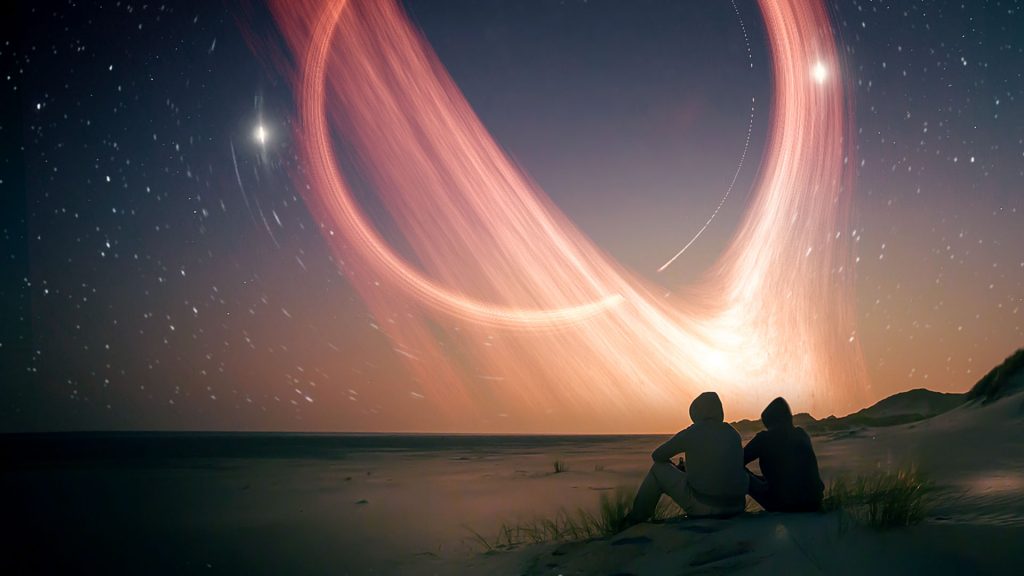
The most frightening part is that gravity itself could feel wrong. Objects around you might seem lighter as Earth’s motion changed. Buildings would shake. Oceans would move unpredictably.
Civilization would face a crisis unlike any it had ever experienced.
And if the giant black hole continued its journey through our neighborhood, Earth might not be destroyed outright. Instead, our planet could be thrown into a completely different orbit.
That outcome may sound less dramatic than an explosion.
But it could be even worse.
Earth’s climate depends on its stable relationship with the Sun. A major change in our orbit could transform temperatures across the globe. Seasons might become extreme or disappear altogether. Agriculture would collapse. Entire ecosystems would struggle to survive.
The terrifying thing about black holes is not that they always destroy everything they touch.
Sometimes, all they need to do is change the rules of gravity.
And in a universe governed by gravity, even a tiny black hole can turn an entire world upside down.