Take a moment to appreciate the snakes of today. The cobras, the pythons, the anacondas. Feared around the world, stars of every nightmare.
Now here is a humbling thought: they are the small ones. The leftovers.
Millions of years ago, this planet belonged to serpents built on a completely different scale. Constrictors heavier than a car. Sea snakes longer than a bus. Vipers the size of crocodiles. Monsters so perfectly engineered for killing that nature itself eventually retired them.
These are the snakes that vanished from Earth, and after meeting them, you will be glad they did.
Titanoboa: The Monster That Ruled the Tropics
Every list of prehistoric horror has a king, and among snakes, the crown belongs to Titanoboa without argument.
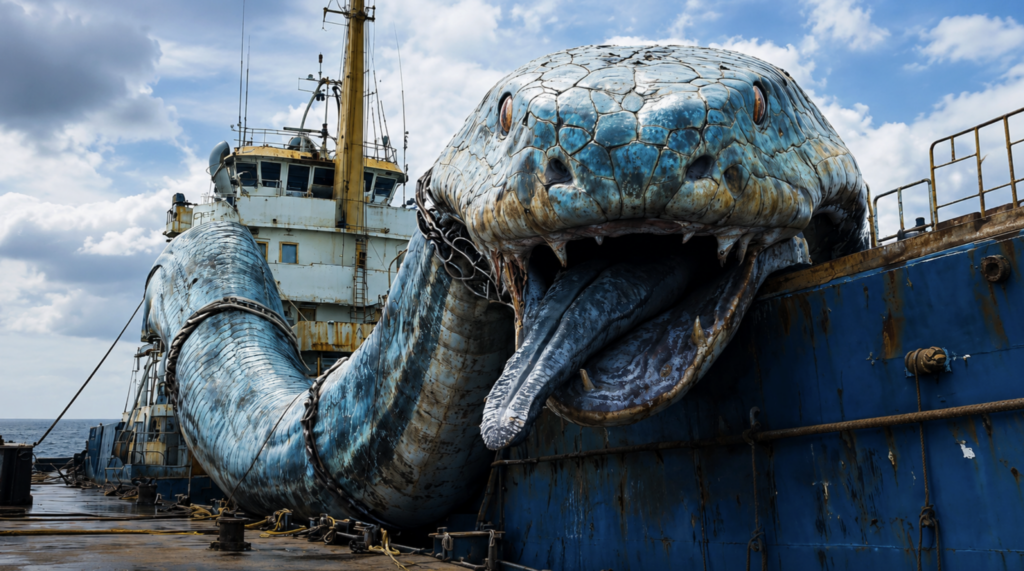
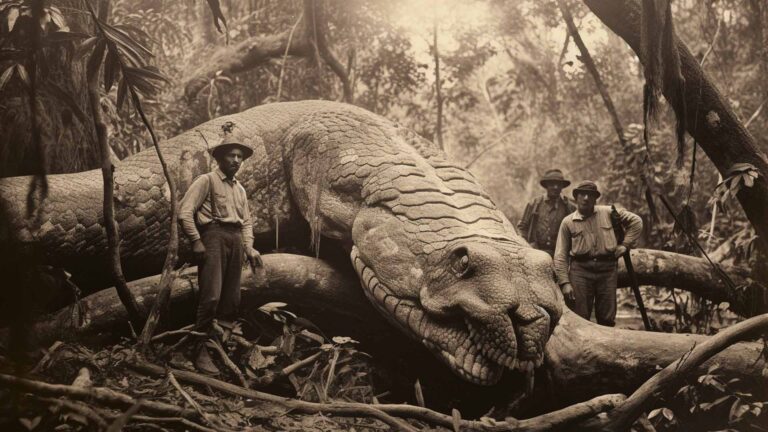
This is the largest snake science has ever discovered: roughly 15 meters of serpent weighing more than 1,100 kilograms. It slid through the hot, swampy rainforests of what is now Colombia about 60 million years ago, and nothing in those swamps was safe.
The numbers barely capture it. Its body was thicker than a human torso, and its raw power dwarfed anything a modern reptile can produce. Scientists believe it hunted by ambush, seizing massive prey, dragging it beneath the water, and crushing the life out of it with muscle alone.
Even the ancient relatives of crocodiles were food to this thing.
If Titanoboa still existed, every warm river and lake on Earth would come with an unspoken question: is the water moving, or is something moving in it?
Gigantophis garstini: The Half Ton Constrictor
Before Titanoboa was unearthed and took the title, the most feared name in paleontology belonged to Gigantophis.
Around 40 million years ago, this giant patrolled North Africa, stretching beyond 10 meters and weighing close to half a ton. It was a pure constrictor, a machine of coils built to wrap, tighten, and suffocate anything it could reach.
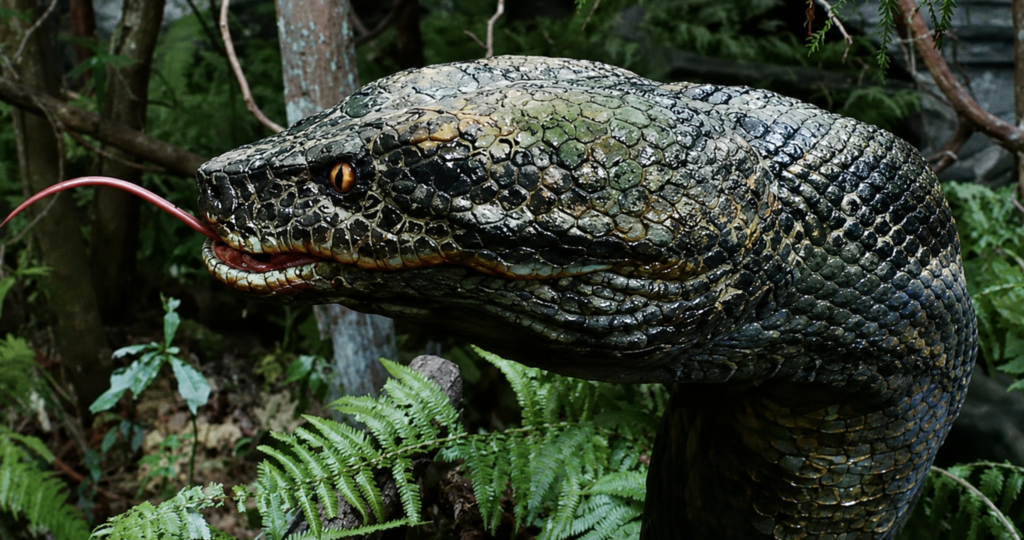
And its menu tells you everything about its power: large prehistoric mammals, some comparable in size to the early ancestors of elephants.
Against a human, there would be no contest and no story to tell. Once those coils closed, the outcome was already decided.
Wonambi naracoortensis: The Ancient Australian Ambush Hunter
This one is different from the others in a chilling way: it may have hunted alongside our own relatives.
Wonambi lived in Australia long after the dinosaurs were gone, surviving late enough that early human ancestors may have shared its landscape. Up to 7 meters long, it was a specialist in patience, lying invisible near trails and waterholes, waiting for something warm to wander past before exploding into strike and coil.
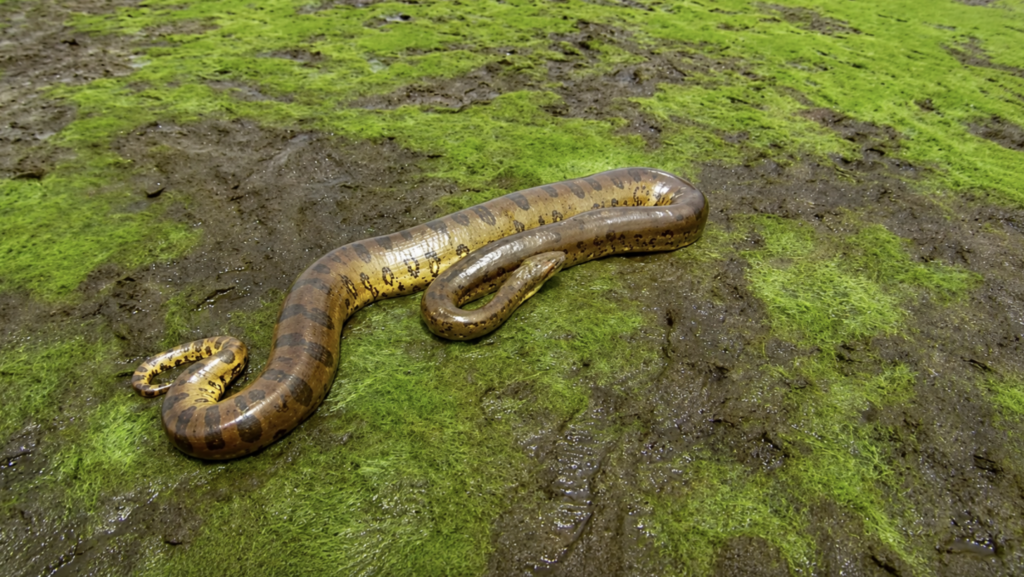
Scientists believe its preferred prey was medium sized mammals. Read that carefully, because early humans fit that description perfectly.
While extinctions swept the planet again and again, Wonambi held its position as one of Australia’s top predators for millions of years. Some killers simply refuse to leave.
Sanajeh indicus: The Dinosaur Nest Raider
Not every deadly snake needed size. Some just needed nerve, and Sanajeh indicus had more of it than any serpent in history.
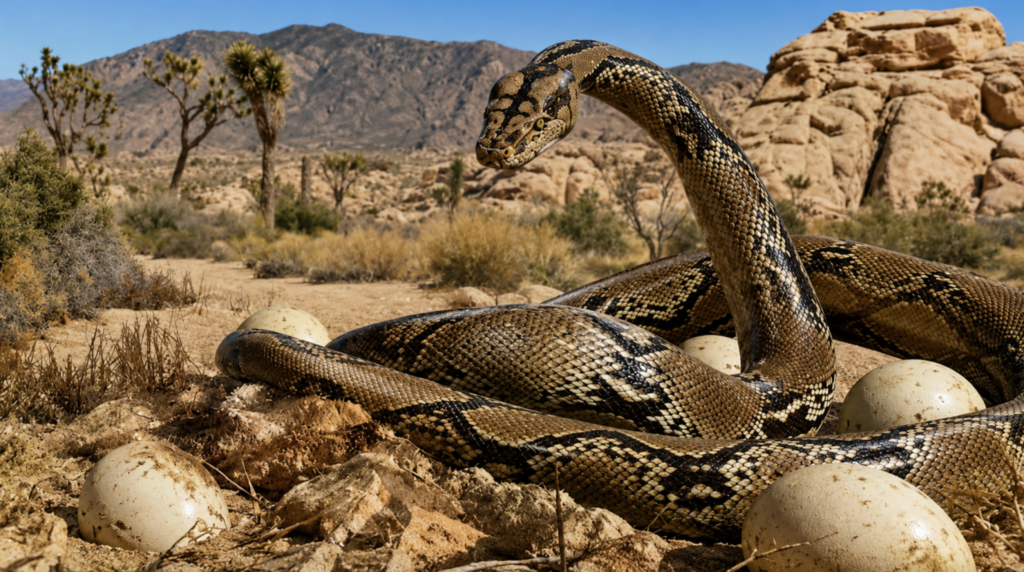
Living around 67 million years ago, in the middle of the age of dinosaurs, this 3.5 meter predator built its entire career on one audacious strategy: raiding the nests of giants. Fossil evidence caught it in the act, coiled around baby titanosaurs, striking hatchlings before they could take their first steps.
Think about what that means. This snake made its living stealing the children of the largest animals ever to walk the Earth, hunting in the shadow of parents the size of buildings.
Small by this list’s standards. Fearless beyond anything alive today.
Palaeophis toliapicus: The Ocean Giant
Just when you think the danger ends at the shoreline, prehistory corrects you.
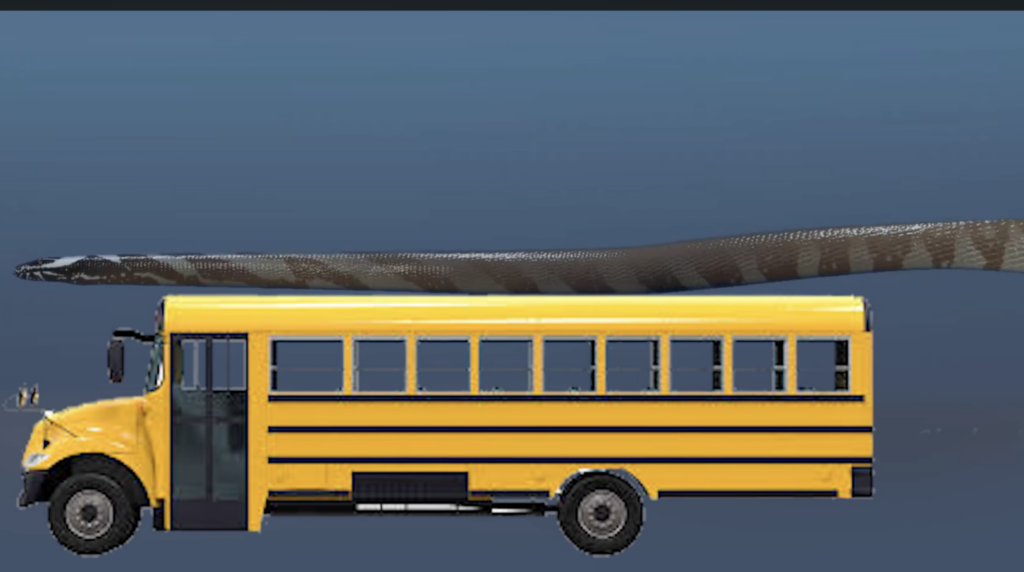
Palaeophis was a marine serpent reaching up to 12 meters, gliding through the shallow coastal waters of ancient North America, Europe, and Africa. The shallows, the exact places where life gathers.
Its diet reads like a list of everything in the sea: fish, birds, marine mammals, and even early whales. In its element, it was close to unstoppable, using sheer length and strength to overwhelm whatever crossed its path.
A swim in those prehistoric seas would have been an act of pure courage, or pure ignorance.
Laophis crotaloides: The Venomous Giant
Every snake so far killed with muscle. The last one on this list brought chemistry to the fight.
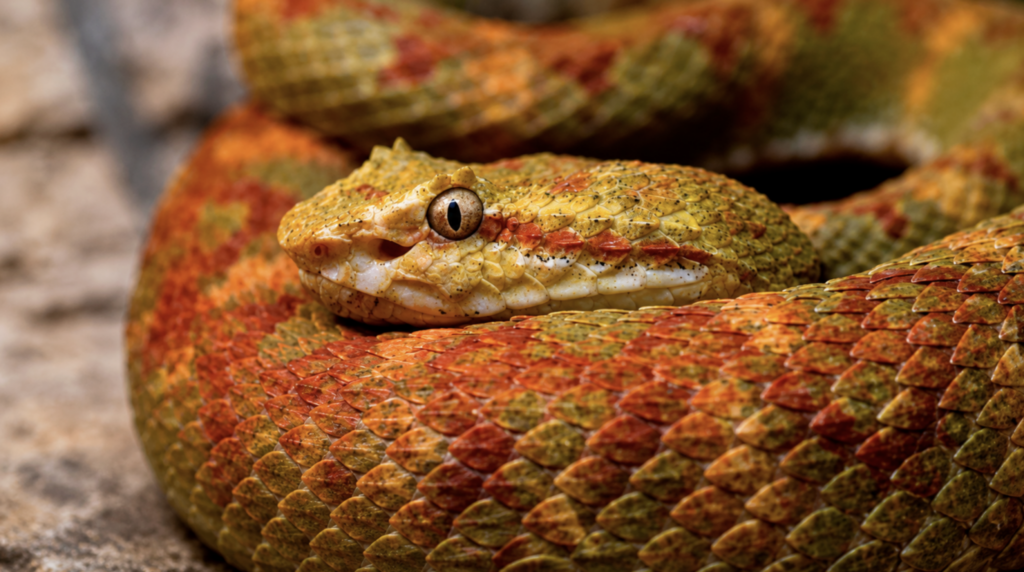
Laophis was a viper, and quite possibly one of the largest venomous snakes ever recorded. It hunted in ancient Greece around 4 million years ago, growing up to 4 meters long, with powerful fangs delivering venom on a scale modern vipers cannot approach.
Size, strength, and toxicity in a single animal, hidden silently in the grass, invisible until the moment it was too late.
That is the complete gallery: six serpents so oversized, so powerful, and so flawlessly built for killing that they sound invented. They were not. Every one of them was real, and every one of them is gone.
Extinct for a reason, and for once, the reason works in our favor. The deadliest snakes that ever existed belong to the past, and the past is exactly where we should be glad they stayed.