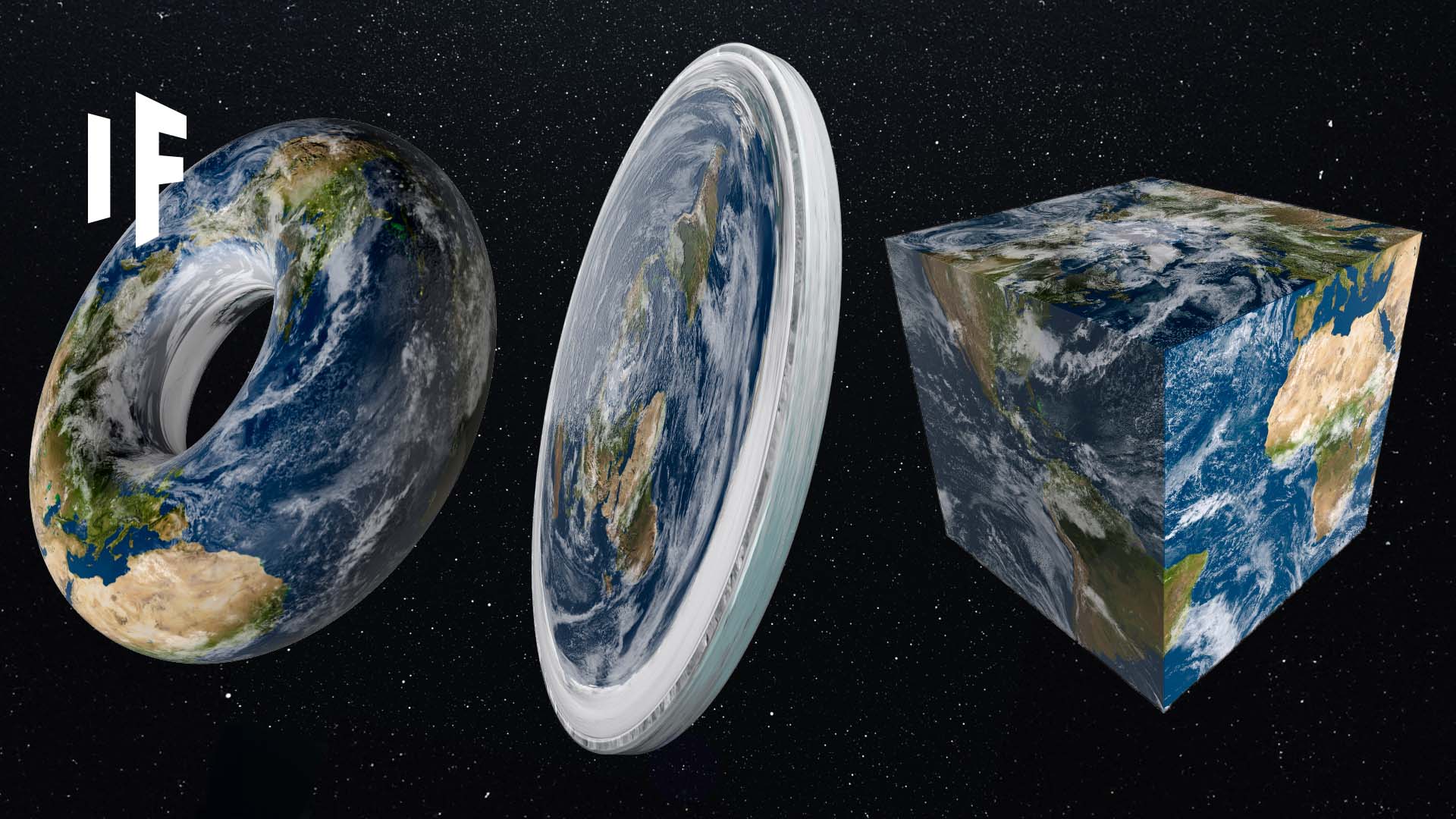
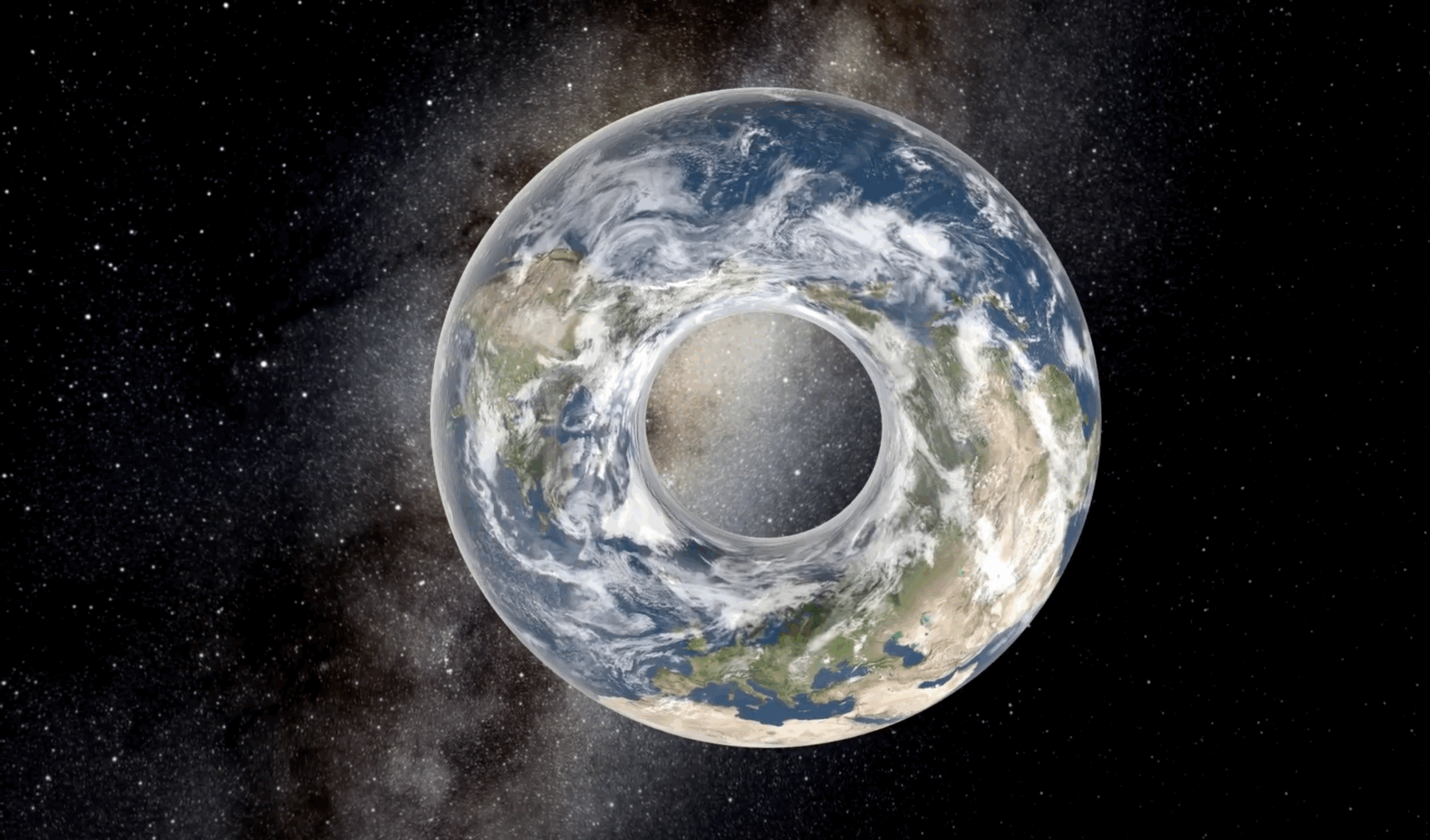
Also known as a torus, a donut shaped Earth would change gravity across the surface. Depending on where you stood, you might weigh significantly less than you do now. At the poles, gravity would be moderate, but near the central hole, it would be much weaker, similar to what astronauts experience on Mars.
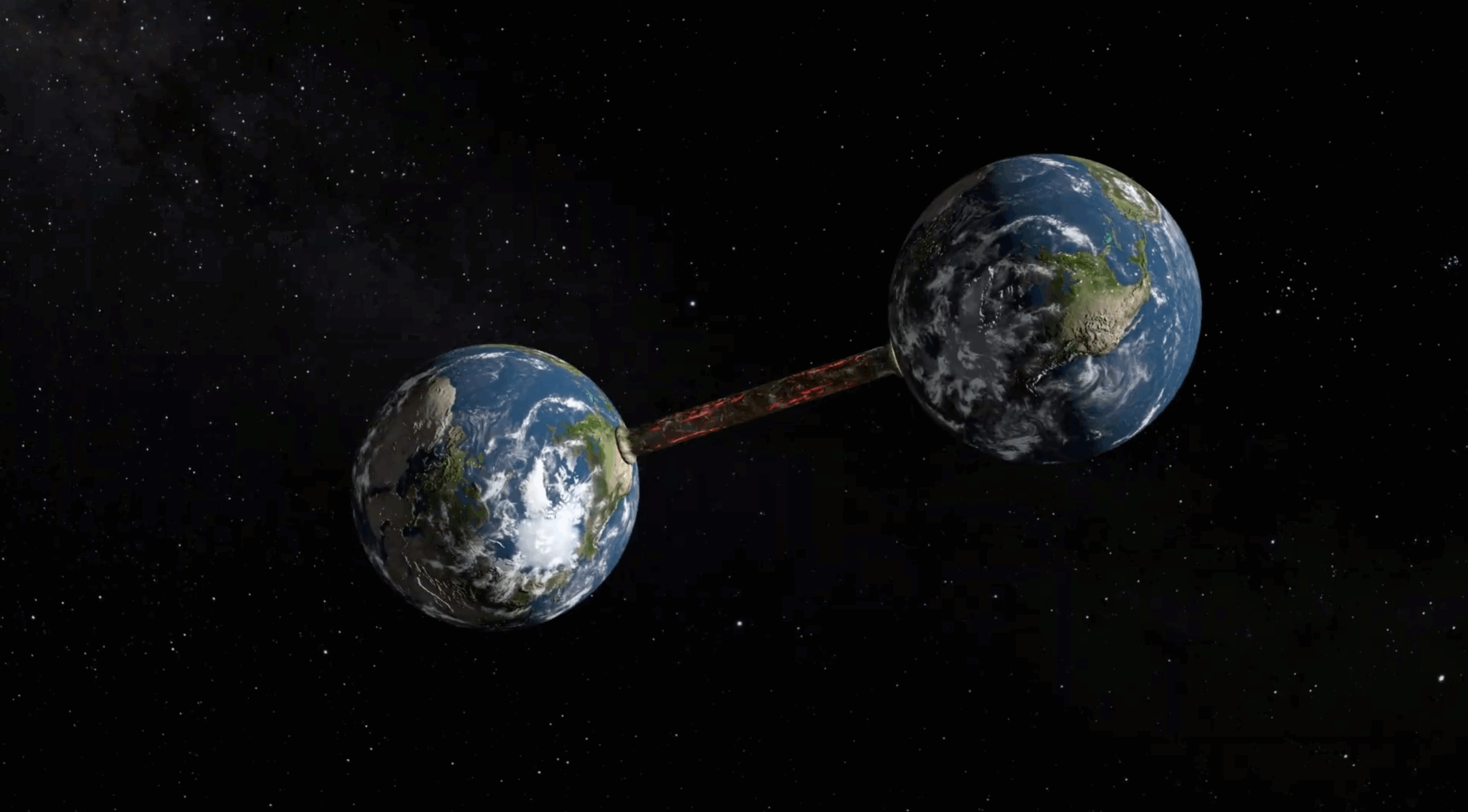
This version of Earth would look like two large spheres connected by a narrow bridge. Gravity in the connecting section would be very unstable. Volcanic activity would likely be severe in this region, and the structure itself could break apart. Life on either end of the dumbbell would be more stable, with regular gravity, weather, and air pressure.
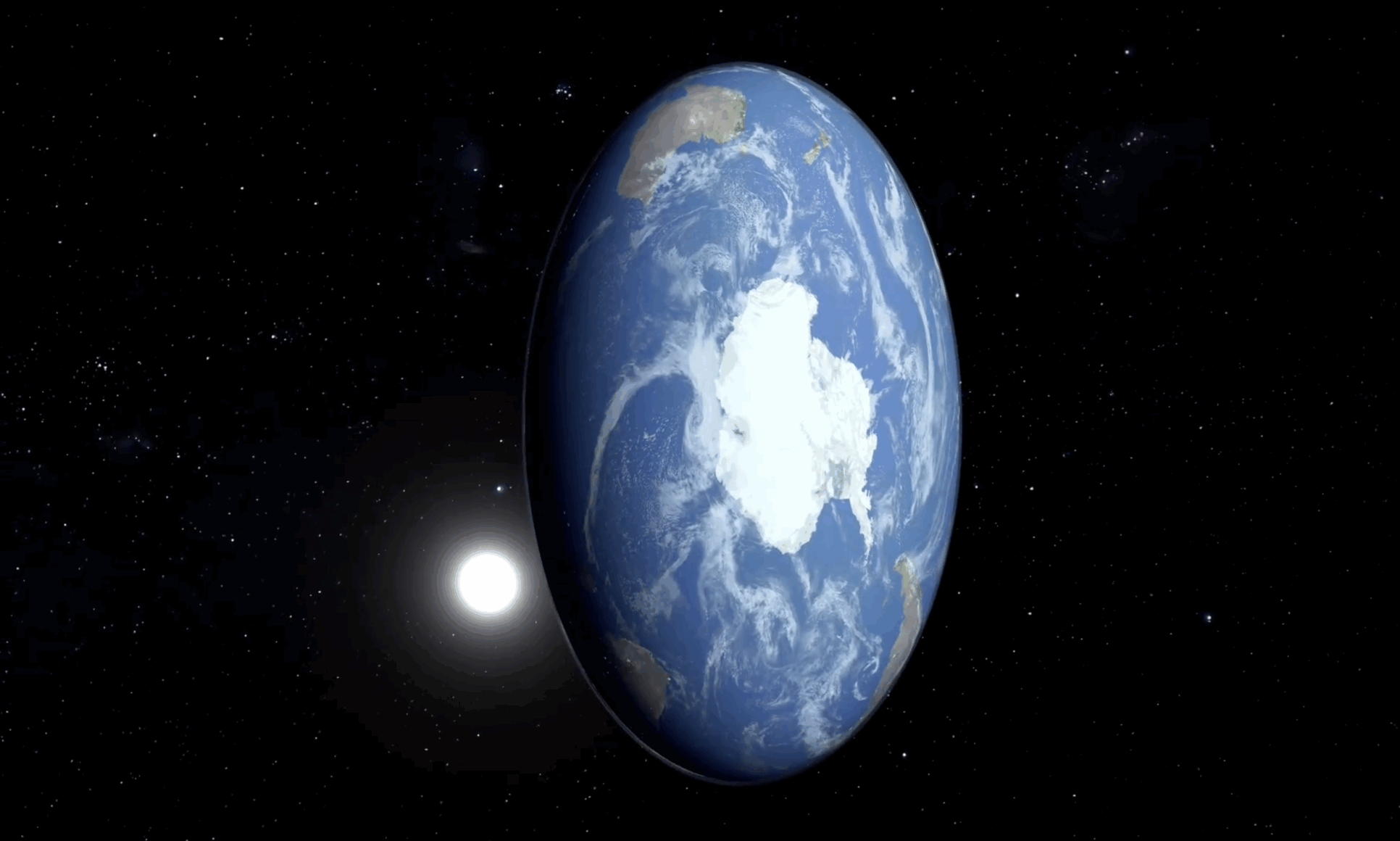
An egg shaped Earth would still support life, but you would notice a few strange differences. Gravity would be stronger at the narrow tips of the egg and weaker along the wide middle. This would affect how buildings are designed and how people move.
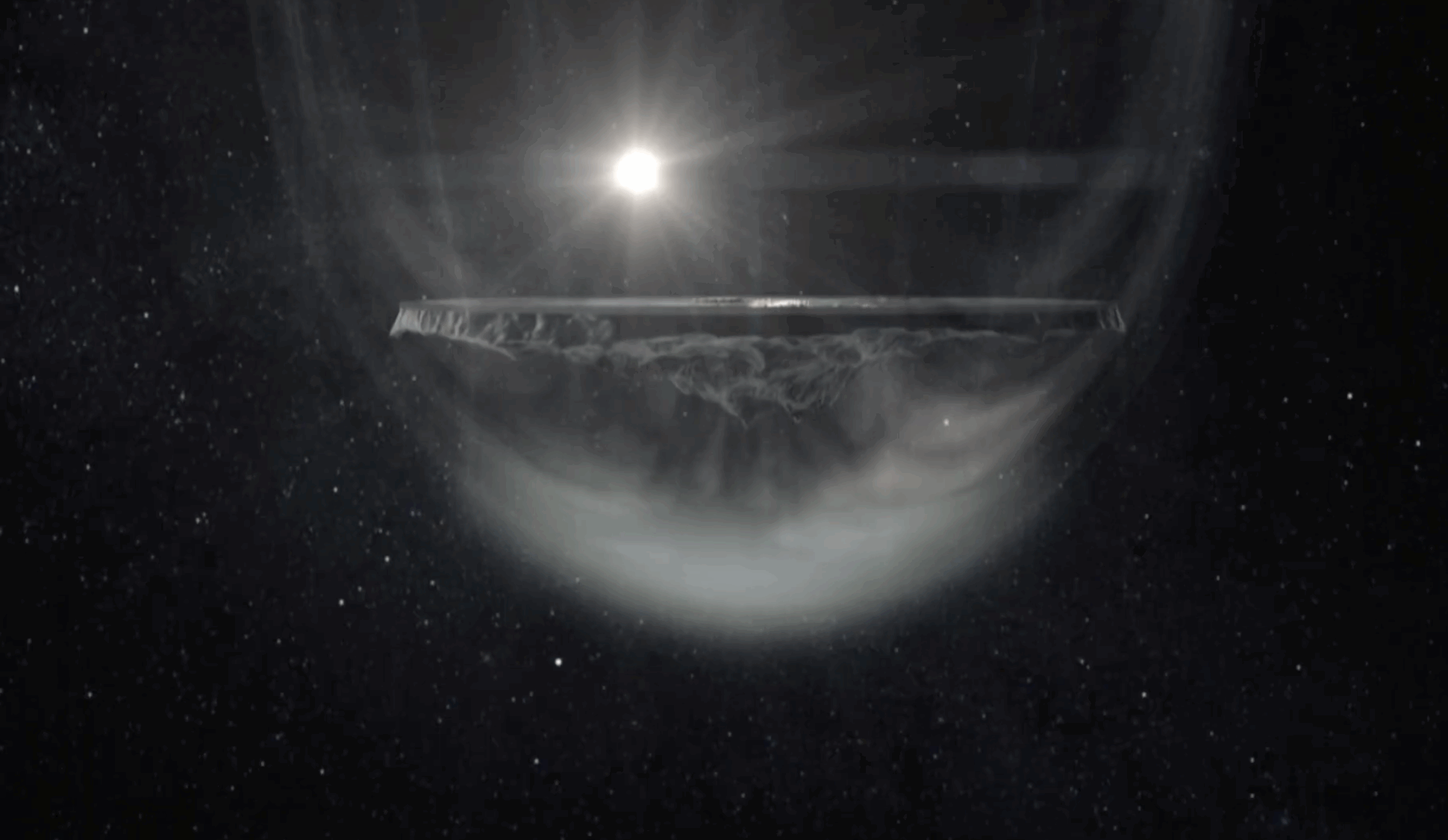
Although some people believe in it, a flat Earth simply cannot exist. Gravity forces planets into roughly spherical shapes, so a flat planet would break the rules of physics. If such a shape were possible, the air would collect near the center, leaving the outer regions without breathable atmosphere.
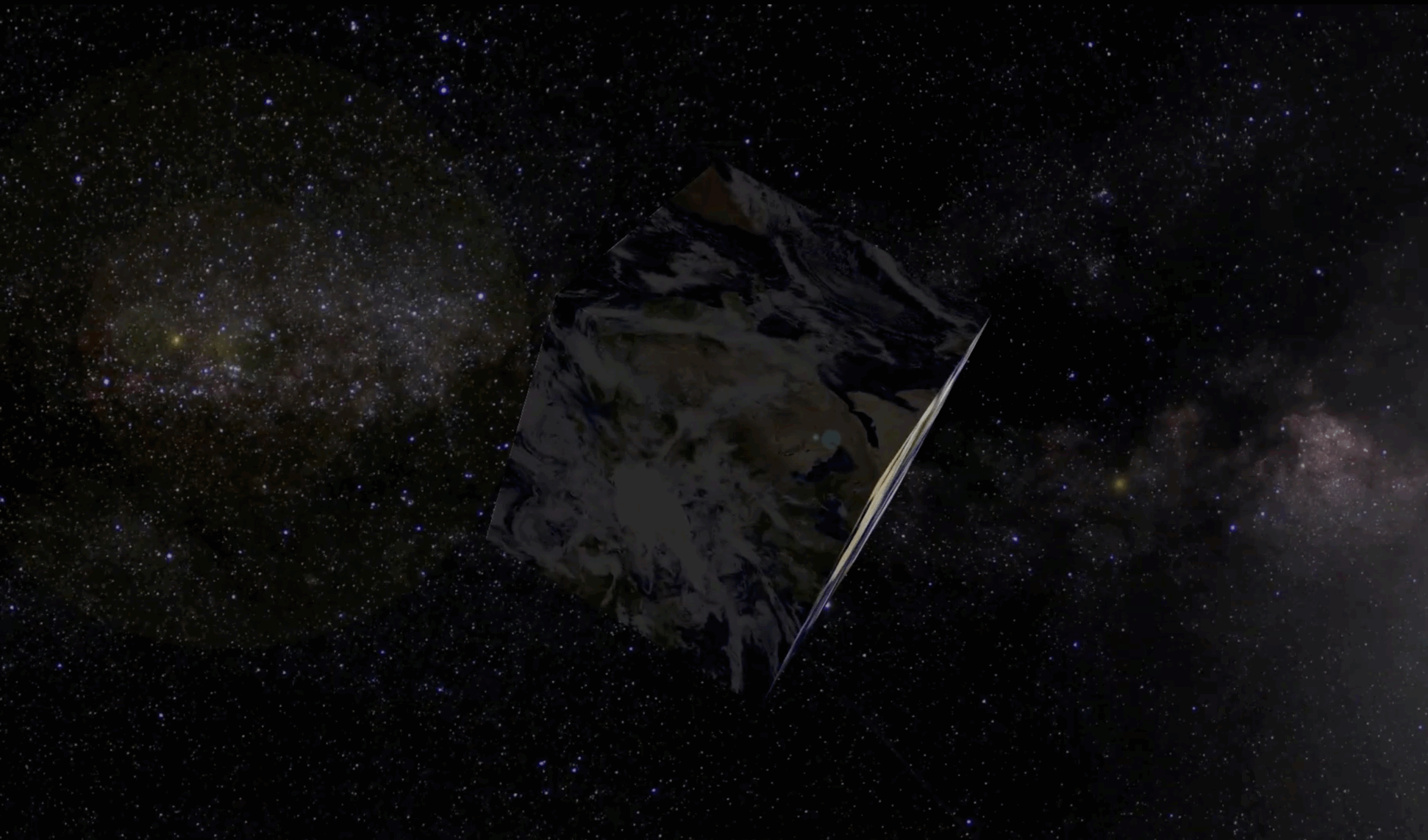
A cube shaped Earth would have six large flat surfaces. Gravity would be strongest at the center of each face, pulling water and air toward those areas. The corners and edges would be barren, rocky, and likely uninhabitable.
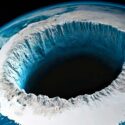
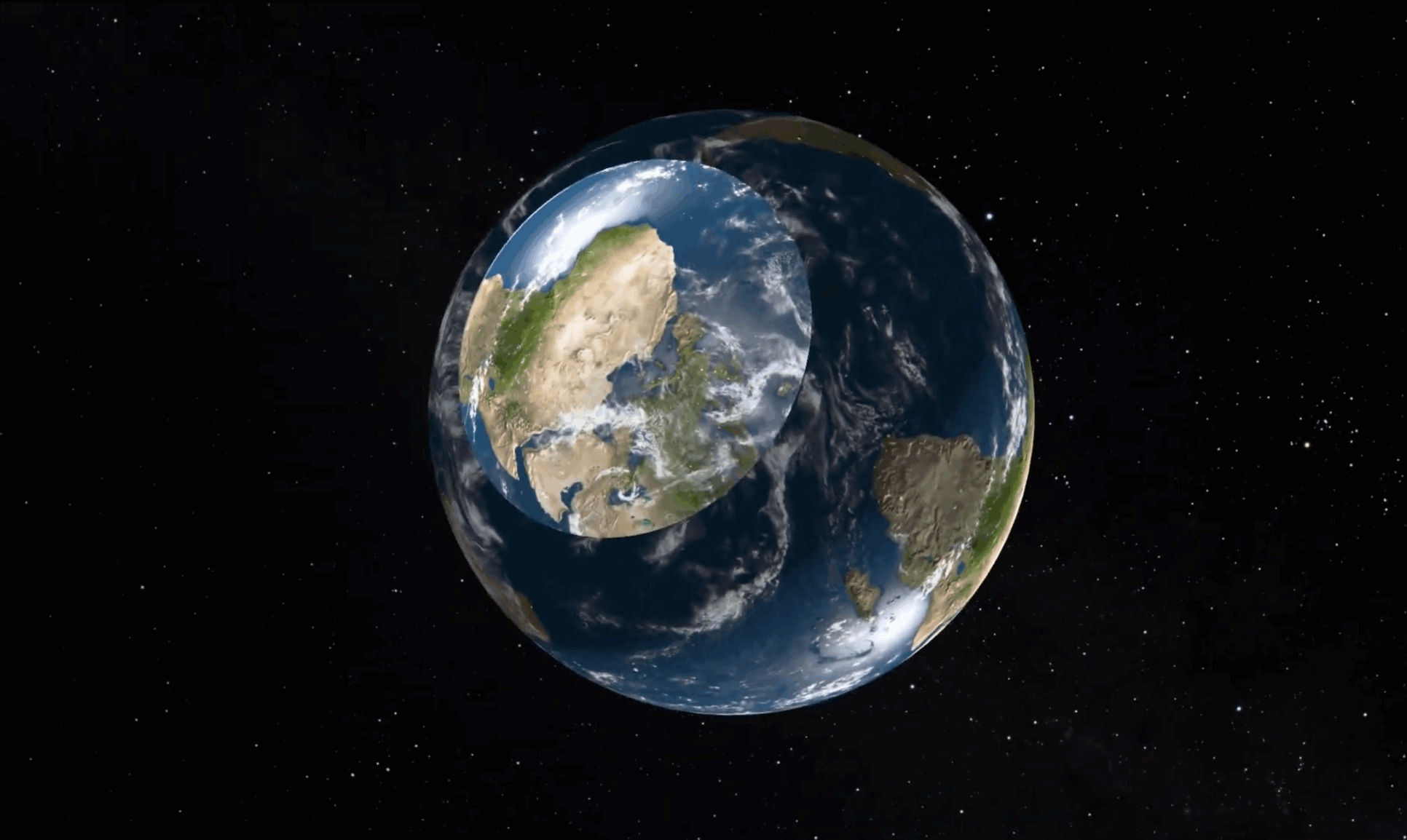
The concept of a hollow Earth is fascinating to imagine, but it would never work in the real world. Without a solid core, gravity would pull the planet inward until it collapsed under its own weight.