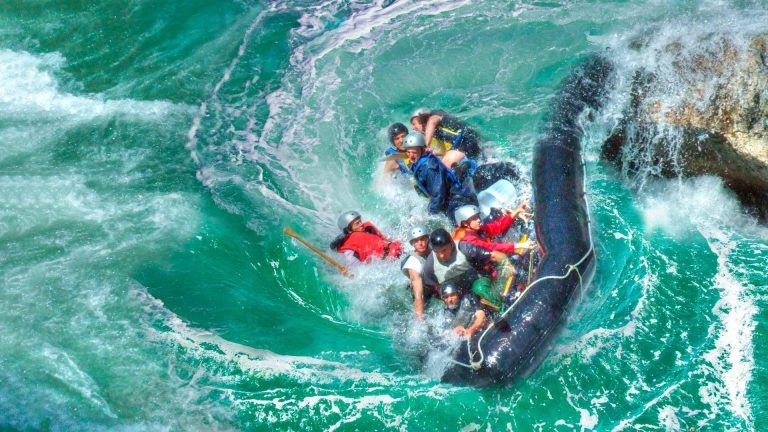
What a perfect day for kayaking out on the open sea. Wait a second, why is the water suddenly spinning? Is that a whirlpool? How do people actually get pulled into something like that? What does it feel like to be dragged into a spinning column of water? And could a bigger boat survive it?
It sounds like something from a movie. A massive spiral of water swallowing ships whole and dragging everything down with almost no chance of escape. Whirlpools have always carried a mythical reputation, but they do exist in the real world, and under the right conditions they can become extremely dangerous.
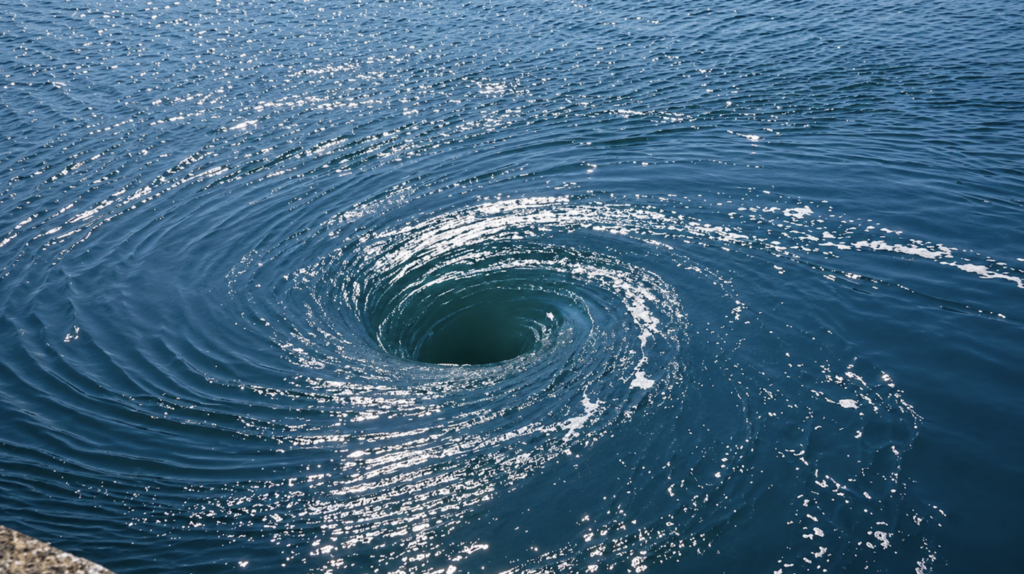
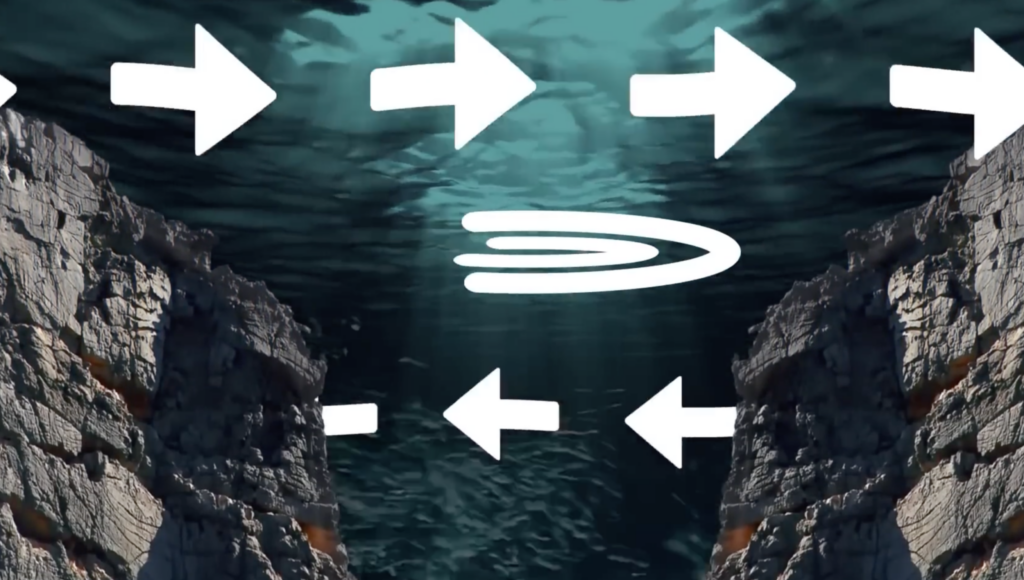
Whirlpools form when opposing ocean currents collide. When these forces are strong enough, they begin to rotate around each other, creating a spinning motion in the water. As the rotation intensifies, a low pressure center forms, pulling water and anything floating nearby toward the middle.
People can get caught in these currents too. Anyone in the wrong place at the wrong time can be pulled into the chaos.
Imagine paddling a kayak near the coast of Norway’s Lofoten Islands. The water here is already rough, but it is also home to one of the most famous whirlpool systems in the world, the Moskstraumen. This powerful maelstrom has inspired writers like Edgar Allan Poe and Jules Verne.
And it is not just one vortex. It is a network of them.
You find yourself drifting toward the largest one, a massive rotating force of water roughly 40 to 50 meters wide. The current moves at speeds up to 32 kilometers per hour, strong enough to overpower small boats and experienced paddlers.
At first, the waves start rocking your kayak violently. Then you lose control completely. You try to paddle away, but the water keeps twisting you inward. Everything feels unstable and disorienting as the surface rises and drops around you.
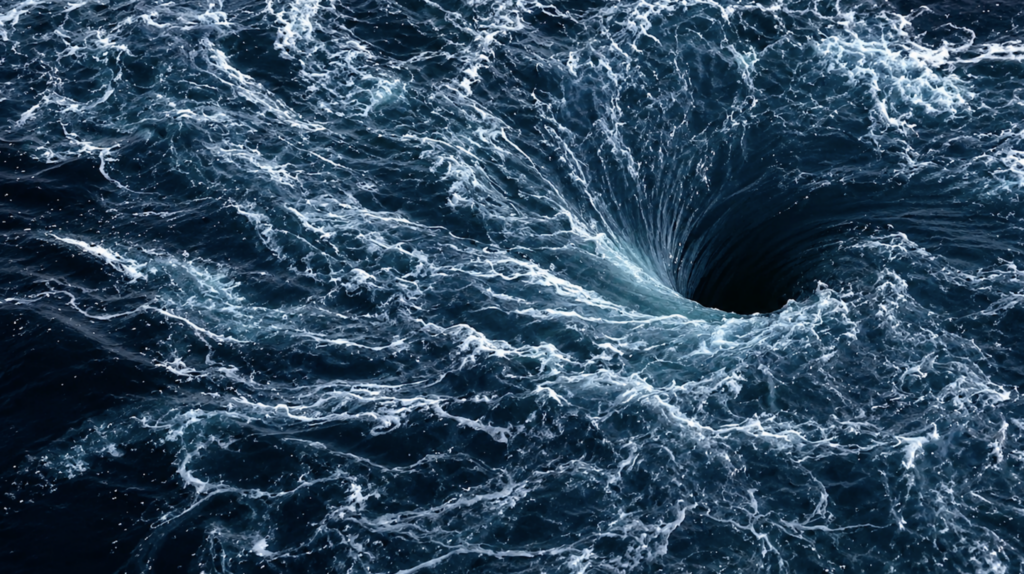
Before long, you are pulled closer to the center. The water begins to form a deep spiral, almost like a funnel reaching down into the ocean. You try one last time to escape, but the current is too strong.
Your kayak flips. You are in the water.
The force pulls you downward, spinning you through the current. It is hard to tell which direction is up. You fight to hold your breath as the water pushes and drags you deeper. For a moment, it feels like you are sinking endlessly into a rotating tunnel.
Then suddenly, the motion changes. The whirlpool releases its grip and the deeper ocean currents take over, pulling you away from the vortex.
You push upward with everything you have left. Your lungs burn as you struggle toward the surface. Just when it feels impossible, you break through the water and gasp for air.
But the danger is not over.
The ocean here is freezing cold. Within minutes, your body begins to shut down as cold water steals your strength. Your arms feel heavy, your legs lose coordination, and staying afloat becomes a fight.
Then something appears through the waves. A fishing boat.
A lifebuoy is thrown toward you, and you grab it. You are pulled aboard, shaking and exhausted, wrapped in dry blankets as you slowly recover from the shock.
For a moment, it feels like survival. Then someone on deck shouts. The boat is being pulled into the same whirlpool.
The engine strains as the vessel fights against the current. The water churns beneath it, lifting the propeller and breaking its grip on the sea. It feels like the boat might be lost too.
Then, suddenly, the propeller catches again. The engine roars. The boat surges forward and breaks free of the vortex, escaping into calmer water.
Silence returns. Only heavy breathing and cold wind remain.