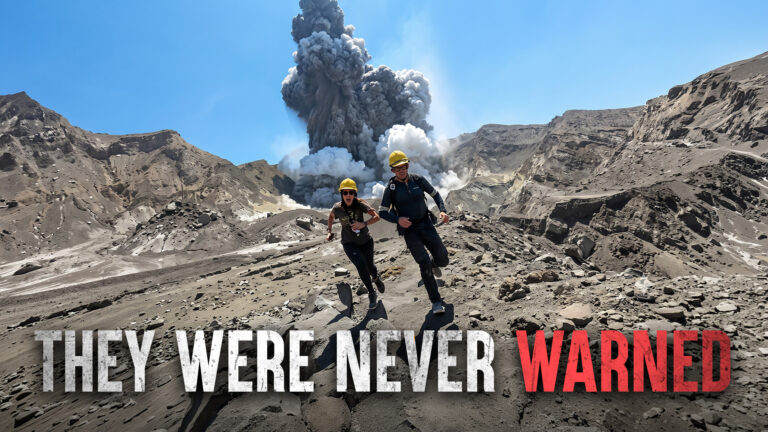
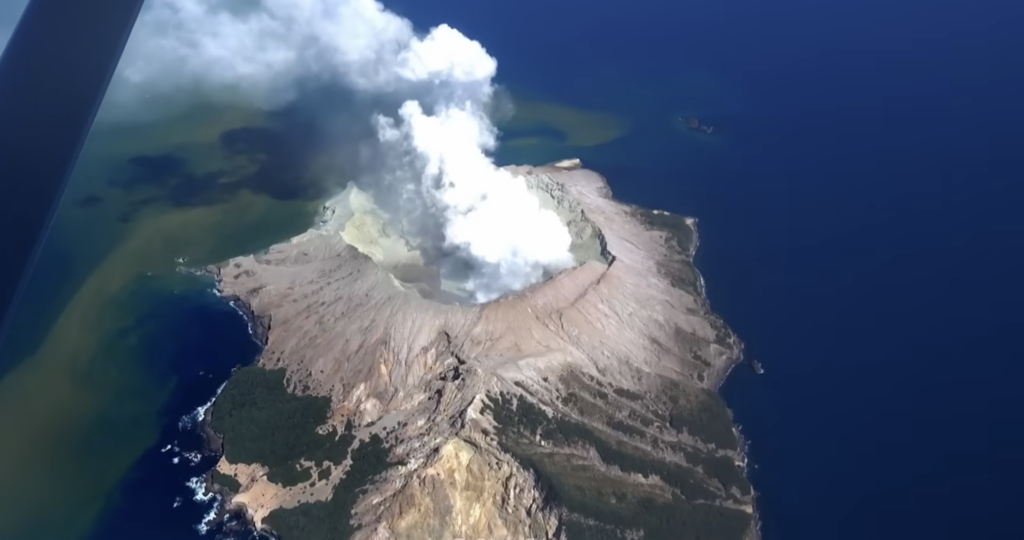
What was meant to be a once in a lifetime adventure quickly turned into one of the deadliest volcanic disasters ever recorded on camera. Whakaari, also known as White Island, sits about 48 kilometers off the coast of New Zealand’s North Island.
It is an active marine stratovolcano that has long attracted tourists eager to walk across its alien landscape and peer into its steaming crater. On December 9, 2019, that curiosity became fatal in a matter of minutes.
Tourists arriving that morning believed they were stepping into a controlled adventure experience. Many had booked the excursion through cruise ship packages or private tour operators, expecting a guided walk across what appeared to be a manageable volcanic terrain.
The marketing emphasized accessibility and unique views, and for many visitors, it felt like a rare opportunity to witness a living volcano up close.
White Island is not a typical volcano with flowing lava. Instead, it is driven by hydrothermal activity, where superheated steam, gas, ash, and rock are released from vents beneath the surface. Under normal conditions, it creates an eerie but mesmerizing environment, with a crater lake tinted green by dissolved minerals and volcanic gases. However, beneath its beauty lies a system that can shift from calm to catastrophic with little warning.
In the months leading up to the eruption, scientists had already raised concerns. The volcano had been placed at Alert Level 2, indicating heightened volcanic unrest and an increased likelihood of eruption. Monitoring agencies reported rising gas emissions and increased seismic activity.
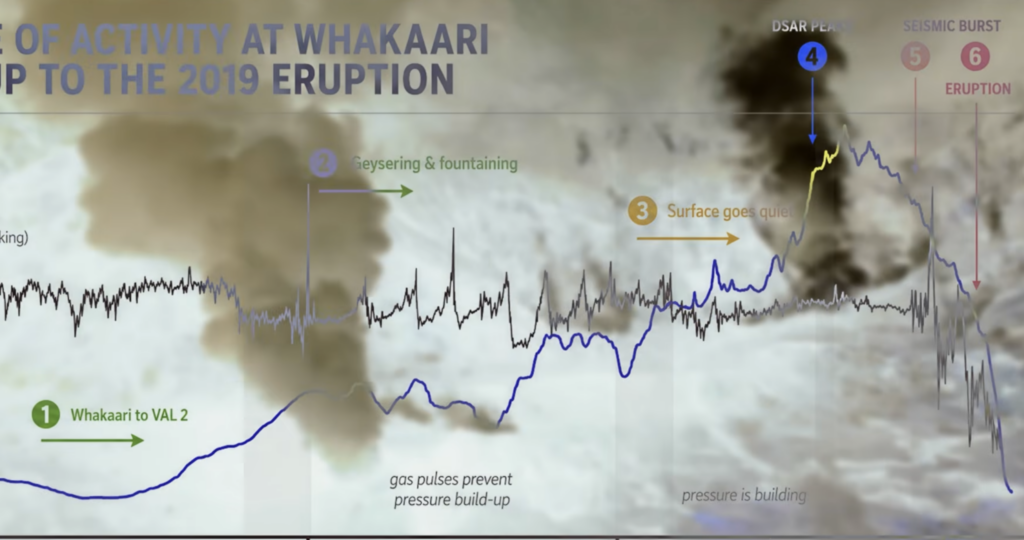
Two weeks before the disaster, officials warned that White Island could enter a period where eruptive activity was more likely than usual. Despite this, tours continued.
On the day of the eruption, multiple groups of tourists were on the island. Some arrived by boat through White Island Tours, while others were brought in by helicopter. Visitors were given basic protective equipment such as helmets and respirators, as well as brief instructions on how long they could safely stay near the crater due to toxic gas exposure.
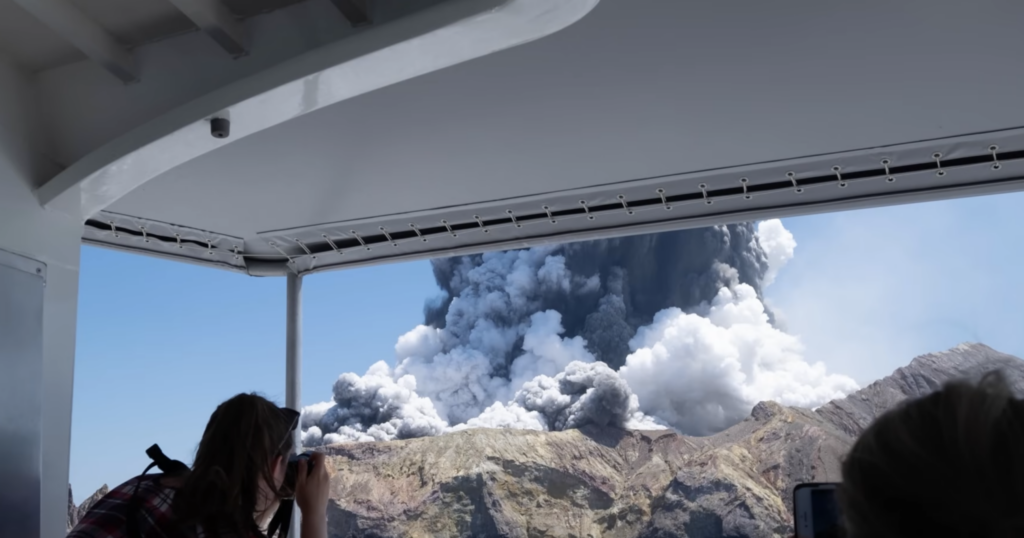
At first, the experience seemed unforgettable in a positive way. Tourists took photographs near the crater, amazed by the steaming vents and surreal landscape. Some even noticed subtle changes in the crater lake, including darker, ash filled water, but most did not interpret it as a warning sign.
Within minutes, everything changed.
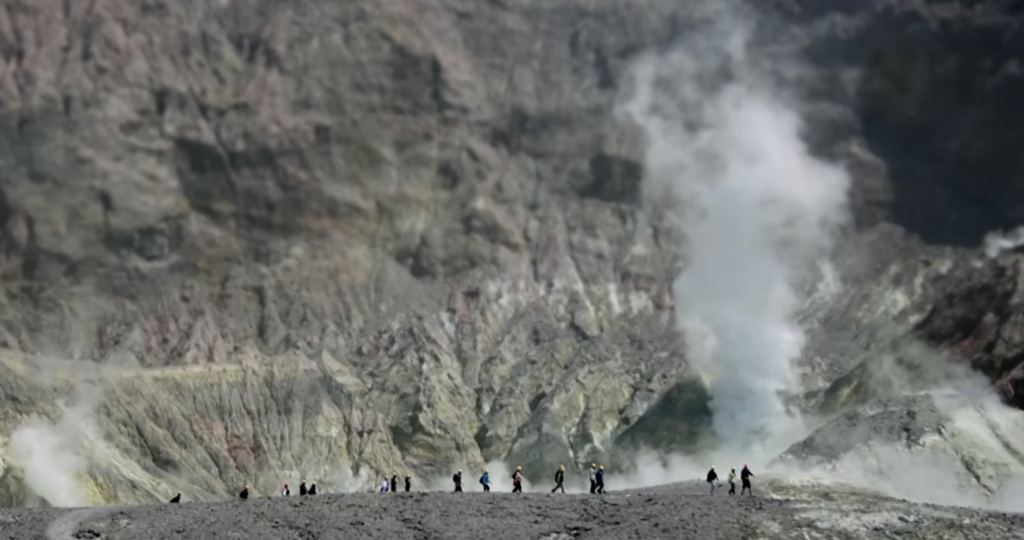
A plume of ash began rising from the crater. At first, it appeared to be a minor release, something many mistook for a natural part of the volcano’s behavior. But within moments, the eruption escalated. Just minutes after the initial signs, a powerful explosion tore through the crater area while dozens of people were still on the island.
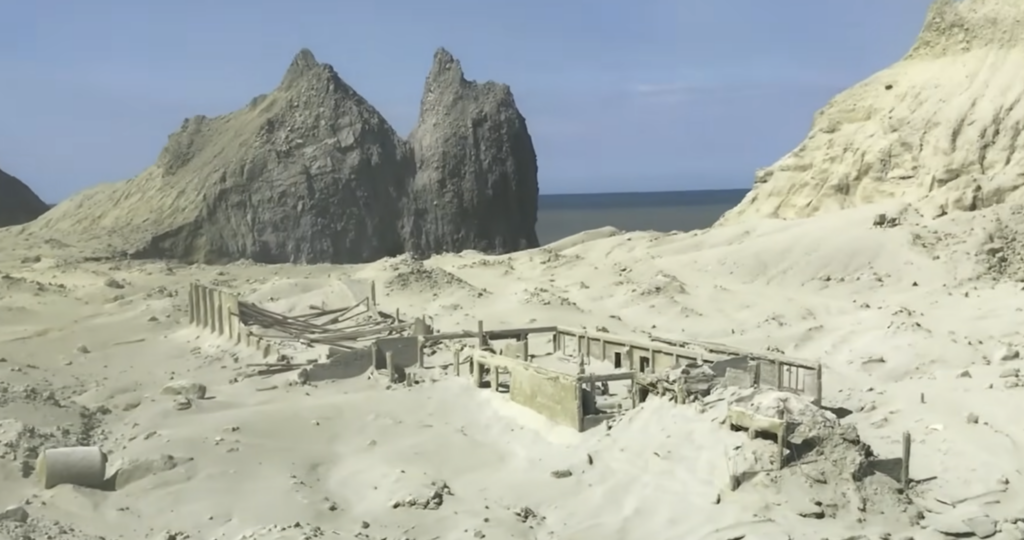
A loud blast echoed across the landscape, followed by a wave of superheated ash, steam, and toxic gas. Visibility dropped to near zero almost instantly. Survivors later described an environment where breathing became impossible and skin began to burn on contact. The eruption lasted only a short time, but its effects were immediate and devastating.
Tour guides and visitors were thrown into chaos. Some attempted to flee toward the shoreline while others took cover behind rocks that offered little protection from the heat and toxic gases. The temperature of the volcanic steam was high enough to cause severe burns and internal injuries within seconds of exposure.
One helicopter pilot, who was on the island with his group at the time, made a split second decision that saved several lives. He instructed passengers to enter the water and stay submerged as ash and debris fell around them. Others nearby were not as fortunate and were caught directly in the blast zone.
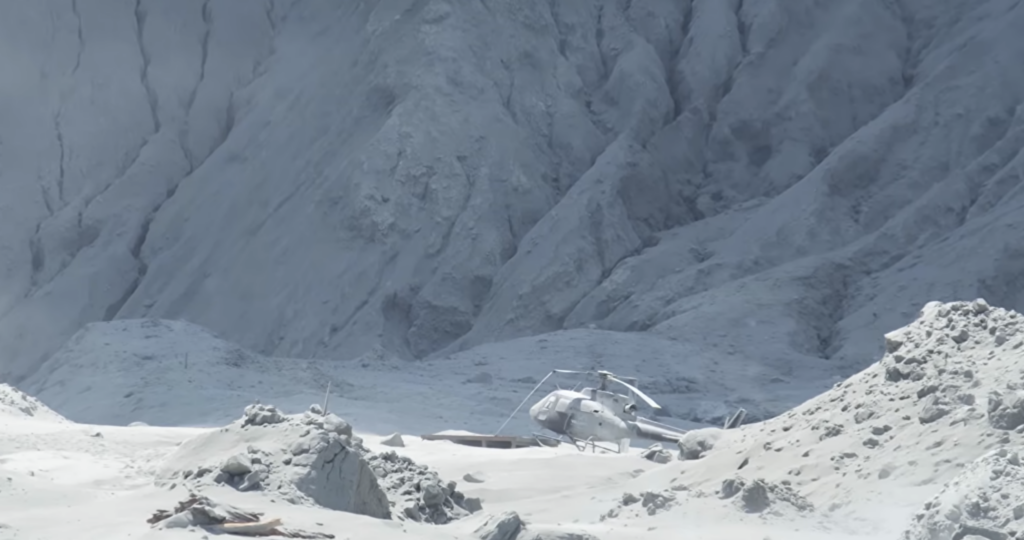
As the eruption continued, survivors struggled to reach evacuation points. Many were severely burned, disoriented, and unable to move quickly. Tour guides attempted to organize evacuations toward inflatable boats waiting offshore. However, the scale of the disaster quickly overwhelmed initial response efforts.
The cruise ship Ovation of the Seas, which had brought some of the tourists to the region, became one of the first major rescue platforms. Crew members helped pull injured survivors aboard while emergency calls were made to authorities. Helicopters attempted to reach the island, but conditions remained extremely dangerous due to lingering ash clouds and volcanic debris.
Emergency responders faced difficult decisions. While local pilots insisted they could land and assist survivors, official rescue coordination initially delayed full deployment due to safety concerns. This created tension between immediate on site rescuers and centralized emergency management.
Over the next hour, rescue efforts intensified. Helicopters and boats shuttled survivors from the island to medical teams waiting on the mainland. Many victims required urgent treatment for severe burns, inhalation injuries, and trauma caused by the eruption.
In total, 22 people lost their lives as a result of the disaster, while 25 survivors suffered life altering injuries. Some required extensive surgeries, skin grafts, and long term hospital care. Several victims were left with permanent disabilities, and families were devastated by the sudden loss of loved ones.
In the aftermath, investigations focused heavily on whether the risks had been properly communicated and whether tours should have been operating under elevated volcanic alert levels. Legal action followed, with questions raised about responsibility, safety protocols, and whether passengers were fully informed of the danger they were entering.
The tragedy also led to broader discussions about the ethics of tourism on active volcanoes. White Island had erupted previously in 2013 and 2016, although those events occurred without tourists present. Some experts argued that the 2019 disaster was not entirely unpredictable, pointing to warning signs in the months leading up to the eruption.
Today, White Island remains closed to the public. The volcano continues to be monitored, and access restrictions have been enforced in recognition of both safety concerns and the cultural significance of the island to the Māori people, particularly the Ngāti Awa tribe, who regard Whakaari as a living ancestor.
The eruption of White Island stands as a sobering reminder of how quickly natural beauty can turn into disaster. What began as a guided tour into an extraordinary landscape ended in one of the most devastating volcanic tragedies ever captured in real time. It remains a case study in volcanic risk, emergency response, and the fragile balance between adventure and safety.