Humanity is already filling the space around our planet with machines. Around Earth, thousands of satellites are currently circling above us, each one serving a different purpose from communication to navigation to observation. But what if this growing network in the sky was not just functional, but also powerful enough to change how we experience night itself
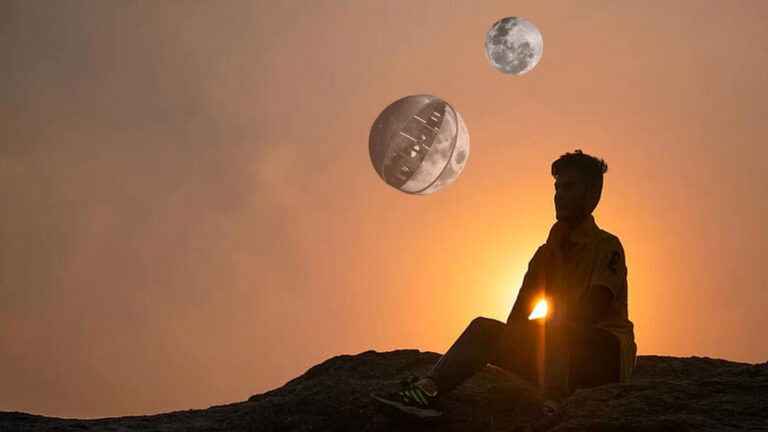
Imagine looking up at the sky and seeing a bright object far larger than any satellite we have today. Not a natural moon, but something built by humans. A massive reflective structure in space that could illuminate entire cities without electricity. It sounds like science fiction, yet it is based on ideas already being tested in smaller forms today.
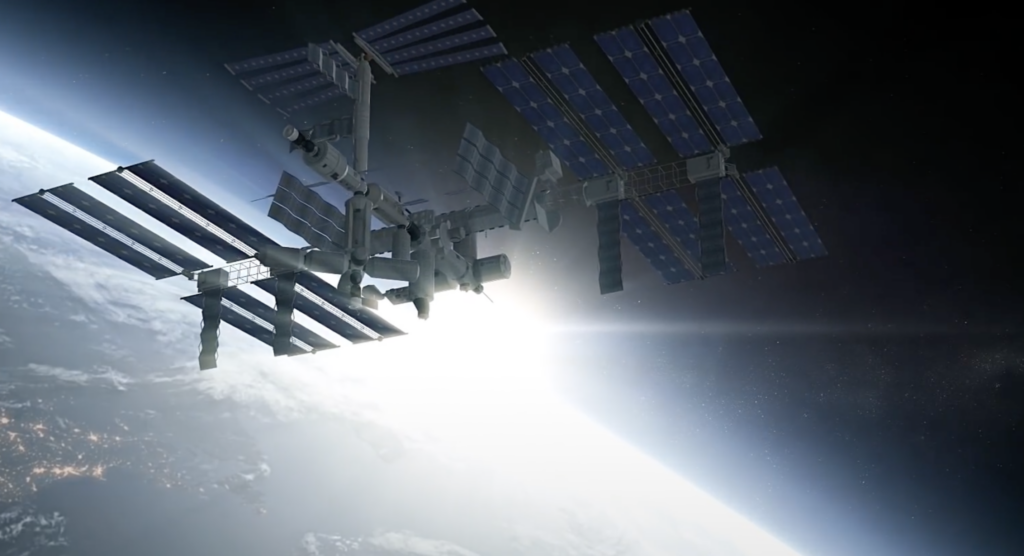
Right now, the largest structure humans have placed above Earth is the International Space Station. It is roughly the size of a football field and orbits our planet at an altitude where astronauts live and work in microgravity. It took many rocket launches and international cooperation to assemble it piece by piece.
Now imagine something ten times larger. Instead of a research station, it would be a structure designed purely for reflection and light control. Building something like this would require materials far lighter and stronger than anything we currently use, along with thousands of coordinated launches and robotic assembly systems operating in space.
The idea is not to place it as far away as the natural moon. Instead, it would be positioned much closer to Earth, in a stable orbit where it could remain visible and effective. In this position, it would move extremely fast to avoid falling back toward the planet, constantly balancing between gravity and orbital motion.
Its surface would need to be covered in an ultra reflective layer, designed to redirect sunlight toward Earth during nighttime hours. From the ground, it would appear as a steady glowing object slowly moving across the sky, bright enough to extend daylight conditions into the night.
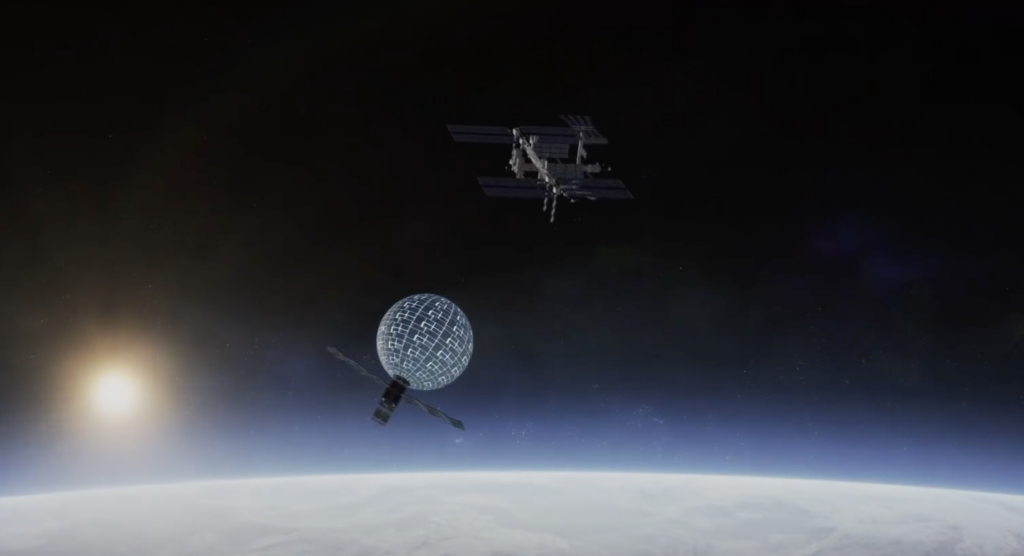
In theory, this could reduce the need for artificial lighting in cities and towns. Entire regions could experience soft illumination without switching on electrical grids. Some proposals even suggest that a system like this could reduce global energy consumption significantly if it operated efficiently and consistently.
However, the consequences of such a project would be far reaching. A permanently brighter night sky would dramatically alter natural ecosystems. Many animals depend on darkness to hunt, migrate, and reproduce. Species that rely on lunar cycles could become disoriented or disrupted by constant artificial brightness.
Humans would not be immune either. Research already shows that exposure to light at night can affect sleep patterns, hormone regulation, and long term health. Increased nighttime brightness could contribute to higher risks of sleep disorders, metabolic changes, and mood related conditions.
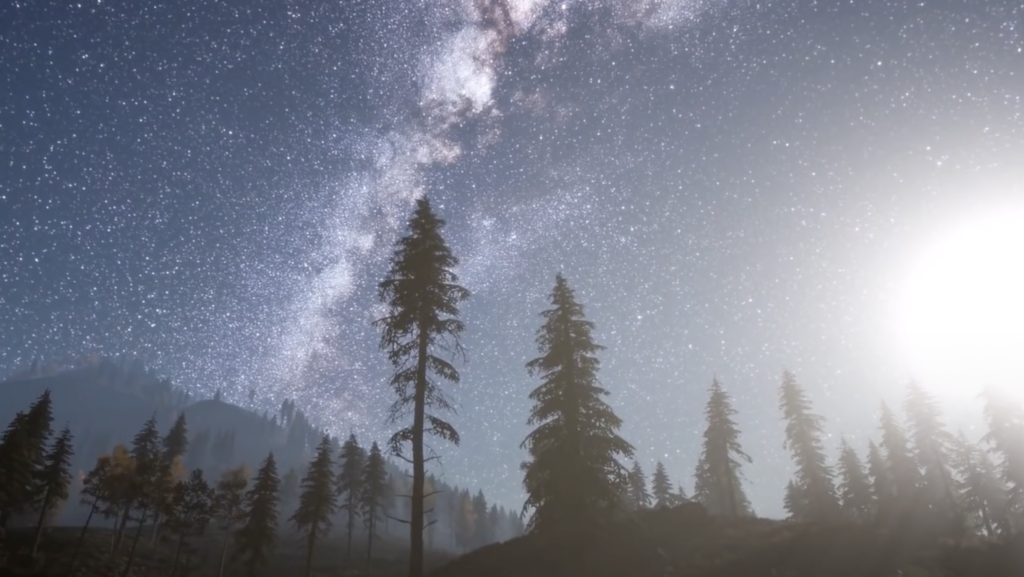
Another major concern is astronomy. A bright artificial object in orbit would interfere with ground based telescopes. Observing distant stars, galaxies, and faint cosmic signals would become significantly more difficult. This could slow down scientific discovery and limit our understanding of the universe.
There is also the question of maintenance and responsibility. A structure of this scale would not be something that could simply be left alone. It would require constant monitoring, repairs, and control systems to ensure it remains in stable orbit and does not become space debris.
Some modern discussions have explored versions of this concept using smaller reflective satellites working together as a coordinated network. These would act like adjustable mirrors in space, redirecting sunlight in controlled ways rather than relying on a single massive structure.
Reports have even suggested that experimental projects related to artificial sky lighting are being explored in different countries, with goals ranging from energy savings to urban illumination. However, no large scale operational system has been confirmed, and most ideas remain theoretical or in early testing phases.
Even if such a system becomes possible, it raises a deeper question. Do we actually want to replace natural darkness with artificial light sources in the sky. The night sky has shaped human culture, science, and imagination for thousands of years. Changing it would not just be a technological decision, but a cultural one as well.
For now, the natural moon continues to serve as Earth’s primary source of reflected light at night, quietly influencing tides, ecosystems, and human history. Whether we ever build something similar or not, it remains one of the most important and stable features of our night sky.