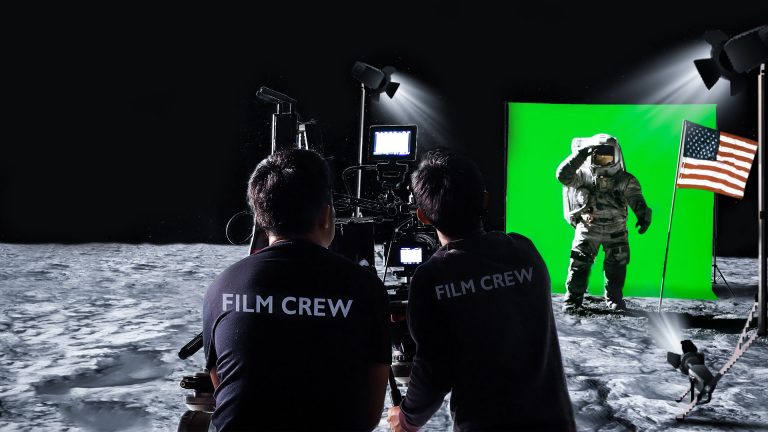
The moment Apollo 11 touched down on the Moon in 1969 became one of the most defining events in human history. Around 600 million people watched as humans stepped onto another world for the first time. It marked the peak of the Space Race and proved that interplanetary travel was no longer science fiction but a technological reality.
But imagine a different timeline. A timeline where the Moon landing never happened. No Eagle lander, no footprints on lunar dust, no iconic moment broadcast across the globe. What would the world look like if that achievement was never completed?
The Space Race itself began years earlier with the launch of Sputnik by the Soviet Union. That single satellite changed global politics and triggered a wave of technological competition between two superpowers determined to prove their dominance beyond Earth.
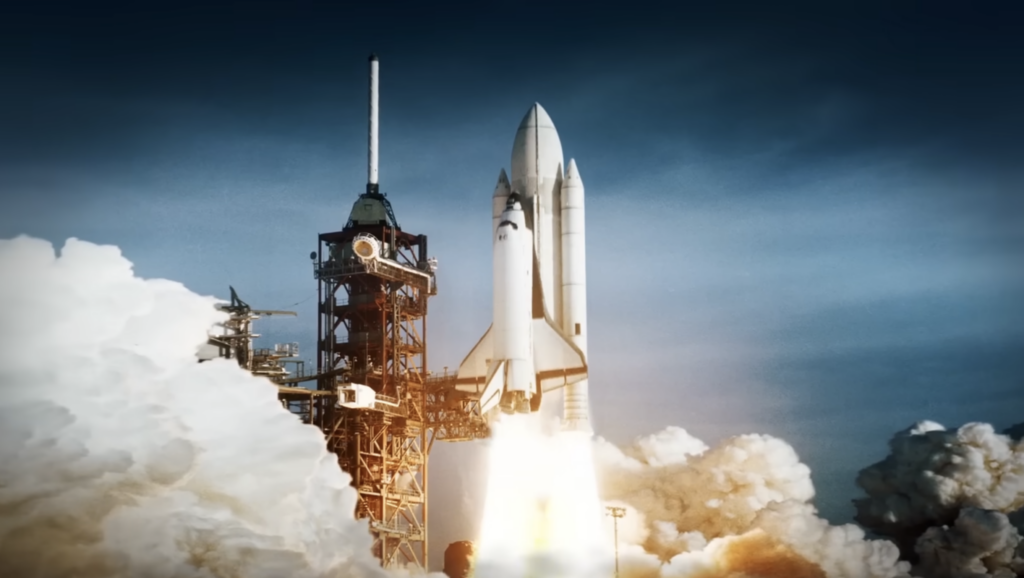
In response, the United States created NASA, an agency dedicated entirely to space exploration and scientific advancement. Its original mission was deeply tied to national pride and geopolitical competition. Without the goal of reaching the Moon, it is uncertain whether NASA would have evolved into the massive research organization it is today.
The absence of a Moon landing would not just change space history. It could also reshape global politics. The Space Race was a symbolic extension of the Cold War, and its achievements helped shift perceptions of technological superiority. Without it, tensions might have played out differently or potentially lasted longer in other forms.
Beyond politics, space exploration had unexpected effects on everyday life. One of the most important outcomes of the Apollo program was the acceleration of electronics development, particularly integrated circuits. These early innovations helped shrink massive computing systems into smaller and more efficient designs.
Without this progress, modern technology could look very different. Computers might still be large, expensive machines instead of compact devices carried in pockets. The evolution of microelectronics was strongly influenced by the demands of space exploration.
Communication systems would also be affected. Many of today’s satellite networks were developed using technologies refined through space missions. Without early lunar programs, the development and deployment of these systems could have been significantly delayed.
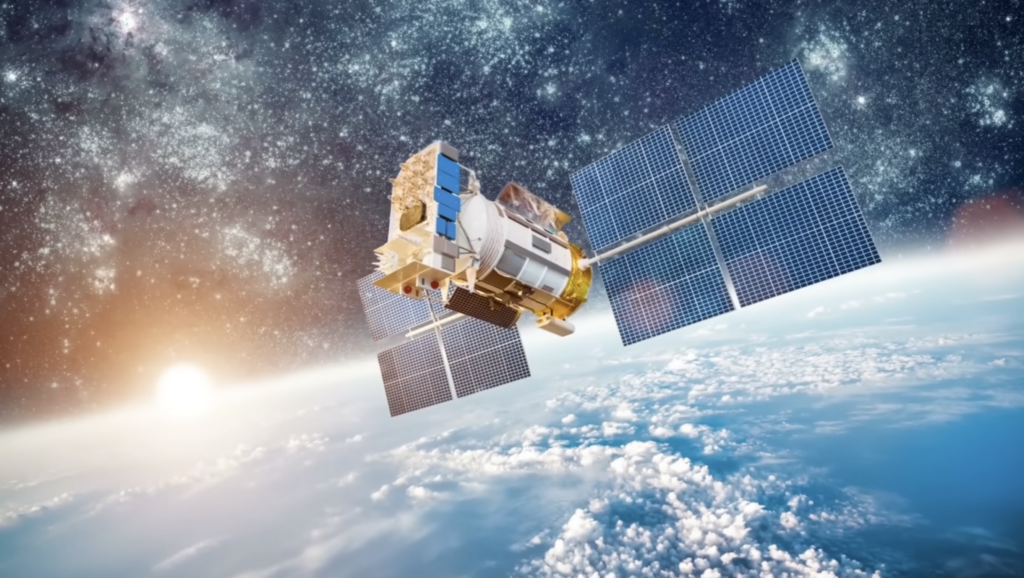
Geosynchronous satellites, which remain fixed relative to a point on Earth, are essential for modern communication, navigation, and broadcasting. Without them, global connectivity would be far less stable and far more limited than what we experience today.
Even everyday services like global navigation systems would likely not exist in their current form. GPS relies on a network of satellites working together to provide accurate positioning anywhere on the planet. Without advances driven by space technology, civilian access to such systems could have been delayed or reduced.
The absence of a Moon landing would also influence scientific discovery. Missions like the Hubble Space Telescope and other orbital observatories depend on decades of accumulated aerospace engineering knowledge. Without that foundation, our understanding of the universe would be far more limited.
Weather forecasting would also be less precise. Many modern forecasting systems rely on satellite data to track storms, monitor climate patterns, and predict environmental changes. Without space based observation, responses to natural disasters would be slower and less accurate.
Medical technology also benefited indirectly from space research. Systems designed to regulate temperature and monitor human health in extreme environments have been adapted for use on Earth. These innovations have contributed to advancements in emergency care and long term patient treatment.
Without the pressure of space competition, some of these developments may have taken much longer to appear. The urgency created by the Space Race accelerated innovation across multiple industries simultaneously.
Humanity’s long term ambitions might also be different. Modern plans for Mars exploration and asteroid missions are built on decades of experience gained from lunar missions. Without that foundation, deep space exploration could still remain largely theoretical.
It is even possible that public interest in space exploration would be lower overall. The Moon landing inspired generations of scientists, engineers, and explorers. Without that moment, fewer people might have pursued careers in science and technology.
Despite all these changes, space exploration would not have stopped entirely. Other nations and private organizations would likely continue exploring space, but the timeline and direction of progress would look very different.
The Moon landing did more than place humans on another world. It acted as a catalyst for technological growth, scientific discovery, and global cooperation. Without it, many of the systems that define modern life might have developed more slowly or taken entirely different paths.
In the end, the absence of that single event would not just change space history. It would reshape the foundation of modern civilization itself.