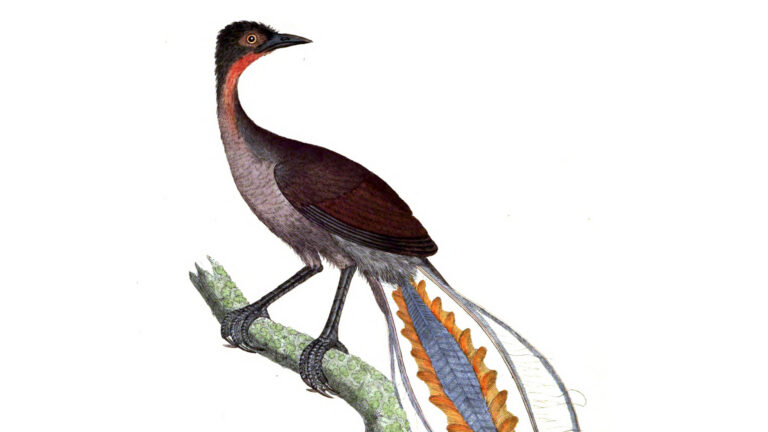
In the dense forests of Australia lives one of the most extraordinary sound imitators in the animal kingdom, a bird capable of copying almost any noise it hears with stunning accuracy. Scientists studying this creature have uncovered just how far its abilities go, revealing a level of vocal control that challenges what we understand about animal communication.
Meet the Australian Lyrebird.
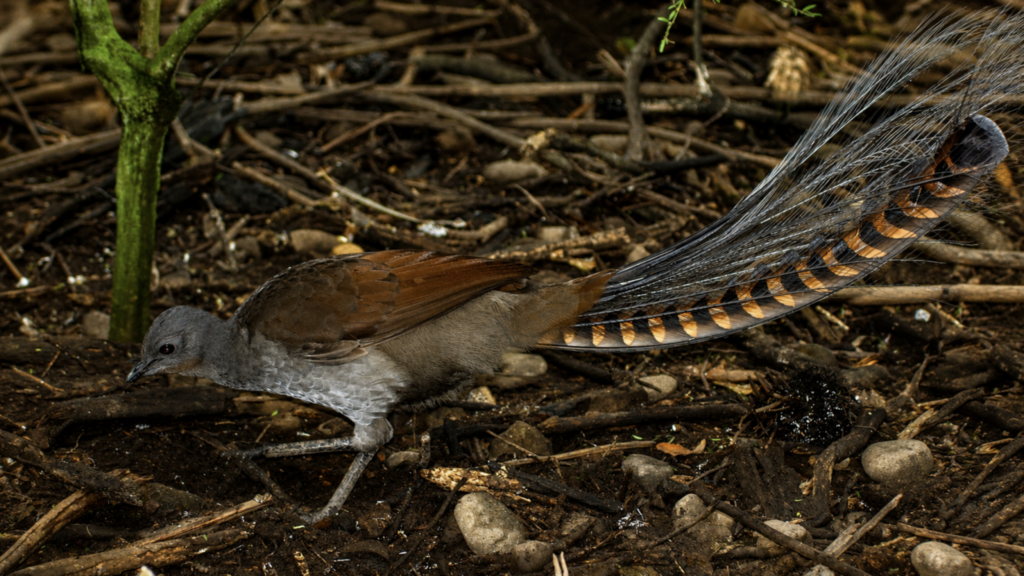
The lyrebird is famous for its incredible ability to mimic sounds from its environment. While it naturally imitates the calls of other birds, researchers have also recorded it copying chainsaws, camera shutters, alarms, power tools, and even human speech patterns.
This has led scientists to study one key question. Why would a bird evolve such a complex skill?
At first glance, it might seem like simple imitation. However, new studies suggest the behavior is deeply tied to survival and reproduction.
Male lyrebirds use their vocal abilities as part of an elaborate courtship display. During the breeding season, they perform for potential mates by combining songs, environmental sounds, and rhythmic movements into a complex performance. The more diverse and accurate the imitation, the more likely they are to attract a partner.
In evolutionary terms, this means that better mimics have a higher chance of passing on their genes.
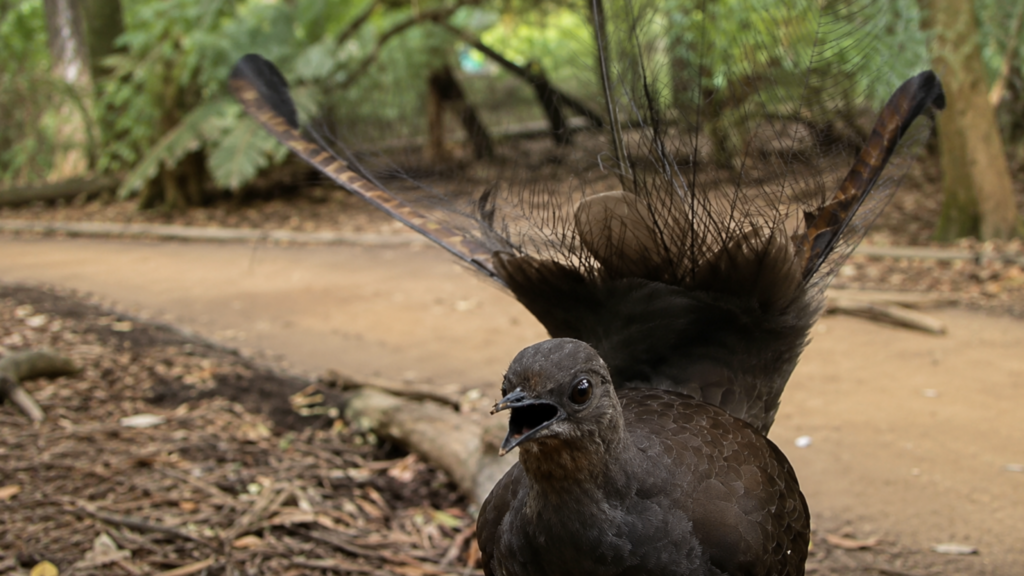
Scientists believe younger birds learn these sounds by listening to older males rather than copying the original sources directly. Over time, they build an expanding library of environmental noises that becomes part of their mating display.
Unlike humans, who might rely on a single talent, lyrebirds depend on variety. Their success is linked to how many different sounds they can reproduce convincingly.
Behind this ability is a specialized vocal organ called the syrinx. Located where the trachea splits into the lungs, it allows birds to produce complex and layered sounds. In lyrebirds, this structure is not necessarily more advanced than in other birds, but the brain control over it appears to be highly refined.
This combination of anatomy and learning creates one of the most sophisticated sound mimicry systems in nature.
But the lyrebird is not just a performer. It also plays an important ecological role in its environment.
As it scratches through the forest floor in search of insects, it helps turn over soil and break down leaf litter. This process reduces the buildup of dry material that could contribute to bushfires, making the species an unexpected contributor to forest health.
Researchers have noted that this constant movement through the undergrowth helps maintain balance in fragile ecosystems.
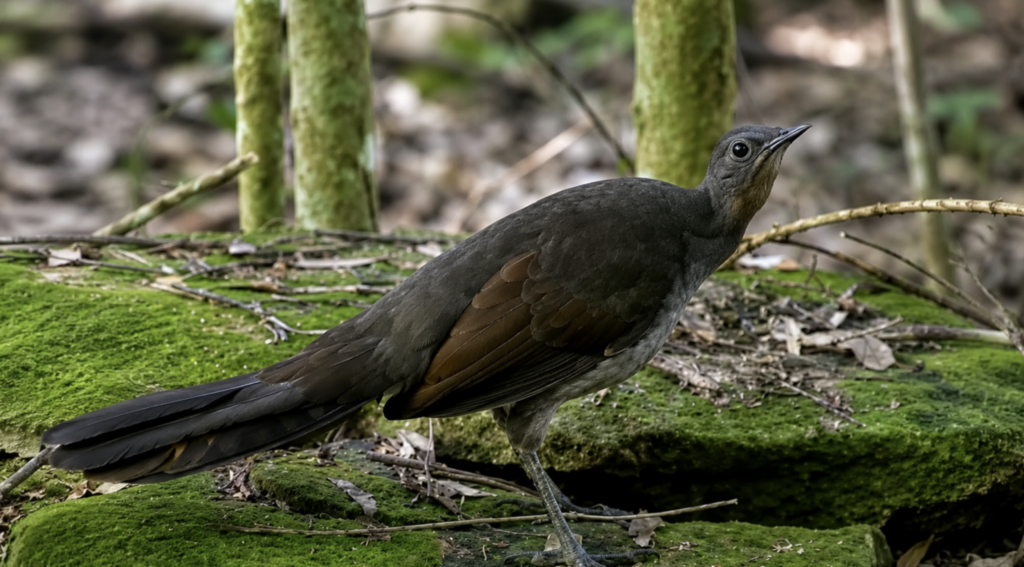
What makes the lyrebird especially fascinating is how its abilities reflect broader patterns in nature. Many species develop unusual traits not just for survival, but for communication, attraction, and competition.
In the case of the lyrebird, sound becomes both a weapon and a language. Every imitation is part of a performance designed to signal strength, intelligence, and experience.
In a way, its world is built entirely on listening and repeating what it hears, transforming the environment into an endless source of inspiration.
The Australian lyrebird reminds us that nature often achieves complexity in unexpected ways. What sounds like chaos in the forest is actually a highly structured system of communication, survival, and attraction.
And in that system, every sound has a purpose.