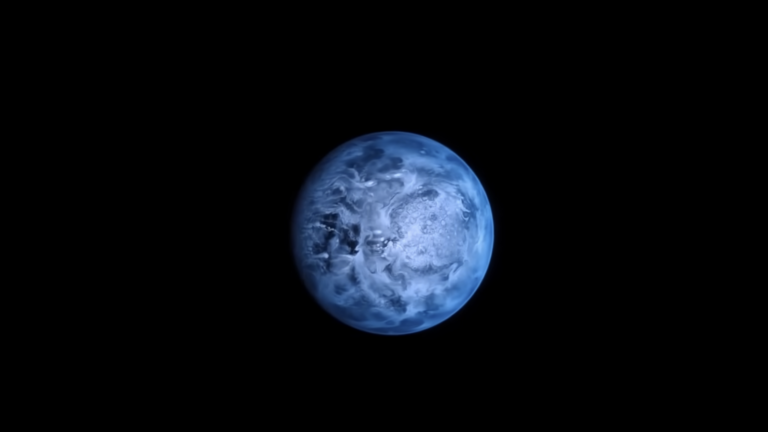
At first glance, it looks almost identical to Earth. Its brilliant deep blue color gives the impression of vast oceans, clear skies, and perhaps even life. But this beautiful world is one of the most hostile planets ever discovered.
Known as HD 189733b, it is a place where temperatures can melt metal, glass falls from the sky, and winds move several times faster than the speed of sound. If a human somehow reached this planet, survival would likely last only a few seconds.
HD 189733b is an exoplanet located about 64 light years away from Earth in the constellation Vulpecula.
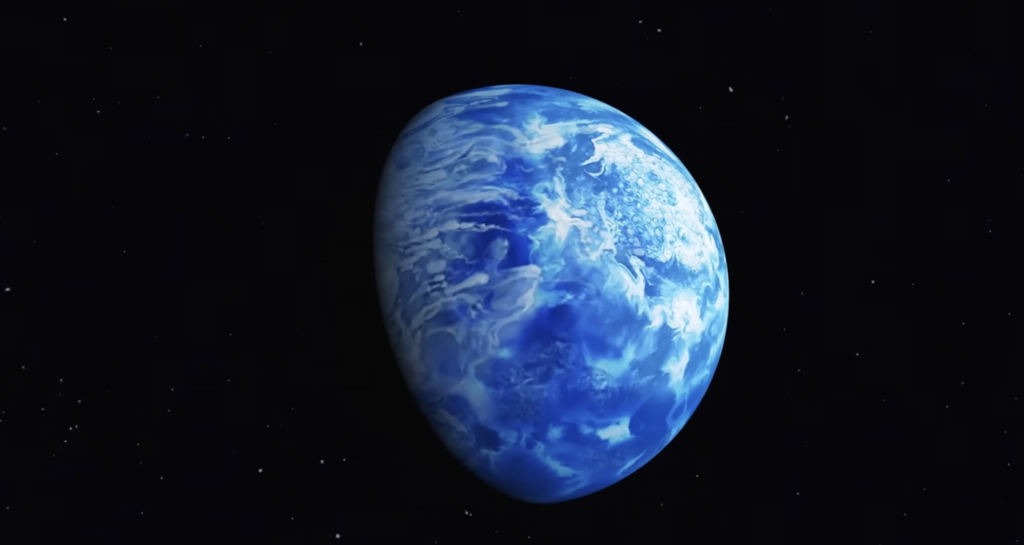
Although it shares Earth’s blue appearance, that is where the similarities end. This planet is actually a massive gas giant that is even larger than Jupiter. Because it orbits extremely close to its parent star, astronomers classify it as a hot Jupiter.
The planet circles its star once every 2.2 Earth days. It orbits about 13 times closer to its star than Mercury does to the Sun. Although its host star is slightly cooler than our Sun, the incredibly close orbit exposes HD 189733b to relentless heat that makes life impossible.
Scientists are still unsure how such a giant planet ended up so close to its star. One theory suggests it formed there during the early stages of the solar system. Another proposes that it formed much farther away before slowly migrating inward because of powerful gravitational interactions with other objects.
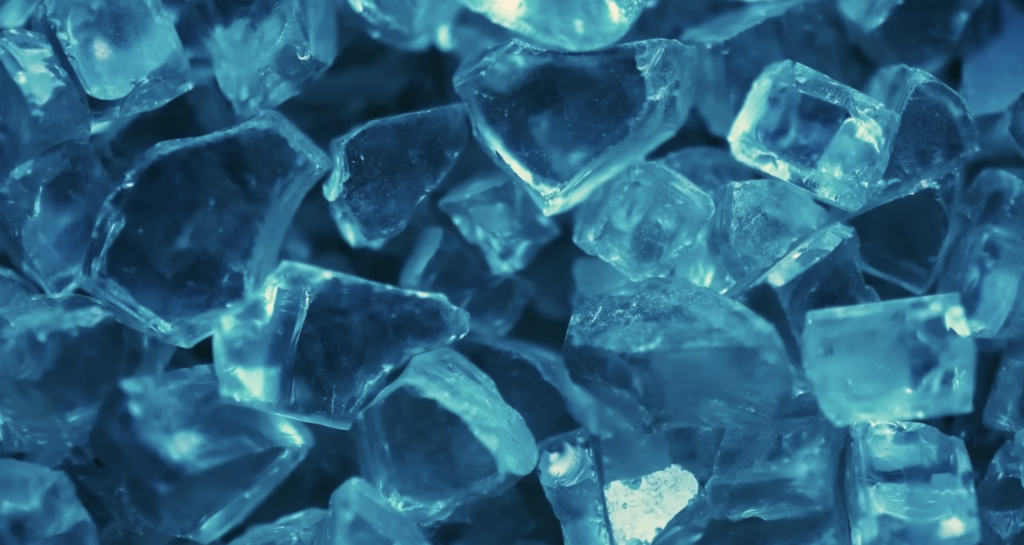
The planet’s blue color is perhaps its greatest deception. Unlike Earth, the color does not come from oceans. Instead, it comes from clouds filled with tiny particles of molten silicate, the same material used to make glass. These particles scatter blue light more effectively than red, giving the planet its striking appearance.
Those glass particles eventually fall back through the atmosphere as molten glass rain. Driven sideways by violent winds, these storms would blast anything in their path with razor sharp droplets traveling at incredible speeds.
The average daytime temperature reaches nearly 1,100 degrees Celsius, or about 2,000 degrees Fahrenheit. That makes HD 189733b almost twice as hot as Venus, the hottest planet in our Solar System.
One reason for these extreme conditions is that the planet is tidally locked. Like Earth’s Moon, one side always faces its star while the other remains in permanent darkness. The enormous temperature difference between the two hemispheres creates violent atmospheric circulation.
Scientists estimate that winds on HD 189733b reach speeds of around 7,000 kilometers per hour, or roughly 4,500 miles per hour. These winds travel nearly six times faster than the speed of sound and are about 30 times stronger than the most powerful hurricanes ever recorded on Earth. They are even significantly faster than the famous winds found on Neptune.
No spacecraft or human could survive such conditions. Long before the powerful winds could tear anything apart, the scorching heat and molten glass rain would already make survival impossible.
HD 189733b serves as a reminder that appearances can be incredibly misleading. While it may look like a second Earth from across the galaxy, it is actually one of the deadliest worlds astronomers have ever discovered.
Its beautiful blue glow hides a planet where glass rains from the sky, temperatures exceed 1,000 degrees Celsius, and hurricane force winds are replaced by supersonic storms. If there is an evil twin of Earth, HD 189733b may be the closest thing we have ever found.