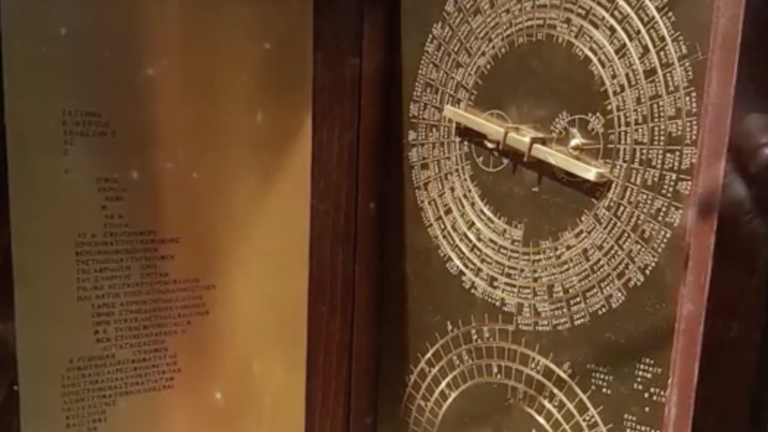
For more than a century, one of history’s greatest technological mysteries sat hidden beneath the sea.
When historians began studying a strange collection of corroded bronze gears recovered from an ancient shipwreck, they realized they had uncovered something extraordinary. It wasn’t a clock or a decorative object. It was a machine so advanced that many now consider it the world’s first computer, built more than 2,000 years ago.
The remarkable device is known as the Antikythera Mechanism, and it completely changed what historians believed ancient civilizations were capable of building.

The story began in 1900 when sponge divers discovered a Roman shipwreck off the coast of the Greek island of Antikythera. Among the sunken treasures were statues, coins, jewelry, pottery, and a small wooden box containing a lump of heavily corroded bronze.
At first, the strange object attracted little attention. It looked like nothing more than a collection of broken gears trapped inside a block of rust.
Everything changed decades later.
Around 50 years after its discovery, Yale University historian Derek J. de Solla Price decided to study the mysterious artifact in detail. As he carefully examined the fragments, he realized they belonged to an incredibly sophisticated mechanical device unlike anything ever found from the ancient world.
Price concluded that the machine was an ancient analog computer.
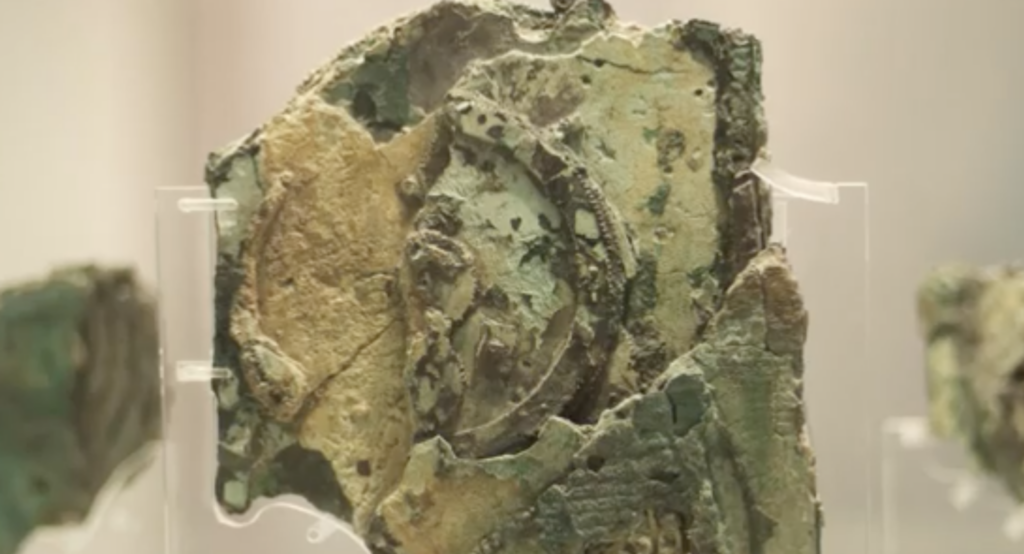
Historians estimate it was built around 87 BC, making it more than 2,000 years old. Even more astonishing, no machine with comparable mechanical complexity appeared again for roughly 1,500 years.
The discovery forced experts to rethink the technological abilities of the ancient Greeks.
Many scholars believe the famous Greek astronomer and mathematician Hipparchus, often called the founder of trigonometry, may have helped design the mechanism or inspired the knowledge behind it. Although no one knows for certain who built it, the engineering required was centuries ahead of its time.
Price spent nearly twenty years trying to understand how the remarkable machine worked.
As researchers continued studying the mechanism, they discovered it could perform an astonishing range of calculations. By turning a hand crank, users could predict the positions of the Sun, Moon, and possibly the known planets. It could calculate the phases of the Moon, track seasonal cycles, and even determine the dates of important events such as the ancient Olympic Games.
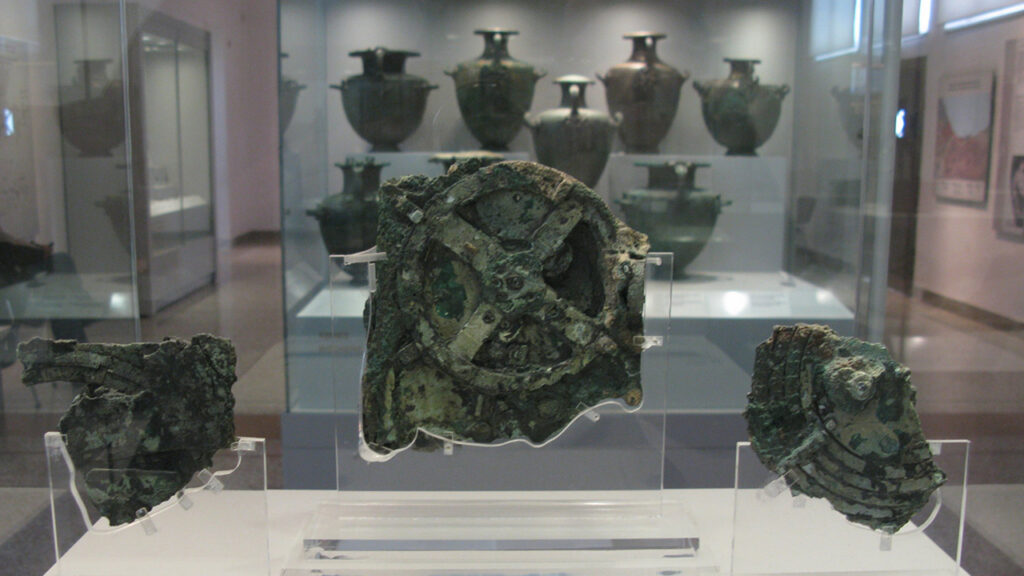
In total, historians believe the mechanism could calculate more than 42 different astronomical and calendar events.
Modern technology has revealed even more secrets.
Using powerful X ray and gamma ray imaging, researchers discovered that the device originally contained at least 37 finely crafted bronze gears working together with incredible precision. Hidden inscriptions covered many of the gears and dials, featuring Greek writing and zodiac symbols that acted as instructions for operating the machine.
These scans allowed historians to reconstruct much of the mechanism without taking it apart, revealing one of the most sophisticated pieces of engineering ever produced in the ancient world.
Although researchers now understand much of how the Antikythera Mechanism functioned, many questions remain unanswered.
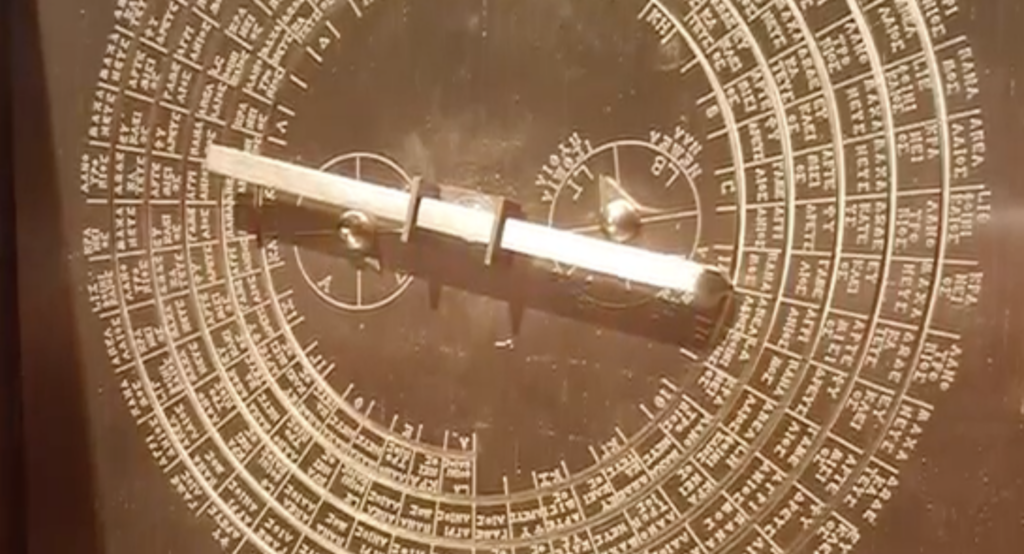
No one knows exactly who commissioned it, where it was originally used, or how many similar machines once existed. Some historians believe it may have been used by astronomers, while others suggest it served as an educational tool or even demonstrated the mathematical knowledge of elite scholars.
Whatever its original purpose, the discovery shattered the long held belief that ancient civilizations lacked advanced mechanical technology.
More than 2,000 years after it was built, the Antikythera Mechanism remains one of the greatest archaeological discoveries ever made. It proves that the ancient Greeks created a machine capable of performing complex calculations centuries before the modern age, earning its reputation as the world’s first known computer.