
For hundreds of years, humans searched for proof that unicorns were real. Stories described magical creatures with giant spiral horns, and many believed these mysterious objects held incredible powers. Kings and explorers collected what they thought were unicorn horns, but the truth behind one of history’s most famous legends was hiding beneath the icy waters of the Arctic.
The creature responsible for inspiring the unicorn myth was the narwhal, a strange marine animal often called the “unicorn of the sea.” With a long spiral tusk extending from its head, the narwhal looks like it came straight from a fantasy story. But this legendary horn is not a horn at all. It is actually a massive tooth.
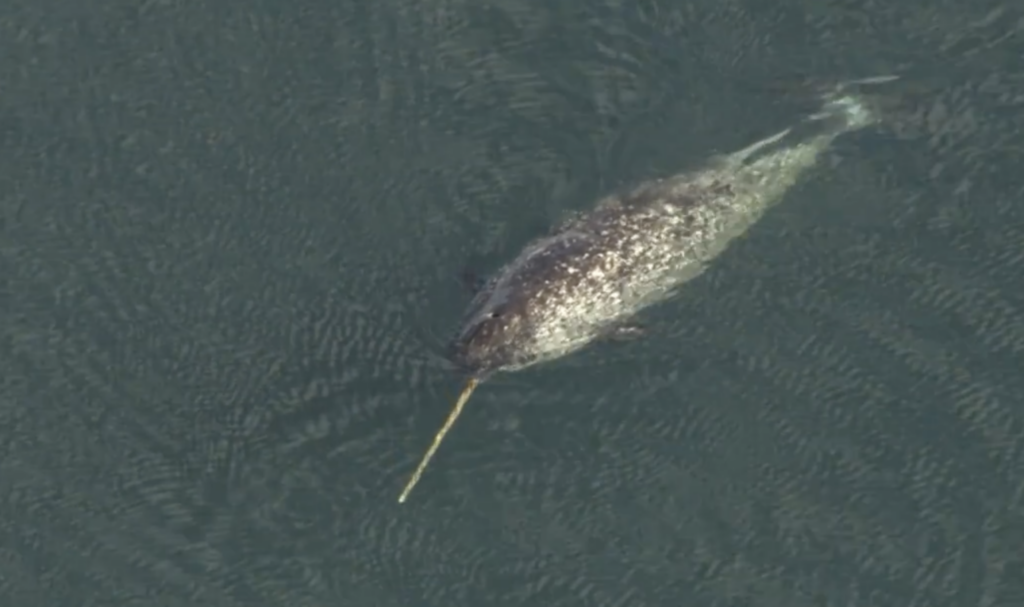
Centuries ago, Viking traders discovered narwhal tusks and brought them to Europe, where they were sold as genuine unicorn horns. At the time, many people believed unicorns existed and that their horns contained magical abilities. Because of this belief, narwhal tusks became incredibly valuable. Some were worth several times their weight in gold, and wealthy collectors competed to own them. Queen Elizabeth I was even said to have possessed a narwhal tusk valued as much as a castle.
But one question remained: why would an animal need such a giant tooth?
Unlike many creatures with large teeth, narwhals do not use their tusks to bite or chew food. These Arctic animals are suction feeders. They catch fish, squid, shrimp, and other prey by creating strong movements that pull food into their mouths, allowing them to swallow it whole.
So what is the purpose of their enormous spiral tooth?
Scientists have proposed several theories. The tusk could help narwhals sense their surroundings, break through ice, defend themselves, compete with other males, or attract mates. Since large tusks are found mostly in males, researchers believe the feature may be connected to reproduction and competition.

However, studying narwhals is extremely challenging. These animals live in some of the coldest and most isolated regions on Earth, including Arctic waters near Canada, Greenland, Norway, and Russia. Their remote habitat makes them difficult to track and observe.
Scientists have continued investigating the mystery, including researcher Dr. Martin Nweeia, who has spent years studying the unusual structure of narwhal tusks. His research suggests that the tusk may function as a powerful sensory tool.
Unlike ordinary teeth, narwhal tusks do not have a hard enamel coating. Instead, they contain millions of nerve endings that allow seawater to interact with the inside of the tooth. This unique design may help narwhals detect changes in their environment, including salt levels in the water that could warn them about dangerous freezing conditions.
Not all researchers agree with this explanation. Some scientists argue that because male and female narwhals often eat the same food in similar areas, a sensory function does not fully explain why males are the ones that usually develop enormous tusks.
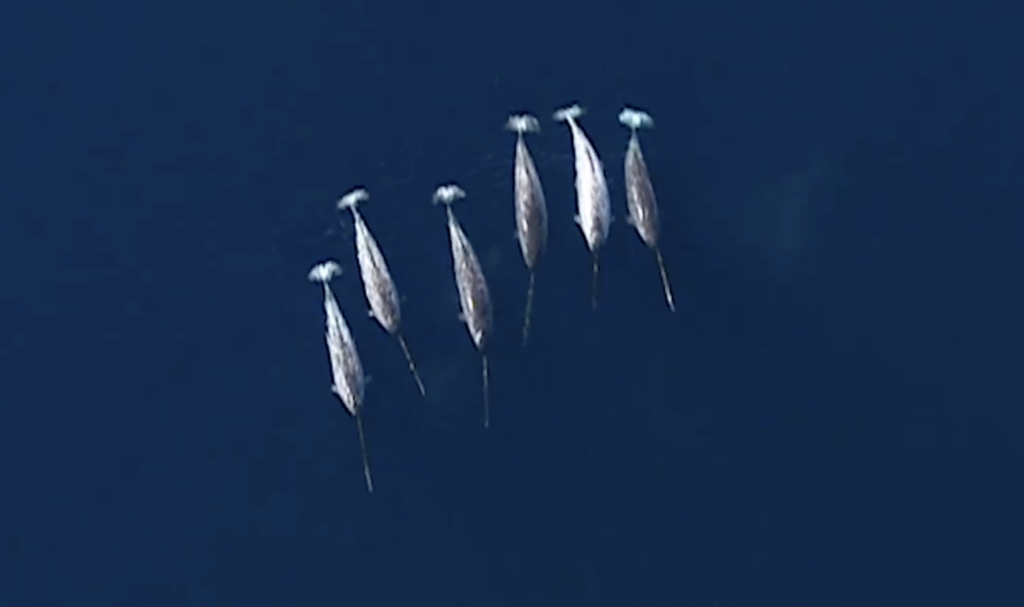
Another theory suggests the tusk is mainly used for attracting mates. Scientists have observed male narwhals crossing their tusks near the water’s surface, possibly showing strength and dominance to potential partners.
More recent discoveries have revealed another surprising possibility. Researchers have observed narwhals using their tusks to strike fish, stunning their prey before eating it. This suggests the famous tooth may have several different purposes.
After centuries of mystery, scientists are finally uncovering the truth behind the creature that inspired the unicorn legend. The narwhal may not be a mythical animal, but its incredible tusk proves that nature can create something just as extraordinary as any fantasy story.
The real unicorn was never hiding in ancient forests. It was swimming beneath the frozen Arctic seas all along.