For 33 years, the people living on Komodo Island had managed to coexist with one of the most dangerous predators on Earth without suffering a fatal attack. The giant reptiles regularly moved through the island, sometimes appearing near homes and villages, but serious encounters had remained relatively rare.
That long period of uneasy coexistence came to an end when a young boy went behind a bush to use the bathroom and suddenly found himself in the path of a Komodo dragon. According to a national park spokesperson, the animal pounced on him before he had any chance to react.
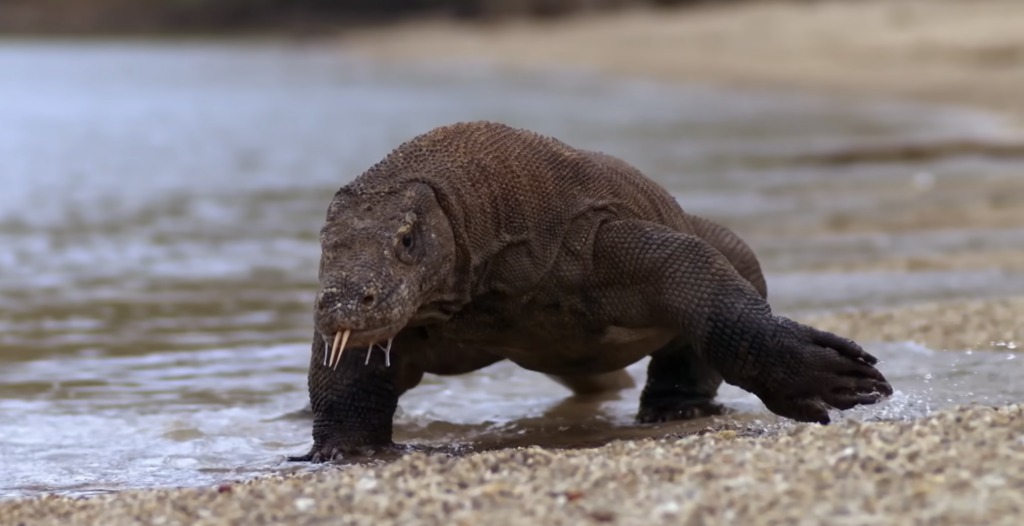
The attack happened quickly. The Komodo dragon clamped onto the boy around the waist and began violently thrashing him from side to side, using its powerful body and jaws to overpower him.
The boy’s uncle witnessed what was happening and immediately tried to save him. With no other way to fight off the enormous reptile, he began throwing rocks at the Komodo dragon, hoping the sudden attacks would force it to release his nephew.
Eventually, the tactic worked and the dragon let go. But by then, the boy had suffered catastrophic injuries, and his uncle could do little more than watch as the situation became increasingly desperate.
The boy died from severe blood loss roughly 30 minutes after the attack. His uncle later claimed that the dragon had bitten the boy in half, although that description was never confirmed and may have reflected the shock of witnessing such a horrifying event.
Komodo dragons are capable of tearing apart large prey, but they cannot swallow an adult human whole. Their feeding method involves ripping pieces of flesh from a carcass, allowing them to consume surprisingly large amounts of food despite being unable to swallow an entire body at once.
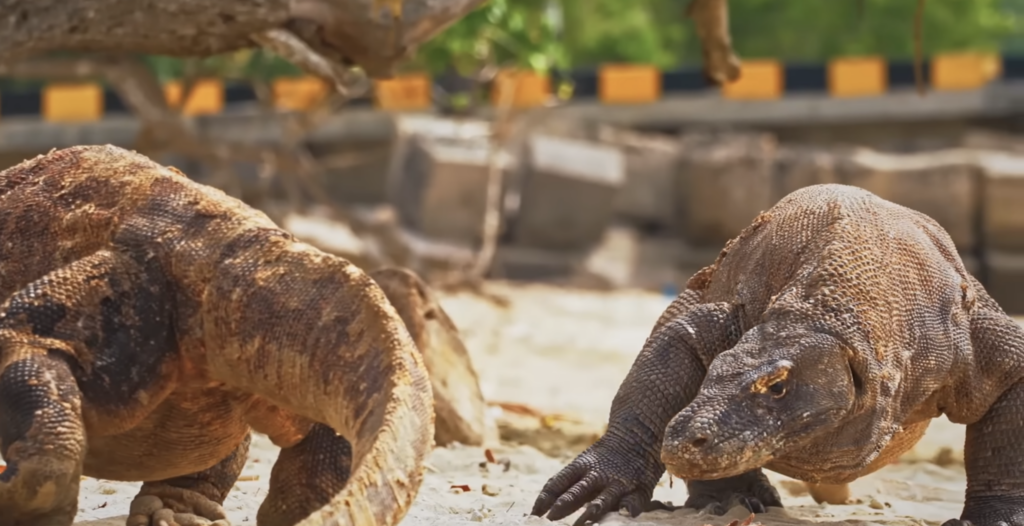
The death was particularly shocking on Komodo Island because around 1,200 people lived in close proximity to the dragons. For more than three decades, residents had experienced encounters with the animals without anyone being killed, creating a dangerous sense that the reptiles could be tolerated as part of everyday life.
Komodo dragons were already known to wander into residential areas and move surprisingly close to people. Previous encounters had generally resulted in minor injuries, so the possibility of a fatal attack may not have seemed like an immediate threat to residents who had grown accustomed to seeing the animals.
The circumstances also left people wondering why the dragon had attacked. Some rangers suspected that the dry season could have played a role because food becomes harder to find during periods when water sources and prey become less available.
A hungry predator may become more willing to investigate unusual opportunities, especially when something vulnerable suddenly appears nearby. However, hunger was only considered a possible explanation, and the exact reason for the dragon’s behavior was never certain.
For the residents of Komodo Island, the incident shattered more than three decades of relative safety. The dragons had always been powerful predators, but after 33 years without a fatality, it was easy to forget how quickly an ordinary encounter could turn deadly.
The boy’s death became a grim reminder that living alongside Komodo dragons carries a permanent risk. Even when generations of people have managed to coexist with them peacefully, a single unexpected encounter can be enough to end a life.