Your body will tell you to run. Every instinct built into you over millions of years will scream the same instruction the moment something that large steps out of the trees.
Ignore it. Running is the single worst decision available to you.
An animal standing 3 meters tall and weighing around 270 kilograms would cover ground far faster than any human, and turning your back simply gives it a reason to chase.
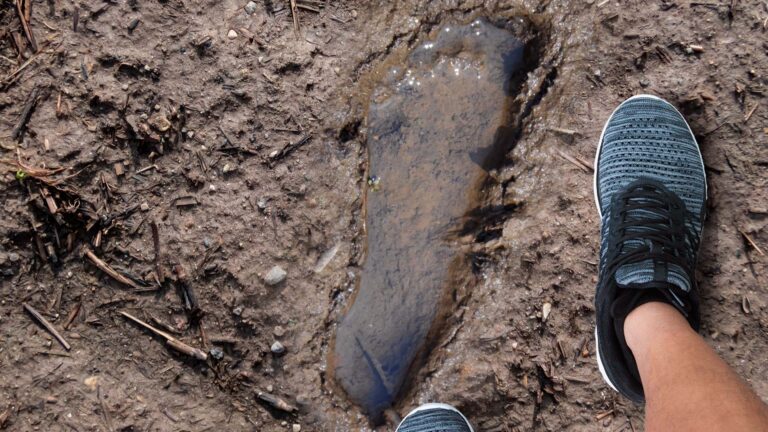
Picture hiking through dense forest when you spot an enormous footprint pressed into the mud. Moments later a strange, powerful odor fills the air.
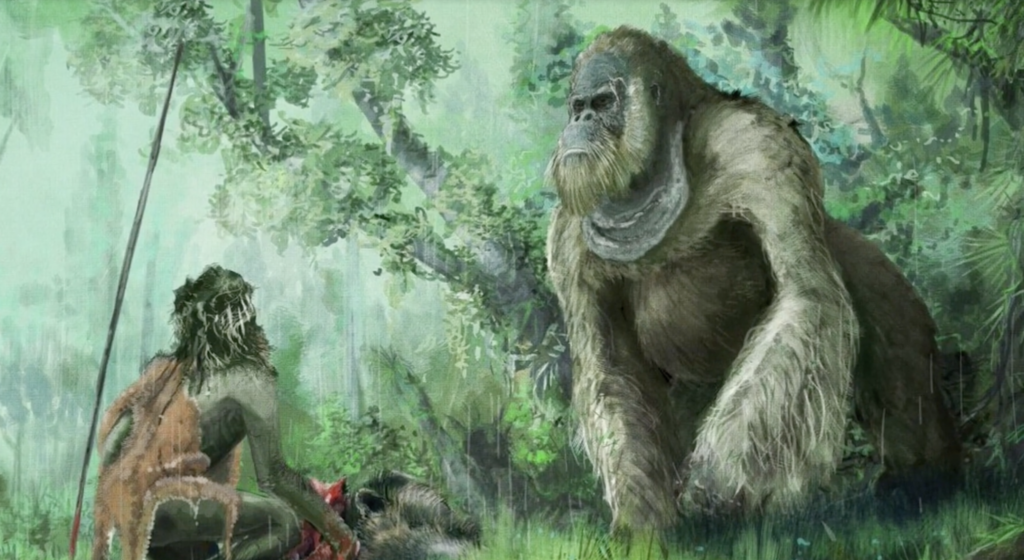
Stories about Bigfoot have fascinated people for decades, describing a giant hairy ape like creature of roughly those dimensions. Some researchers have speculated it could be related to Gigantopithecus, a massive ape that lived in Southeast Asia before disappearing around 100,000 years ago.
No scientific evidence has ever confirmed it exists, yet sightings have been reported in nearly every U.S. state, particularly in heavily forested regions.
So if it does exist, how would you survive meeting one?
Your nose gets the first warning. Witnesses consistently describe an incredibly strong and unpleasant body odor, so a sudden pungent smell in a remote forest is your cue to stay alert and quietly leave the area.
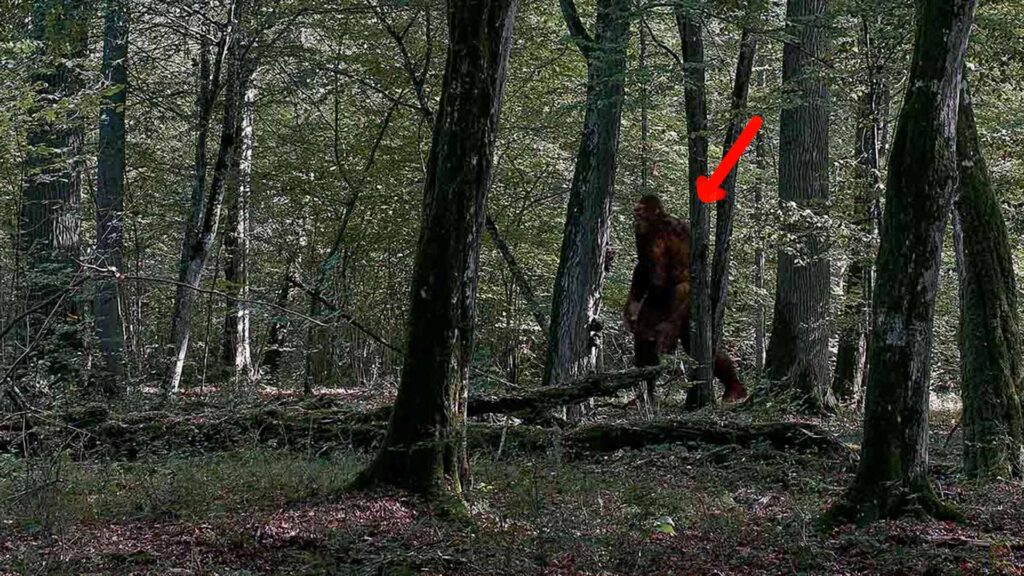
Quietly being the important word, because if it has already noticed you, the running rule applies.
The legend itself started in 1958, when a road construction crew in Northern California found enormous humanlike footprints measuring 40 centimeters long, and the local newspaper nicknamed the creature Bigfoot.
Decades later those prints were exposed as a prank created by a man named Ray Wallace. By then the story had outgrown him completely.
In 1967, filmmakers Roger Patterson and Bob Gimlin captured a few seconds of footage near Bluff Creek, California showing a large hairy figure walking upright, and that clip remains the most debated piece of supposed evidence ever recorded.
Now back to the encounter, because staying calm is everything.
Experts who study primates note that large animals typically turn aggressive only when they feel threatened. Witnesses claim Bigfoot may grunt, scream, or produce loud hooting sounds as a warning display, and if that happens you avoid sudden movements and back away slowly, giving it as much space as possible.
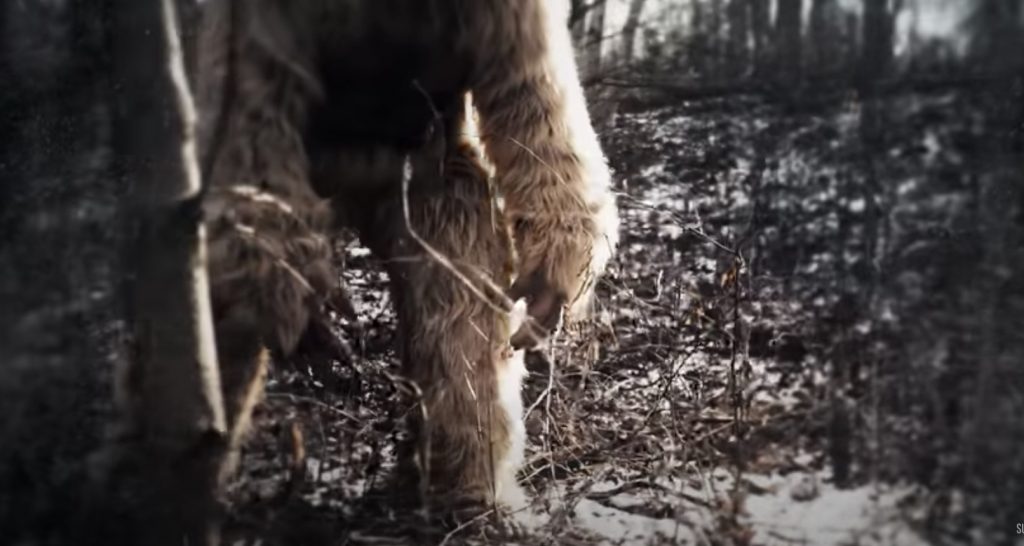
Food may help too. If the Gigantopithecus connection holds, its diet would consist mainly of fruits, leaves, and roots, so placing whatever you are carrying on the ground and retreating slowly could distract it long enough to defuse the situation.
As a final option, act submissive. Sit down, stay calm, and avoid direct eye contact, since many animals read staring as a challenge. Appearing harmless may convince it you are no threat and encourage it to lose interest.
Whether any of this would ever be needed is another question entirely.
One theory suggests that if Gigantopithecus crossed the ancient land bridge between Asia and North America during the last Ice Age, it could have evolved into something hidden in the continent’s forests. Native American traditions also describe mysterious beings living in remote wilderness and watching over the land.
And history does leave the door slightly open. The giant panda, the mountain gorilla, and the Komodo dragon were all dismissed as legends by outsiders once.
Bigfoot may be another undiscovered animal, or simply the greatest myth we have. Either way, if you ever smell something wrong in the woods, remember the one rule that matters.
Do not run.