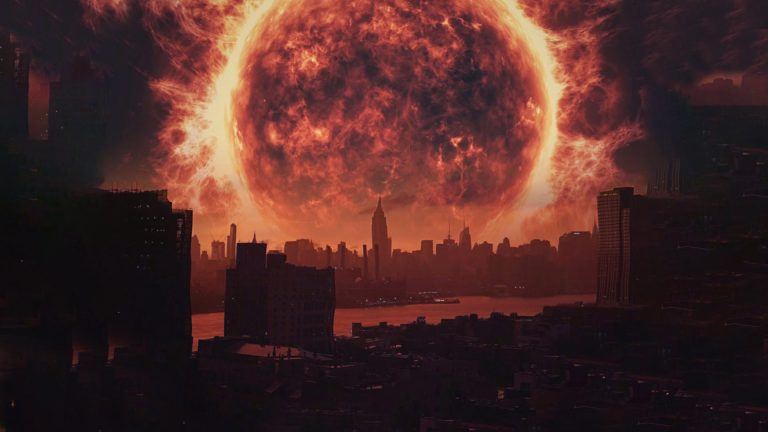
Every living thing on this planet owes its existence to a single star. Heat, light, and the raw energy that keeps ecosystems running all trace back to the Sun, and without it Earth would turn dark and still almost instantly. That dependence raises an unsettling question: what would truly happen if that star suddenly tore itself apart?
To answer that, it helps to know what the Sun actually is. It is an enormous ball of superheated plasma sitting at the middle of our Solar System, already about 10 billion years into its existence. Researchers calculate it has close to 5 billion years remaining before it begins its natural transformation into something else entirely.
That transformation, when it eventually comes, will unfold slowly. A sudden explosion is a completely different scenario, one with consequences that arrive far faster than anyone could prepare for.
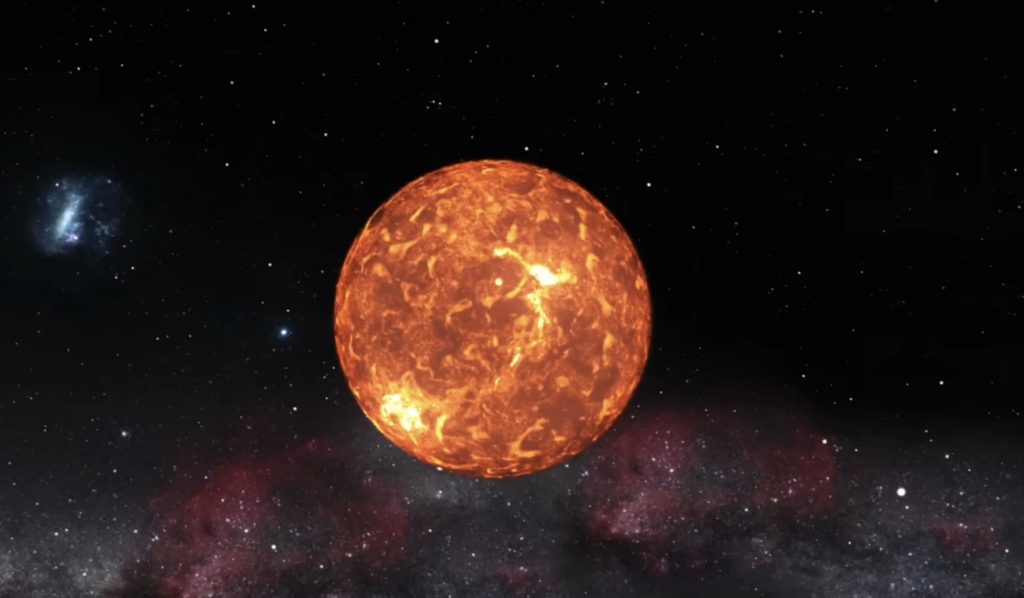
Under ordinary circumstances, the Sun’s ending looks nothing like a blast. It will swell into a red giant large enough to consume the planets nearest to it, then shrink down into a white dwarf that spends billions of years gradually losing heat. None of that gives us any sense of what an instant detonation would actually feel like.
Picture instead that the explosion happens tomorrow. Because roughly 150 million kilometers separate Earth from the Sun, light needs about 8 minutes to make that journey, and so would any signal of the disaster itself. For those 8 minutes, life on Earth would continue completely unaware that anything had gone wrong.
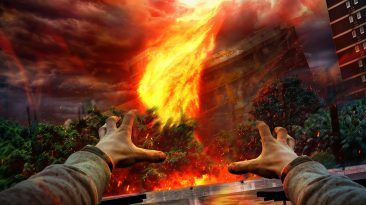
Once that brief window closes, everything changes almost at once. The half of Earth turned toward the Sun would be hit directly by an overwhelming pulse of radiation and heat, and much of that surface would begin boiling away and breaking apart under the sheer force of it.
The far side of the planet would fare no better. A colossal thermal shockwave would tear through the atmosphere, collapsing it on a global scale as temperatures rocketed past anything biology could endure. Whatever balance kept Earth livable would be gone in what feels like an instant.
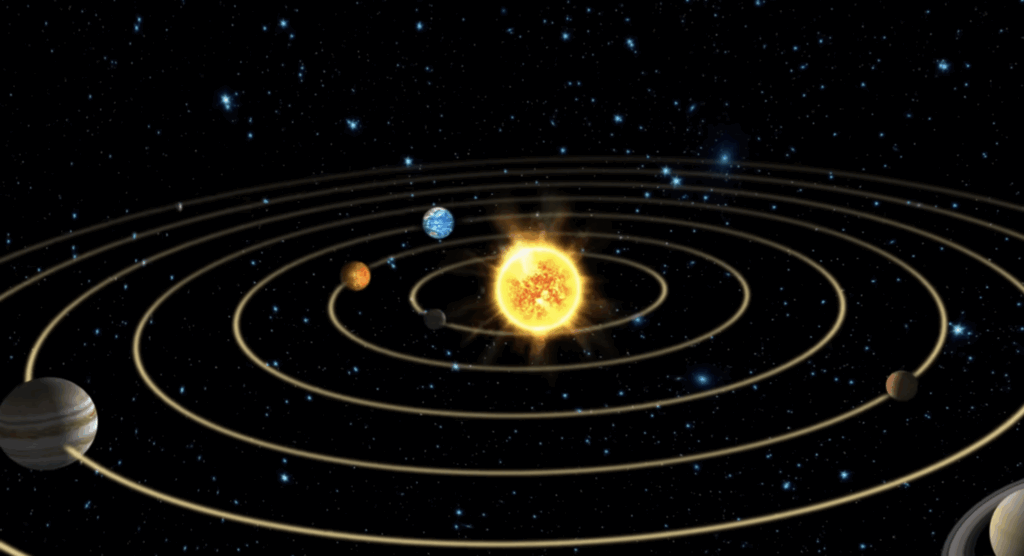
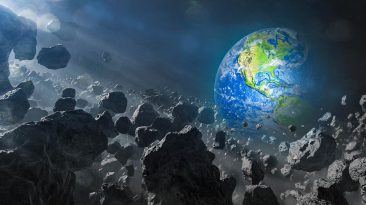
There is a second, quieter catastrophe happening alongside the heat. Earth’s orbit depends entirely on the Sun’s gravity, and once that anchor disappears, the planet would break free and drift through space as a lone world with no star to call its own.
It is possible, at least in theory, that Earth could eventually fall into orbit around a different star somewhere in the galaxy. That process, however, would stretch across millions of years, and by the time it happened, nothing resembling human civilization would likely still exist to notice.
Suppose, though, that people somehow had warning before such an explosion took place. In that scenario, the odds of survival would come down almost entirely to how well humanity had prepared beforehand.
One realistic path forward would be retreating underground. Only a short distance beneath the surface, geothermal energy keeps temperatures fairly steady regardless of what is happening above, which means buried shelters could offer a genuine buffer against the destruction unfolding overhead.
Given sufficient technology and resources, communities living in these underground refuges might endure for centuries, possibly even close to a thousand years, after the Sun’s collapse. The world above them, meanwhile, would be changing fast.
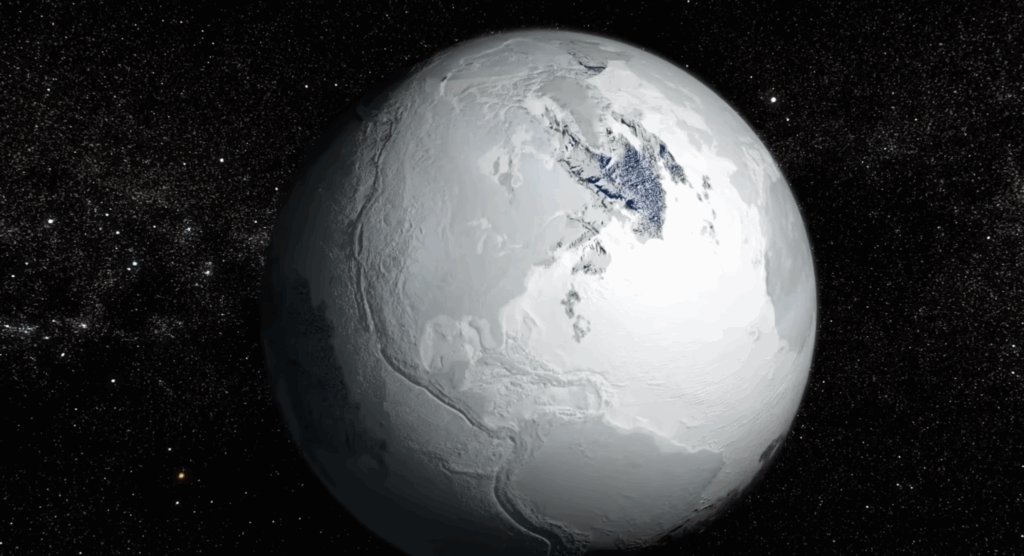
Within a matter of days, global temperatures would fall well below freezing. By the end of the first year, oceans would start turning to ice from the surface downward, and over a longer stretch of time, the atmosphere itself could freeze solid, stripping away the shield that normally blocks cosmic radiation.
Even under the most optimistic conditions imaginable, there is no version of long term survival on Earth without a star to keep supplying energy.
Taken together, this means that if the Sun really did explode, humanity’s window for survival would be remarkably brief on any cosmic scale. Life on the surface would vanish almost at once, and even the best sheltered underground societies would face a slow, grinding decline unless they eventually found somewhere else to live entirely.
Fortunately, the Sun’s real death will look nothing like this. It will play out gradually across billions of years, leaving whatever civilization exists by then plenty of time to either adapt in place or move on to another star system altogether.