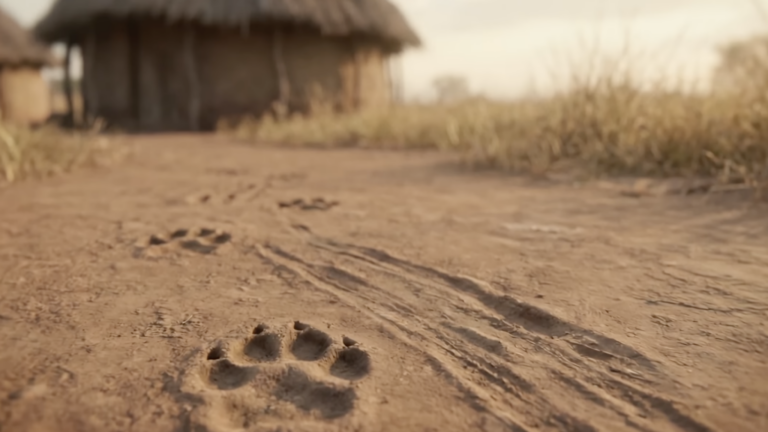
To many people who live in rural Zimbabwe, the nights are quite unlike the busy world outside their own communities. Once it is dark over the countryside, the sounds of animals become much easier to hear, and the boundary between human habitation and the surrounding wild areas can seem rather faint.
For many generations inhabitants of these regions have got used to living together with Africa’s wildlife. Although most nights are uneventful, when food and water become harder to find animals are likely to travel longer distances in order to find something to eat.
This can cause predators to get dangerously near houses and farm animals. There are also cases in which an animal that usually avoids people becomes bold enough to go into a neighbourhood at night, leading to a situation which residents never anticipate.
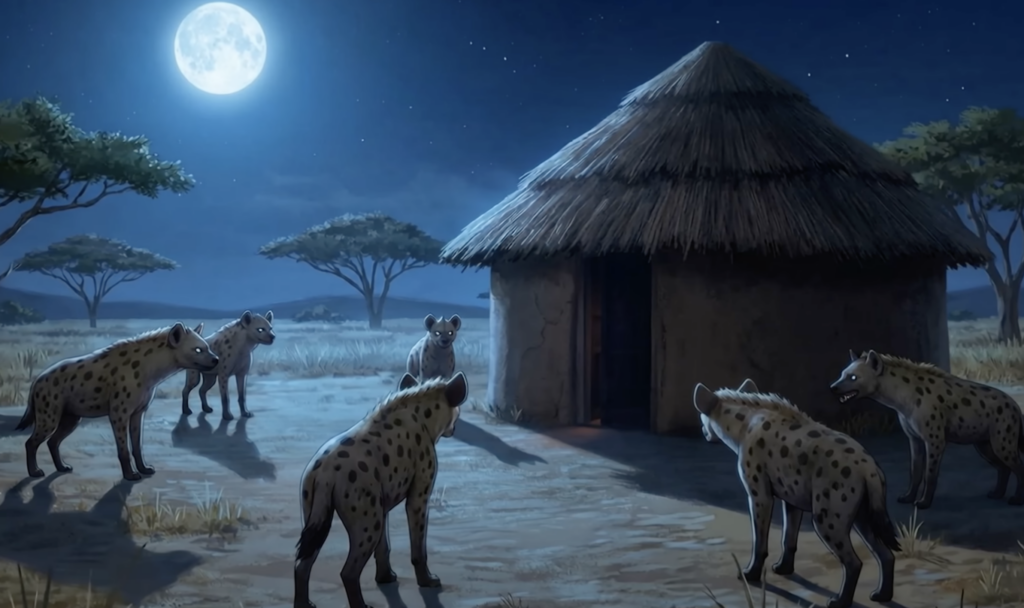
In November 2020 Tendai Maseka, who was 87 years old, was sleeping in his mud hut in Zimbabwe and, before the night had ended, he was the victim of a rare and terrifying encounter with a group of predators.
Some six spotted hyenas entered the area and attacked Maseka as he was asleep, after which they pulled him away from his hut and left a trail over the ground.
The distance was amazing. It was discovered that there were drag marks and hyena footprints indicating the pack had dragged Maseka about 1,000 feet, or roughly 305 metres, before feeding on him.
When it had been noticed that the attack was taking place, about half of the man’s body had already been eaten.
Concerns were widespread in the nearby community since it was not thought to be a one-off event. It was believed by experts that the same group of hyenas had already been attacking livestock and cattle in that area.
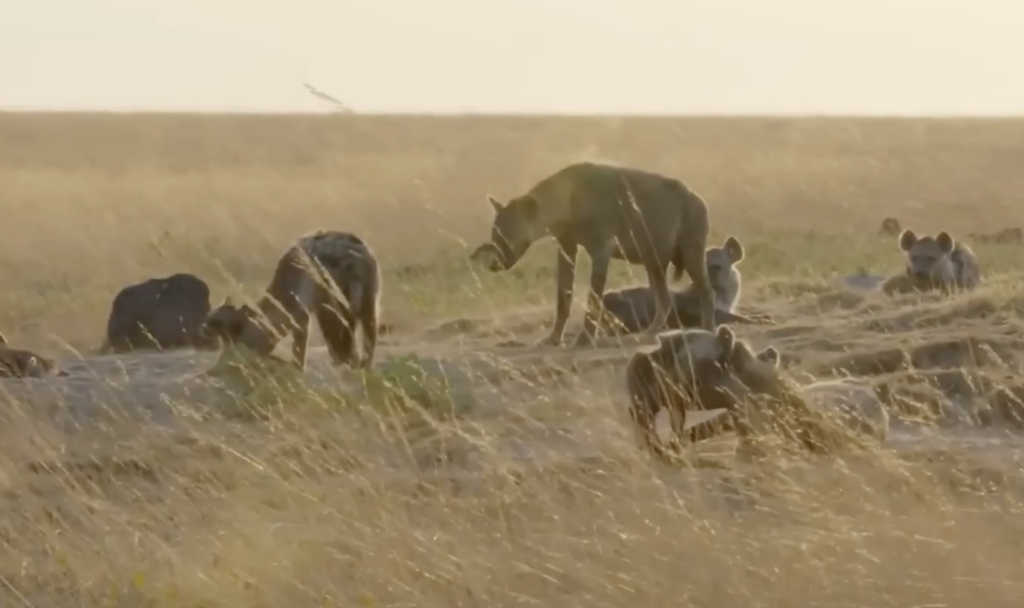
People were advised to take special care after dark as the authorities carried out their efforts to find and catch the predators. Since the wolves had grown used to coming near human settlements, they presented a serious threat, particularly to those who lived in basic houses near the wild areas.
There was also another possibility as to why the hyenas had moved so near to people.
Tinashe Farawo, who is a spokesman for the Zimbabwe Parks and Wildlife Management Authority, said to CNN that such incidents tend to rise during the country’s drier periods since, as food and water become scarce, wildlife are forced to travel much longer distances and sometimes end up moving directly into human settlements.
Spotted hyenas are opportunistic predators and scavengers and will make use of any food source that is available. Although humans are not generally their favourite meal, in some cases desperation, the opportunity to do so and their familiarity with human settlements can cause the risk to increase.
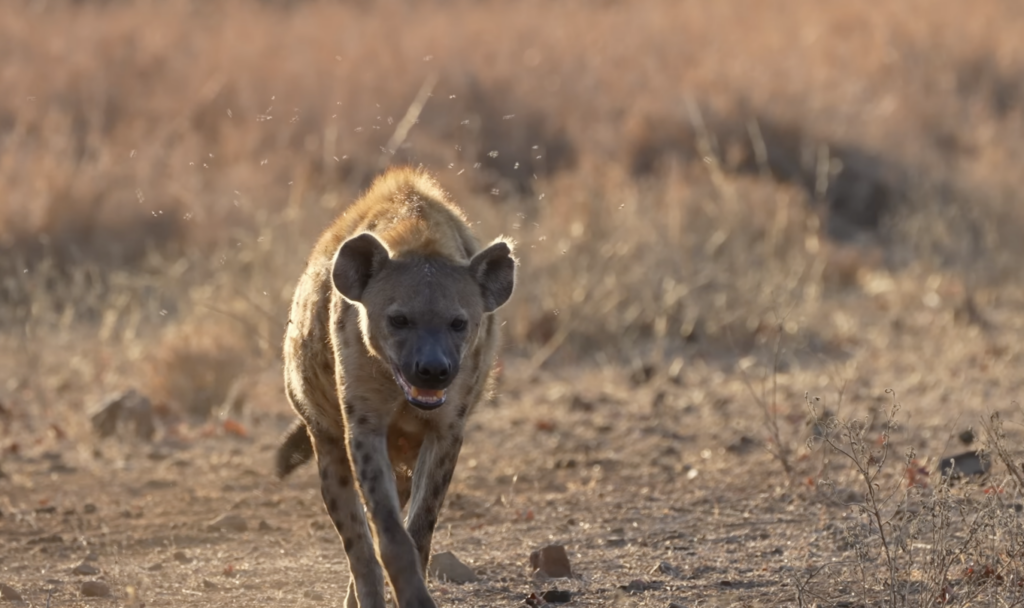
When people are travelling in an area where hyenas are known to be, experts usually advise that one should, if at all possible, avoid travelling alone. If you travel in a group, you will seem bigger and less vulnerable than if you were alone.
Making yourself look larger and making loud sounds might help to keep a single hyena away. It is advisable to stay aware of the animal since turning your back and running could make the situation worse.
A pack poses a different kind of problem. Although the fundamental idea of looking big and making a lot of noise still applies, it is also important to get to a higher position and make sure the animals don’t surround you.
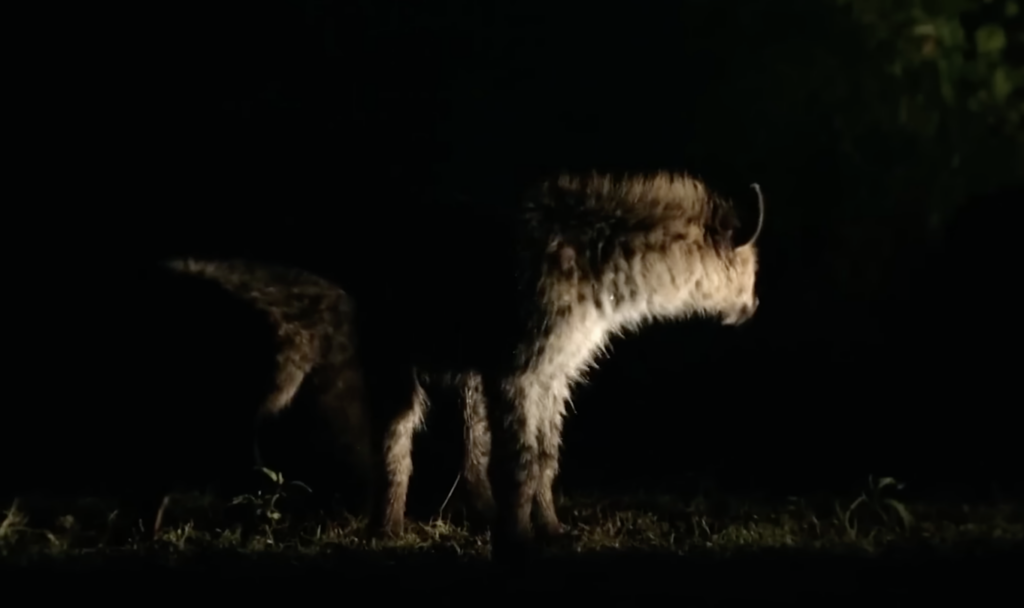
Hyenas are not only social but also very intelligent animals, and a group of them is far more dangerous than one alone. The reason for their strength lies not just in their strong jaws but in their ability to cooperate.
The fact that Maseka died is a sobering indication of what occurs when changing circumstances cause predators to move closer to human settlements. In areas where people and wildlife share their environment, a night which is normally safe can turn dangerous if hungry predators start searching outside their normal range.