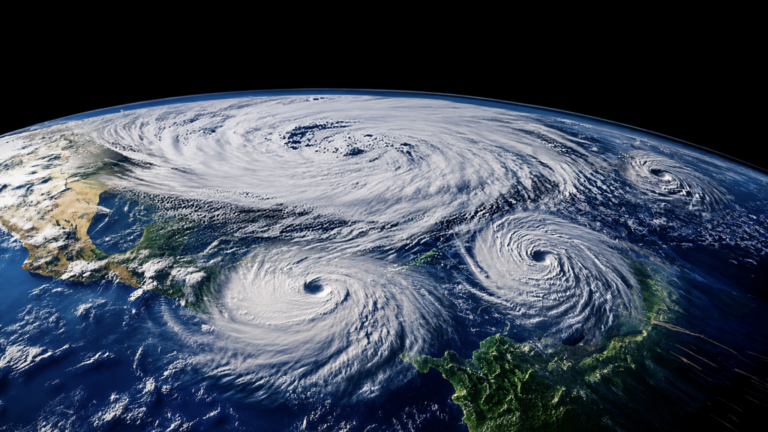
Hurricanes are among the most powerful storms on Earth, capable of producing enormous winds, flooding, and storm surges. But how do some of the strongest hurricanes in U.S. history compare?
We’re looking at five of the most powerful and destructive storms ever to hit the United States, from their wind speeds and paths to the devastation they left behind.
The strongest hurricanes are classified using the Saffir-Simpson Hurricane Wind Scale, which ranks storms from Category 1 to Category 5 based on sustained wind speeds.
Labor Day Hurricane of 1935
The Florida Keys’ Labor Day Hurricane of 1935 is remembered as one of the most intense storms in U.S. history. This Category 5 hurricane struck with winds reaching 185 mph (295 km/h).
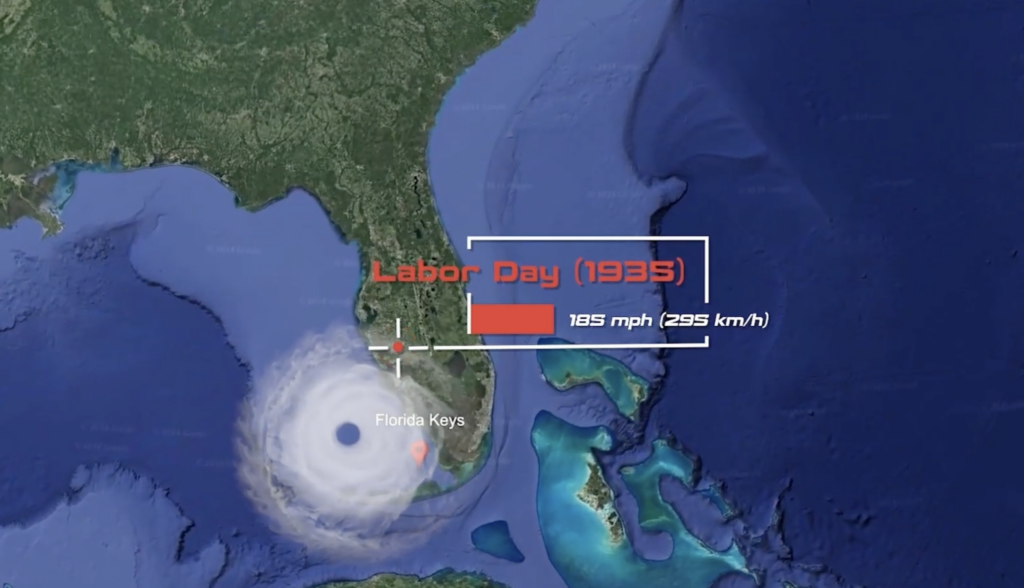
The storm originated in the Bahamas before moving west and reaching its maximum strength just before making landfall in the Florida Keys. Its powerful winds destroyed entire communities and killed 408 people.
Many of the victims were World War I veterans working on construction of the Overseas Highway. The hurricane also caused an estimated $6 million in property damage, equivalent to approximately $135 million today.
Hurricane Katrina
Hurricane Katrina struck in August 2005 and reached Category 5 strength, with winds exceeding 175 mph (280 km/h). It caused 1,836 deaths and an unprecedented $125 billion in damage.
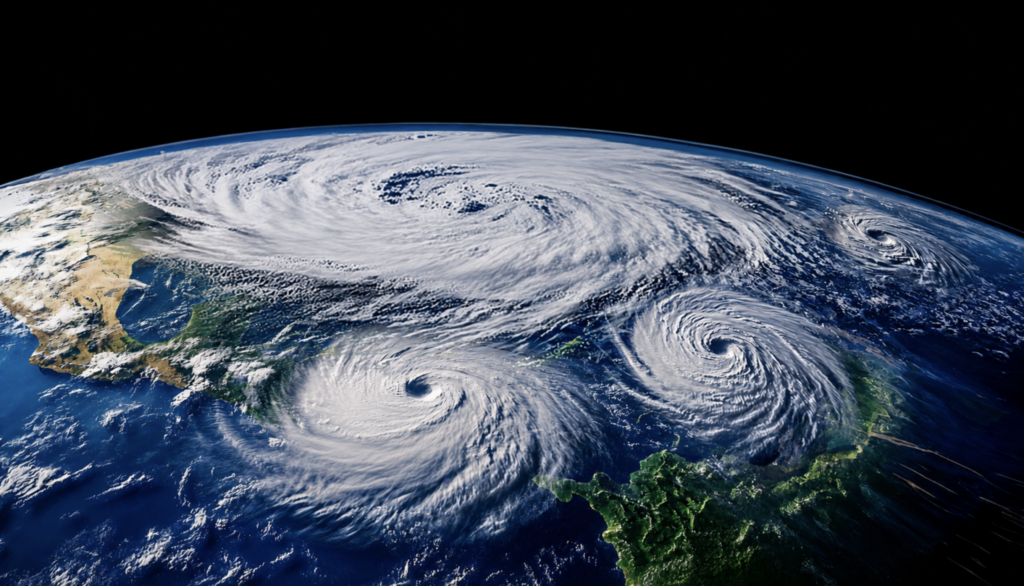
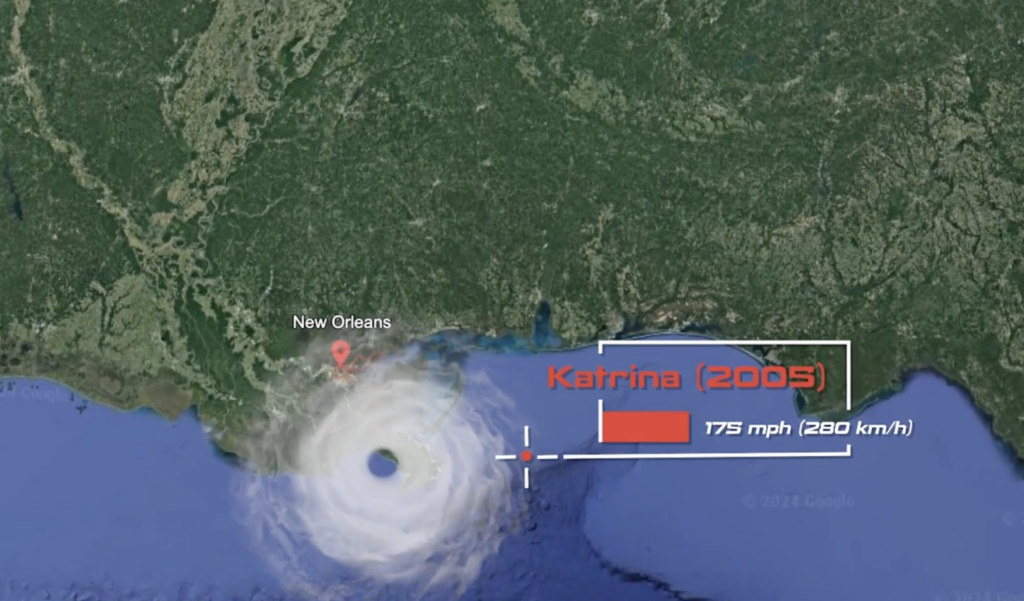
After making landfall in South Florida, Katrina moved into the Gulf of Mexico, where it intensified dramatically. It eventually struck the Gulf Coast near Buras, Louisiana.
New Orleans suffered some of the worst destruction. The city’s levee system failed in multiple locations, allowing floodwaters to cover approximately 80% of the city.
Some areas were submerged under as much as 15 ft (4.5 m) of water. Entire communities were uprooted, and reconstruction took years.
San Felipe-Okeechobee Hurricane
The San Felipe-Okeechobee Hurricane of 1928 was another Category 5 monster, with winds reaching 160 mph (260 km/h).
It killed at least 2,500 people in the United States and caused $75 million in property damage. After crossing the Atlantic and striking the Caribbean, the storm continued toward Florida.
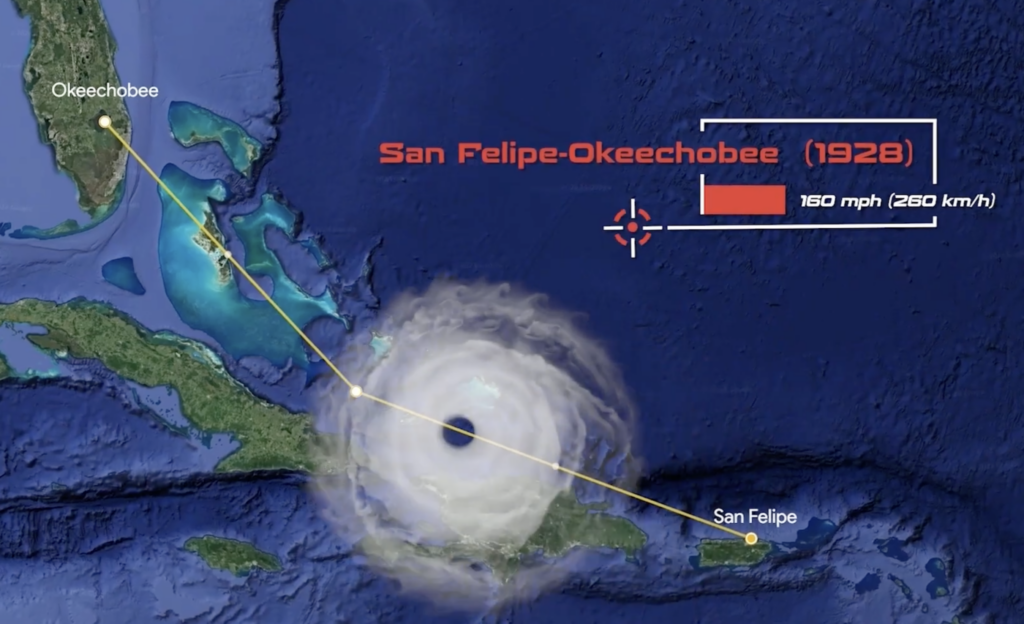
The area around Lake Okeechobee suffered the worst consequences. Storm surges reached up to 9 ft (2.7 m), sweeping away homes, crops, and livestock.
Floodwaters rose rapidly around the lake, catching many residents off guard. The storm continued inland through North Carolina before eventually reaching the Great Lakes region.
Hurricane Maria
Hurricane Maria became a Category 5 storm in September 2017, with winds reaching 175 mph (282 km/h). It resulted in 3,059 deaths and caused an estimated $90 billion in damage.
Maria first struck Dominica, where powerful winds and heavy rain destroyed buildings, uprooted trees, and caused widespread flooding.
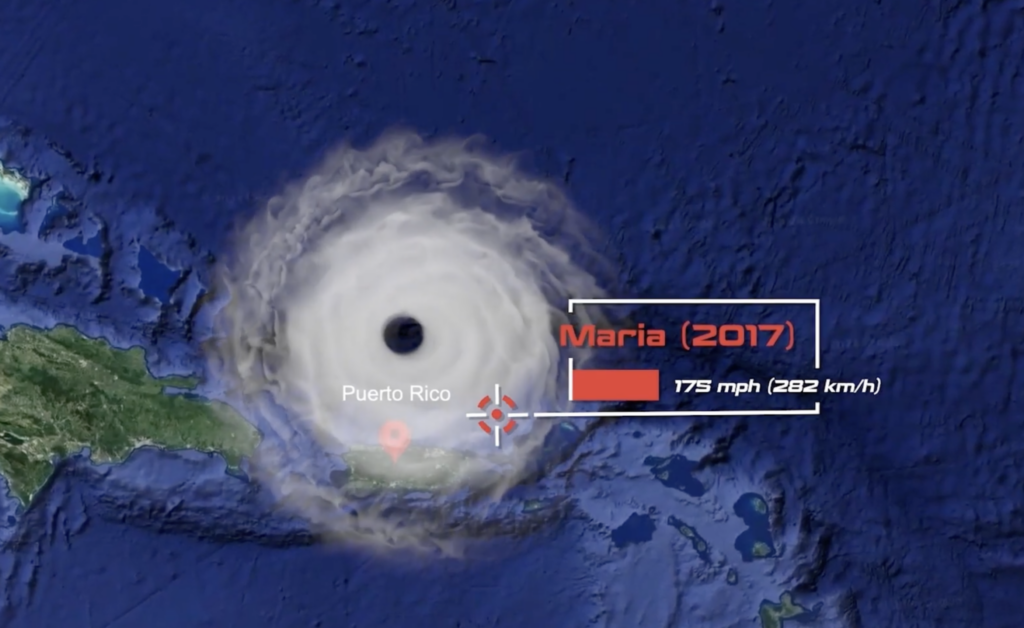
The storm then hit Puerto Rico as a Category 4 hurricane, bringing winds of 150 mph (241 km/h) and 23 inches (58 cm) of rain. Its impact devastated the island’s power grid and caused a massive blackout.
The loss of electricity disrupted water supplies, healthcare, and communications across Puerto Rico. Maria eventually continued north before dissipating over the Atlantic.
Galveston Hurricane of 1900
The Galveston Hurricane of 1900 remains the deadliest weather disaster in U.S. history. This Category 4 hurricane produced winds reaching 145 mph (230 km/h) and killed approximately 8,000 people.
The storm struck Galveston, Texas, after traveling across the Atlantic and Gulf of Mexico. The city’s location on a low-lying barrier island left it especially vulnerable to the enormous storm surge.
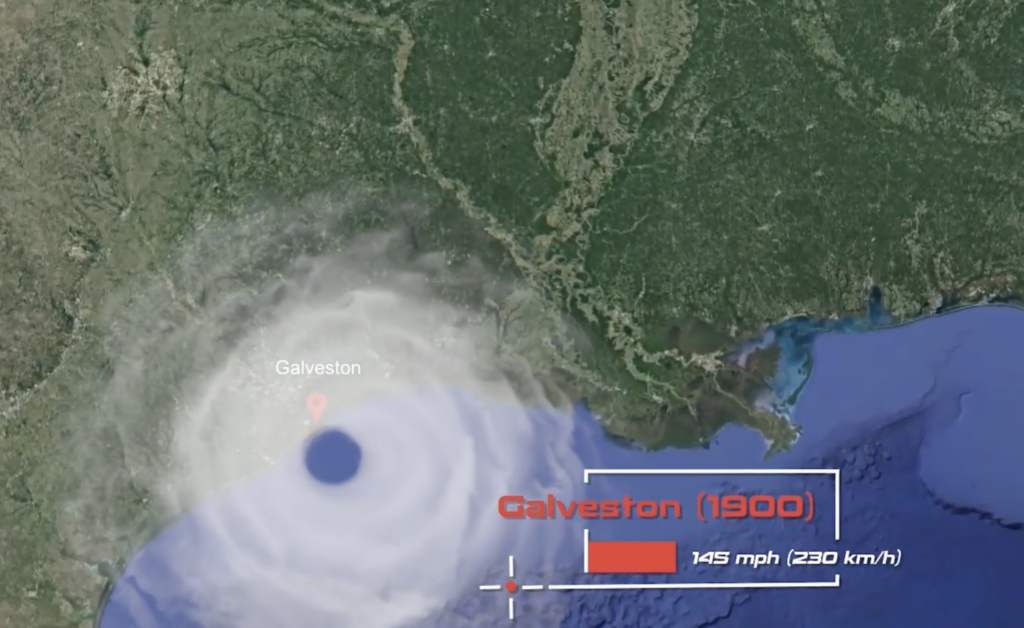
Floodwaters swept away homes, buildings, and infrastructure, while entire neighborhoods were destroyed. Many victims drowned or were crushed by collapsing structures.
The disaster eventually led Galveston to take major measures against future storms, including raising the city and constructing a seawall.
When a hurricane is forecast, seek sturdy shelter or evacuate if authorities instruct you to do so. Keep an emergency kit ready, stay informed through reliable weather sources, and remain indoors and away from windows during the storm.
Even after the eye passes, stay inside until authorities say it is safe to leave.
These hurricanes show that a storm’s danger isn’t determined by wind speed alone. Size, storm surge, rainfall, flooding, and where a hurricane strikes can all determine how destructive it becomes.