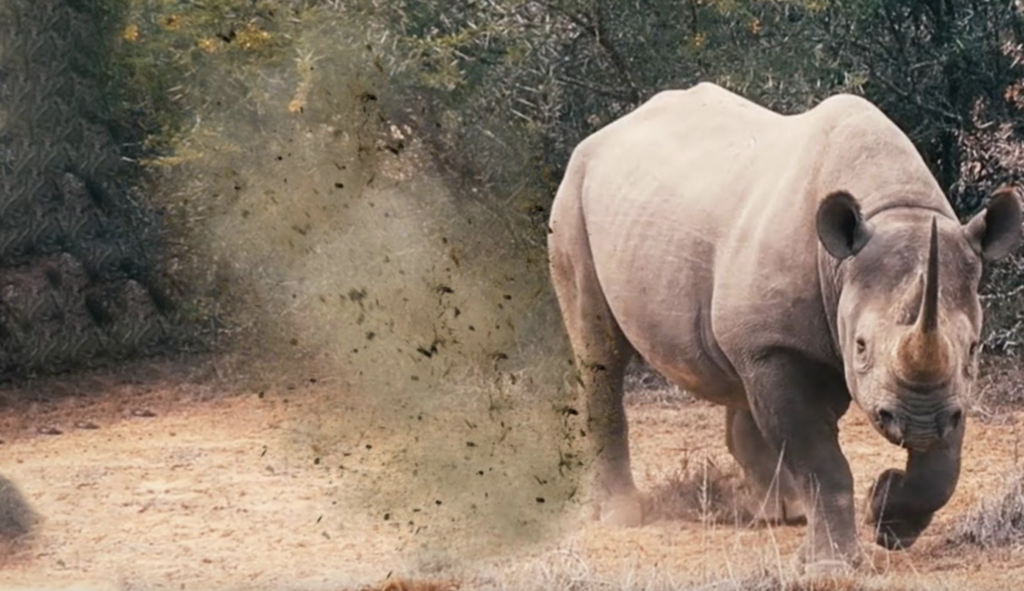
Black rhinos are among the largest and most powerful animals found in Africa. They can grow up to 1.8 meters (6 feet) tall and weigh around 1,350 kilograms (3,000 pounds), making them an imposing sight even when they appear calm.
Despite their size, black rhinos can move surprisingly quickly. They can reach speeds of around 55 km/h, and their large horns can grow up to 50 centimeters (20 inches) long. When one of these animals feels threatened, those characteristics can make an encounter extremely dangerous.
Black rhinos are also known for being nervous and aggressive animals. Their poor eyesight can make them especially unpredictable when they encounter something nearby, and a sudden movement can trigger a reaction.
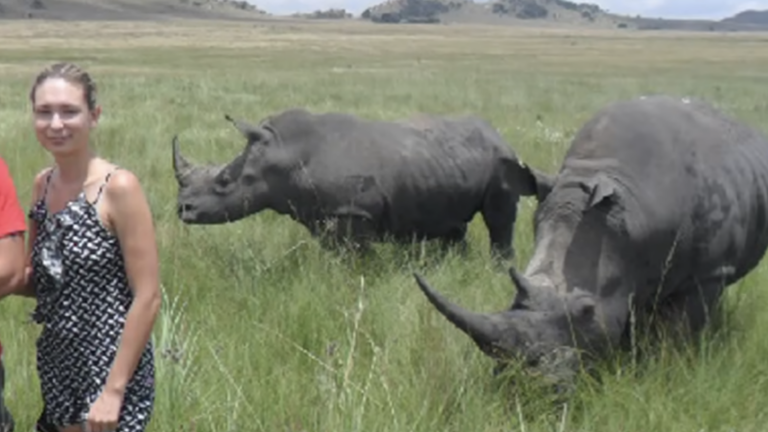
In 2013, 24 year old South African student Chantal Beyer discovered how quickly such an encounter could become dangerous. She was near a couple of rhinos and decided to pose for a photograph with the animals.
Beyer was standing just centimeters away from the rhinos when one of them suddenly reacted. The animal charged from behind, leaving her with little opportunity to get out of the way.
The rhino gored her during the attack, causing serious injuries. Several of her ribs were broken, and one of her lungs collapsed as a result of the impact.
Beyer was rushed to a hospital and spent a long time recovering from the injuries. Despite the severity of the attack, she survived.
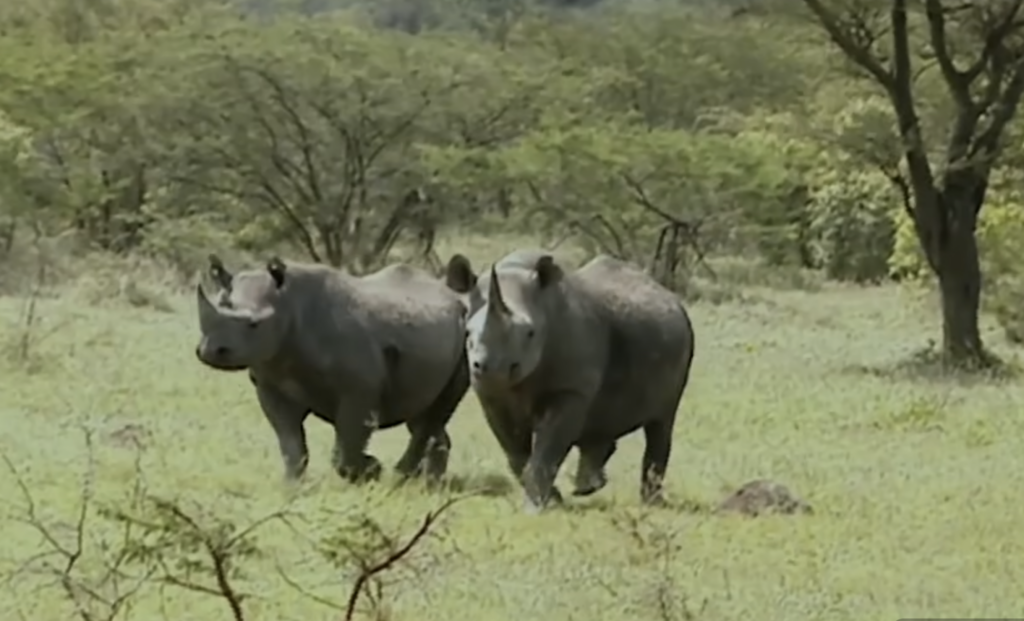
The incident demonstrates the danger of approaching large wild animals, even when they appear to be standing peacefully. A photograph may only take a few seconds, but those seconds can put a person dangerously close to an animal capable of causing devastating injuries.
Black rhinos have powerful bodies built for charging. Their horns are made of keratin and can be used as formidable weapons when the animal attacks. Combined with their speed and weight, a charging rhino can be extremely difficult for a person to stop or avoid.
Their poor eyesight does not make them safe to approach. Instead, it can contribute to unpredictable behavior because the animal may react when it detects movement or becomes aware of something close to it.
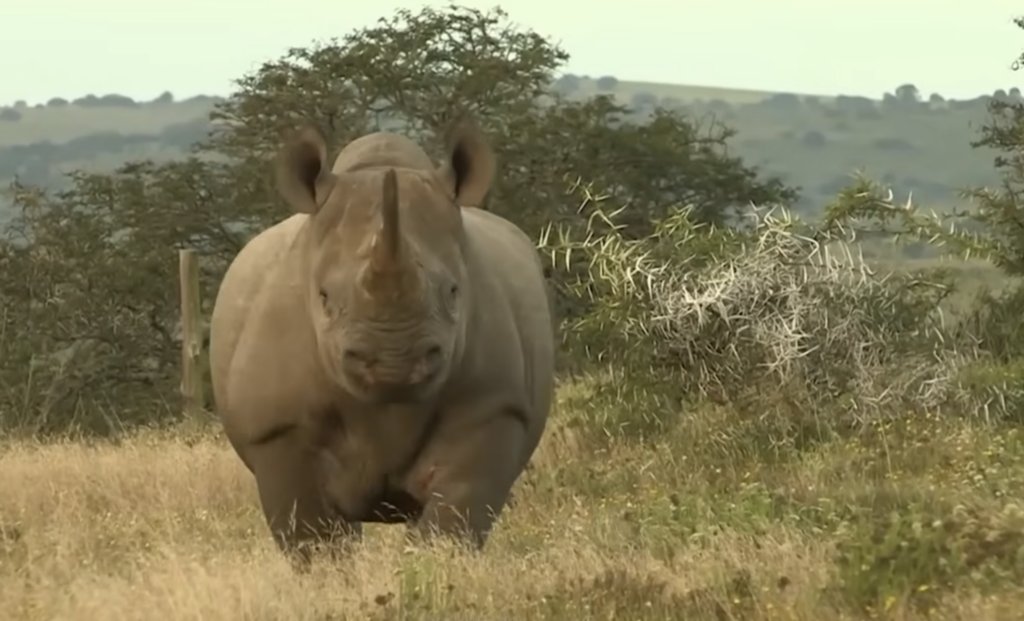
If someone encounters a black rhino in the wild, trying to outrun it is not a reliable option. Moving away carefully and finding a substantial obstacle, such as a large tree or rock, can provide protection if the animal begins charging.
Beyer’s experience began as a simple moment near two rhinos, but it quickly became a life threatening encounter. Standing only centimeters from a wild animal left her vulnerable to a sudden attack that resulted in multiple serious injuries.
Her survival also shows why wild animals should be observed from a safe distance. Even animals that seem calm can react without much warning when a person gets too close.
For anyone encountering a black rhino in its natural environment, distance is one of the most important forms of protection. These animals may not always attack, but their strength, speed, and horns mean that a close encounter can have serious consequences.