Giles Corey made a good living in Salem after migrating over from England. Corey owned a fairly large portion of land and was widely known for his farming and animal husbandry, though he certainly could not be labeled an upstanding citizen without his own share of brushes with the law (an early lawsuit involved a farm worker who died from injuries he’d received in the service of Giles).
Then, the witch trials came to Salem.
Giles’s wife was indicted for witchcraft, arrested, and, as is evident to even a fleeting observer of the panic enveloping the colonial town, you would find a word being enough to convict or ruin you. Eventually, neighbours began pointing fingers at each other and officials started accepting witchcraft confessions as solid evidence of truly something far more terrifying in nature.

Originally, Giles testified against Martha, though he would later recant. Rather than aiding Giles, this admission would only provide those concerned in the accusations of witchcraft with the feeling that his involvement was quite more than what he originally claimed and an increased suspicion. Eventually, he was also arrested on the charges and accused of involvement.
Corey responded in a way he felt right, though in the long run it cost him dearly. He absolutely refused to plea. He maintained he had no guilt but also refused to plead “innocent.”
The lack of an admission (either guily or not) would not allow the court to proceed with a typical court case and trial.
Rather than let him go he and the court would have to give him something more concrete. The only way he would enter a plea in court was, to him, too great a concession, and he was thus willing to pay any price not to! It would be death that he was willing to pay rather than give the magistrates what they wanted.

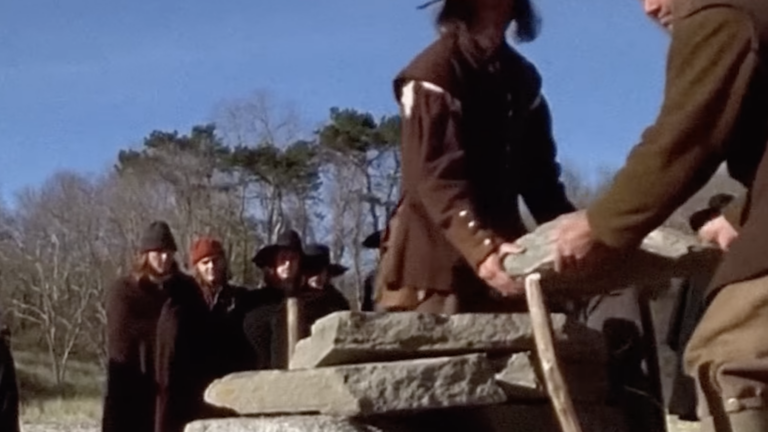
The procedure used was called peine forte et dure. Essentially it was “torture by imposition”, something practiced in English law to make the prisoner enter a plea. The penalty in Giles Corey’s instance, however, proved fatal. Giles would be chained to the floor and a huge board laid on his chest while it was weighted down with large rocks.
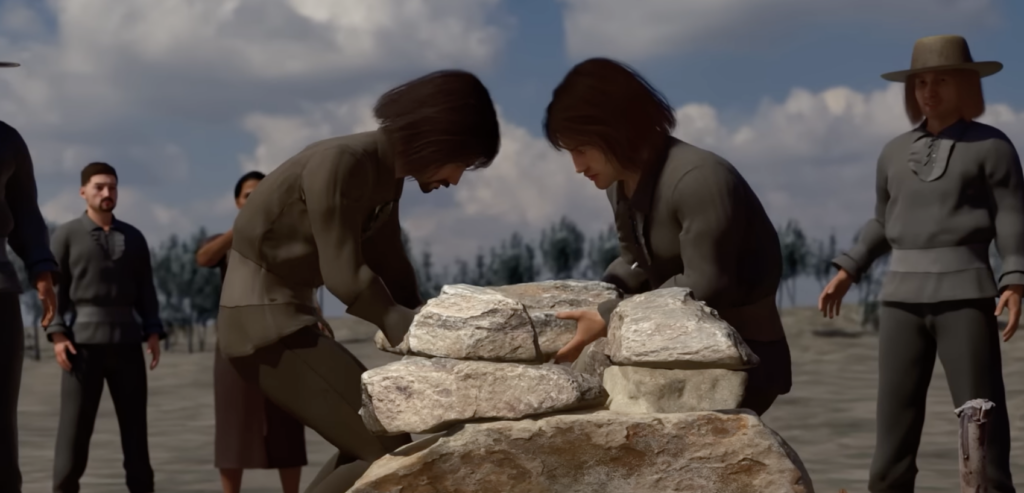
The initial stones he was presented with would only cause severe pain, while every stone later added to his body, piling up on each other, continued adding an almost incomprehensible amount of weight to his already pained frame making it increasingly difficult for his chest cavity to take in breath and expand, though the only response he offered, after being relentlessly asked, was that “More weight.”
For approximately two days this continued. Rock upon rock was piled onto the defenseless Giles as his breath became more and more labored and more difficult, though still he did not concede to offering up what his accusers and interrogators so desperately wanted.
Then, at long last, an admission was offered as the immense pressure on his body became too much for the farmer to bare anymore.
It turned out to be his last word for Stone after Stone pressed down upon his body until all respiration and movement ceased.
Giles’ Corey would lose his life.
Of all of the charges Giles Corey leveled against him, the most disturbing and legendary is that he repeatedly refused to be given anything until stones continued to piled upon the boards that pressed down so immensely on his frame. In the face of such horrifying torturous demise, his only words were “More weight.” He simply refused to comply; for him he died rather than do what seemed too much and in its stead he was beaten, beaten, and then crushed into non-living status.
Despite questionability by historians whether every account can be validated, the story of Giles Corey’s death would forever become a part of the annals of dark history associated with the Salem witch trials.
Though still, he was never truly convicted or tried, just tortured unto death for his refusal to give any of the Salem magistrates and authorities what they so highly and desperately wished for.