When most people imagine dinosaurs, they picture giant reptiles covered in thick scales, with rough skin similar to modern lizards or crocodiles. But an extraordinary scientific discovery found trapped inside a piece of ancient amber is changing the way we see these prehistoric creatures forever.
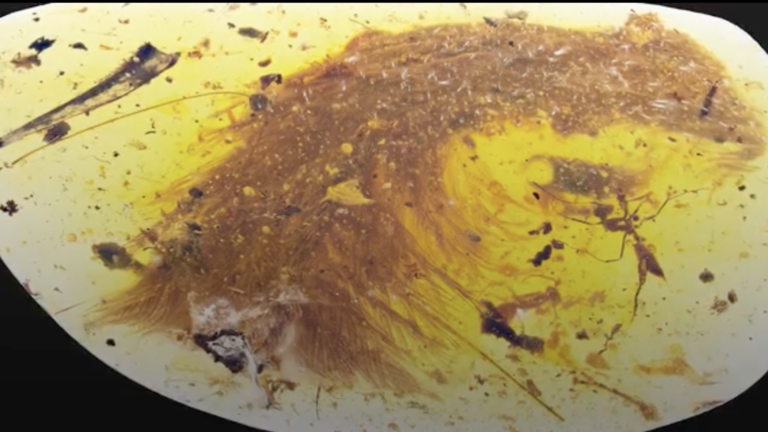
Researchers examining a piece of amber from Myanmar uncovered something never seen before in such remarkable detail: the perfectly preserved tail of a feathered dinosaur dating back nearly 99 million years. The fossil contained not only feathers, but also bones, soft tissue, and microscopic structures that survived from the age of dinosaurs.
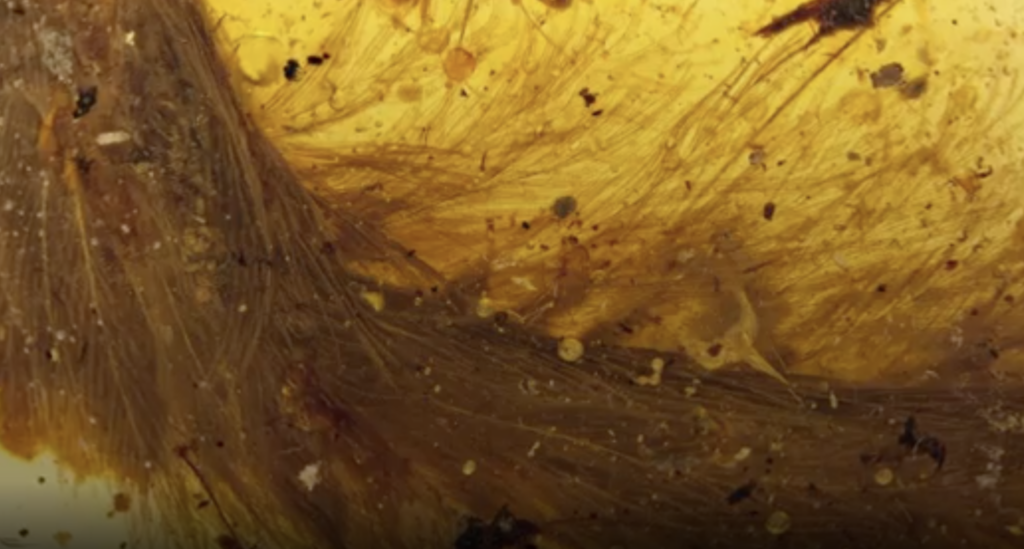
For scientists, it was a groundbreaking moment.
Amber forms when sticky tree resin hardens over millions of years, sometimes trapping insects, plants, and small animals inside like a natural time capsule. While feathers had previously been discovered preserved in amber, this was the first time researchers found an actual dinosaur tail with bones still intact.
The tail belonged to a young dinosaur believed to be part of a group called Oviraptorosaurs. These dinosaurs were small, bird like theropods that lived during the Cretaceous Period. Unlike the massive predators often shown in movies, Oviraptorosaurs were lightweight, agile animals with feathers covering much of their bodies.
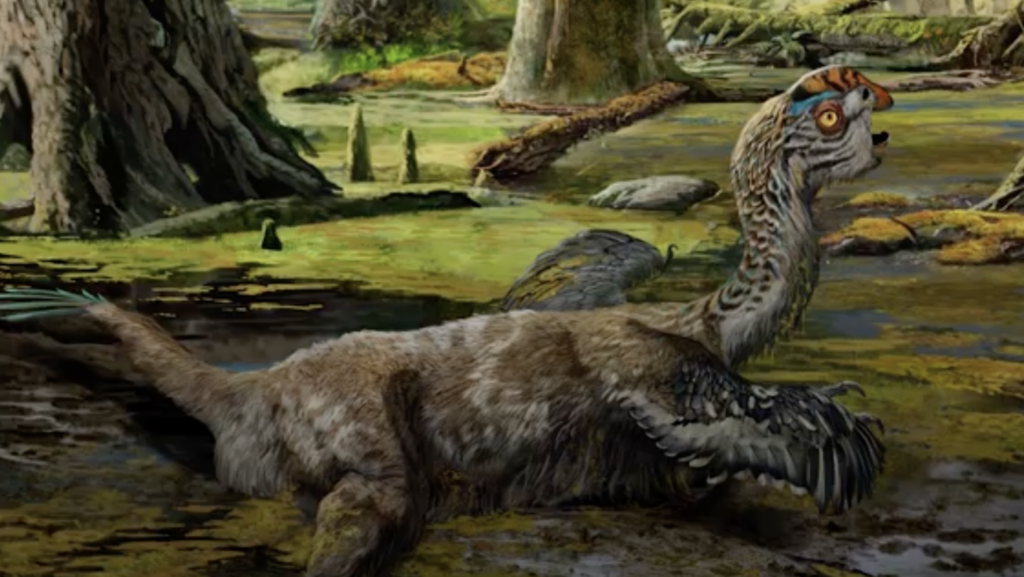
The fossilized tail revealed eight tiny vertebrae surrounded by delicate feathers. Instead of stiff feathers designed for flight, these were soft and flexible, more likely used for warmth, display, or communication. Scientists believe the dinosaur may have used its colorful feathers to attract mates or intimidate rivals.
The discovery provided some of the clearest evidence yet that dinosaurs and birds are deeply connected. Modern birds are now widely considered the direct descendants of certain dinosaur species, and fossils like this continue to strengthen that link.
What shocked researchers even more was how advanced the feathers appeared. They were not simple primitive strands, but complex feather structures similar to those seen on birds today. This suggests feathers evolved long before powered flight and may have originally served entirely different purposes.
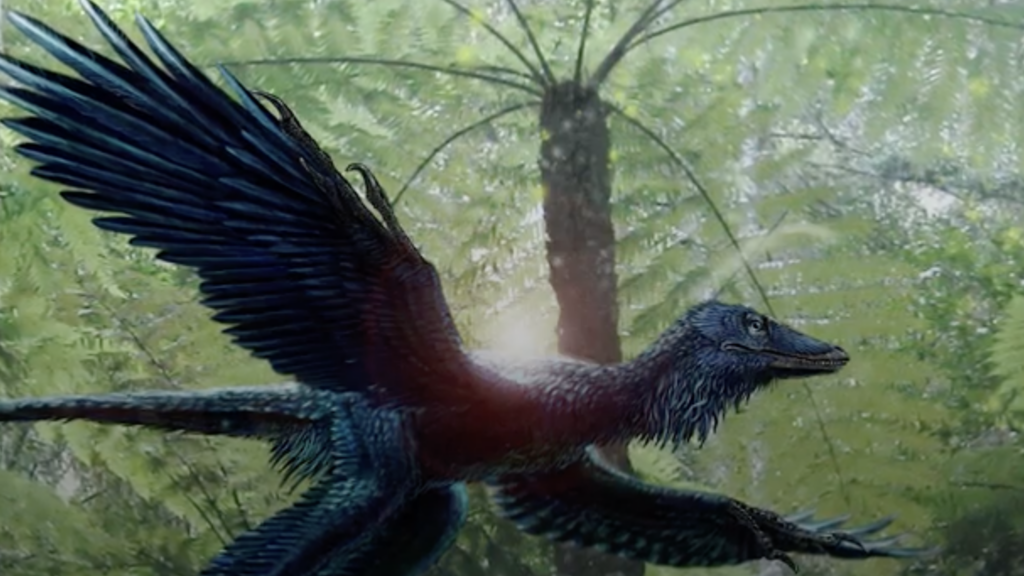
The amber tail also supports a growing theory that feathers may have been far more common among dinosaurs than scientists once believed. A study from the University of Bristol suggested that many dinosaur species, possibly even most of them, could have possessed some type of feather covering millions of years ago.
That idea completely changes the traditional image of dinosaurs. Instead of giant scaly reptiles roaming the Earth, many may have looked far more like oversized birds, covered in colorful plumage and fluffy feather coats.
The discovery has opened an entirely new window into prehistoric life. Fossils usually preserve bones, but soft tissues and feathers rarely survive the passage of time. Amber, however, can capture tiny details with extraordinary precision, allowing scientists to study ancient creatures almost as if they had just died yesterday.
For paleontologists, the feathered tail preserved in amber is more than just a fossil. It is a rare snapshot of evolution in action, connecting the ancient world of dinosaurs to the birds flying above us today.