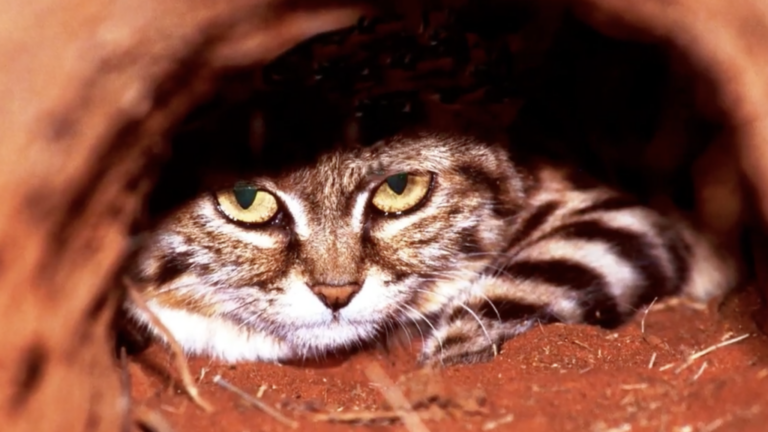
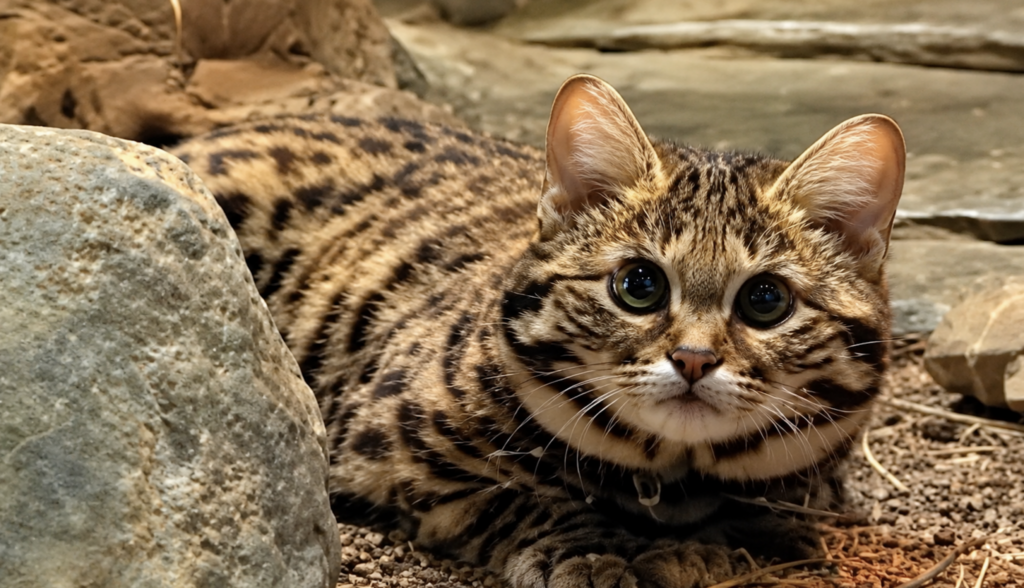
Deep within the grasslands and dry regions of southern Africa lives a tiny predator that has earned a fearsome reputation among wildlife experts. At first glance, the black footed cat may look like an ordinary kitten. With its large eyes, spotted coat, and small frame, it appears harmless and even adorable. Yet behind that innocent appearance is one of the most efficient hunters in the animal kingdom.
The black footed cat is the smallest wild cat in Africa. Adults typically weigh only a few pounds, making them much smaller than lions, leopards, and cheetahs. Despite its size, this remarkable feline survives in some of the continent’s harshest environments, including deserts, scrublands, and open grasslands.
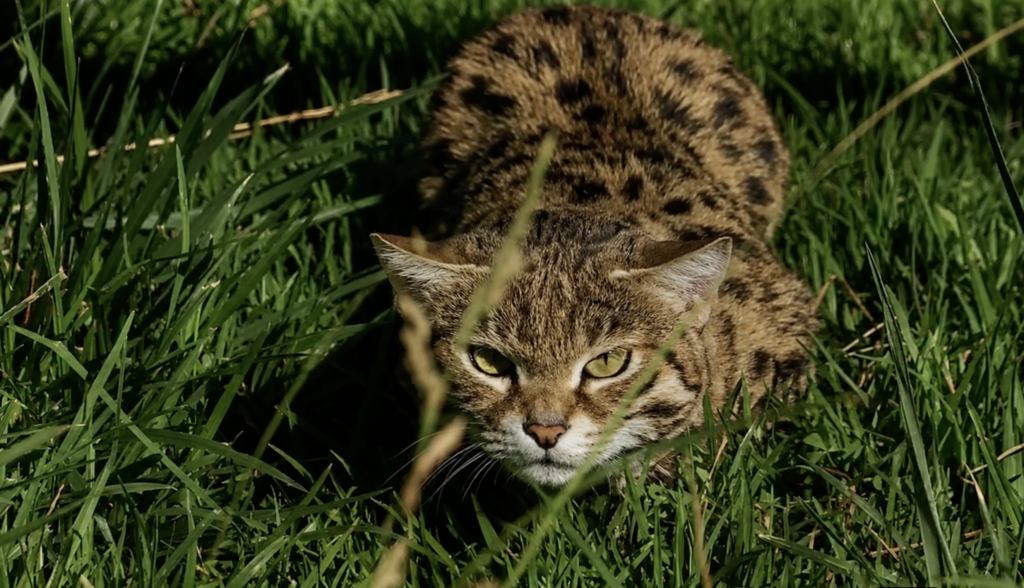
What truly sets this cat apart is its extraordinary hunting success. Researchers have found that the black footed cat is successful in a large percentage of its hunting attempts, a rate that rivals and often surpasses much larger predators. While lions may spend hours stalking prey before a successful kill, this tiny hunter can capture multiple animals in a single night.
The secret to its success lies in its relentless determination. Black footed cats are incredibly active after sunset. As darkness falls, they emerge from their burrows and begin searching for food. During a single night, one cat may travel several miles across its territory in search of prey. It constantly moves, scanning the landscape with its sharp eyesight and excellent hearing.
Its diet consists mainly of rodents, birds, insects, and other small animals. The cat uses several different hunting techniques depending on the situation. Sometimes it patiently waits near a likely hiding place until prey appears.
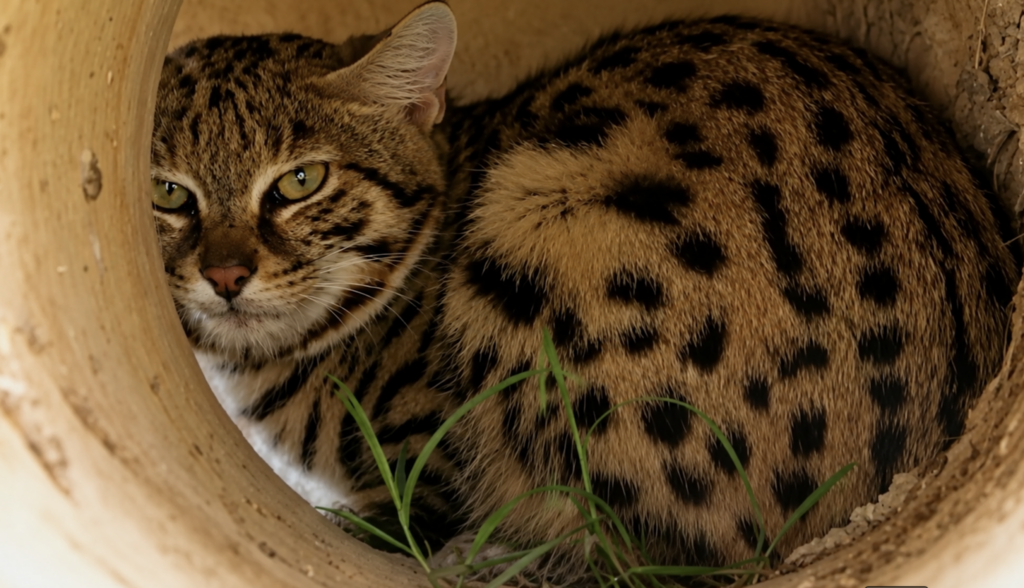
At other times it silently stalks through vegetation before launching a quick attack. It may also actively search through grass and bushes, flushing out animals that attempt to hide.
One of the most impressive aspects of the black footed cat is its fearlessness. Although it is tiny compared to many African predators, it does not hesitate to pursue prey with confidence and determination. Its speed, agility, and precision allow it to overcome animals that would seem difficult for such a small predator to catch.
During the day, black footed cats often rest in abandoned burrows, hollow logs, or other sheltered locations. This behavior helps them avoid the intense heat and reduces the risk of encounters with larger predators. Their spotted coats provide excellent camouflage, helping them blend into their surroundings when danger approaches.
Unlike many larger cats, black footed cats tend to live solitary lives. Males and females usually come together only for breeding.
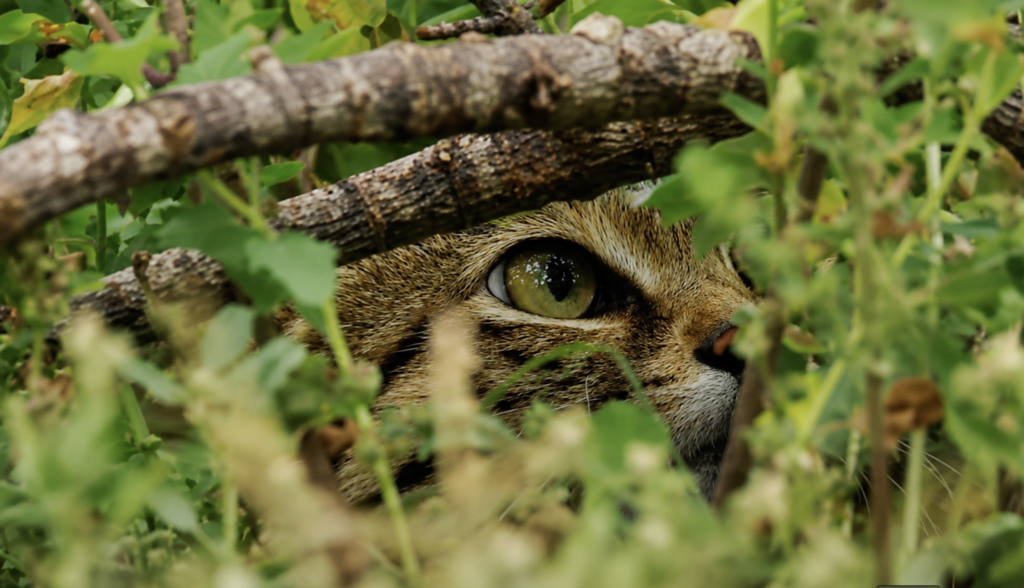
Each cat maintains its own territory and spends most of its time alone. Because they are nocturnal and highly secretive, they are rarely seen in the wild. Many people living within their range may never encounter one despite sharing the same landscape.
Their elusive nature has made scientific study challenging. Researchers often rely on tracking devices, camera traps, and nighttime observations to learn more about these fascinating animals. Every new discovery helps scientists better understand how the species survives and what threats it faces.
Unfortunately, black footed cats face several challenges. Habitat loss, declining prey populations, and accidental poisoning can all impact their survival. Because they are so difficult to observe, population estimates remain uncertain in many areas.
Conservation efforts focus on protecting habitats and increasing awareness about the importance of preserving this unique species.
The story of the black footed cat is a reminder that size is not always the best measure of strength or success. While Africa is famous for its giant predators, one of its most remarkable hunters is also one of its smallest. Hidden beneath the cover of darkness, this tiny feline continues to prove that determination, skill, and adaptability can make even the smallest predator a formidable force in the wild.
For those lucky enough to glimpse one, the black footed cat offers a fascinating example of nature’s ability to create extraordinary hunters in the most unexpected forms.