The sound was described by witnesses as loud and chaotic, a sudden eruption that cut through what was meant to be a carefully controlled stage performance. On October 3rd, 2003, Roy Horn stepped onto the stage at the MGM Grand in Las Vegas expecting another flawless show, just as he had done thousands of times before with his partner Siegfried Fischbacher.
Instead, the performance would become one of the most shocking incidents in live entertainment history.
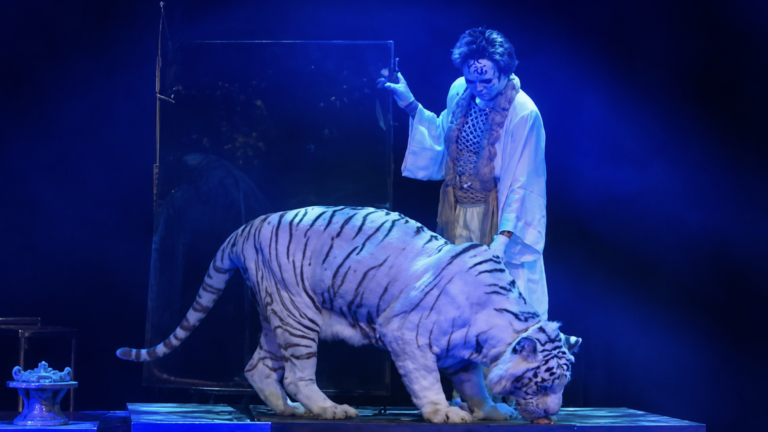
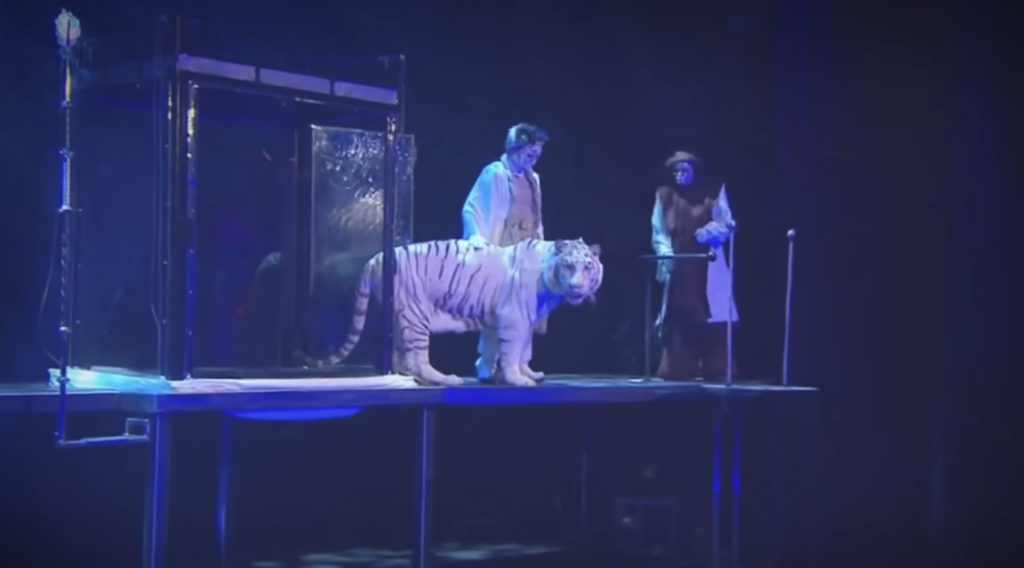
Halfway through the show, a 400 pound Siberian tiger named Mantacore was introduced into the act. At first, everything appeared normal, as the audience watched one of Las Vegas’s most famous illusion acts unfold. But within moments, something changed.
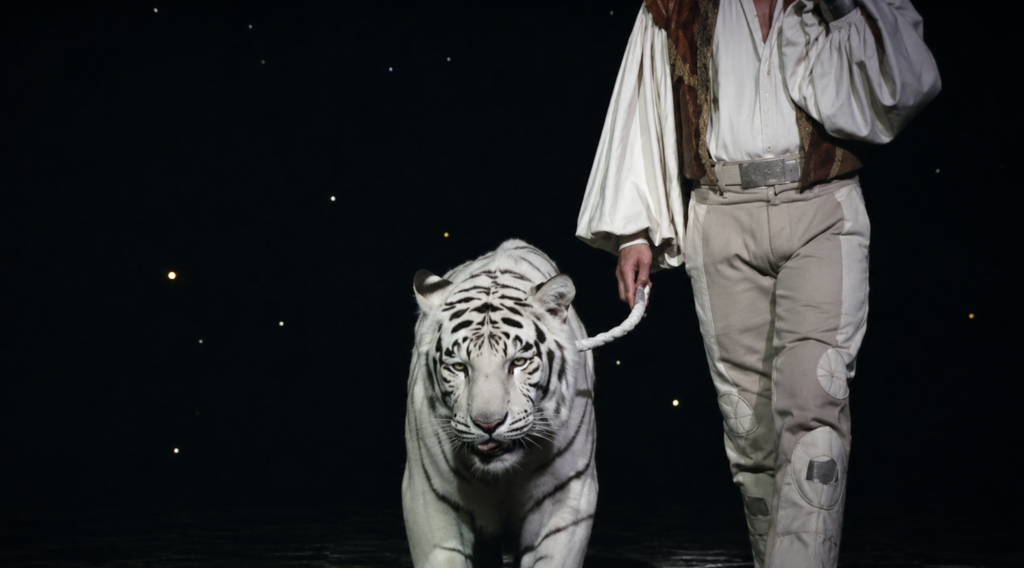
The tiger became distracted, breaking from the routine and moving toward the front of the stage. Roy attempted to redirect the animal, stepping between it and the audience, but the situation quickly escalated beyond control.
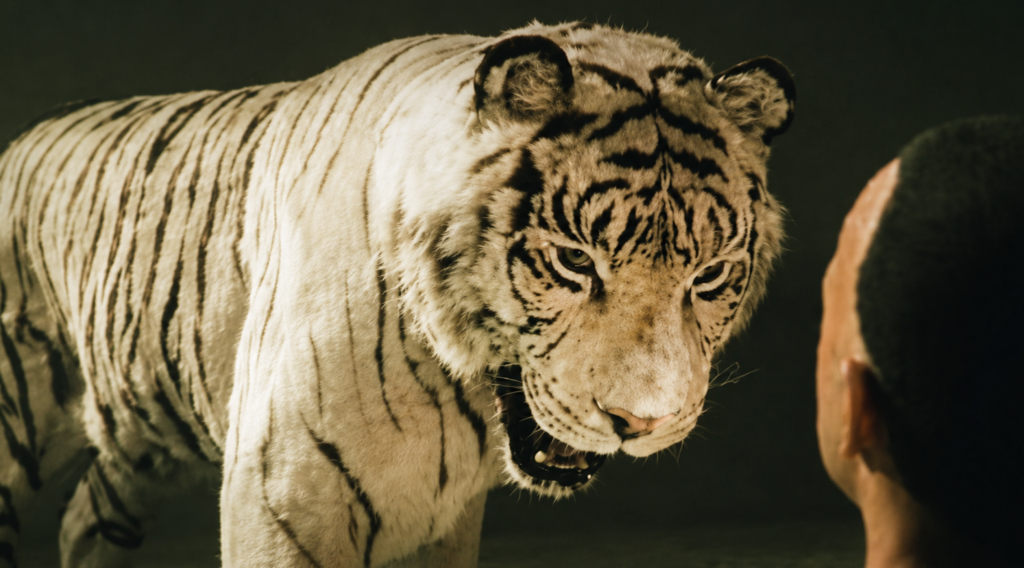
Mantacore suddenly grabbed Roy, and in the struggle that followed, the tiger bit into his neck and dragged him across the stage. The attack happened in front of a live audience, leaving the crowd in shock as stage crew rushed to intervene. Eventually, the tiger was forced to release Roy, but by that point, severe injuries had already been inflicted, including life threatening damage to major blood vessels in his neck.
Emergency responders rushed Roy to the University Medical Center in Las Vegas, where doctors worked urgently to save his life. His injuries were critical, and at one point reports suggested he had nearly died multiple times during treatment. His airway had been severely damaged, requiring a ventilator to help him breathe.
In the following days, he also suffered a stroke, adding further complications to an already critical condition.
As news of the incident spread, crowds gathered outside the hospital and the MGM Grand, shocked by what had happened to one of Las Vegas’s most iconic performers. Inside the hospital, Roy underwent multiple surgeries, including procedures to relieve brain swelling, which required part of his skull to be temporarily removed. His condition remained unstable, but against expectations, he survived the initial trauma.
During recovery, Roy reportedly made a statement that reflected his lifelong bond with the animal, asking that the tiger not be harmed. This detail became widely discussed in the media, especially as questions arose about what had caused the attack. Some believed the animal had reacted instinctively to a perceived emergency, while others argued that a breakdown in training and performance control had led to confusion and aggression on stage.
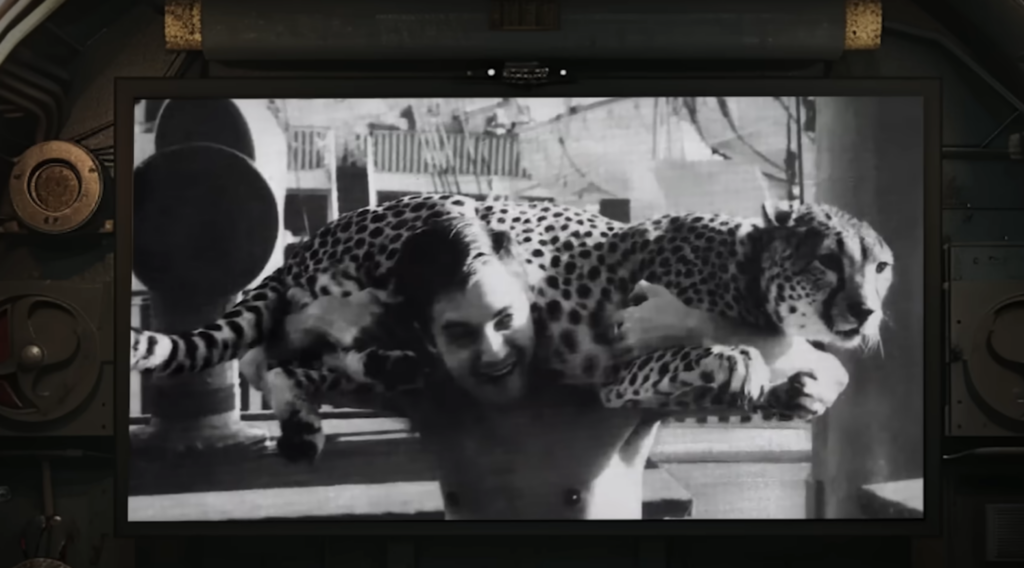
Siegfried and Roy had built their careers on an extraordinary partnership with big cats, performing together since the late 1950s. Their act evolved from simple magic performances into elaborate shows featuring lions, leopards, and tigers, eventually becoming one of the most successful entertainment acts in Las Vegas history.
Over time, they acquired private facilities where dozens of big cats were raised and trained, often living closely alongside their handlers.
However, their methods and safety practices were later questioned. Investigations revealed that Mantacore had shown signs of distraction during rehearsals leading up to the performance, and that deviations from routine may have contributed to the incident. Critics also pointed out that working with large predators always carries inherent risk, regardless of training or experience.
This was not the first time concerns had been raised. Years earlier, a backstage incident involving one of their animals had resulted in serious injury to a young performer, though it received far less public attention at the time.
These events later fueled debate about whether the risks of such performances had been underestimated or downplayed.
Despite the severity of his injuries, Roy eventually regained partial mobility and continued his recovery over the following months. By early 2004, he was able to speak and eat again, and his progress was described as medically remarkable. Siegfried remained closely by his side throughout the entire recovery process, reflecting the deep personal bond between the two performers.
In later years, discussions about the attack continued to divide opinion. Some believed the tiger had reacted to a medical emergency during the show, while others maintained that it was a failure of control in a high risk environment.
Regardless of interpretation, the incident marked the end of Siegfried and Roy’s legendary stage career.
The tragedy also intensified global debate about the use of wild animals in entertainment. Critics highlighted the ethical and safety concerns of keeping big cats in captivity for performances, while supporters pointed to the duo’s long history without major incident prior to 2003. Over time, many venues shifted away from animal based shows altogether.
The attack on Roy Horn remains one of the most infamous moments in live performance history. It stands as a reminder of the unpredictable nature of working with wild animals, and the thin line between spectacle and danger that defined Siegfried and Roy’s extraordinary careers.