Most people think bears are the biggest danger in the wild.
In places like Alaska, that assumption is wrong. Moose actually attack humans more often than any other large wildlife species in the region. With populations far higher than bears in some areas, your chances of encountering one on a hike are surprisingly real.
And if that encounter turns aggressive, you are suddenly dealing with one of the most powerful animals in North America.
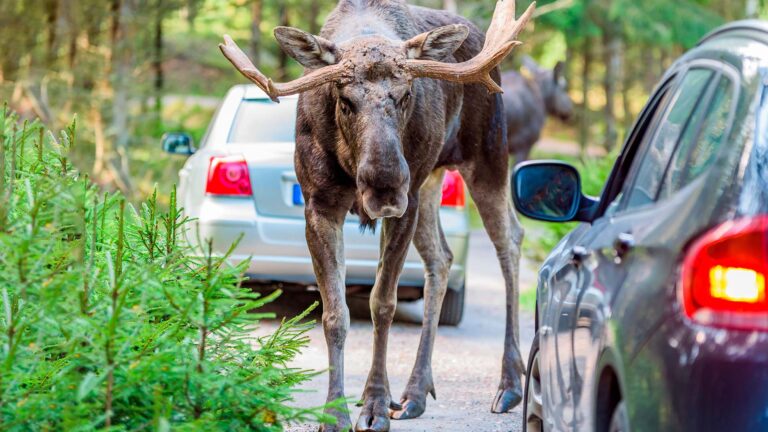
A full grown moose can weigh up to 816 kilograms and stand over 2 meters tall. It is the largest species in the deer family, with long legs, a heavy body, and antlers that can stretch up to 1.8 meters across in males. When those antlers come swinging during a charge, the situation becomes extremely dangerous.
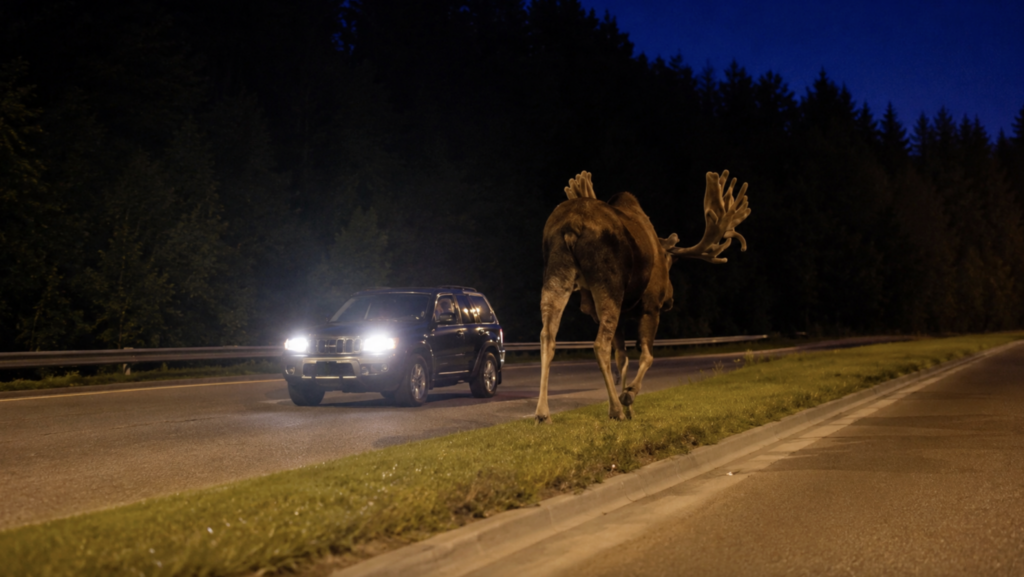
Despite their size, moose are not naturally afraid of humans. That is part of what makes them unpredictable.
So what do you do if you find yourself too close to one?
Here is how to survive a moose attack.
Step 1: Stay Away From Water
Moose are commonly found near lakes, rivers, and wetlands. These areas provide their main food source, aquatic plants that grow along the surface.
They are also strong swimmers and can even stay submerged for over 30 seconds at a time.
This means water edges are high risk zones. Many attacks happen when hikers accidentally get too close while walking along shorelines.
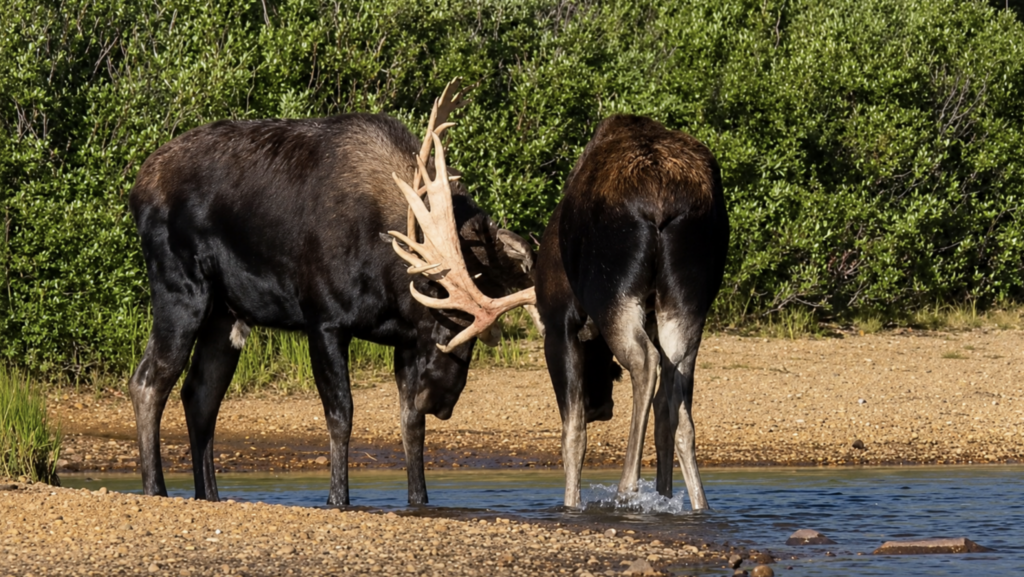
If you see signs of a moose near water, increase your distance immediately and avoid blocking its path.
Step 2: Make Yourself Known
Moose do not always avoid humans. In fact, surprising one is one of the most common triggers for aggression.
When hiking in moose territory, make noise. Talk, clap, or sing. It may feel strange, but it helps prevent a dangerous surprise encounter.
If you do spot a moose, keep at least 15 meters of distance. If it appears unaware of you, slowly back away without sudden movements.
Step 3: Read the Warning Signs
A calm moose is not usually a threat. A stressed one is a different story.
Warning signs include raised neck hair, pinned back ears, lip licking, and stiff body posture. These are indicators that the animal feels threatened and may charge.
If you see these behaviors, do not approach. Increase distance immediately and look for cover such as trees or vehicles between you and the animal.
Step 4: Run Only If You Must
Moose can run at speeds of up to 56 kilometers per hour. You will not outrun them over distance.
However, if a moose charges and distance is closing fast, running in a straight line away from the animal may be your only option.
If you are knocked down, curl into a tight fetal position and protect your head and neck. Stay still until the moose leaves the area.
Step 5: Never Underestimate a Cow Moose
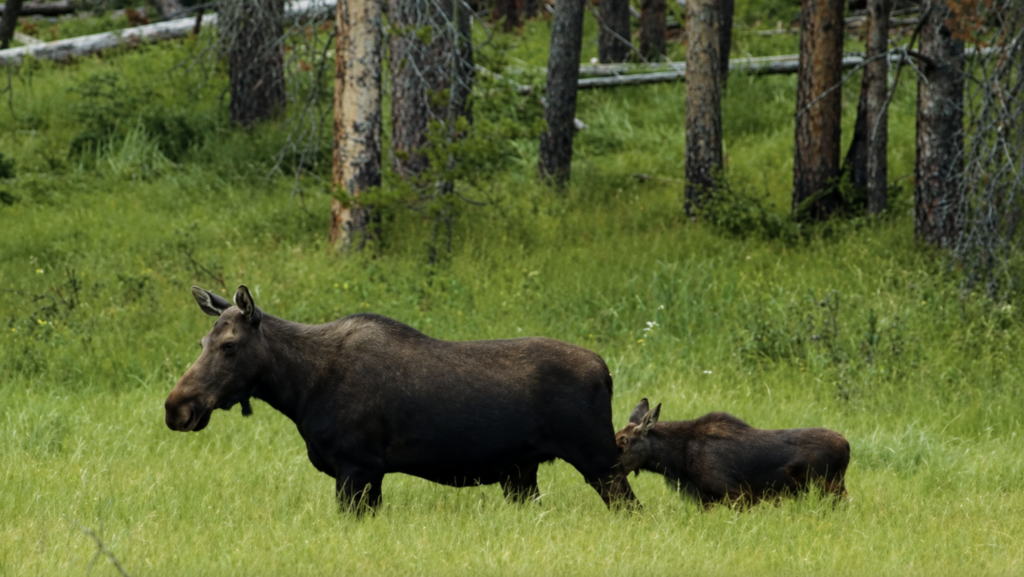
Female moose may look less intimidating because they lack antlers, but they are often more dangerous.
A mother protecting her calf will defend aggressively, using powerful kicks that can break bones or cause fatal injuries.
Never assume a cow moose is safe just because it looks less threatening.