For more than half a century, rockets have been humanity’s ticket to space. They carried astronauts to the Moon, launched probes to the outer planets, and continue to power missions toward Mars. But there is one major problem with rockets: they need fuel. And when it comes to traveling beyond our Solar System, carrying enough fuel becomes almost impossible.
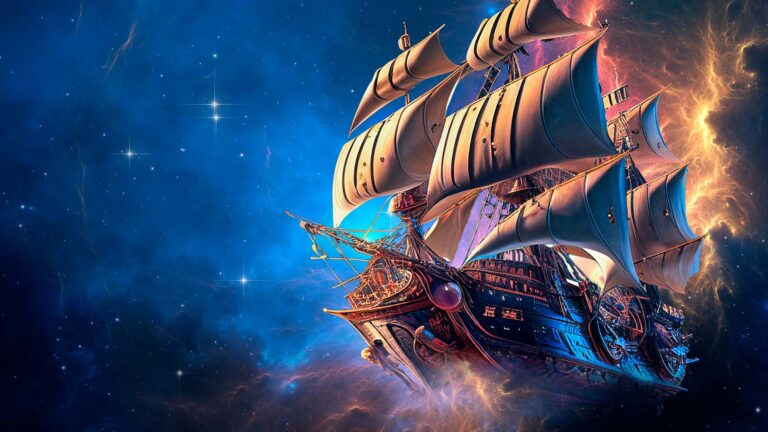
That is why scientists have been exploring a radically different way to travel through space. Instead of relying entirely on rocket engines, future spacecraft may one day sail across the cosmos using the power of the Sun itself.
The concept is known as an electric sail, or e sail, and it could become one of the most efficient methods ever developed for deep space exploration.
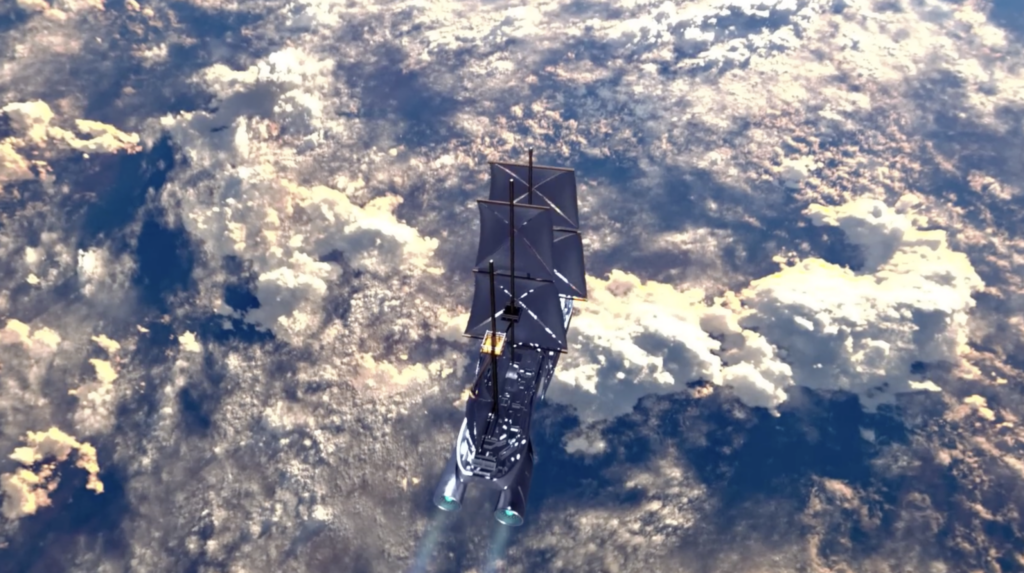
On Earth, sailing ships use wind to move across oceans. In space, there is no air, but there is something similar. The Sun constantly releases streams of charged particles known as solar wind. These particles race through the Solar System at speeds of up to 1.6 million kilometers per hour.
Scientists believe that specially designed spacecraft could harness this flow of particles in much the same way a sailboat captures wind.
Unlike traditional sails made from fabric, electric sails would consist of long, ultrathin aluminum wires extending outward from a spacecraft. These wires would carry an electric charge, creating an invisible field that interacts with the charged particles in the solar wind. As the particles are deflected, they transfer momentum to the spacecraft, producing thrust without burning any fuel.
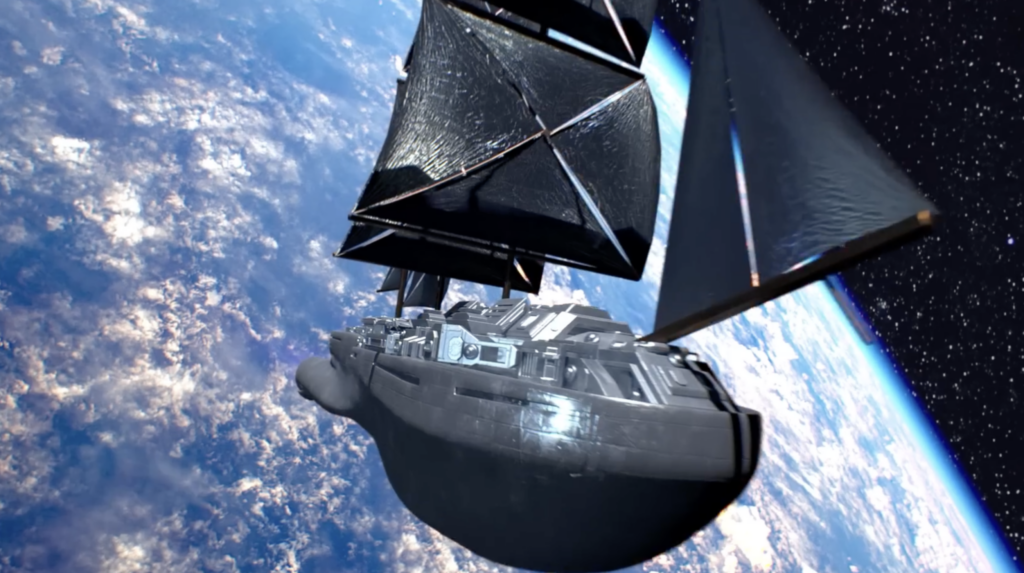
The idea sounds futuristic, but the physics behind it is surprisingly straightforward.
There is one catch, however. Electric sails would not work near Earth. Our planet is surrounded by a magnetic field called the magnetosphere, which shields us from much of the solar wind. To escape this region, spacecraft would still need conventional rockets to reach deep space before deploying their sails.
Once beyond Earth’s magnetic influence, the real journey could begin.
Researchers estimate that a spacecraft weighing around 1,000 kilograms could use an electric sail to gradually accelerate to speeds between 30 and 150 kilometers per second. That is significantly faster than the famous Voyager 1 probe, which is currently traveling through interstellar space at about 17 kilometers per second.
At those speeds, a spacecraft could travel beyond the orbit of Neptune in only a few years. It would pass the giant planets, cross the vast emptiness of the outer Solar System, and eventually approach the heliopause, the distant boundary where the Sun’s influence begins to fade.
But traveling to the edge of the Solar System would not be without risks.
One major obstacle is the Kuiper Belt, a region filled with icy bodies, comets, and debris beyond Neptune. A collision with even a small object could damage the fragile wires that make up an electric sail. Navigating safely through this region would require careful planning and precise control.
The farther a spacecraft travels from the Sun, the weaker the solar wind becomes. Eventually, there may not be enough particles to keep accelerating the vessel. If that happens, a spacecraft could find itself drifting through the cold darkness of deep space with little ability to gain speed.
To continue the journey, explorers might need to aim for another star.
The most likely destination would be the nearby Alpha Centauri system, located about 4.3 light years away. This system contains three stars, including Proxima Centauri, the closest known star to our Solar System.
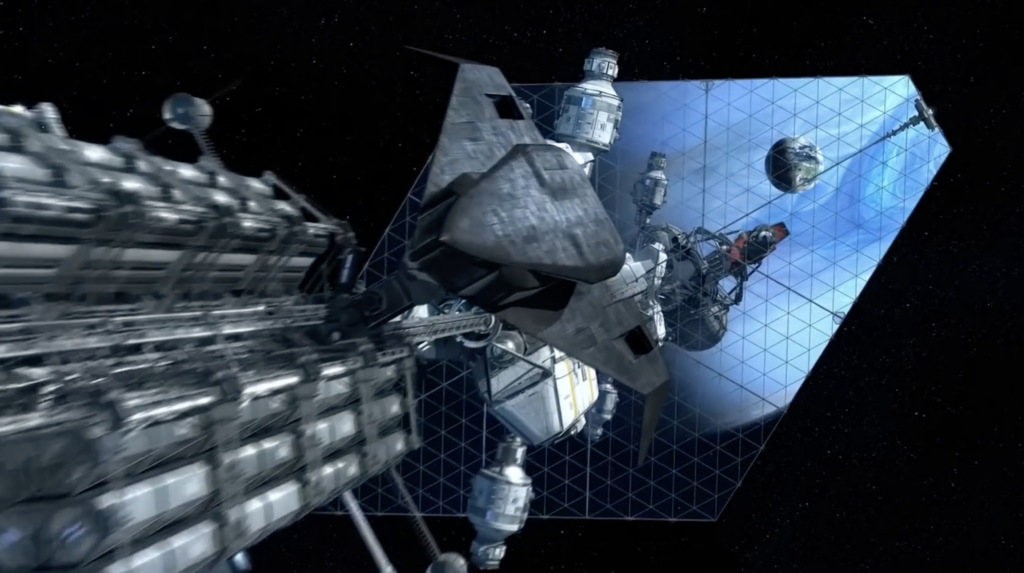
Although red dwarf stars produce far less light than our Sun, they still generate stellar winds that could potentially provide enough thrust for an electric sail to continue accelerating. In theory, a spacecraft could travel from one stellar wind system to another, using the energy of stars instead of carrying vast amounts of fuel.
The greatest advantage of electric sails is that they require almost no propellant once deployed. Traditional rockets are limited by the fuel they carry. Electric sails, on the other hand, could continue operating for years while consuming very little onboard energy.
For scientists dreaming of interstellar exploration, this technology represents a major breakthrough. It offers a way to travel farther, faster, and more efficiently than many conventional propulsion systems.
Humanity has not yet built an electric sail capable of reaching another star. But if future engineers succeed, the first true voyages beyond our Solar System may not be powered by giant engines or exotic fuels.
Instead, they may travel the way ancient explorers once crossed Earth’s oceans.
By sailing.