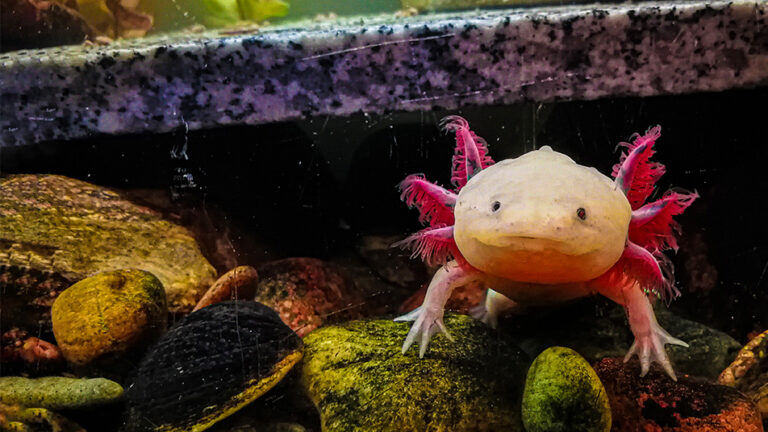
This pink, permanently smiling creature might look like something out of a cartoon, but it is very real. Known as the axolotl, this unusual animal has captured the attention of scientists around the world. With its feathery external gills, wide grin, and almost toy like appearance, it often seems more like a fictional Pokémon than a real living species.
Yet behind its strange look lies one of the most fascinating biological mysteries ever studied.
Long before modern science became interested in it, the axolotl already held deep cultural meaning. In ancient Aztec mythology, it was associated with the god Xolotl, who was linked to fire, lightning, deformities, and death. According to legend, this god transformed into a salamander like creature, giving the axolotl its symbolic origin.
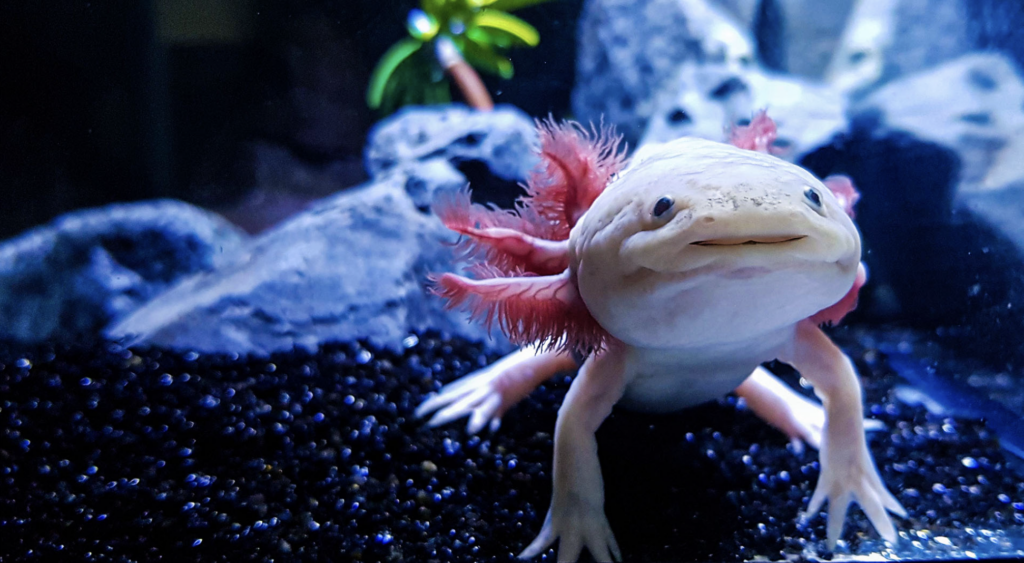
The name itself comes from the Nahuatl language and translates roughly to “water dog.” Today, these animals are found almost exclusively in the ancient lake system of Xochimilco near Mexico City, the same region where the Aztec civilization once flourished.
What makes the axolotl truly unique is that it never fully grows up in the way most amphibians do. While other salamanders eventually lose their gills and move onto land, the axolotl remains aquatic for its entire life. This condition, known as neoteny, means it keeps juvenile features even as an adult. Living at the bottom of lakes and canals, it feeds on worms, insect larvae, crustaceans, mollusks, and small fish.
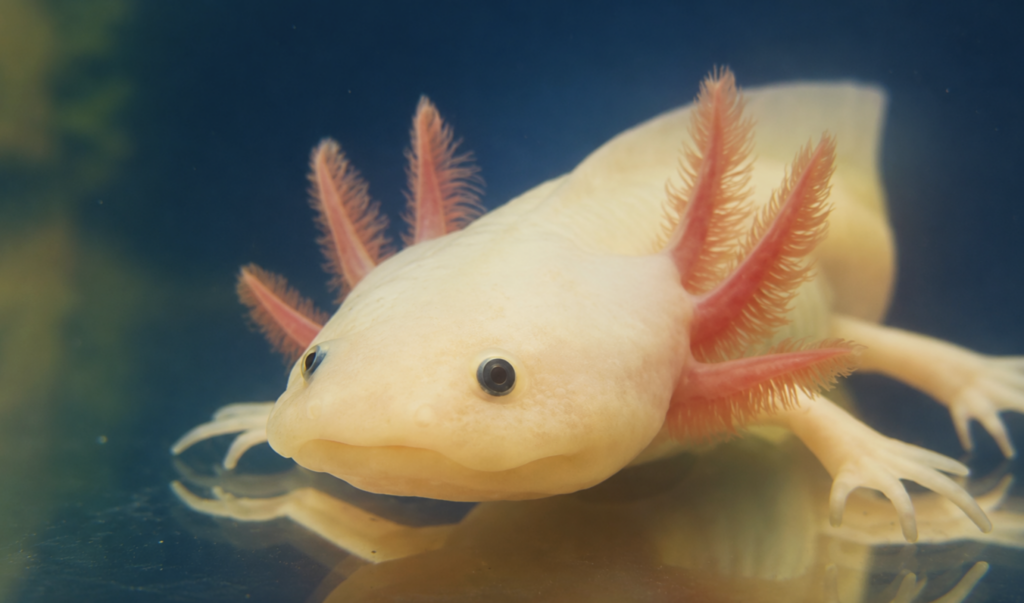
It can grow up to 45 centimeters long and live more than a decade in the wild, moving through murky water with surprising efficiency despite its calm appearance.
The most extraordinary feature of the axolotl is its ability to regenerate almost any part of its body. If it loses a limb, it can grow it back completely, including bones, muscles, nerves, and skin. Even more astonishing, it can regenerate parts of its heart, spine, jaws, and even sections of its brain.
Unlike humans, who heal wounds by forming scar tissue, axolotls rebuild damaged areas with remarkable precision and without scarring. Scientists have discovered that they achieve this by converting nearby cells into stem like cells that then rebuild the missing structures from scratch, almost like replaying a developmental process.
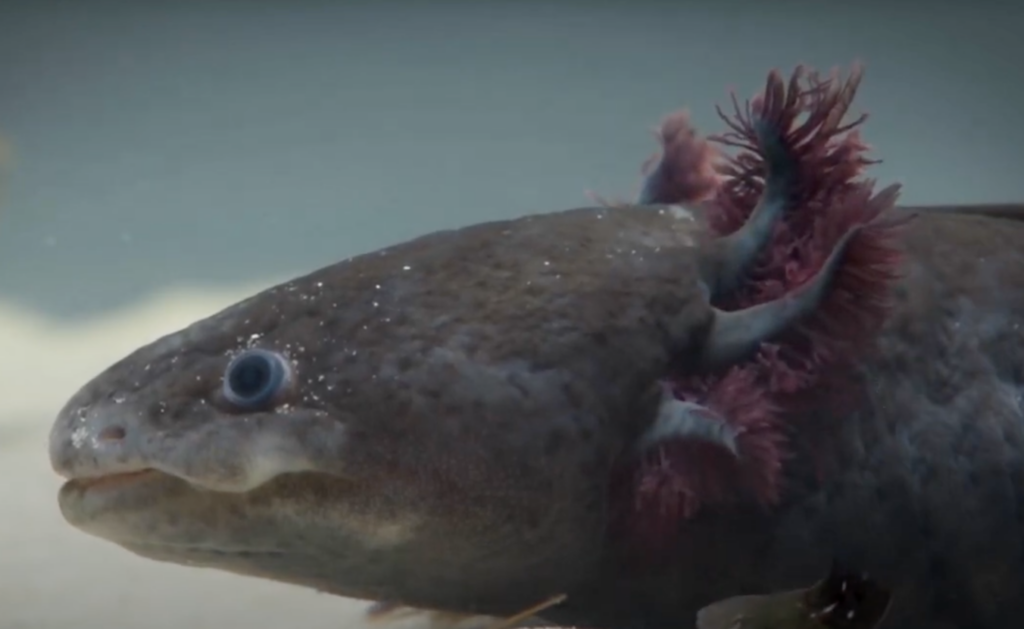
Because of this ability, researchers are now studying axolotls in hopes of understanding how regeneration works at a biological level. If scientists can unlock the mechanisms behind this process, it could one day lead to breakthroughs in healing injuries, repairing organs, and treating spinal damage in humans.
The axolotl also shows an unusual resistance to cancer, appearing far less vulnerable than mammals, which adds even more interest to its biology and medical potential.
Despite its scientific importance, the axolotl is now critically endangered in the wild. It survives only in a small region of Xochimilco, where pollution, urban expansion, and water system changes have severely damaged its habitat.

Estimates suggest that only a few hundred individuals may remain in nature, and the number continues to decline. Conservation programs and breeding efforts are now in place, but the species remains at serious risk.
The axolotl stands as both a biological wonder and a warning. It is a creature that may hold answers to some of medicine’s biggest questions, yet it is also disappearing from the wild.
If scientists succeed in understanding its regenerative abilities, it could reshape human medicine in ways that are still difficult to imagine.