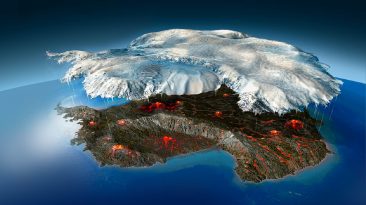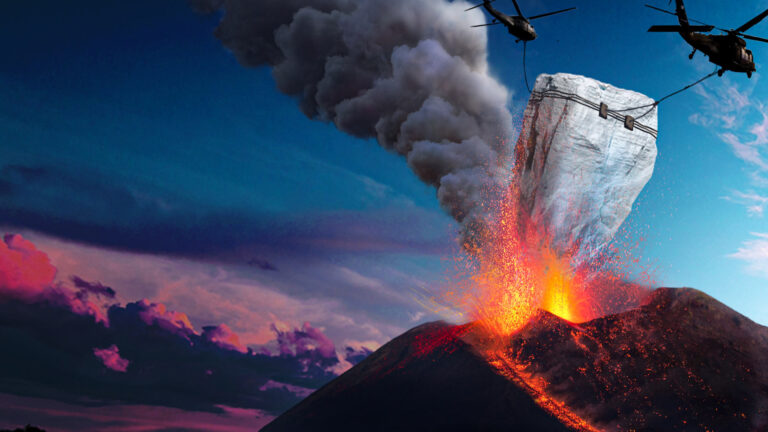
A nearby volcano is showing signs of an imminent eruption. Seismic activity is increasing, magma is rising, and the pressure beneath the surface is building. In a situation like this, the instinct might be to look for anything that could cool it down before catastrophe strikes. If fire can be fought with water in some scenarios, then maybe extreme heat can be stopped with extreme cold.
This leads to a strange but intriguing question. What would happen if an iceberg were dropped directly into an active volcano?
At first, the idea seems like a dramatic form of emergency cooling. Ice is one of the coldest natural materials available on Earth, while lava is among the hottest. Bringing the two together might sound like a way to neutralize the heat. However, physics tells a very different story.
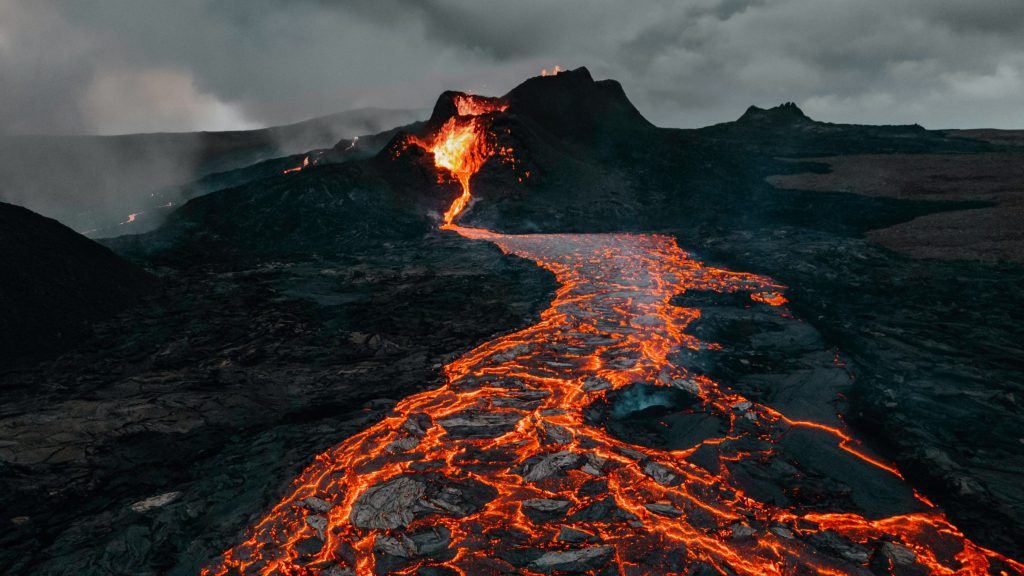
This is not the first time humans have attempted to interfere with lava flows. In Iceland, efforts have been made to slow advancing lava by using massive amounts of seawater. Billions of liters were pumped onto lava fields in an attempt to cool and redirect molten rock away from populated areas.
While these efforts did not stop the lava completely, they did help slow and redirect its path, protecting key infrastructure such as harbors. Even so, lava remains extremely difficult to control once it is in motion.
Now imagine scaling that idea up to something far more extreme. Instead of water, an iceberg the size of a small city is dropped directly into a volcanic crater filled with molten rock.
To test this scenario, consider a highly active lava lake such as Mount Michael in the South Sandwich Islands. This volcanic system contains a constantly bubbling lava lake with temperatures approaching or exceeding 1,000 degrees Celsius.
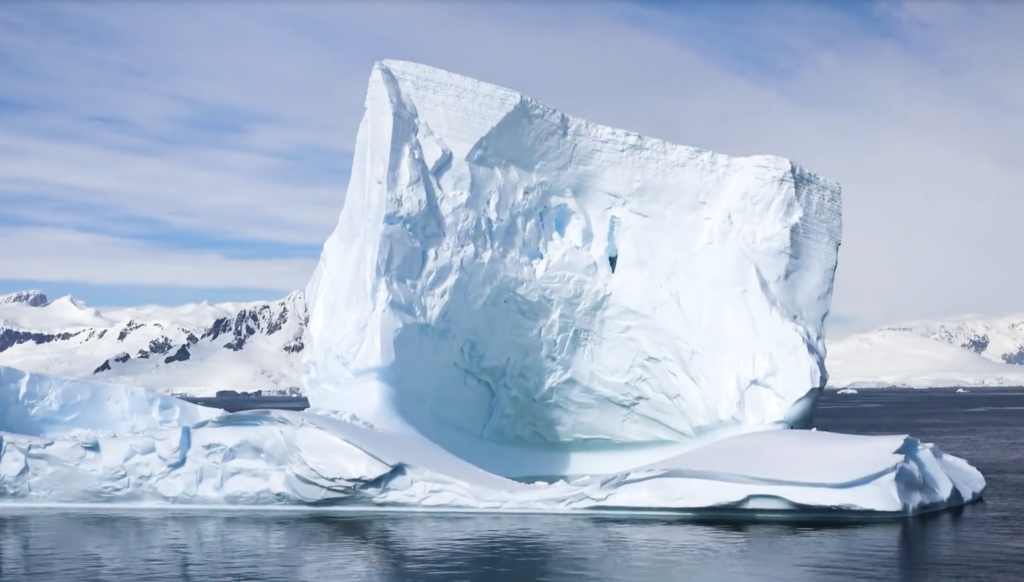
An iceberg large enough to interact meaningfully with such a system would need to be enormous. Icebergs of this scale do exist, especially in polar regions, where massive sections of ice can break away from glaciers and drift into open ocean.
When a structure of frozen water encounters molten lava, the temperature difference is so extreme that the ice does not melt in a controlled way. Instead, it transitions almost instantly into steam, bypassing the liquid phase in a process driven by rapid heat transfer.
This rapid phase change creates an immediate expansion in volume. Water expands dramatically when converted into steam, and when this happens suddenly inside a confined or semi confined volcanic structure, the result is a violent increase in pressure.
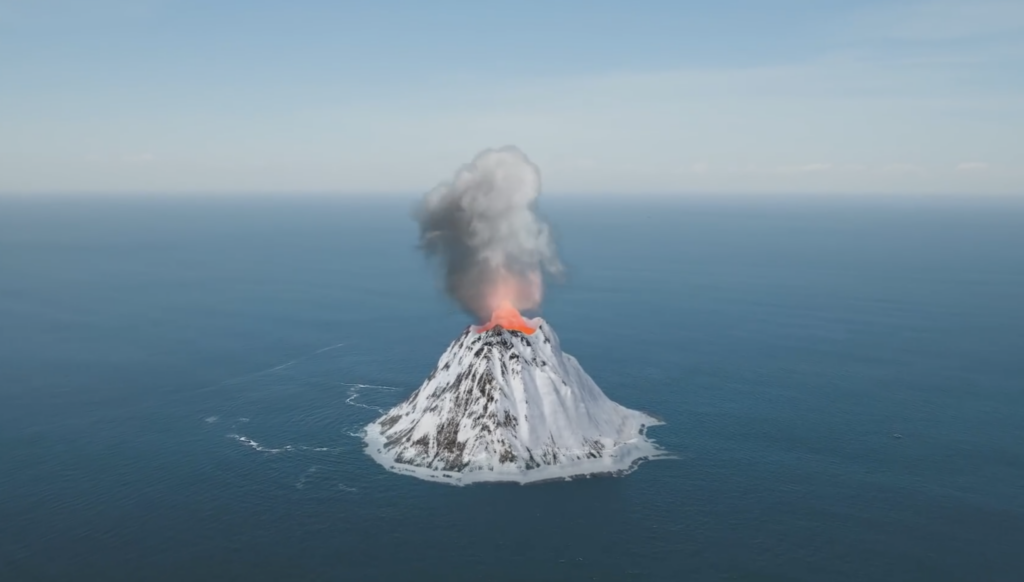
In one possible outcome, this rapid steam generation triggers an explosion. The expanding vapor forces magma, rock fragments, and ash into the air, potentially increasing the intensity of the eruption rather than reducing it.
Volcanic material ejected in this way can include tephra, which ranges from fine ash to large fragments of rock. In more extreme cases, explosive pressure can launch debris hundreds of meters into the atmosphere, creating additional hazards for surrounding areas.
Another possibility is slightly less immediate but still dangerous. If part of the iceberg cools the surface of the lava quickly enough, it may form a hardened crust over the molten material beneath.
This crust might appear to stabilize the surface temporarily, similar to a solid shell forming over a boiling liquid. However, this is where the danger increases in a different way.
Volcanic systems release large amounts of gas as magma rises and decompresses. If a solid layer traps these gases beneath the surface, pressure continues to build with no easy escape route.
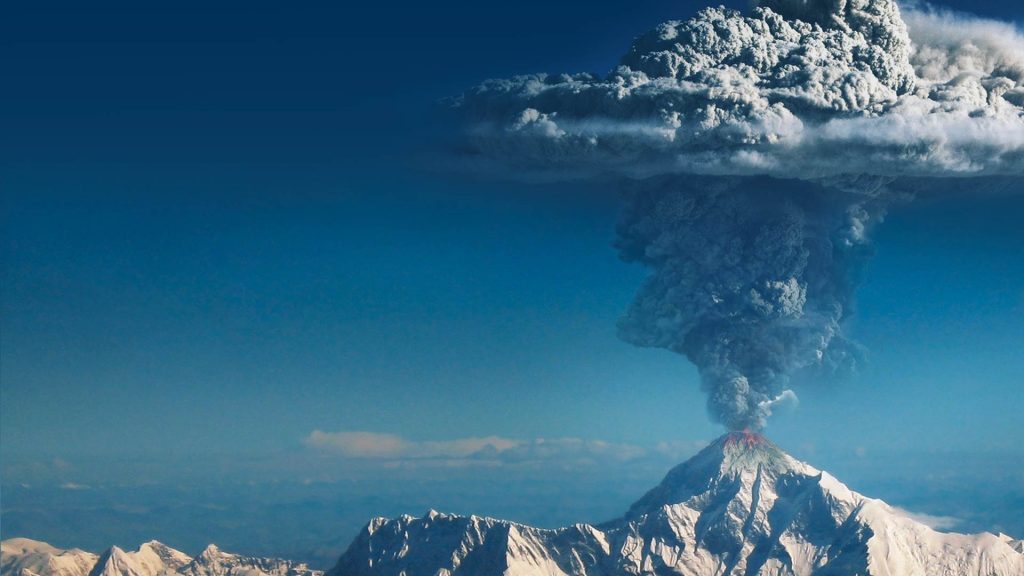
Eventually, that trapped pressure must be released. When it exceeds the strength of the overlying rock and hardened lava, it can result in a sudden and powerful explosive eruption. In this case, the attempt to stabilize the volcano actually makes it more volatile.
These outcomes highlight an important principle in geophysics. Extreme systems like volcanoes do not respond to simple interventions in predictable ways. Introducing a strong external force, such as an iceberg, can amplify instability rather than reduce it.
Volcanic eruptions are driven by complex interactions between heat, pressure, and gas dynamics deep within the Earth. Once these systems are in motion, direct interference can create unintended feedback loops that increase the severity of the event.
In practical terms, this means that attempting to cool a volcano with ice is not only ineffective but potentially dangerous. The interaction between ice and lava introduces rapid phase changes and pressure fluctuations that can escalate the situation.
Instead of calming an eruption, such an intervention could transform a localized volcanic event into a more explosive and unpredictable system.
While the idea of fighting fire with ice is visually striking, nature operates on scales and energy levels that often defy intuitive solutions. In the case of volcanoes, the safest approach remains distance and monitoring rather than direct physical interference.