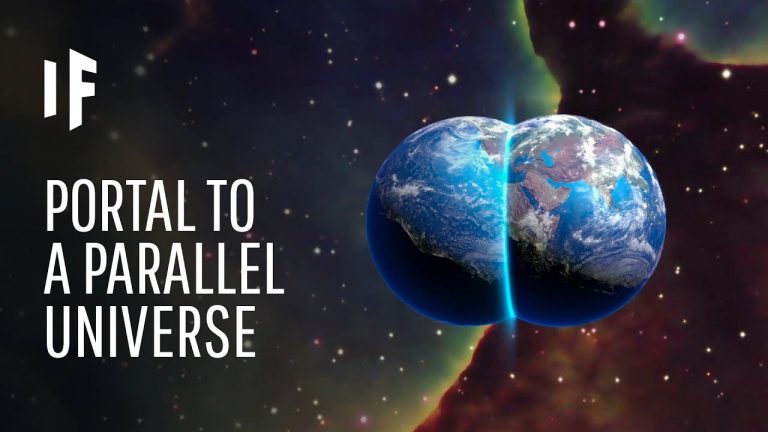
The idea that our Universe might not be alone is one of the most fascinating possibilities in modern physics. What if reality is not singular, but instead just one layer in an endless stack of universes? And what if somewhere out there, versions of you are living completely different lives?
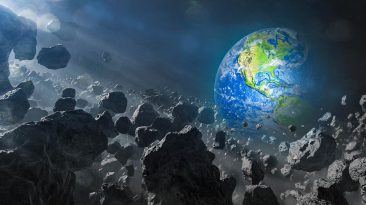
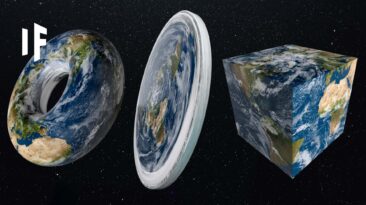
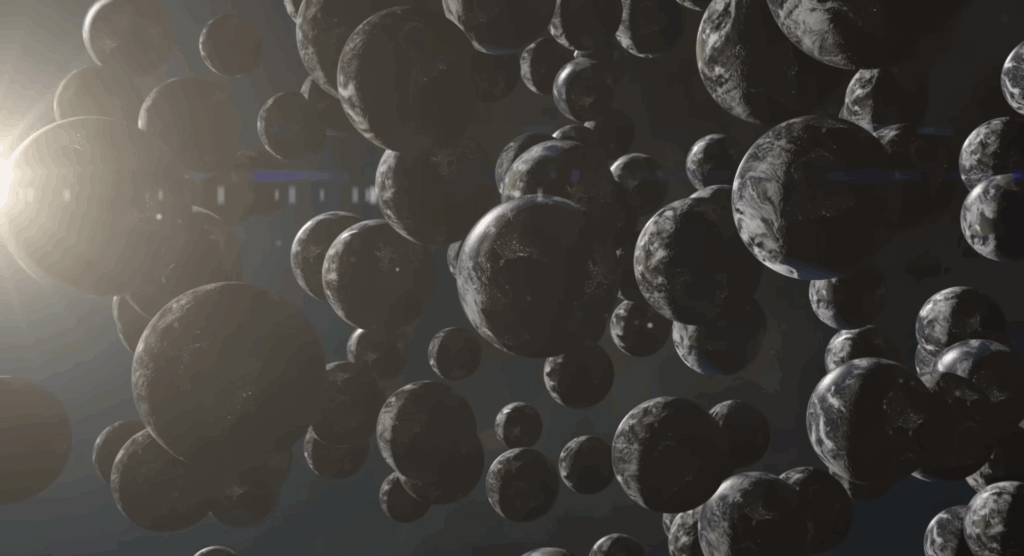
In this scenario, the cosmos would not contain just one Earth, but potentially infinite Earths, each shaped by different outcomes, choices, and physical conditions. Some might be almost identical to our own world, while others could be so different they are barely recognizable.
The concept of a multiverse comes from attempts to understand how space and time behave on the largest scales. Our Universe began with the Big Bang around 13.7 billion years ago, emerging from an extremely hot and dense state. But some theories suggest that this event may not have been unique.
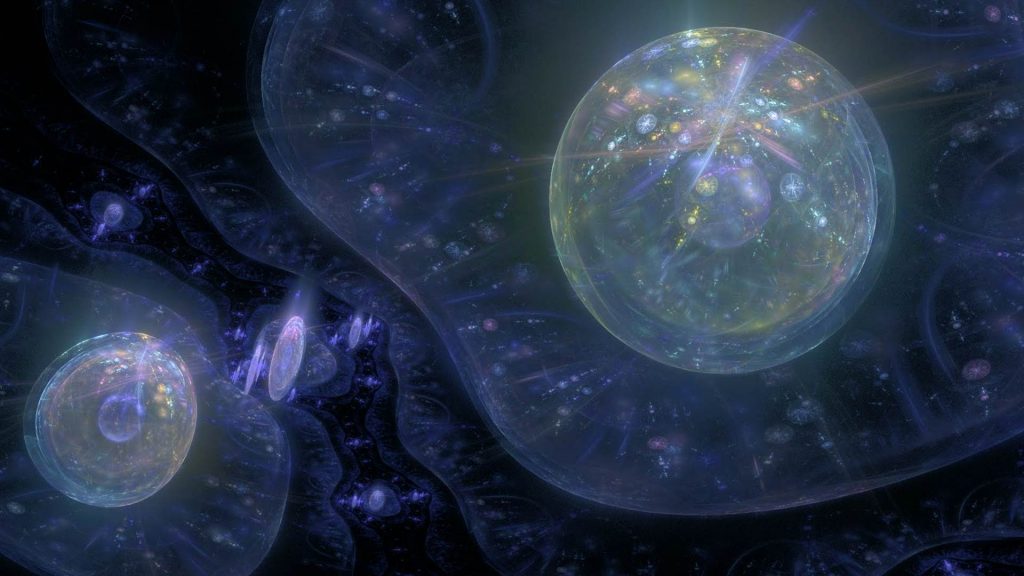
Instead, space time itself could stretch far beyond what we can observe, forming a vast structure where countless universes exist independently of one another.
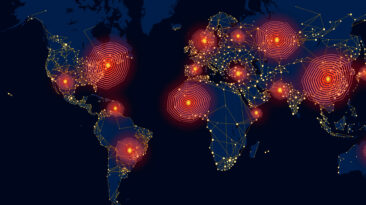
In this framework, reality becomes something like a cosmic pattern. If the number of ways particles can arrange themselves is finite, then over immense scales, those arrangements could eventually repeat. That means somewhere far beyond our observable horizon, a version of you might exist living a life almost identical to your own.
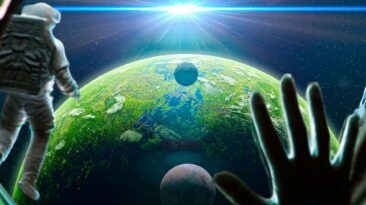
Some interpretations of physics even suggest that these universes could be incredibly close in a higher dimensional sense, possibly separated by distances far smaller than anything we can perceive.
But even if parallel universes exist, reaching them is a completely different challenge.
One speculative idea involves using high energy particle experiments to test whether “mirror versions” of particles exist. In some theories, neutrons could transform into mirror counterparts under very specific conditions. Because of this, researchers have proposed experiments using powerful neutron beams and dense shielding materials to detect unusual behavior.
These experiments are extremely complex and remain purely theoretical in terms of interuniversal travel. However, they raise an interesting question. If particles can behave differently than expected, could it hint at hidden structures beyond our own Universe?
Some experimental observations in particle physics have shown small inconsistencies in neutron decay times depending on how they are measured. While these differences are still being studied and debated, they have sparked curiosity about whether unknown factors or hidden dimensions could be influencing results.
However, even if a mirror universe exists, it would not necessarily resemble ours in any meaningful way. The probability of finding an identical copy of Earth, or even an identical version of yourself, becomes astronomically small when you consider the number of particles and interactions required to replicate a single moment in time.
Every atom in the Universe has undergone billions of years of interactions since the Big Bang. Reproducing that exact history elsewhere would require conditions so precise that it may be practically impossible.
Still, the idea of a mirror universe remains open in theory. Some scientists even speculate that dark matter, which makes up most of the mass in the Universe, could be linked to hidden or parallel sectors of reality that we cannot directly observe.
Dark matter interacts through gravity, shaping galaxies and holding cosmic structures together, yet it remains invisible to every instrument we have built. If it is connected to another layer of reality, it could mean that what we call empty space is actually far more complex than it appears.
Even if a portal to another universe were ever discovered, it would likely not resemble science fiction gateways. Instead, it might exist on a microscopic scale, limited to particle level interactions that are far too small for a human to pass through.
In that sense, entering another universe might require more than technology. It might require changing what we fundamentally are, down to the scale of atoms themselves.
For now, the idea remains one of the most intriguing mysteries in physics, sitting at the edge of imagination and science.