
Imagine a normal night at home suddenly interrupted by a blazing space rock crashing straight through your roof. Glass shatters, furniture is destroyed, and in seconds your quiet evening turns into chaos. But how likely is something like this? And what would actually happen if a meteorite landed in your home?
Space is full of rocky debris orbiting the Sun. Depending on size, these objects are called asteroids or meteoroids. Most of them never reach Earth’s surface. Instead, they burn up in the atmosphere and create bright streaks of light known as meteors.

However, some survive the journey. When a fragment of space rock reaches the ground, it is called a meteorite. Scientists estimate that around 44,000 kilograms of meteoritic material fall to Earth every day, although most of it lands in oceans or remote areas where no one notices.
Now imagine one of those rare objects is headed directly toward your home. A meteoroid enters the atmosphere at speeds between 10 and 70 kilometers per second, compressing air in front of it and generating extreme heat. Temperatures can rise to around 1,650 degrees Celsius as the object glows brightly during its descent.
As it travels downward, most of its outer layers burn away in a process called ablation. This is why the majority of space rocks never survive to reach the ground. In fact, only a few hundred meteorites make it to Earth’s surface each year.

But in this scenario, you have the worst possible luck. A meteorite survives the atmosphere, breaks through your roof, and crashes into your bedroom. You wake up to the sound of destruction and find a dark, rocky object lying nearby.
Shock quickly sets in. You might even expect it to be burning hot, but surprisingly, it is not. Despite its fiery journey through the atmosphere, most meteorites are only warm or even cold by the time they land. This is because heat affects only the outer surface while the interior remains insulated.
Carefully, you inspect the object. It feels heavy, possibly weighing several kilograms. For something so small, the potential energy it carried during impact is astonishing. If it had struck you directly, the outcome could have been far worse.
Then you notice something unusual: a strange smell. Meteorites can sometimes produce odors depending on their composition, described as metallic, earthy, or even similar to burnt organic material.
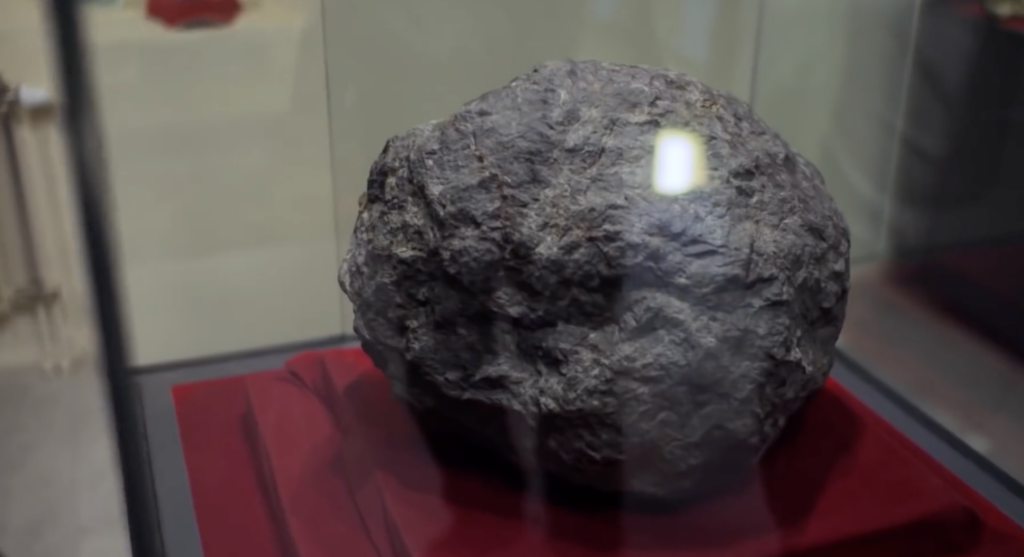
At this point, you realize how rare your situation is. One of the most famous real cases happened in 1954 in Alabama, when Ann Hodges was struck by a meteorite while she was sleeping. She survived with only a bruise, becoming the only confirmed person ever directly hit by a space rock.
Your meteorite, however, might be more than just a strange piece of space debris. Meteorites can be valuable to collectors and scientists. Depending on rarity and condition, they can be worth anywhere from a few cents to thousands of dollars per gram.
So what started as a terrifying home invasion from space could turn into an unexpected discovery of enormous scientific and financial value. Still, you would probably prefer not to experience it again.
After all, it is one thing to dream about space rocks. It is another thing entirely to have one crash through your ceiling.