






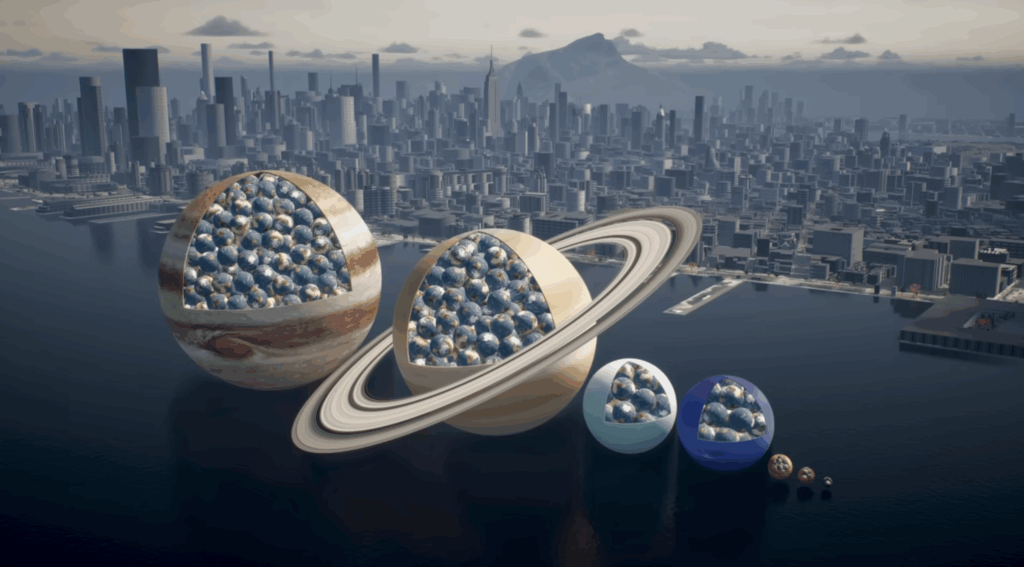
The Solar System is far more diverse in size than it appears from Earth. From tiny rocky worlds to massive gas giants, each planet differs dramatically in scale. To truly understand these differences, scientists often compare how many Earths or moons could fit inside each planet.
These comparisons reveal just how extreme planetary sizes can become, and how small our own world is in the larger structure of space.
Mercury: The Smallest Planet
Mercury is the smallest planet in the Solar System. In fact, it is so small that no Earth sized planet could fit inside it. Even so, it can still hold multiple smaller moons and dwarf planets in terms of volume comparison.
For example, Mercury could contain a couple of Earth’s moons or several small icy bodies like Europa. It could also fit multiple dwarf planets such as Pluto. Even though it is the smallest planet, it still shows how even “tiny” worlds in space are far larger than anything we experience on Earth.
Mars: The Red Planet
Mars is about half the size of Earth and significantly larger than Mercury. In terms of volume, it could fit two Mercuries inside it.
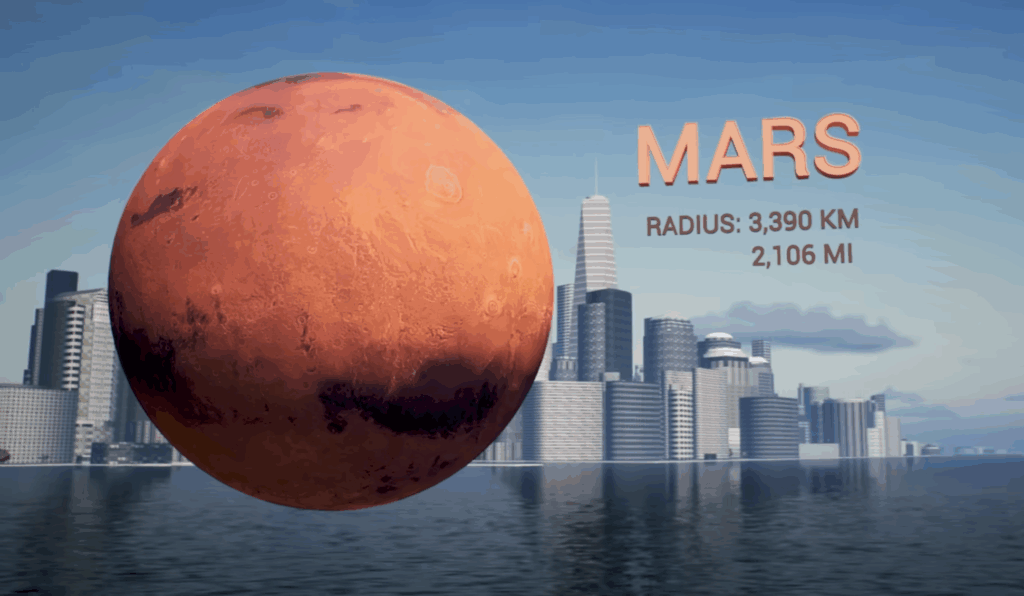
It could also contain several of Earth’s moons or multiple dwarf planets. While Mars is smaller than Earth and Venus, it is still a substantial planetary body with enough volume to make smaller worlds look tiny in comparison.
As we move outward from the Sun, each planet becomes increasingly massive, and Mars represents an important step in that scaling pattern.
Venus: Earth’s Twin
Venus is often called Earth’s twin because of its similar size and mass. It is only slightly smaller than Earth, making the two planets nearly comparable in volume.
Venus could fit several Mars sized planets inside it and many times more Mercury sized worlds. It can also contain large moons like Ganymede in comparison scale models.
This similarity in size between Venus and Earth makes it a useful reference point when understanding how rapidly planetary scale increases in the outer Solar System.
Earth: Our Reference World
Earth provides the baseline for all planetary comparisons. In simple volume terms, it could contain dozens of Earth’s moons.
While it may seem large from our perspective, Earth is relatively modest when compared to the gas giants. It is, however, the only known planet capable of supporting complex life as we understand it.
Earth serves as the measurement standard that helps scientists visualize just how extreme planetary sizes become beyond the inner Solar System.
Neptune: The Smallest Ice Giant
Neptune marks the beginning of the giant planets. Even though it is the smallest of the ice giants, it is still enormous compared to Earth.
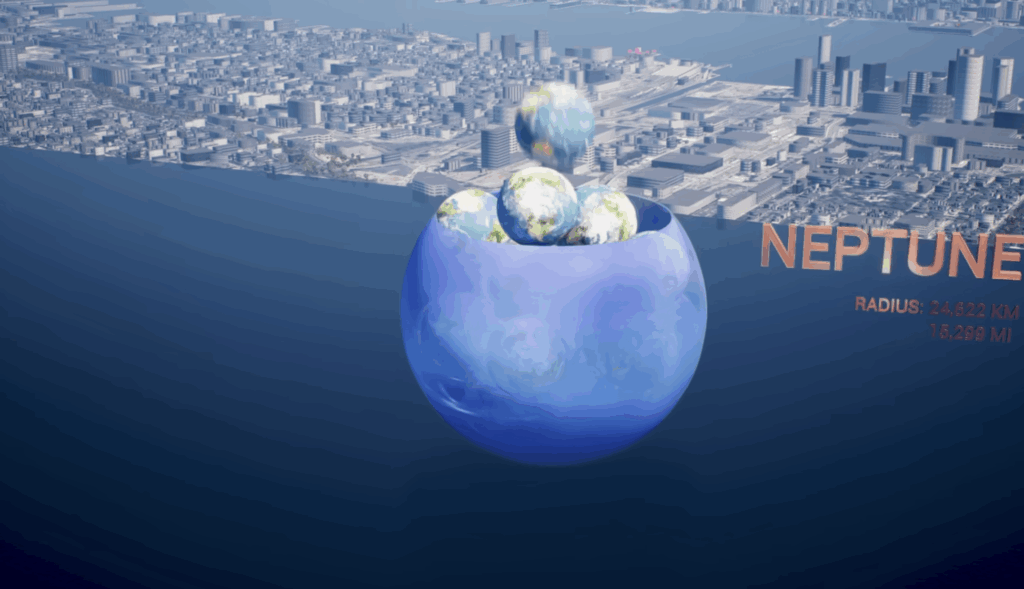
Neptune could fit dozens of Earth sized planets inside its volume, along with hundreds of Mars sized worlds and over a thousand Mercury sized bodies.
At this scale, planets stop being comparable to Earth in any intuitive way. Neptune shows how quickly size escalates once you reach the outer Solar System.
Uranus
Uranus is slightly larger than Neptune and continues the trend of massive ice giants. It could contain one Neptune and many dozens of Earths within its volume.
It could also fit thousands of dwarf planets like Pluto, showing just how much space exists inside these distant worlds.
Uranus demonstrates the sharp transition from rocky planets to massive ice giants, where size differences become almost difficult to imagine.
Saturn: The Ringed Giant
Saturn takes planetary scale even further. It is large enough to contain more than a dozen Uranus sized planets.
Inside Saturn, hundreds of Earths could fit at once, along with thousands of smaller planets and over one hundred thousand Pluto sized objects.
Although its rings are its most recognizable feature, Saturn itself is an enormous gas giant that dominates the outer Solar System in scale.
Jupiter: The Largest Planet
Jupiter is the largest planet in the Solar System and sets the upper limit for planetary size in our neighborhood.
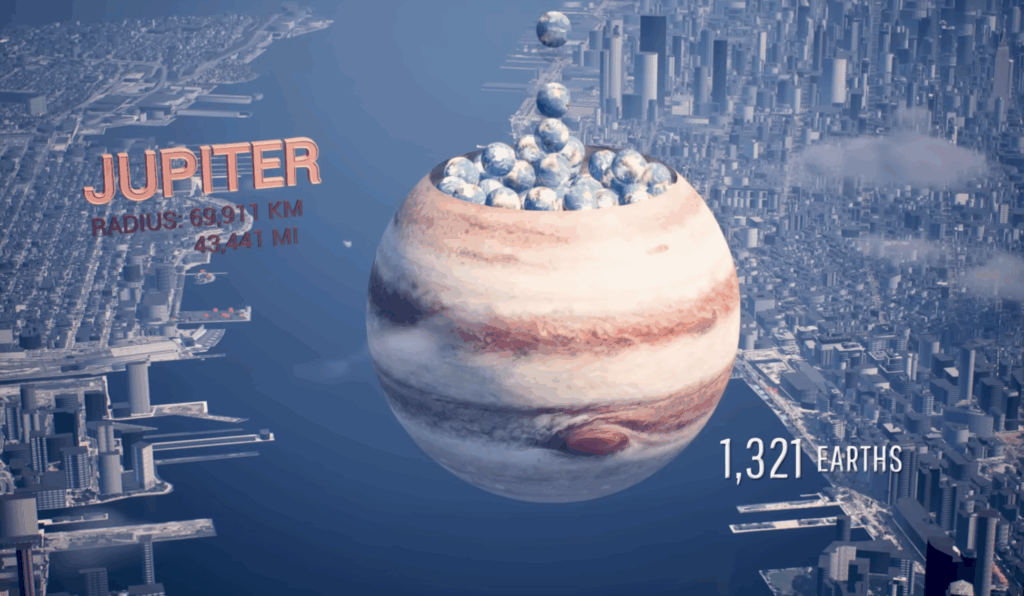
It could fit all the other planets inside it in various combinations, including more than a thousand Earth sized worlds.
Its volume is so vast that even comparisons with other gas giants become difficult to visualize. Jupiter truly represents the extreme end of planetary scale in our Solar System.
The Sun: The Ultimate Giant
Even Jupiter becomes small when compared to the Sun. Our star could contain over a million Earths inside its volume.
It could also fit hundreds of Jupiters, making it the dominant object in the entire Solar System by a massive margin.
The Sun controls nearly everything in our planetary system, from gravity to energy, and its size reflects that overwhelming influence.