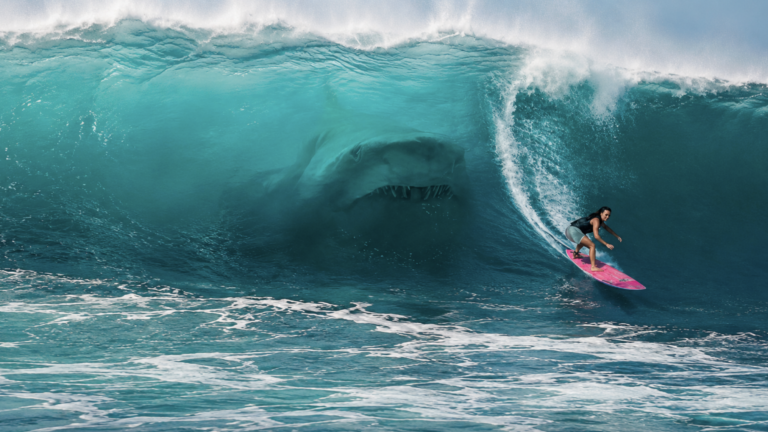
A shadow appears beneath the surface. At first it is distant, almost harmless. Then it grows closer. A triangular fin cuts through the water, moving steadily in your direction.
In that moment, even the calmest swimmer can feel a rush of fear.
Sharks have long been misunderstood as relentless predators, but science shows a more complex picture. Most shark encounters are not attacks, but curiosity driven investigations. Still, knowing how to behave in these rare situations can dramatically improve your chances of staying safe.

So what should you actually do if you ever find yourself near a shark?
Researchers and marine safety experts generally divide survival advice into two stages: prevention and response.
The first and most important rule is avoiding unnecessary risk in the ocean. Sharks are more commonly found in deeper waters, near drop offs, harbor entrances, and areas where fish gather. Swimming in these zones increases the chance of an encounter.
Low visibility conditions can also increase risk. Many sharks are active at night or in low light, relying on their senses to navigate and hunt.

If you spot a shark while already in the water and it is not behaving aggressively, the worst thing you can do is panic. Sudden splashing or erratic movement can attract attention. Instead, experts recommend staying as still and controlled as possible while slowly and calmly moving toward safety.
Contrary to popular myths, there is no strong evidence that urine in the water attracts sharks. However, blood and other biological signals can be detected by sharks at long distances, which is why anyone with an open wound is advised to leave the water immediately.
Once a shark becomes aware of your presence, behavior becomes critical.
Playing dead is not an effective strategy in shark encounters. Unlike some land predators, sharks do not rely on hesitation when deciding to investigate movement or potential prey.
If a shark begins to circle closely or shows signs of aggression, experts advise active defense. This means attempting to deter the shark rather than passively waiting.

Sharks have several sensitive areas, including the eyes, gills, and snout. Forceful strikes to these regions can sometimes cause the animal to disengage. In rare survival cases, people have used any available object such as fins, cameras, or diving equipment to increase the effectiveness of defensive actions.
The goal is not to fight the shark indefinitely, but to create enough disruption for it to retreat.
If contact escalates into a bite, continuing to resist can help prevent the shark from maintaining its grip. Many documented cases of survival involve individuals who managed to push the shark away during the encounter.
Once the shark withdraws, it is important to leave the water immediately. Even if the animal appears to have gone, it may return, especially if it is still curious or agitated.
After reaching safety, medical attention becomes the priority. Shark bites can cause significant blood loss and tissue damage. Applying pressure to the wound and staying as calm as possible can help slow bleeding until professional treatment is available.
While shark attacks are extremely rare, they can be serious, which is why preparation and awareness matter.
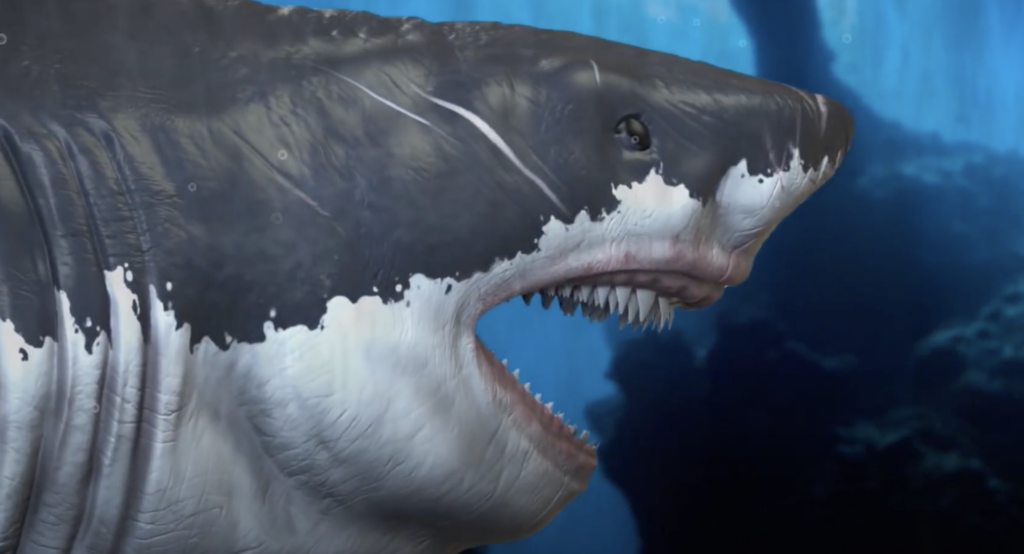
It is also worth noting that sharks do not actively seek out humans as prey. Most species are not interested in human flesh, and many incidents occur due to mistaken identity or curiosity.
In reality, humans are far more dangerous to sharks than sharks are to humans, with populations of many species declining due to human activity.
So while the idea of a shark encounter can be frightening, understanding how sharks behave helps replace fear with awareness.
And in most cases, the best survival strategy is still the simplest one: avoid risky situations, stay calm, and respect the ocean environment.