Our oceans are a place of constant contrast. Calm surface waters hide a world of darkness, pressure, and strange life forms that most humans will never see. While many people explore the sea through scuba diving or deep sea footage, the reality below the waves is far less predictable than it appears.
Sometimes, what looks like a peaceful underwater landscape can suddenly reveal something far more unsettling.
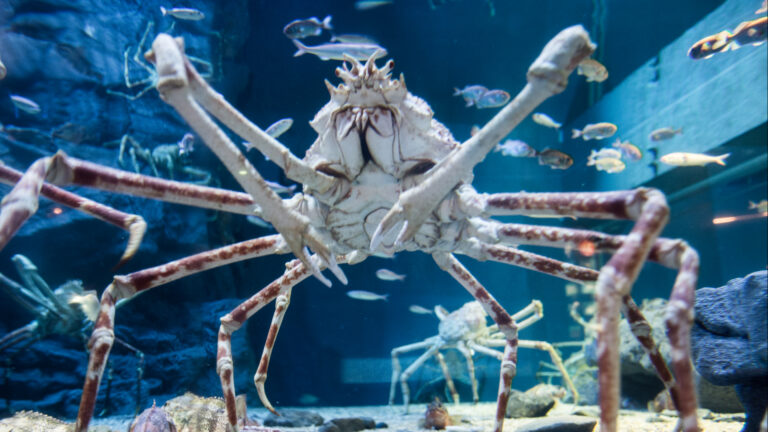
One of the most striking examples of this hidden world is the Japanese spider crab, a creature so unusual in appearance and scale that it often looks more like a machine than a living animal. With extremely long legs stretching across the seafloor, it is one of the most visually intimidating animals in the ocean.
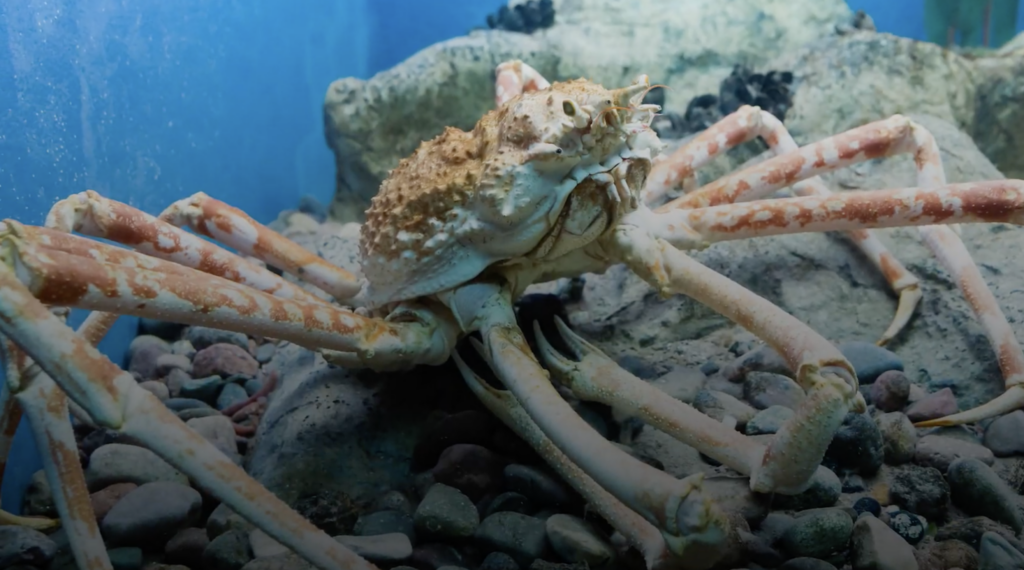
Despite their appearance, these crabs are not active predators of humans, but their size alone is enough to capture attention. Their leg span can reach over three meters, making them the largest known species of crab in the world. Living at depths of around 150 to 300 meters, they inhabit a part of the ocean that remains difficult for humans to fully explore.
Their claws are strong and efficient tools used for breaking apart shellfish such as clams and mussels. In their environment, this makes them effective scavengers, capable of feeding on whatever organic material reaches the ocean floor.
One of the most unusual aspects of Japanese spider crabs is their use of camouflage. They belong to a group often called decorator crabs, meaning they can attach pieces of their surroundings, such as seaweed and debris, onto their shells. This allows them to blend into the ocean floor and avoid predators. From a distance, they can appear almost indistinguishable from the environment around them.
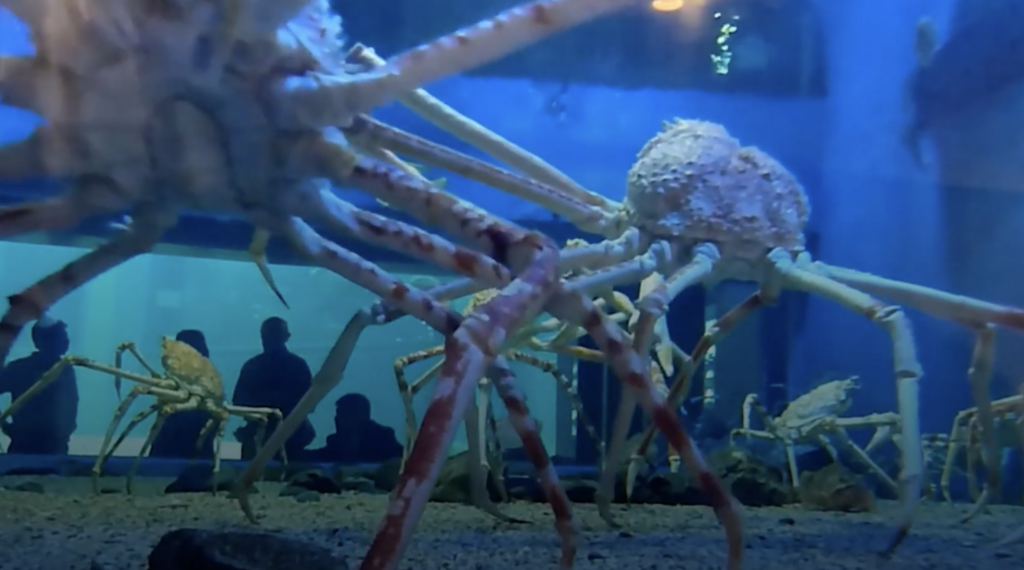
Another feature that makes them so fascinating is their ability to regenerate lost limbs. Japanese spider crabs can survive even after losing multiple legs, and over time they are capable of growing them back through natural regeneration processes. This resilience has contributed to their reputation as long surviving and highly adaptable creatures.
They also grow throughout their lives by shedding their exoskeleton in a process called molting. During this time, the crab forms a new shell underneath the old one and eventually breaks free. While this allows them to increase in size, it also leaves them vulnerable for a period of time before the new shell hardens.
Because of this growth pattern, some individuals can live for many decades and reach enormous sizes compared to most marine species. The largest recorded specimens have become almost legendary among deep sea researchers, sometimes nicknamed due to their massive proportions.
Despite their intimidating appearance, Japanese spider crabs are not considered dangerous to humans. They are generally slow moving scavengers that feed on dead or decaying material on the ocean floor. This behavior plays an important role in the ecosystem, helping to clean up organic waste in deep sea environments.
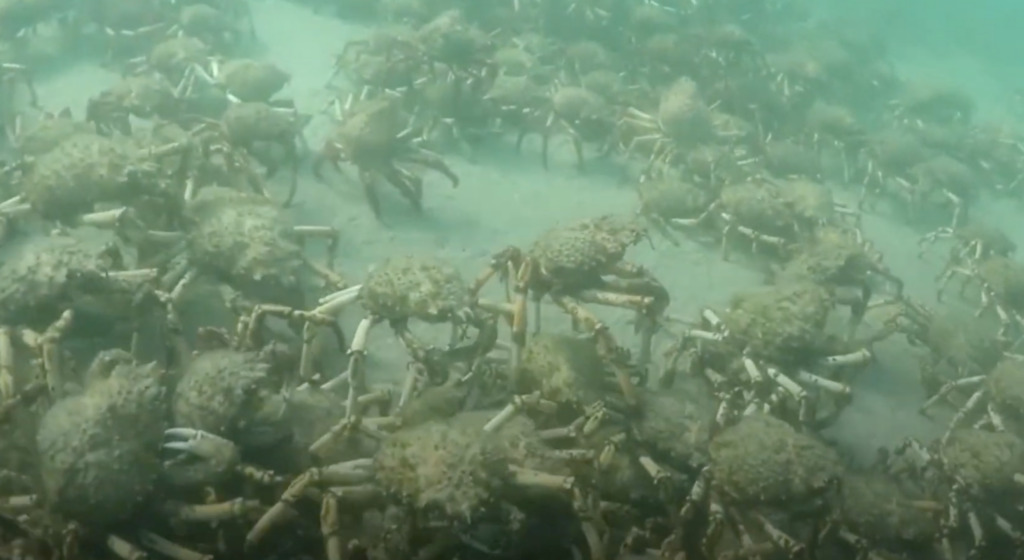
Their diet and behavior have also contributed to ocean legends. In the past, sailors told stories of large crabs dragging bodies beneath the waves, but there is no evidence that these animals actively hunt humans. In reality, any interaction with human remains would be incidental rather than predatory.
Encounters between humans and Japanese spider crabs are extremely rare, as they live far below the surface where light barely reaches. Even researchers who study them often describe them as calm and slow moving, more curious than aggressive.
In the end, these creatures show how misleading appearances can be. What looks like a nightmare from the deep is actually a highly adapted scavenger playing an important role in the ocean’s ecosystem. The Japanese spider crab may look like something out of a story, but it is very real, and it is just one of many reminders that the deep sea is still full of unknown wonders.