Imagine if it were possible to pull energy straight out of empty space. Not from fuel, not from sunlight, but from nothing itself. At first, this idea sounds impossible, because a vacuum is usually defined as empty. But in quantum physics, emptiness is not truly empty at all.
If you go deeper than atoms and particles, into the strange world of quantum fields, space begins to behave very differently. Even in a vacuum, tiny fluctuations constantly appear and disappear. Particles briefly form, then vanish again, as if space itself is never completely still.
These fluctuations are not just random noise. They are believed to contain a form of energy known as vacuum energy. This raises a fascinating question in physics. If this energy exists everywhere, could it ever be extracted and used?
This is where the concept of zero point energy comes in. It refers to the lowest possible energy state of a system, the background energy that remains even when all other motion has been removed. According to quantum field theory, space itself still contains this baseline energy.
In theory, the amount of energy contained in a small volume of space could be enormous. Some interpretations of the equations suggest it could be effectively limitless. However, turning that into usable power is an entirely different challenge.
At the quantum level, particles do not behave like solid objects with fixed positions. Instead, their properties are described by probabilities. This is part of the Heisenberg uncertainty principle, which states that certain measurements, such as position and momentum, cannot both be known with perfect accuracy at the same time.
This same principle is linked to the idea that vacuum energy is always present. It is not something added to space. It is a built in property of it. The difficulty lies not in proving it exists, but in finding any way to access it.
One of the major obstacles is temperature and energy balance. Even the emptiest regions of space are not at absolute zero. The cosmic background temperature is around 2.7 Kelvin, meaning space still contains leftover energy from the early universe.
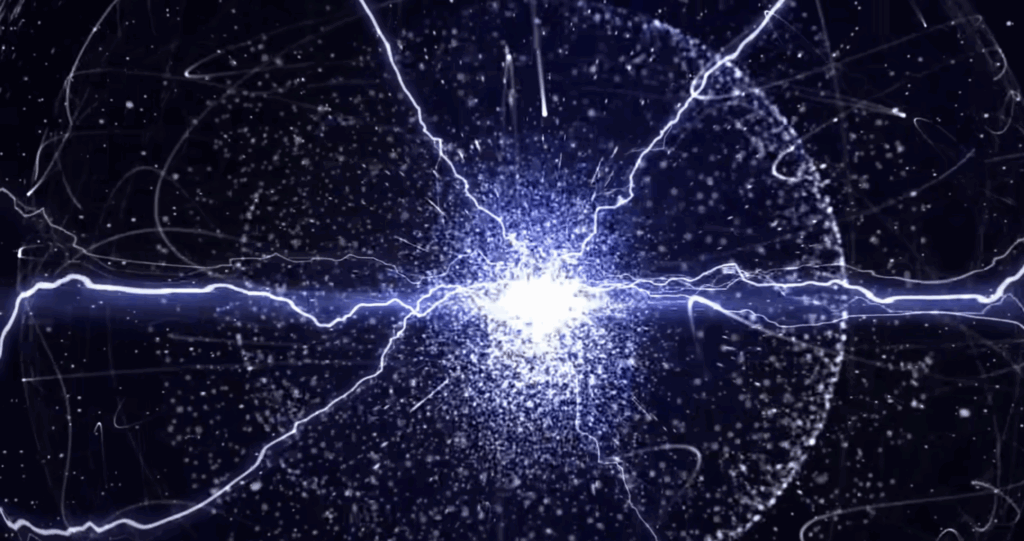
In theory, extracting energy from a vacuum would require creating conditions where energy differences can be isolated and captured. The problem is that any system designed to do this would likely require at least as much energy as it produces, based on current understanding of thermodynamics.
This is why zero point energy remains a theoretical concept rather than a practical power source. It appears in equations, but not in engineering systems.
However, if we imagine a future where these physical barriers are solved, the consequences would be transformative. A civilization with access to near unlimited energy would no longer depend on traditional fuel sources.
Electricity could become extremely cheap or widely available at minimal cost. Transportation systems could become fully electrified, and energy scarcity would no longer shape economic or political systems.
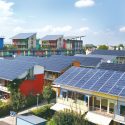
Entire industries built around fossil fuels would disappear, and even renewable energy systems like solar and wind might become secondary options rather than essential infrastructure.
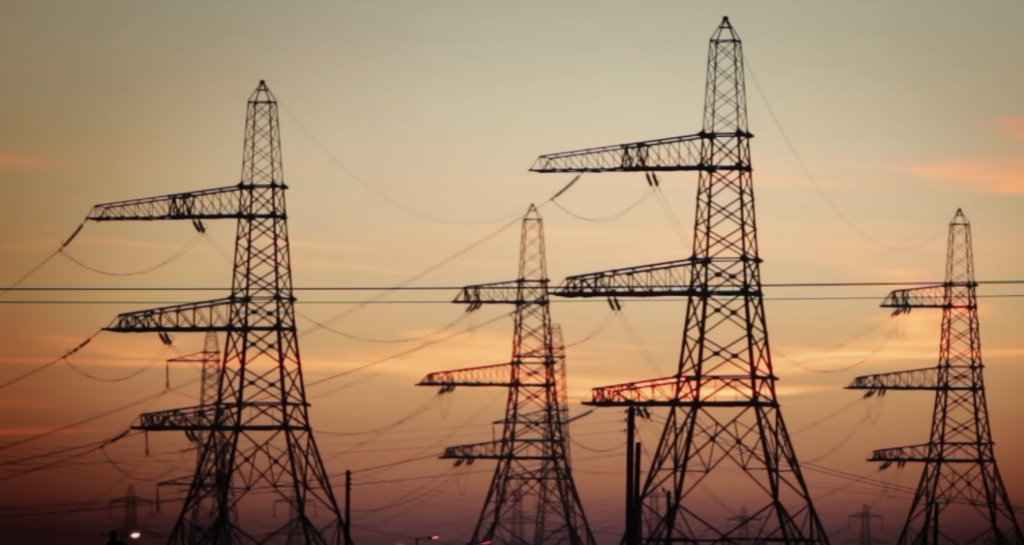
But unlimited energy would not automatically create a balanced world. History shows that when resources become abundant, consumption often increases. Without control, energy use could expand in ways that still strain the environment in other forms.
Because of this, regulation would likely become essential. Governments and global systems would need to manage how such a powerful resource is distributed and used.
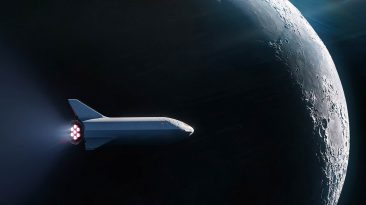
At the same time, the positive possibilities would be enormous. Space travel could become far more accessible, with faster and more efficient propulsion systems opening the Solar System to exploration.
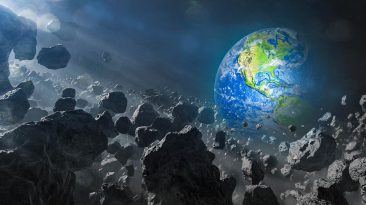
Missions to asteroids, outer planets, and eventually even interstellar space could become realistic long term goals. Human expansion beyond Earth would shift from science fiction toward engineering challenges.
In the end, zero point energy represents one of the most fascinating ideas in modern physics. Even if it never becomes usable, it pushes us to rethink what energy, space, and emptiness actually mean.