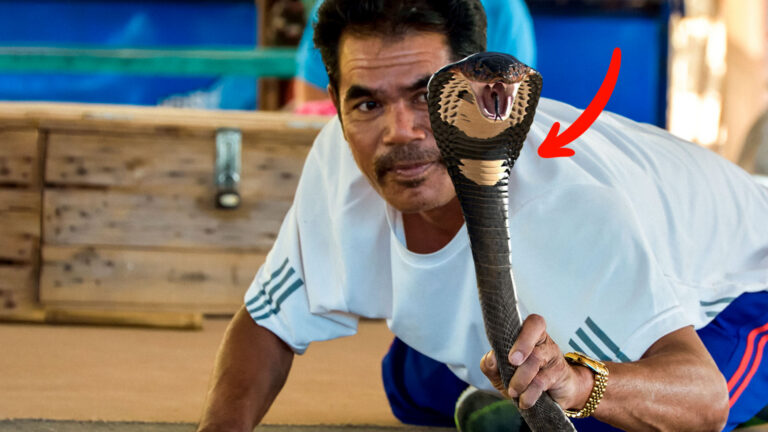
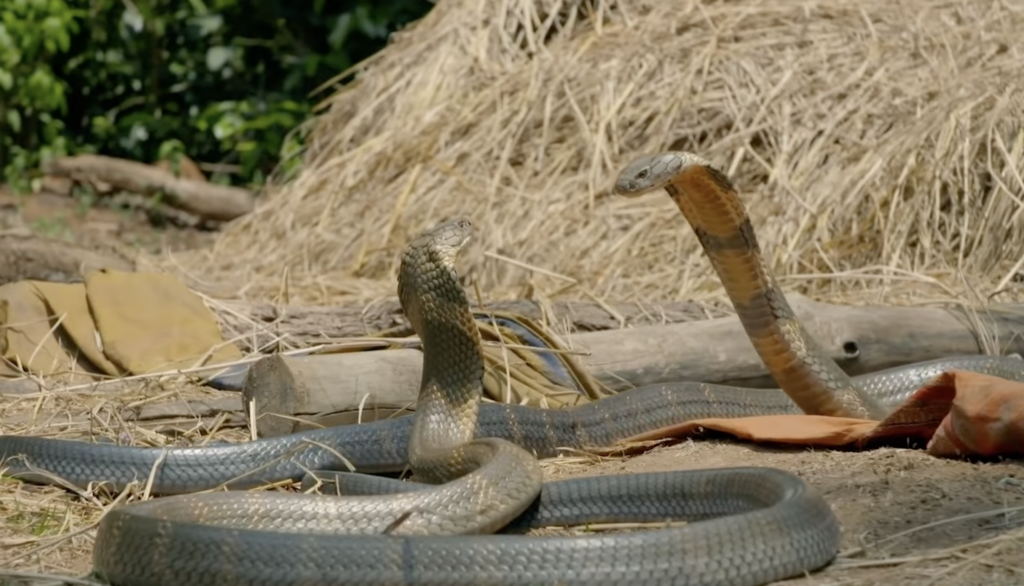
The king cobra is one of the most dangerous reptiles on Earth. It is the longest venomous snake in the world and can be found across India, South China, and Southeast Asia.
Its natural habitats include bamboo thickets, forests, high altitude grasslands, mangrove swamps, and river regions. Despite their fearsome reputation, king cobras are generally elusive and prefer to avoid humans when possible.
What makes them especially dangerous is their ability to lift up to one third of their body off the ground and strike forward with surprising speed.
Although king cobra venom is not the most toxic among snakes, it is delivered in extremely large quantities. A single bite can contain enough neurotoxin to kill up to 20 humans or even an elephant.
In this guide, you will learn what to do if you ever come face to face with a king cobra.
Step 1. Watch for nests
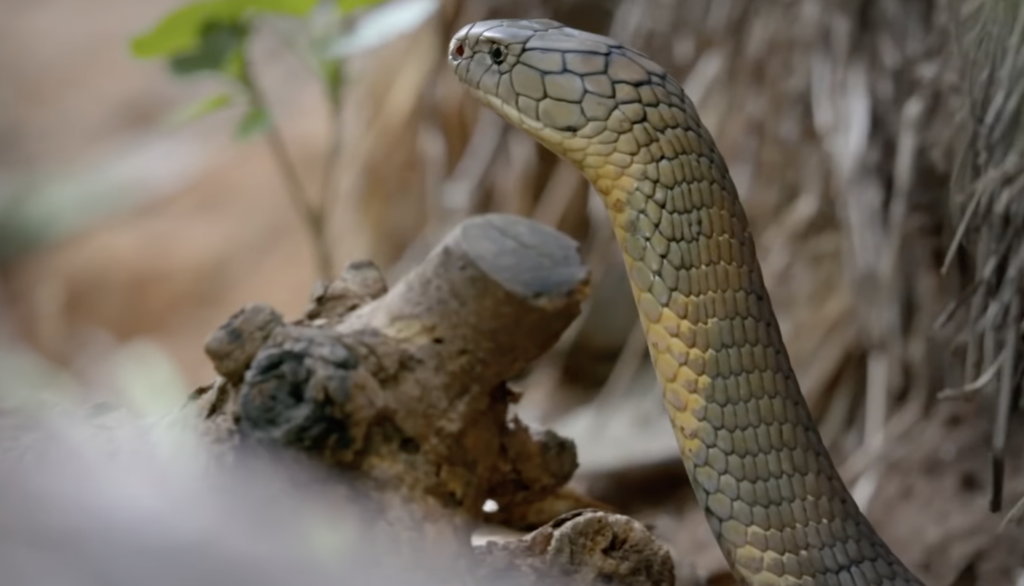
King cobras are highly territorial, especially when protecting their nesting areas. They have strong eyesight compared to many other snakes and can detect movement from nearly 100 meters (330 feet) away.
If you spot one, it may already be aware of your presence and could be preparing to defend itself. In most cases, the safest action is to slowly and carefully move away.
However, the real danger comes when you unknowingly get close to their eggs. The king cobra is the only snake species known to build nests, and it will defend them aggressively.
Step 2. Read its warning signs
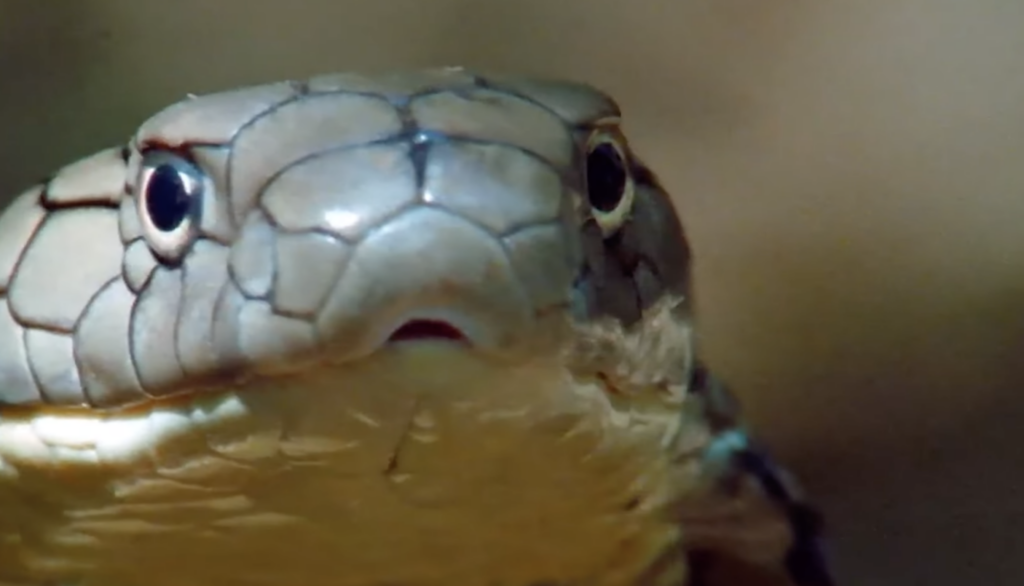
If you are in its territory, the snake will usually warn you before attacking. It may raise the front of its body off the ground, spread its iconic hood, and expose its fangs.
You may also hear a loud hiss, sometimes described as similar to a growling animal. At this point, the message is clear. You are too close, and you should leave immediately.
Step 3. Stand your ground if necessary
If escape is not possible and the snake is preparing to strike, some experts suggest trying to appear larger and more intimidating.
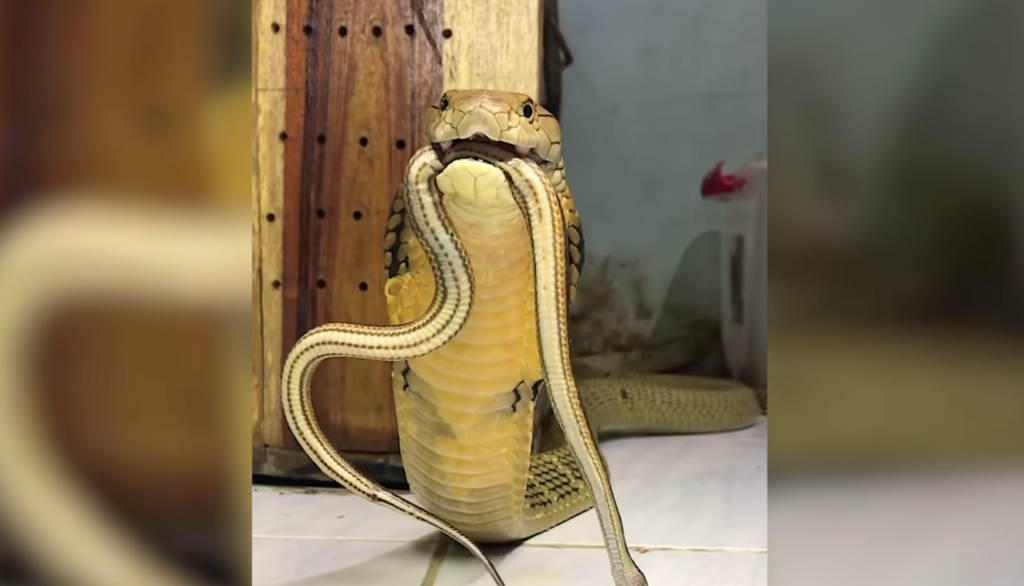
There are recorded instances of handlers using sudden movements or assertive posture to discourage an attack.
In one well known case, wildlife handler Mike Holston, often known online as Real Tarzan, briefly handled a king cobra during a controlled situation. When the snake became defensive, his sudden movement caused it to hesitate and retreat.
If you are ever in a real encounter, and no escape route is available, throwing nearby objects such as sticks or stones may help discourage the snake. In some cases, it may choose to retreat rather than commit to an attack.
Step 4. Never delay medical treatment
A king cobra bite is a medical emergency.
Without treatment, respiratory failure can occur in under 30 minutes.
You must seek emergency medical help immediately to receive appropriate antivenom specifically designed for king cobra venom.
Do not rely on outdated methods such as tourniquets. While they may slow venom spread, they can also trap venom in one area of the body, increasing the risk of severe tissue damage and possible amputation.
Instead, lightly bandage the bite site if possible and keep the affected limb as still as you can while getting to a hospital as quickly as possible.