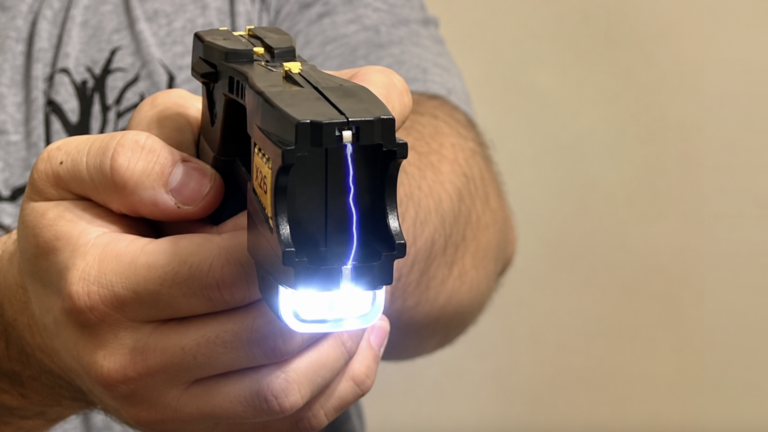
Do you know what’s worse than being tased? Being tased without any protection at all. Without the barrier of clothing, there is nothing between your skin and a high voltage electrical shock that can reach tens of thousands of volts.
That might sound extreme, but it highlights an important point. What you wear and how you react in a taser encounter can affect how the situation plays out. Thin or loose clothing can make it easier for the probes to reach the skin, while thicker or bulkier clothing may slightly reduce effectiveness, but it does not make you immune.

There are even ideas online about specialized materials such as conductive fabrics or carbon fiber based layers being used to redirect electrical current. In theory, conductive materials can influence how electricity travels, but in real world situations, there is no guaranteed clothing based protection that can make someone immune to a taser.
Before getting into what not to do, it helps to understand what a taser actually is.
A taser, often classified as a conducted electrical weapon, is designed to temporarily incapacitate a person through electrical stimulation. It fires two small probes that are launched using compressed gas. These probes can travel several meters and attach to the body with small barbed tips.
Once both probes make contact, an electrical circuit is completed through the body. The device then delivers a high voltage pulse that disrupts normal muscle control, causing involuntary contractions and temporary loss of coordination.

The result is intense pain and temporary incapacitation.
So while there is no safe way to be tased, there are definitely actions that can make the situation worse. Here are the things you should never do.
Never Run Away
One of the most common instincts is to immediately run. However, sudden movement can actually affect how the probes attach to the body.
If the probes are closer together, the electrical effect tends to be more localized. If they spread further apart, more muscle groups can be affected at once, increasing overall incapacitation.

Rapid movement can also increase the chance of injury from falling once muscle control is lost. For this reason, uncontrolled running can make the outcome more dangerous than staying still in the moment.
Never Panic or Flail Excessively
Panic is a natural reaction to sudden pain, but excessive movement can make things worse.
Struggling or thrashing can potentially shift probe placement and increase muscle engagement across more of the body. It can also increase the risk of secondary injury from falling or hitting nearby objects.
Remaining as still as possible during the brief period of incapacitation is generally less harmful than erratic movement.
Never Ignore the After Effects
Even after the electrical discharge stops, the situation is not over.
Taser probes can penetrate the skin, leaving small puncture wounds that require proper care. Without treatment, these wounds can become infected or lead to complications.

Medical evaluation is especially important if the person experiences dizziness, confusion, chest discomfort, or any unusual symptoms after the incident.
Never Assume You Are Not at Risk
Certain conditions can increase vulnerability to electrical disruption. Factors such as intoxication, underlying heart conditions, pregnancy, or other health issues can increase the physical strain caused by a taser.
In rare cases, serious complications such as heart rhythm disturbances or respiratory issues have been reported, particularly in vulnerable individuals.
This is why medical attention after exposure is always recommended, even if the person feels fine at first.
Never Ignore the Risk of Secondary Injury
Beyond the electrical effect itself, one of the most common dangers comes from what happens immediately after.
Loss of muscle control can cause sudden falls, which may lead to head injuries, fractures, or other trauma. These secondary injuries are often more serious than the electrical exposure itself.