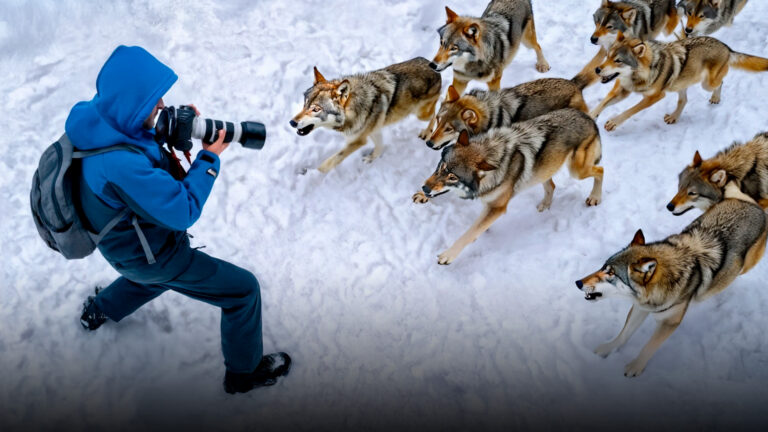
Deep in the wilderness, humans are no longer the dominant force. A quiet hunting trip can quickly turn into a survival situation when you enter the territory of one of nature’s most efficient predators. Wolves are intelligent, fast, and built to hunt as a team. Facing one wolf would already be dangerous, but facing an entire pack is a completely different challenge.
Wolf attacks on humans are extremely rare. Between 1942 and 2002, only 49 documented cases were recorded in Alaska and Canada. Most wolves avoid humans whenever possible. However, as human activity expands deeper into wild areas, encounters between people and wolves can become more common.
In 2019, a man named Russ Fee heard screams coming from a nearby campsite. When he investigated, he found a wolf dragging another person away from his family. Fee managed to scare the animal away by kicking it, shouting, and throwing rocks. His actions saved a life, but that strategy worked against a single wolf.
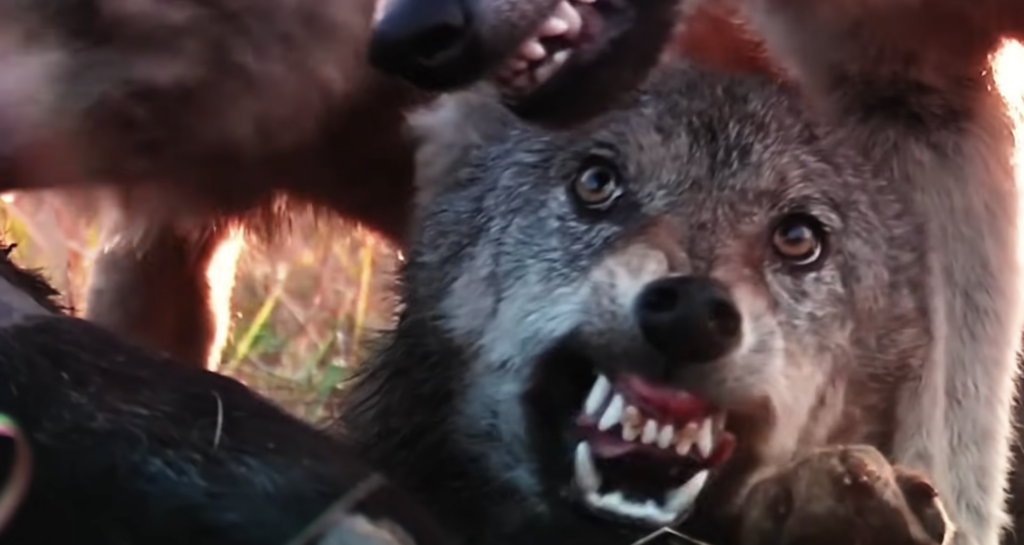
Against a pack, the situation would be completely different.
Wolves are powerful predators designed to work together. A gray wolf can reach speeds of around 65 km/h (40 mph) during short bursts, making it impossible for most humans to outrun one. Running away also activates a wolf’s natural chase instinct, turning you into something that looks like fleeing prey.
The first thing you should do during an encounter is avoid running. Stay calm and avoid making direct eye contact, which a wolf may interpret as a challenge. Instead, lower your head slightly and avoid appearing like a threat.
If the wolf continues approaching, it is time to make yourself appear larger. Raise your arms above your head, stand tall, clap, and use a loud, confident voice. This behavior can signal that you are not an easy target and may convince the wolf that approaching you is too risky.
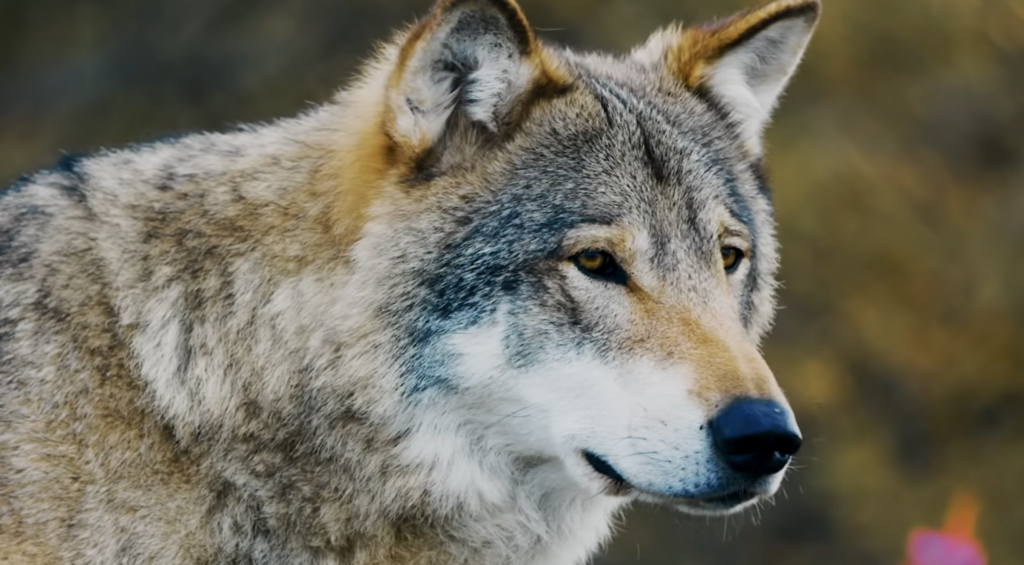
The next step is to slowly move away. Never turn your back and never run. Carefully back toward a safer area while keeping the animal in sight. If you are with other people, move together as a group. Wolves are more likely to approach isolated individuals than a united group that appears difficult to challenge.
Finding shelter can also improve your chances. Moving toward other people, a vehicle, or a safe structure is ideal. Fire and smoke can discourage many wild animals, so getting closer to a campfire may provide some protection.
If a wolf attacks and knocks you down, protecting your most vulnerable areas becomes critical. Wolves often target the neck and throat of prey, so protecting your head and neck can reduce the risk of serious injury. Staying curled up and defending yourself may prevent the animal from reaching vital areas.
If you are able to fight back, use anything available. Rocks, sticks, backpacks, or other objects can be used to create distance. A wolf looking for an easy meal may reconsider if it realizes you are capable of fighting back.
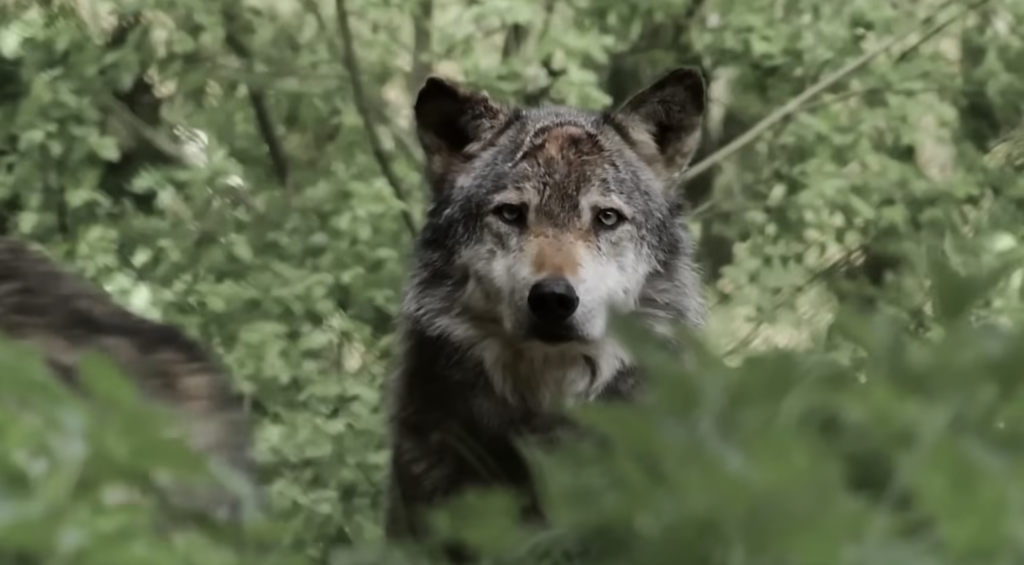
When protecting a group, the weakest members are usually the most vulnerable. Children, elderly people, and injured individuals should stay in the center while stronger members face outward and watch for movement around them.
The best way to survive a wolf encounter is to avoid one completely. Pay attention to signs of nearby wolves, including tracks, droppings, gnawed bones, and repeated howling. Avoid approaching dens or areas where wolves may be protecting their young.
Wolves are not monsters searching for humans to attack. They are intelligent animals that usually want nothing to do with people. But if you ever find yourself surrounded by a pack, remember that winning a fight is not the goal. Your only advantage is convincing the wolves that you are not worth the risk.