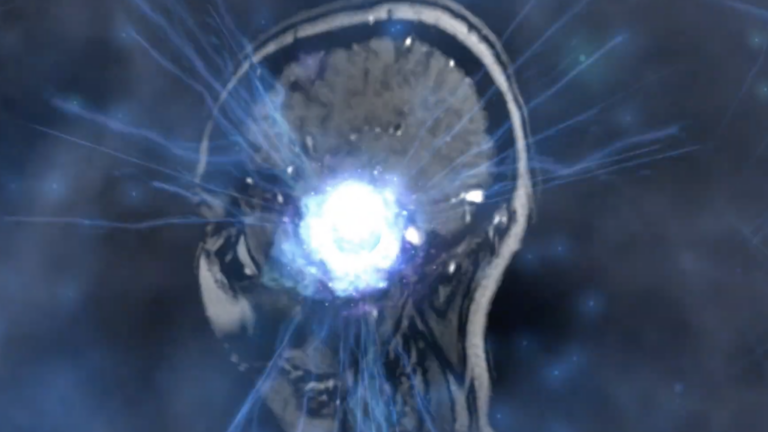
Most people assume that being struck by an intense beam of radiation would be instantly fatal. For Soviet physicist Anatoli Bugorski, it should have been. Instead, he survived one of the most extraordinary laboratory accidents ever recorded, leaving doctors with a medical mystery that still fascinates scientists today.
In the late 1970s, Bugorski was working at the Soviet Union’s largest particle accelerator, a machine designed to propel protons to incredible speeds for physics research. During a routine day at work, one section of the accelerator developed a fault. Believing the machine had been safely powered down, he entered to inspect the problem.

But something had gone terribly wrong.
A series of safety failures allowed the accelerator to remain active. As Bugorski leaned over the equipment, an invisible beam of high-energy protons shot directly through his head at nearly the speed of light.
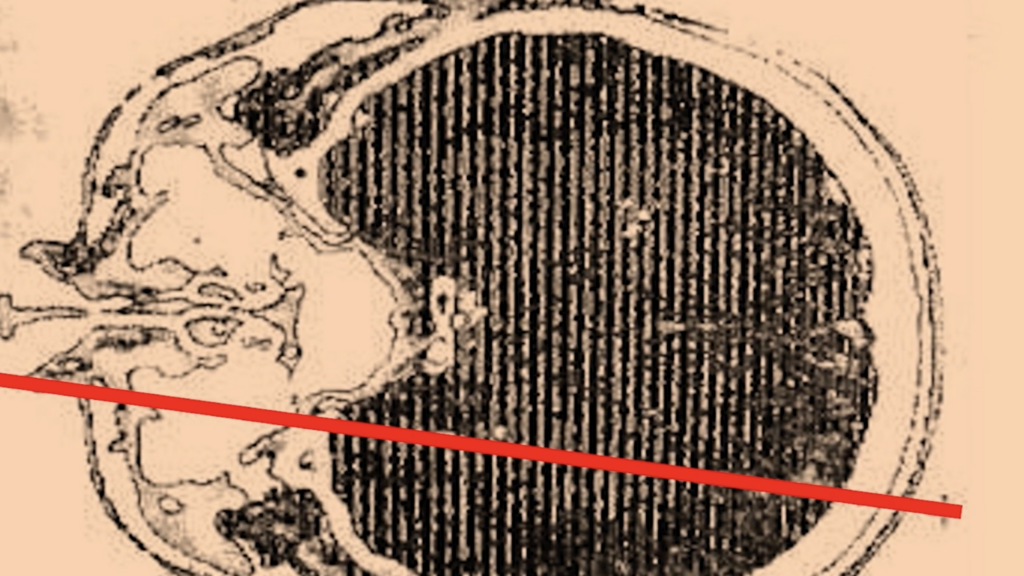
The beam entered through the back of his head and exited near his nose, passing through parts of his skull and brain in an instant. Scientists later estimated that the radiation delivered along its path was hundreds of times greater than what would normally be considered a fatal dose.
Everyone expected him to die. Instead, he remained conscious.
Within hours, the left side of his face swelled dramatically. The skin around the beam’s entry and exit points was severely damaged, allowing doctors to trace the path the particles had taken through his head. Over time, sections of bone and tissue were permanently scarred, and the left side of his face became partially paralyzed.
Remarkably, Bugorski retained his intelligence, memory, and ability to continue working as a physicist.
Researchers believe his survival came down to one crucial detail: the particle beam was extraordinarily narrow. Although it carried immense energy, it affected only a tiny line of tissue rather than exposing his entire body to radiation. That limited the widespread damage usually associated with lethal radiation exposure.
The accident did leave lasting effects. The damaged side of his face aged differently from the other, giving him an unusual appearance that became more noticeable over the years. He also experienced hearing loss, facial paralysis, and periodic seizures for the rest of his life.

Despite everything, Bugorski continued his scientific career, becoming one of the few people ever known to survive a direct strike from a particle accelerator.
His experience remains one of the strangest survival stories in medical history. It also serves as a powerful reminder that even the most advanced scientific equipment can become incredibly dangerous when multiple safety systems fail. Sometimes, surviving the impossible is simply a matter of being unbelievably lucky.