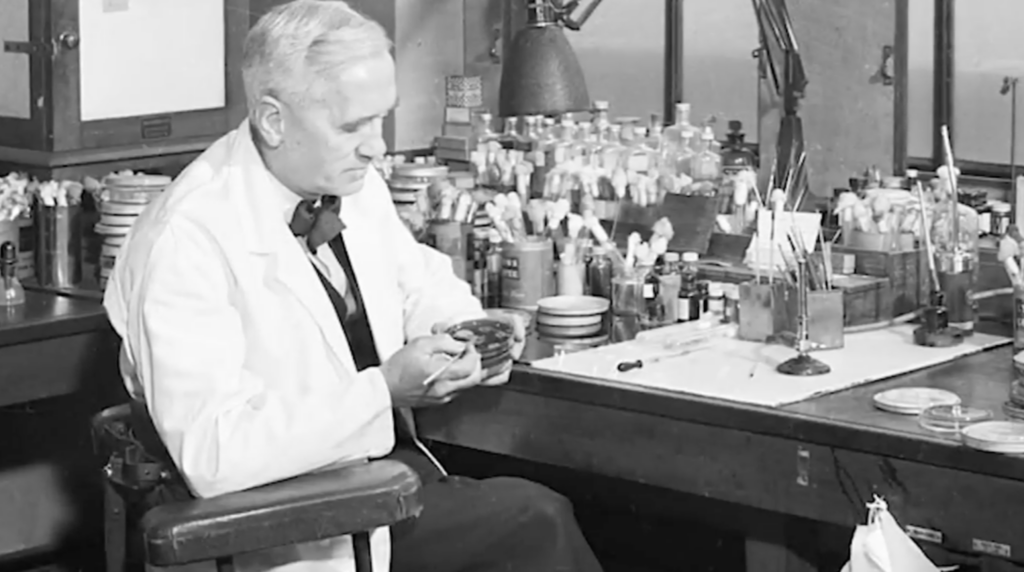
September 1928. A London laboratory sits empty while its owner takes a summer holiday.
When Alexander Fleming finally comes back, his workspace is exactly as messy as he left it, including a stack of old petri dishes nobody bothered to clean. He glances at one of them and notices something strange growing inside.
A colony of mold had crept across the dish while he was away. And around that mold, the bacteria were dissolving.
That accidental patch of contamination on a dirty dish would go on to save more than 200 million lives.
Before we get to the mold, consider what medicine looked like before it. Herbs. Honey. Moldy bread. Animal feces. These were the standard treatments for disease and infection, and if that sounds primitive, remember that the whole story turns on a lucky piece of mold anyway.
Since that accident in 1928, penicillin has become one of the most consumed medicines on Earth. In 2010 alone, the world used more than 7.3 billion standard units of it. Not bad for something nobody set out to invent.
Which raises a haunting question. Fleming almost missed it. What if that dish had simply been washed?
First, understand how long the journey took even after the discovery. The mold, identified as Penicillium notatum, was studied, developed, and purified over the following decade. Not until 1942 did it save its first patient, a woman named Anne Miller, dying of a deadly infection after a miscarriage.
From that moment on, penicillin quietly rewrote human survival. It treated diseases that had always been fatal. It stopped infections after surgery. And in every major conflict since World War II, it slashed the number of deaths and amputations that would otherwise have been routine.
All of it traceable to a scientist who went on vacation and left his dishes dirty.
So run the alternate timeline. Fleming tidies up before he leaves, the mold never grows, and the miracle never happens. How much worse is that world?
The damage would spread further than penicillin itself, because that single discovery lit the fuse for everything after it. In 1940, soil microbiologist Selman Waksman published research showing that microorganisms living in soil could stop infectious bacteria from growing. That work led him and his colleagues to streptomycin, a drug capable of treating tuberculosis, plague, and even rat bite fever.
But Waksman only went looking because Fleming’s discovery had captivated him. No dirty dish, no fascination, no streptomycin. Other essential antibiotics would have stayed buried in the soil for years longer.
Now, before you picture a world of shorter, more painful lives, hold the violin for a moment. The honest answer is that we might have ended up somewhere surprisingly similar.
Back in the mid 1930s, a class of synthetic drugs called sulphonamides, better known as sulfa drugs, had already proven they could fight bacteria and cure infections. They were the original miracle drugs, and they only faded because penicillin and its successors outshone them within a decade.
Take penicillin out of history and medicine simply leans on sulfa drugs instead. Researchers refine them, strengthen them, and push them to handle tougher diseases as those diseases evolve.
And here is the twist: that timeline ends up facing exactly the same crisis we face today.
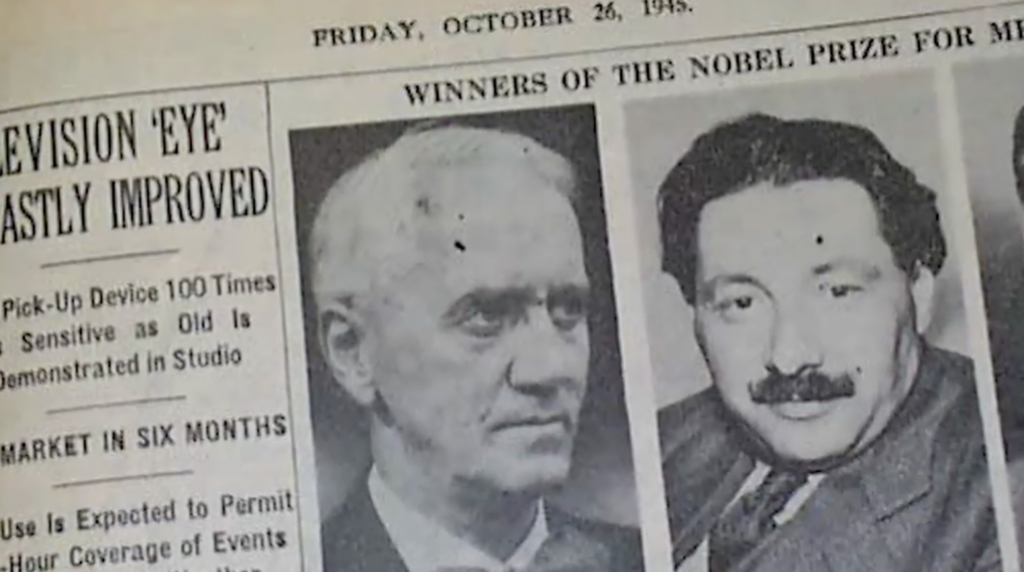
Because Fleming himself saw it coming. Standing on the stage to accept his Nobel Prize in 1945, at the peak of his triumph, he issued a warning: misuse penicillin, and bacteria will learn to resist it.
Eighty years later, that warning reads less like caution and more like prophecy. The miracle cure is slowly losing its power, one resistant strain at a time.
Which means the interesting question was never what if we had missed the discovery. A messy scientist handed us 200 million lives, and history worked out. The real question is far more uncomfortable.
What if they stop working?
We cannot predict that future, and that is exactly what makes it frightening. Then again, the last time humanity got lucky, it came from an unwashed dish in an empty laboratory. Nobody knows when the next accident will save millions more.