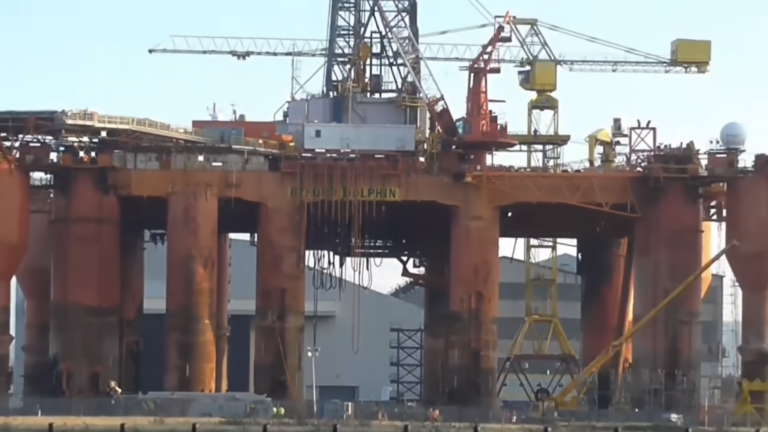
On November 5, 1983, a routine maintenance operation on the Byford Dolphin oil rig in the Norwegian sector of the North Sea became one of the most horrifying accidents in commercial diving history.
Four saturation divers were working hundreds of feet beneath the surface, performing underwater maintenance as part of a carefully coordinated operation. What happened next would expose the terrifying dangers created when enormous pressure and human error meet.
Saturation diving allows workers to spend extended periods at extreme depths. Instead of repeatedly traveling between the surface and the seabed, divers live inside pressurized chambers and can remain under pressure for weeks at a time.
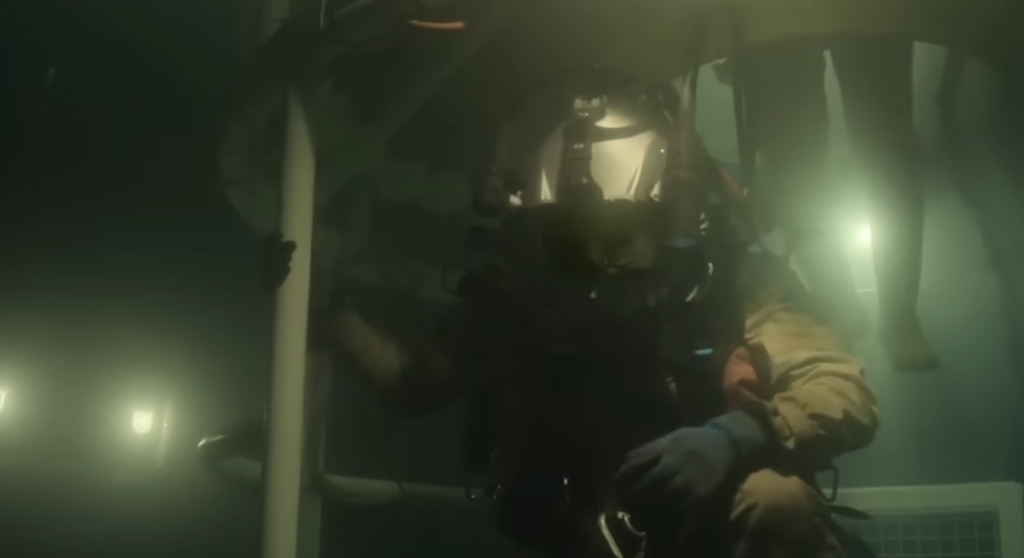
The system requires an entire support team. Crews operate the diving bell, monitor the divers, maintain equipment, and handle the complicated procedures required to move people between different pressurized environments.
Among the most important workers are the tenders. They manage the cables, breathing lines, and communication equipment connecting the divers to the surface. If something goes wrong, these connections can become the difference between life and death.
William Crammond was one of those workers.
Part of his responsibility involved helping divers move between the diving bell and the pressurized chambers on the rig. The process had to be performed with extreme precision because the chambers and bell were maintained at pressures far above normal atmospheric conditions.
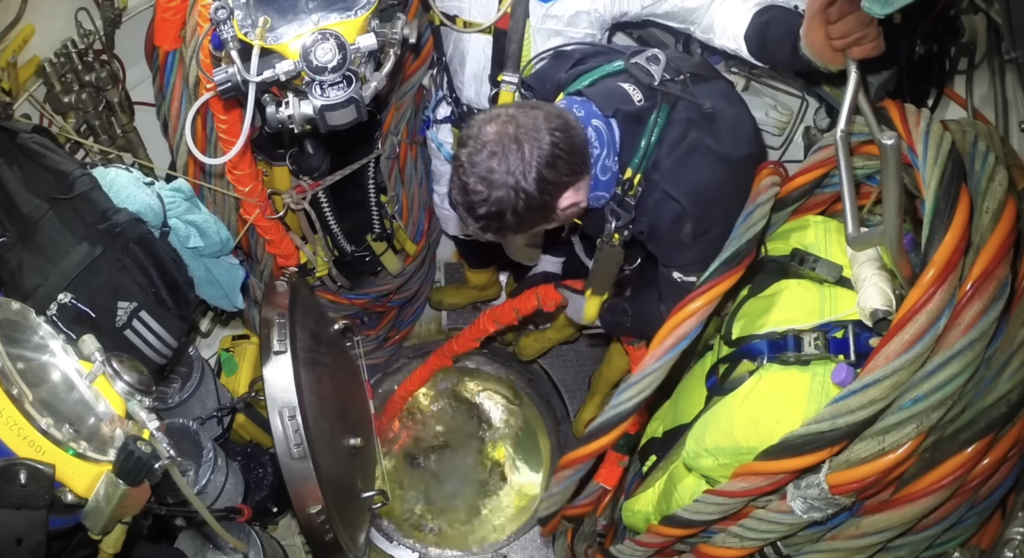
That morning, Crammond had already helped two divers enter one of the chambers safely. He then began preparing the remaining divers for the next stage of the operation.
Under normal conditions, the diving bell had to remain securely connected until the chamber doors were completely closed. Only after the pressure system was safely isolated could the bell be disconnected.
But something went catastrophically wrong.
The chamber door was not fully secured when the diving bell was disconnected. The result was an explosive release of compressed gas.
The pressure difference was enormous, reaching approximately nine atmospheres, or more than 130 pounds per square inch. Air and debris were violently forced outward through the opening.
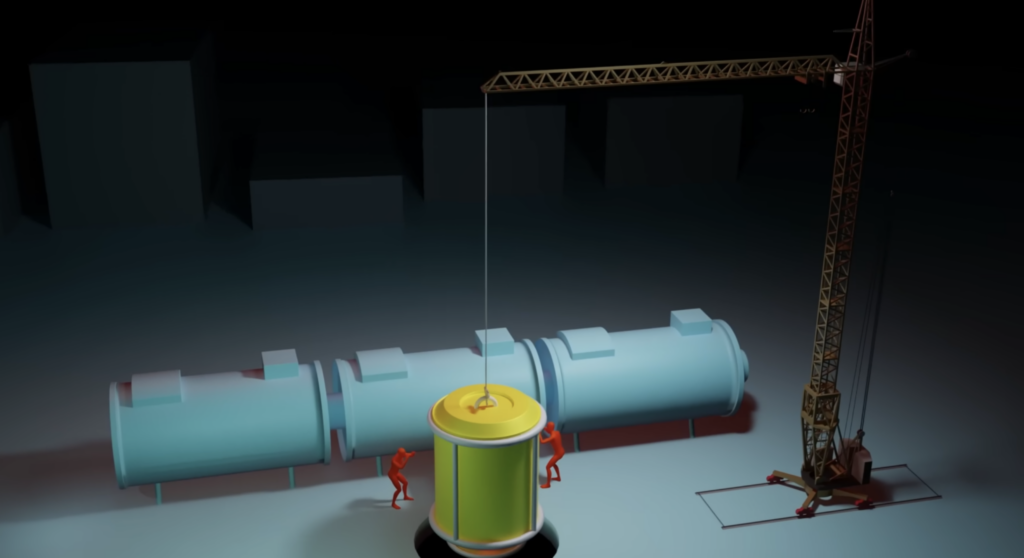
Crammond was struck by the diving bell and died in the accident. Another tender, Martin Saunders, suffered serious injuries.
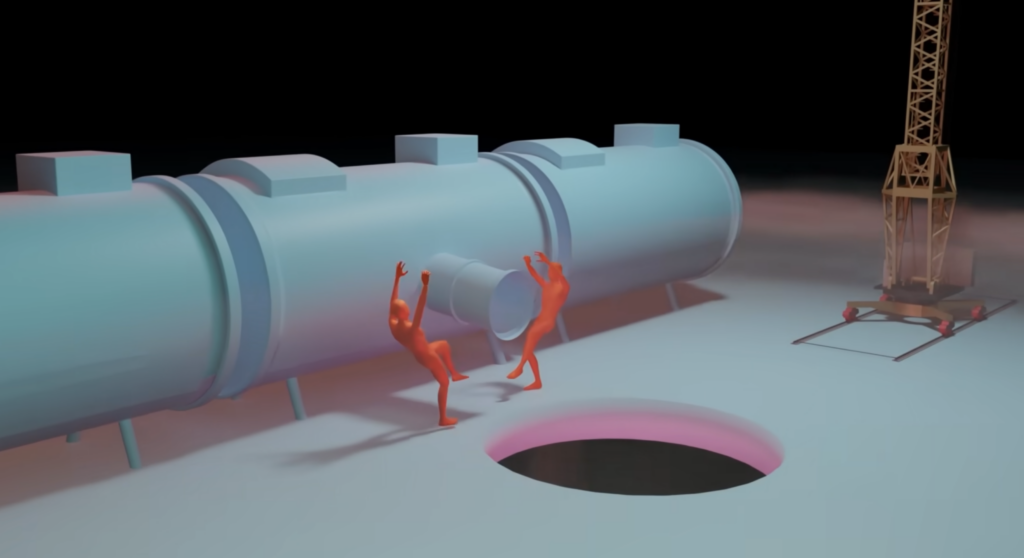
Inside the pressurized chamber, three divers were exposed to the sudden decompression. Edwin Arthur Coward, Roy P. Lucas, and Bjørn Bergersen were killed almost instantly as the extreme pressure change caused catastrophic injuries. The fourth diver, Truls Hellevik, was positioned directly beside the opening when the pressure escaped.
The sudden decompression created an extraordinary force that pulled him toward the opening. He was violently forced through the narrow passage, suffering fatal injuries before being expelled onto the rig’s deck.
The entire incident unfolded in seconds.
The accident demonstrated how dangerous saturation diving could become when a single part of a complex procedure failed. At extreme pressure, even a tiny mistake could unleash forces capable of destroying equipment and killing people almost instantly.
Investigators examined the accident and the procedures surrounding the operation. The tragedy contributed to changes in commercial diving safety standards, including improvements in equipment, procedures, training, and safeguards designed to prevent similar decompression accidents.
Saturation diving remains an important part of offshore work, but technology has also provided alternatives. Remotely operated vehicles, commonly known as ROVs, can now perform many underwater tasks without placing human divers in extreme environments.
These machines can descend to depths that would be dangerous for people while allowing operators to control them safely from the surface.
The Byford Dolphin disaster remains a chilling example of the dangers faced by offshore workers. The divers were performing specialized work that depended on dozens of carefully coordinated steps.
But when one critical barrier failed, the enormous pressure surrounding them was unleashed in an instant.
For the people involved, what began as another day of underwater maintenance became a disaster that permanently changed the way the industry approached saturation diving safety.