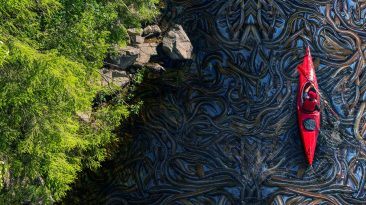
You are fishing on a calm lake under a bright, sunny sky when something suddenly feels wrong. A strange rotten egg smell fills the air, your boat begins rocking violently, and within moments, the peaceful lake erupts.
Then you look toward the water and see a massive wave racing toward you. It rises roughly 20 meters, or 65 feet, above the lake and gives you only moments to react.
This terrifying scenario can happen during a limnic eruption, an extremely rare natural disaster that occurs when huge amounts of dissolved carbon dioxide suddenly escape from a lake. The gas can build up deep underwater, particularly in lakes located near volcanic or geothermal activity, until something triggers a violent release.
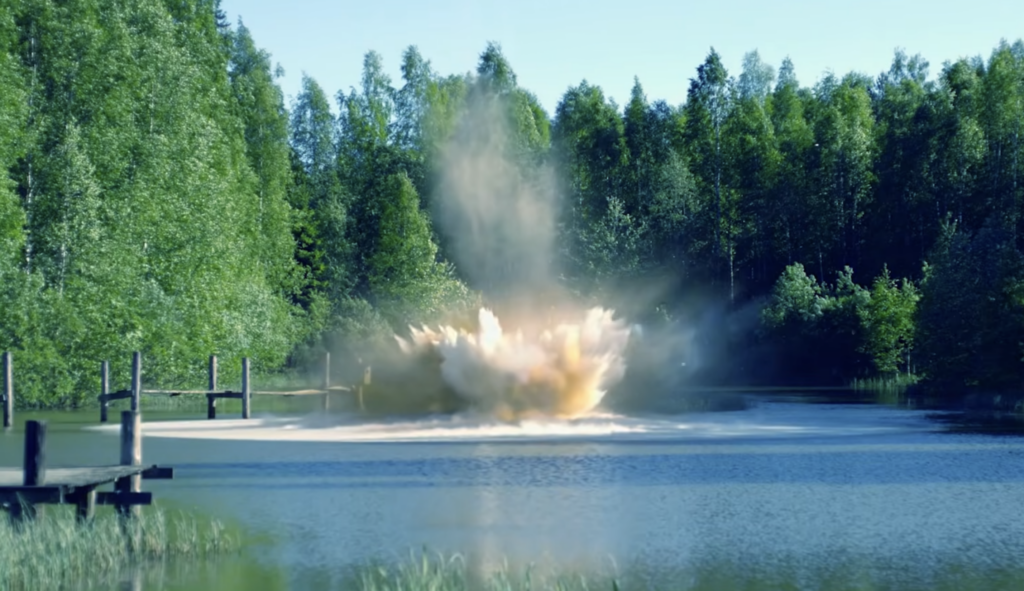
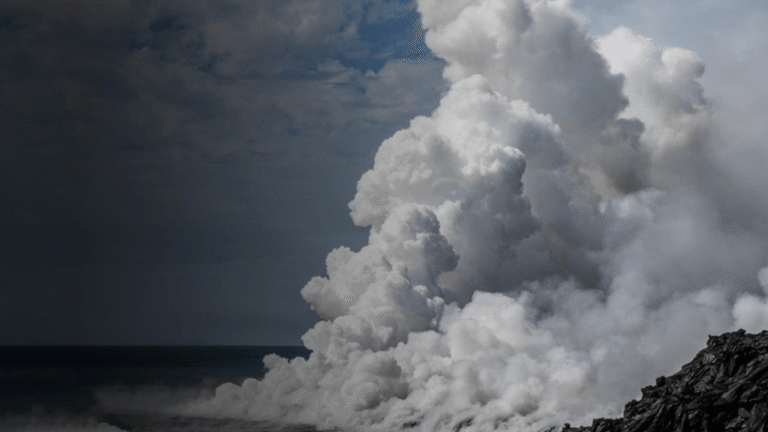
When the gas rapidly escapes, it can send enormous amounts of water upward and outward, producing waves that resemble a tsunami. Even more dangerously, the released carbon dioxide can spread across the surrounding area, creating an invisible threat that can cause people and animals to suffocate.
Only a handful of limnic eruptions have been documented, but the consequences can be catastrophic. In 1986, Lake Nyos in Cameroon released a massive cloud of carbon dioxide that spread through nearby communities and killed more than 1,700 people.
If you were near a lake when something like this happened, your first priority would be to recognize the warning signs and get away from the water.
A rotten egg smell can indicate sulfur compounds associated with volcanic activity, although it is not by itself a reliable warning that a limnic eruption is about to occur. Unusual changes in the lake, such as bubbling or disturbances in the water, could also signal something is wrong.
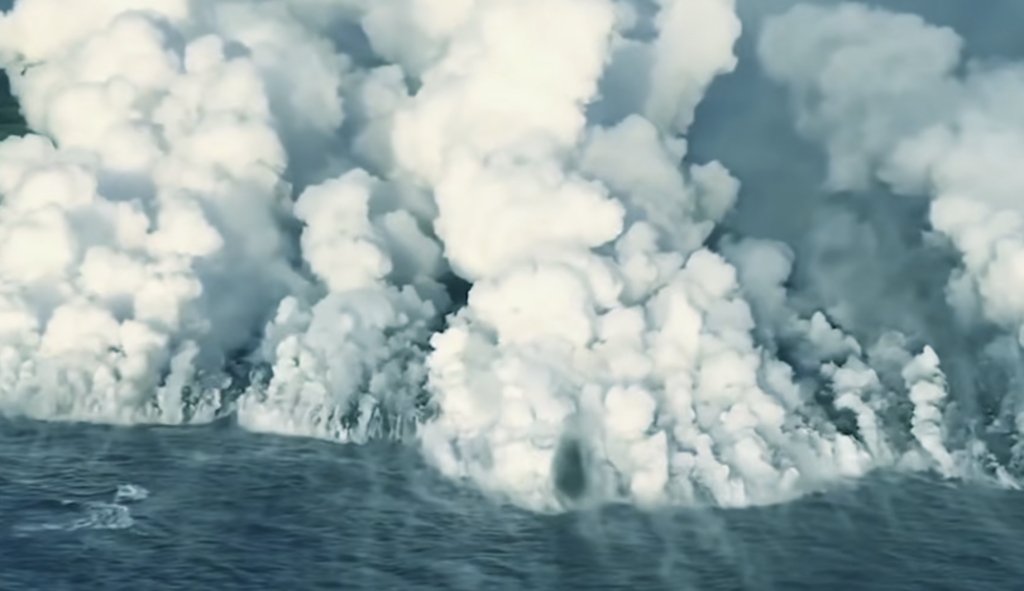
The moment authorities issue a warning or you notice a dangerous event developing, move away from the lake immediately. Do not stay nearby to watch what happens.
Once the eruption occurs, carbon dioxide becomes the biggest danger. The gas itself is colorless and odorless, and at high concentrations it can quickly cause dizziness, unconsciousness, and death by replacing the oxygen in the air.
Unlike the original script suggests, trying to hold your breath is not a realistic survival strategy. Instead, get away from the affected area as quickly as possible and move toward higher ground or another location where the air is safer.
If a vehicle is available and roads are passable, leaving the danger zone may be faster than traveling on foot. However, do not drive through flooded roads or areas where visibility and air quality are dangerously poor.
Higher ground can provide another advantage because carbon dioxide is denser than ordinary air and can accumulate in low lying areas. Moving uphill can therefore reduce your exposure to concentrated gas while also helping you escape rapidly moving water.
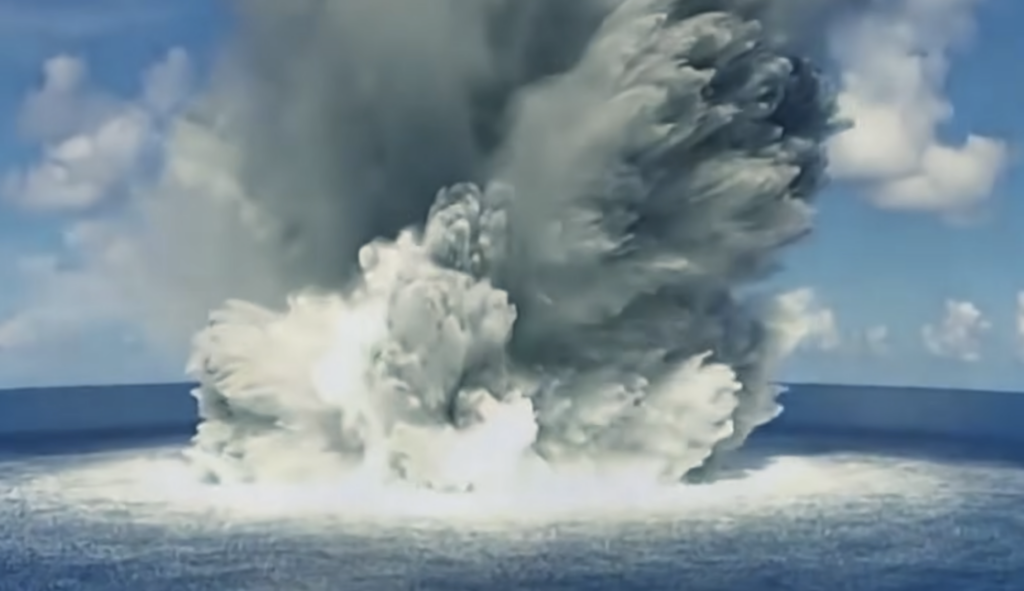
The water itself could be devastating. A sudden displacement of the lake can send powerful waves across the shoreline, flooding homes, roads, and surrounding communities. Even after the initial wave passes, unstable conditions and contaminated or displaced water can make the area extremely dangerous.
Once you reach a safe location, contact emergency services and provide your exact position if possible. Do not return toward the lake until authorities confirm that the danger has passed, because carbon dioxide concentrations can remain hazardous in low areas.
A limnic eruption is extraordinarily rare, but Lake Nyos demonstrated how quickly one can transform a peaceful landscape into a deadly disaster. The best chance of survival is not trying to outrun a giant wave at the last second, but recognizing an emergency early, escaping the lake area, reaching safer elevation, and staying away until professionals declare the area safe.