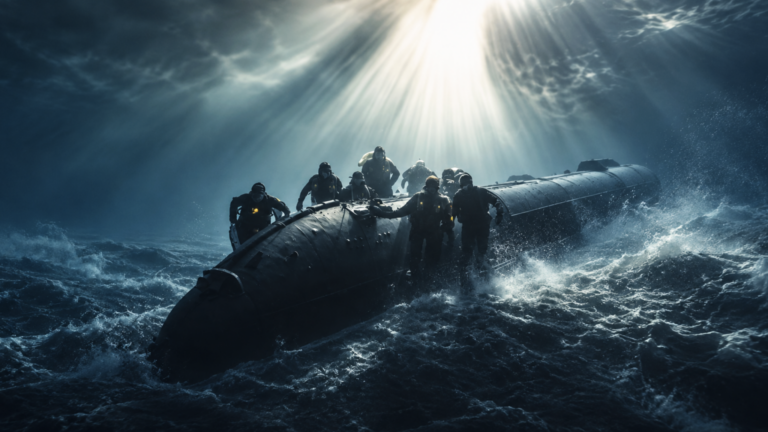
They’re practically indestructible, made to handle any situation thrown at them. But what if you were underwater and disaster struck?
Here’s how to survive in a sunken submarine.
Surviving a sinking submarine is not something many people have successfully done. A lot of it comes down to having the right kind of equipment, excellent training and a healthy dose of good luck. After all, when it comes to surviving, swimming to the surface is only part of the answer.
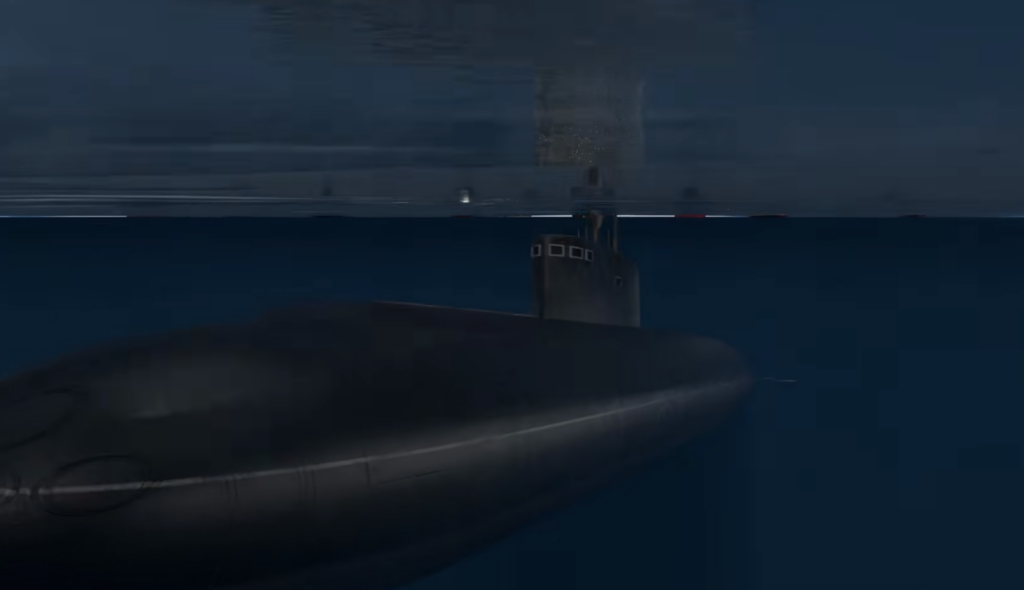
You could be deep underwater, and a long way from land, when disaster strikes on a submarine. There’s no time to look for answers in a manual. If you want to survive, remember these tips.
Step 1: Don’t panic
You had to practice fire control and evacuation drills to get on the sub, so you have the training to survive. Stay calm, and focus on your training. Panicking in a sinking submarine can make matters even worse.
Opening the wrong door at the wrong time, failing to see a fire extinguisher as a fire breaks out, making rash decisions, pushing and shoving people out of the way while you’re all trapped in a big tin tube can cause more injuries or deaths that could’ve been avoided. Don’t lose your cool.
Step 2: Identify and control the problem
You should immediately work to find, control, and even stop the problem. Figure out what’s wrong, and seal off the damaged area.
If there’s a fire, you should try to put it out immediately to avoid losing the crucial oxygen that you’ll need to survive until help comes.
In 2019, in the Barents Sea, only a handful of crew members aboard a Russian navy sub managed to escape after a fire started onboard. Unfortunately, 14 didn’t escape. They died in the accident.
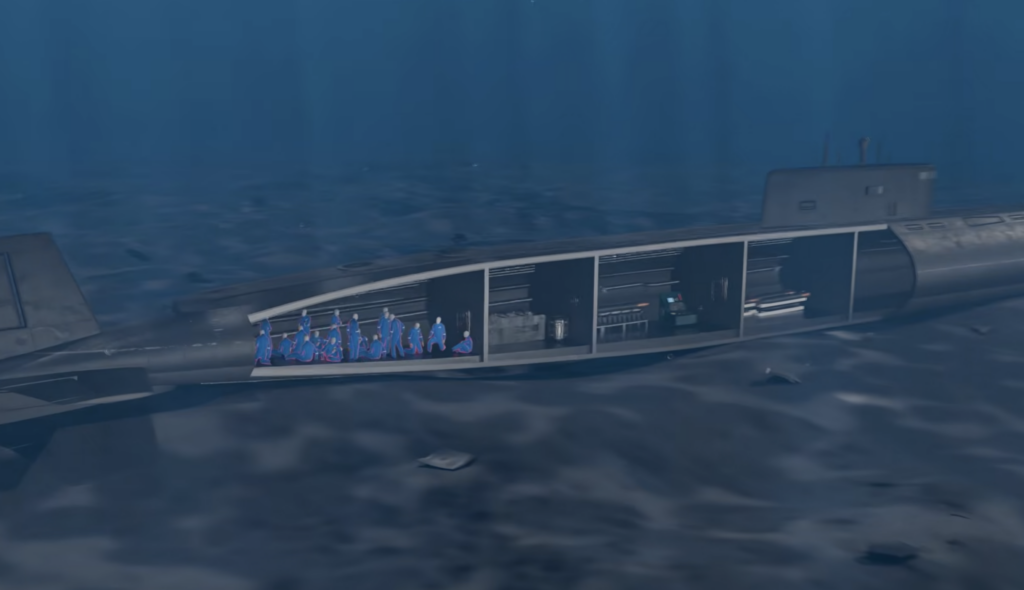
The Barents Sea is also home to one of Russia’s worst naval disasters. The Kursk nuclear submarine suffered two explosions and sank in August 2000, killing all 118 men on board.
Step 3: Call for help
Send distress calls right away, and use every means possible. Submarines are made of heavy metal and are designed to be nearly invisible on radar.
That stealthy concept is excellent in times of war, but this makes rescue missions incredibly complicated. However, sending that distress call right away is crucial.
You need to be rescued as soon as possible, as the oxygen in the submarine can be lost to the sea or used up inside the sub.
Step 4: Use a flotation device
New technology makes it possible for submarine sailors to survive a crisis situation. The good news is most modern subs will have some kind of full body suits, called Submarine Escape Immersion Equipment suits, known as SEIE suits.
Sailors put on these suits as soon as it’s mandatory to escape. Each sailor will wait in an escape trunk with a partner as it fills with water.
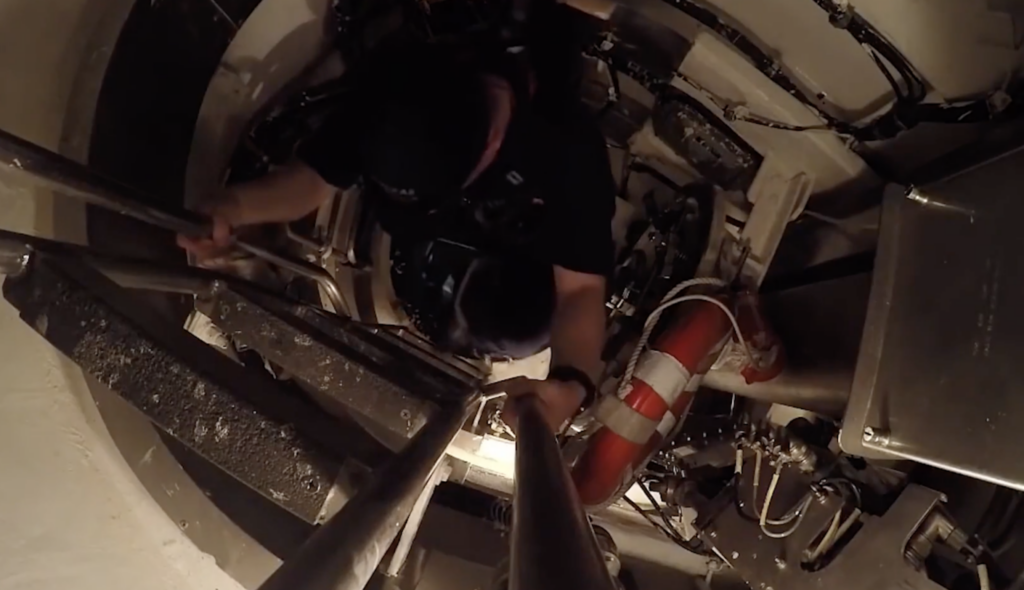
As soon as the pressure inside equalizes, the suit wearing sailors pop out, two by two, and they float to the surface. But subs not equipped with these life saving suits are more likely to become watery graves for the sailors trapped inside.
Step 5: Move toward the emergency exits
Move toward the submarine’s emergency exits or another locked area that can be filled with water to equalize pressure.
On some subs they practice escaping from missile tubes. Equalizing the pressure will make it possible to open the door or hatch, allowing for an escape.