A sunset on Earth feels almost predictable. The sky catches fire with shades of orange, pink, and red, the Sun slips below the horizon, and darkness gradually takes over. It is a familiar ending that happens somewhere on our planet every day.
Leave Earth behind, however, and that familiar scene can change dramatically. On Mars, for example, the daytime sky can appear reddish while the setting Sun produces a strange blue glow. On other worlds, the fading Sun may disappear and return, vanish behind another planet, or become only one part of an extraordinary display.
Across the Solar System and beyond, sunsets can be shaped by strange atmospheres, unusual rotations, powerful radiation, enormous storms, and even worlds that are being destroyed. Some would look beautiful, while others would be almost impossible for a human visitor to survive.
Mercury
Mercury can produce one of the strangest sunset sequences imaginable because its rotation and orbit interact in an unusual way. At certain locations near its closest approach to the Sun, the star can appear to slow down, stop, move backward, and then set again.
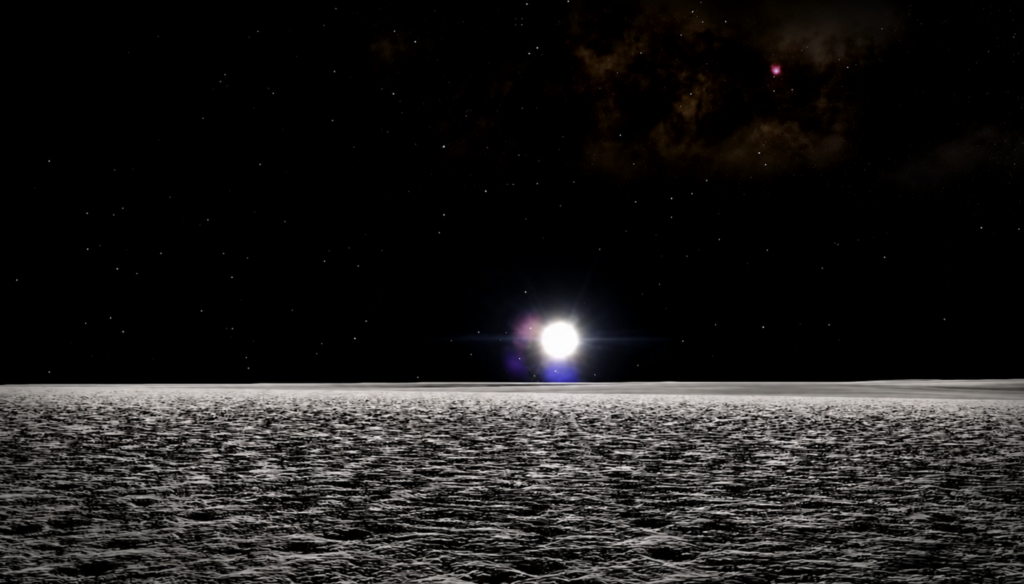
There is no atmospheric haze to soften the view, so the sky would remain completely black even while the Sun was shining. From the surface, you could watch the Sun approach the horizon, reverse its apparent motion, rise again, and eventually disappear. The strange event is linked to Mercury briefly moving around the Sun faster than its rotation carries the surface, and a full solar day lasts 176 Earth days.
Venus
Venus would offer a completely different experience. Its dense cloud layers contain sulfuric acid and prevent a clear view of the Sun, turning the entire sky into a thick, glowing haze rather than a sharp celestial scene. As daylight fades, the yellowish atmosphere would gradually become darker and more reddish.
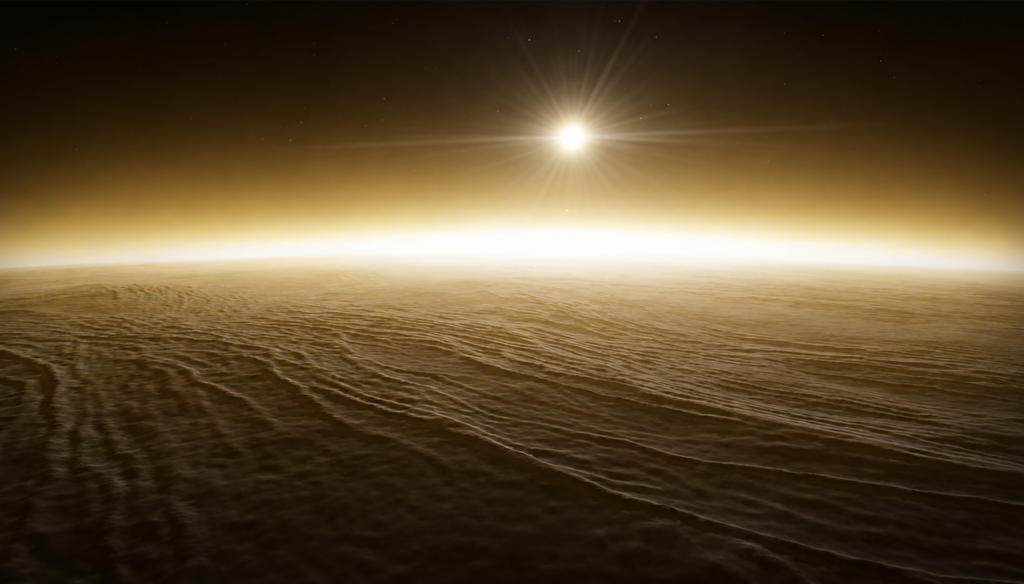
The planet’s incredibly slow rotation makes the transition even stranger. Instead of watching darkness arrive within minutes, you would experience an extraordinarily long period of fading illumination. The clouds would continue hiding the stars, leaving the surface beneath an atmosphere that seems to dim almost endlessly rather than suddenly switching from day to night.
Mars
Mars is famous for turning the normal appearance of a sunset upside down. During the day, dust suspended in its thin atmosphere scatters sunlight and gives the sky its familiar rusty appearance, making the planet look red even from its surface.
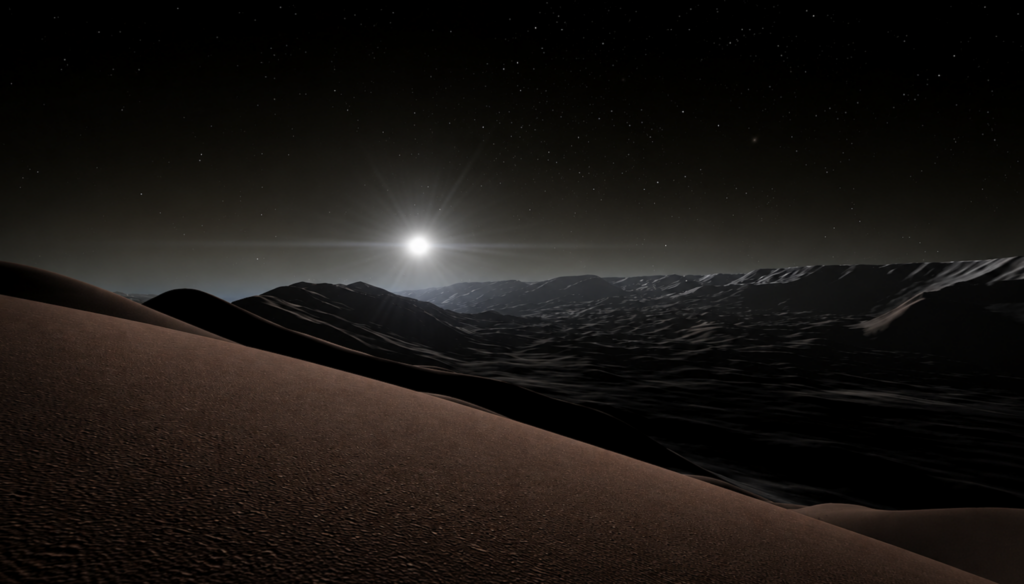
As the Sun sinks, however, the scattering pattern changes and blue light becomes concentrated closer to the Sun. The result is a muted blue halo surrounded by the dusty Martian sky. It is not a brilliant blue sunset like something from a science fiction movie, but a delicate effect that spacecraft and rovers have actually photographed on the Red Planet.
Jupiter
Jupiter has no solid ground where you could stand and watch the Sun, but imagine observing the sunset from high inside its cloud layers. The Sun would appear much smaller than it does from Earth, shining against a dark blue sky that would gradually become even darker.
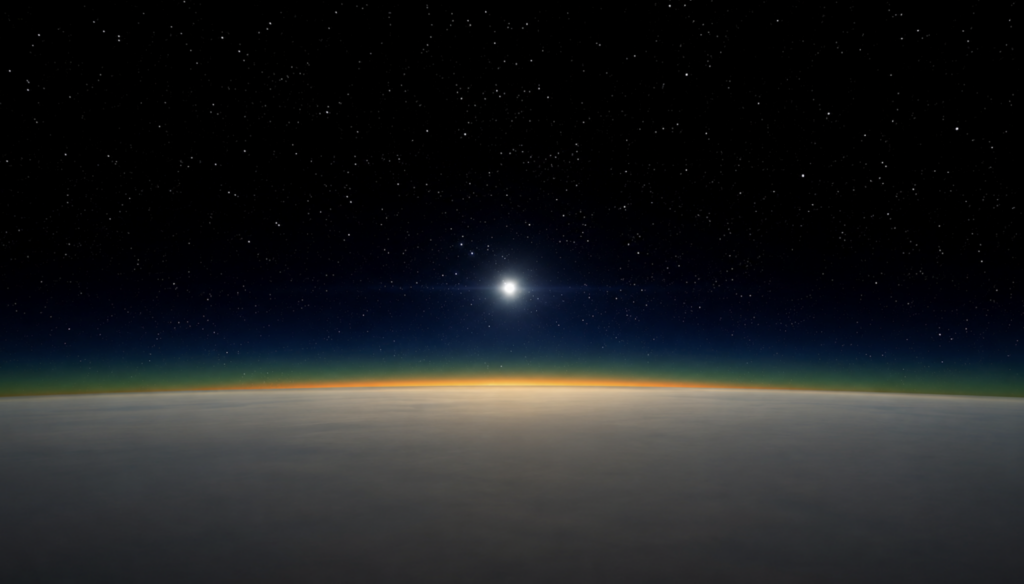
Jupiter’s rapid rotation makes the cycle surprisingly quick. A sunset could arrive more than twice during one Earth day, with daylight and darkness each lasting only several hours. While the Sun disappeared, enormous storms and swirling cloud bands would continue moving beneath you, creating a view unlike anything possible on Earth.
Io
On Io, sunset can coincide with something far more dramatic than ordinary darkness. The volcanic moon regularly passes into Jupiter’s shadow, cutting off direct sunlight and producing an eclipse that can last for nearly two hours.
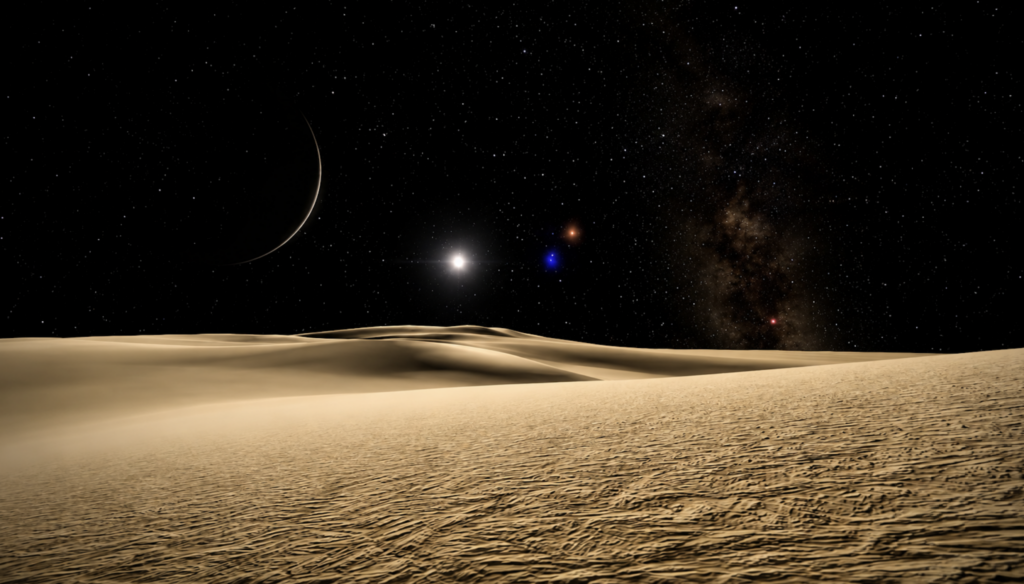
Io has only a very thin atmosphere, meaning the sky would remain mostly black even in daylight. Once sunlight disappears, however, darkness would not completely hide the landscape. Volcanic eruptions, glowing lava, and hot gases could illuminate portions of the surface with an eerie orange glow. On this violently active moon, night could actually reveal details that daylight makes harder to appreciate.
Europa
Europa can create a strange kind of twilight without relying on a thick atmosphere. Powerful radiation from Jupiter interacts with chemicals frozen into the moon’s icy surface, producing faint emissions that become noticeable against the darkness.
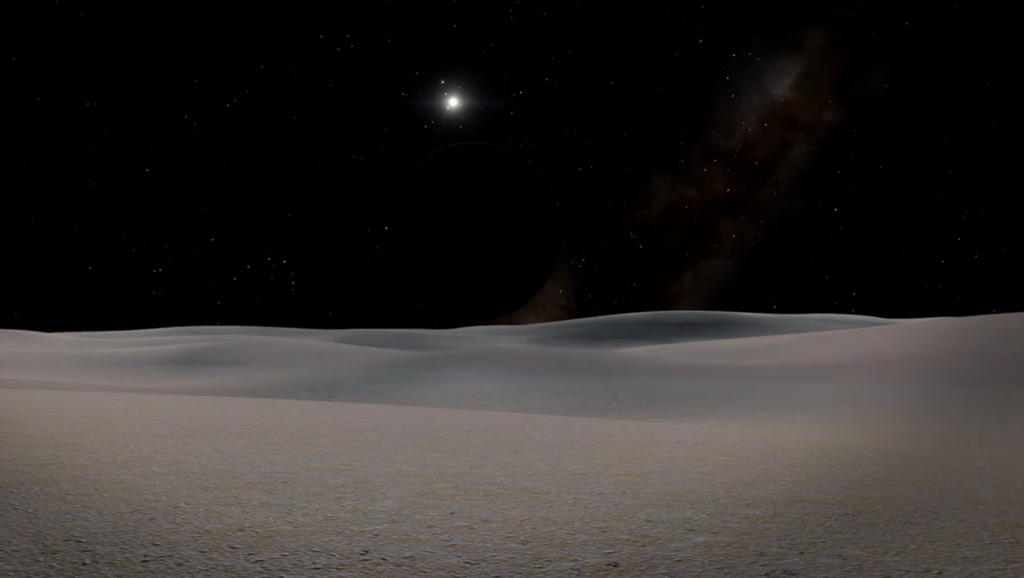
The sky would remain almost completely black because Europa’s atmosphere is extremely thin, while the ice beneath your feet could produce a subtle glow. Different materials trapped within the frozen surface can influence the colors and intensity of that emission, making the ground seem strangely alive after the Sun has disappeared.
Ganymede
Ganymede stands apart from most moons because it possesses its own magnetic field. When daylight fades, interactions between charged particles and the magnetic environment can produce auroral activity around its polar regions.
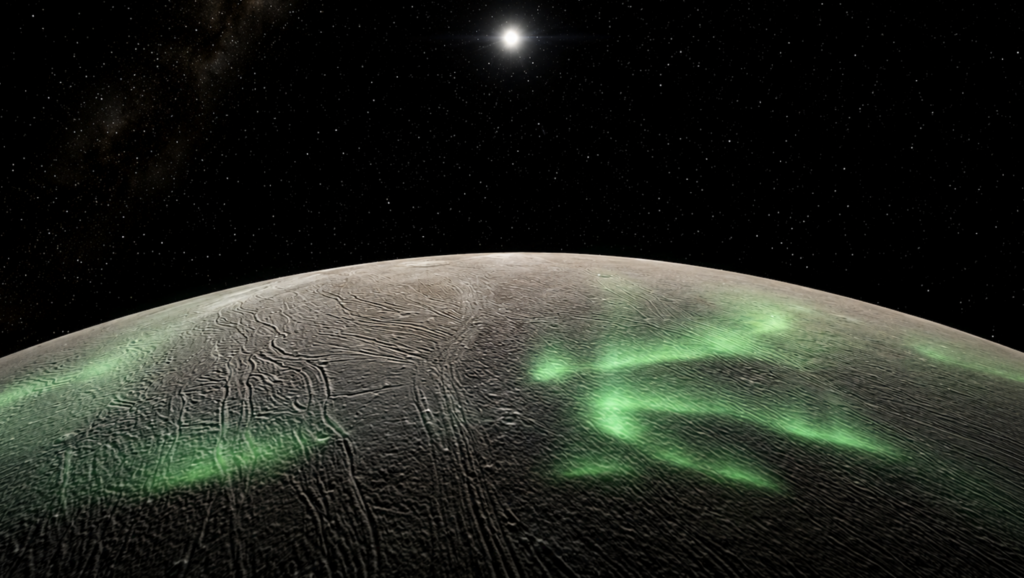
Much of this auroral light occurs in ultraviolet wavelengths, so human eyes would miss much of the spectacle. With suitable instruments, though, the polar regions would reveal glowing structures that become especially interesting as darkness settles in. Ganymede’s magnetic field makes this moon particularly unusual among objects of its size.
Callisto
Callisto’s great distance from Jupiter means its sunsets are generally less dramatic than those on some of the inner moons. Jupiter would still dominate the sky, but the giant planet would not frequently pass between Callisto and the Sun.
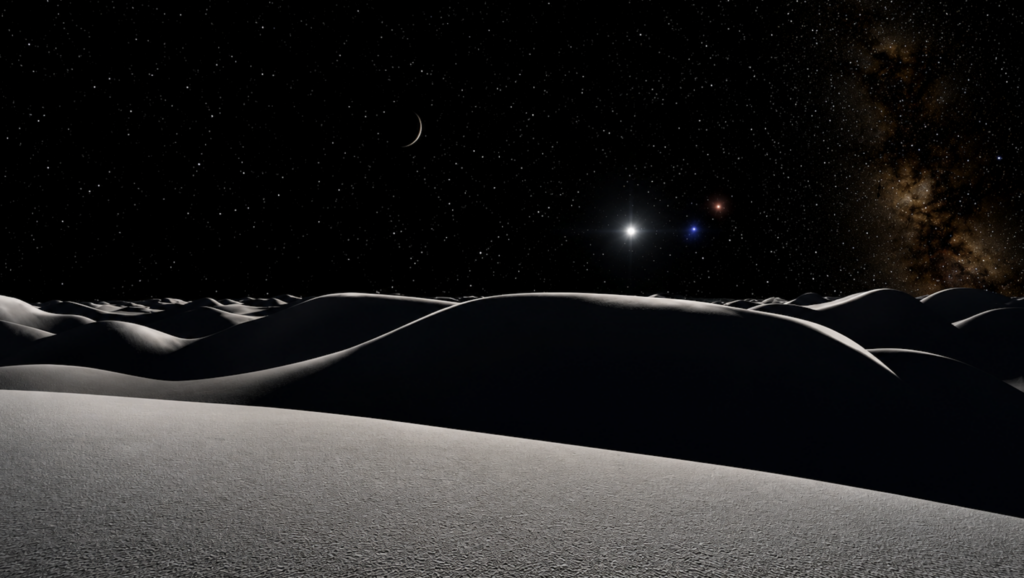
Only relatively infrequent alignments would create major eclipse events. That same distance also places Callisto outside some of Jupiter’s strongest radiation, making it one of the more interesting moons when scientists consider possible future exploration. Its ancient, heavily cratered surface has remained remarkably unchanged for billions of years.
Titan
Titan’s atmosphere would transform sunset into a broad, hazy transition rather than a sharply defined event. Thick atmospheric layers would spread the fading sunlight into shades ranging from orange to brown, while its methane and ethane lakes could reflect the weak illumination like enormous dark mirrors.
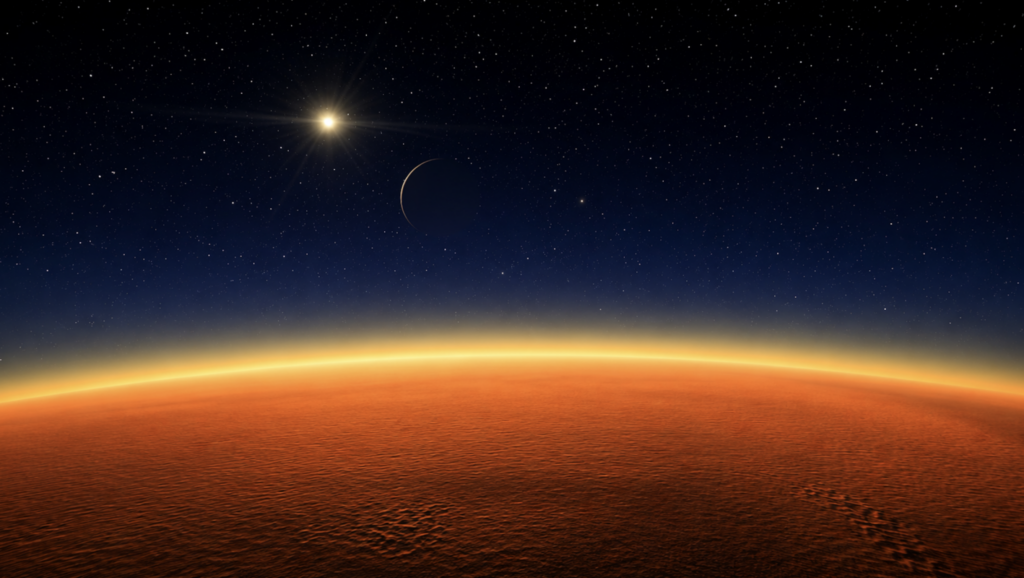
Saturn would add another spectacular feature to the horizon or sky. Because Titan’s atmosphere is so thick, sunlight would remain diffuse instead of forming a crisp disk. In this cold world, methane clouds and rain could also contribute to the strange scenery, creating a sunset unlike any natural landscape found on Earth.
Saturn
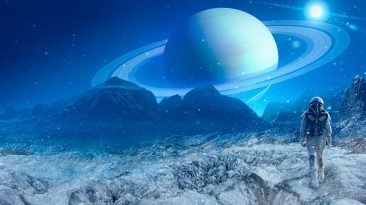
Saturn’s rings would completely change the appearance of sunset from high within its atmosphere. As the Sun moved toward the horizon, the planet’s enormous shadow would begin spreading across the rings, causing sections of them to disappear from direct illumination.
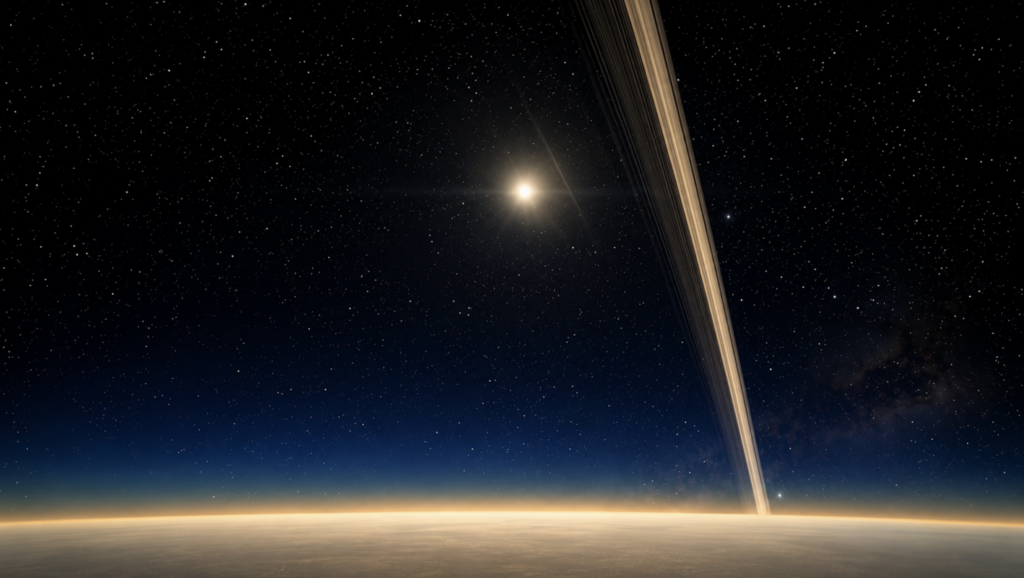
The result would resemble a giant curtain of darkness moving across a cosmic stage. Because the rings occupy such a huge portion of the sky, the changing illumination could continue as a broad sequence rather than one simple moment. Their appearance would also change with Saturn’s seasons and your position within the atmosphere.
Uranus
Uranus is tilted so dramatically that its seasonal cycle is unlike anything experienced on Earth. Near its poles, the Sun can remain above the horizon for an extraordinarily long time before finally beginning its descent.
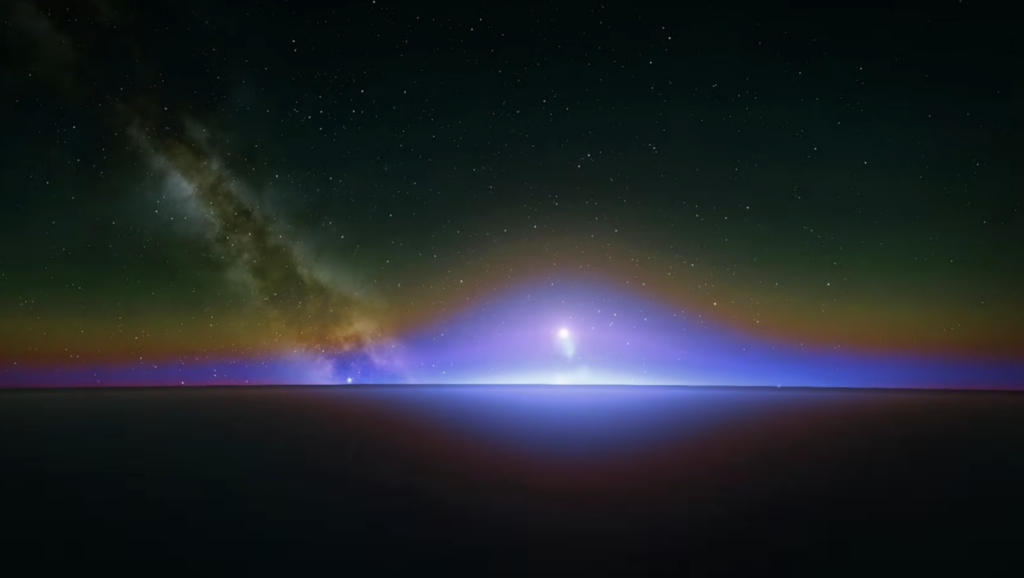
When sunset eventually arrives, methane in the atmosphere would influence the color of the sky, producing bluish and turquoise tones. At the poles, darkness can then persist for decades. A sunset there would not feel like the end of another ordinary day, but the beginning of a night that could outlast an entire generation.
Neptune
At Neptune’s enormous distance from the Sun, daylight is already incredibly weak. A sunset would therefore be a quiet transition from a dim blue environment toward an almost completely black sky.
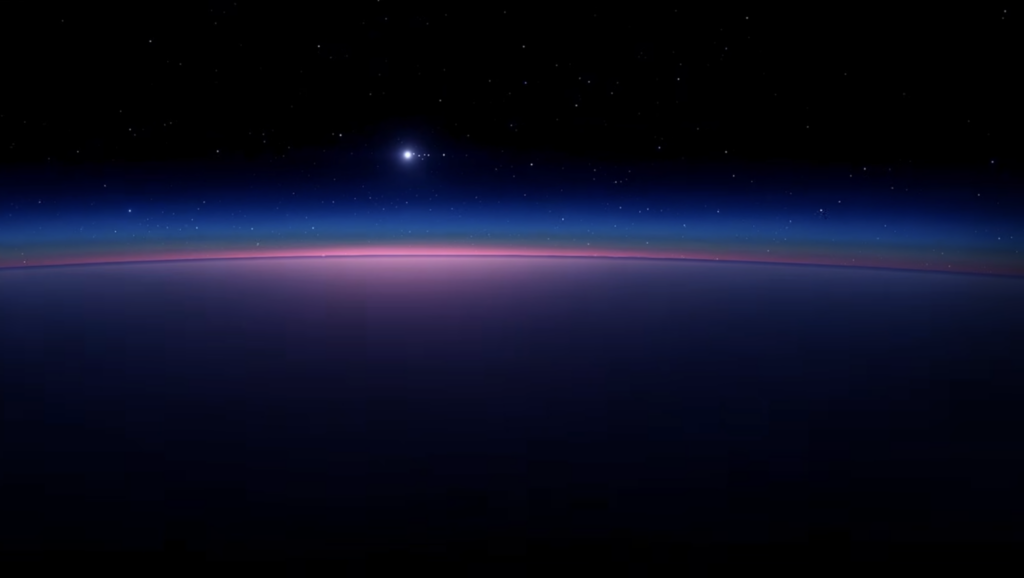
Sunlight there is roughly a thousand times weaker than the illumination Earth receives, so even midday would resemble a kind of permanent twilight. The planet’s winds, however, are anything but calm. They can reach supersonic speeds while the visual change from day to night remains remarkably understated.
Pluto
On Pluto, the setting Sun would be an incredibly distant source of illumination. Its atmosphere can produce a deep blue twilight, while Charon would dominate the sky above one side of the dwarf planet.
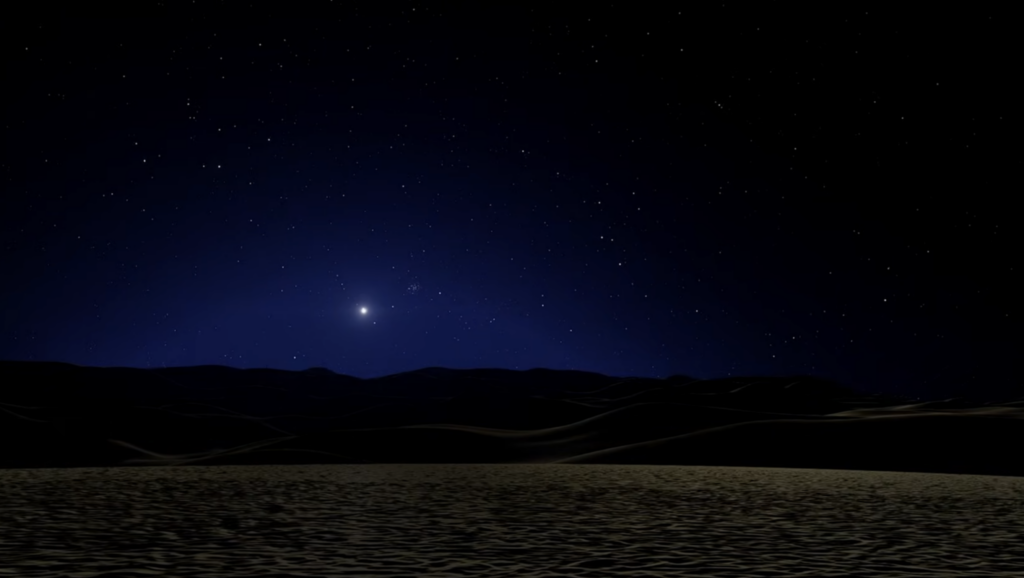
Because Pluto and Charon are tidally locked to one another, Charon remains fixed over the same region instead of rising and setting like Earth’s Moon. The Sun would appear more like an exceptionally bright star than a giant disk, leaving the icy landscape in a weak, frozen glow as darkness spreads.
Kepler 444 c
Kepler 444 c circles a small star at a very close distance, roughly 119 light years from Earth. Although its star is much smaller than the Sun, the planet’s tight orbit would make the stellar disk appear surprisingly large in its sky.
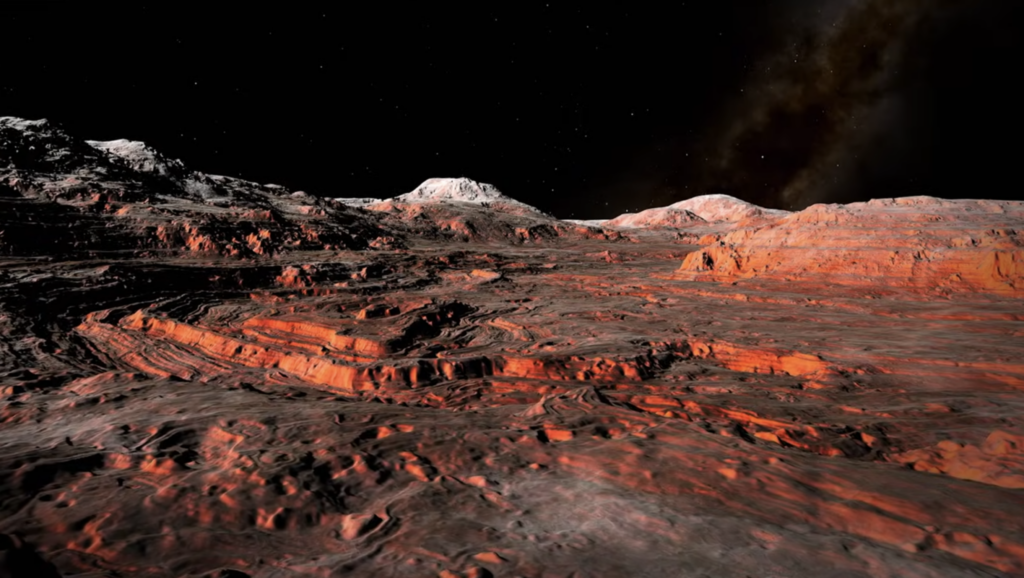
That close orbit would make sunset a relatively quick event, with the large star dropping below the horizon instead of lingering for a long time. The system itself is also extraordinary because it is ancient, dating back to a period when the Milky Way was much younger than it is today.
Kepler 452 b
Kepler 452 b is often described as an Earth like planet because it travels around a star somewhat similar to our Sun. Its star is slightly older and brighter, so the general appearance of a sunset could feel surprisingly familiar to someone accustomed to Earth.
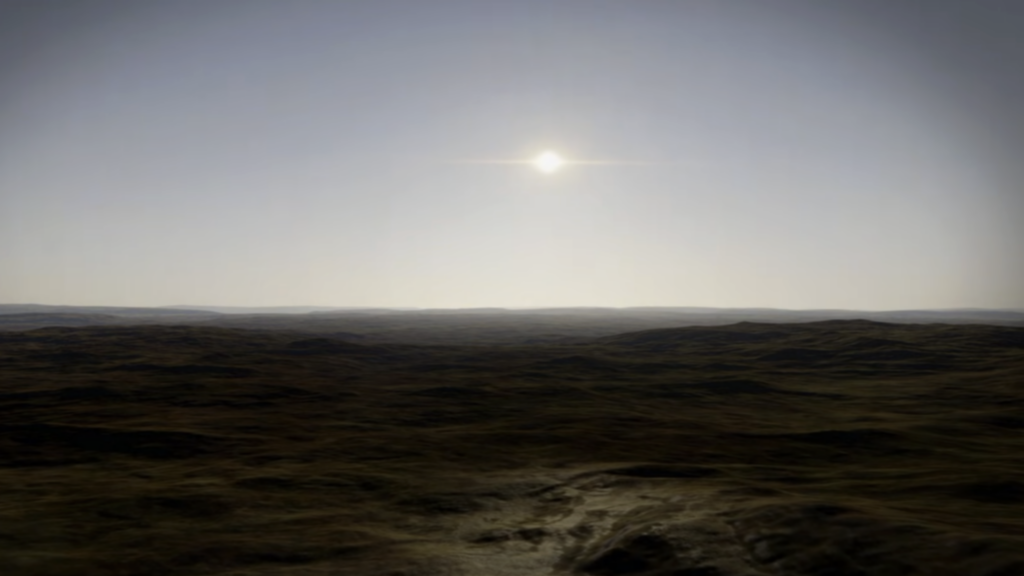
The additional stellar brightness could make the colors of twilight somewhat stronger. Compared with the other destinations here, this world might offer one of the least alien looking sunsets, assuming it has an atmosphere capable of producing familiar scattering effects. The differences might be subtle enough to escape immediate notice.
TRAPPIST 1 e
TRAPPIST 1 e circles a small red dwarf star, so its daylight would look very different from sunlight on Earth. If it possesses a substantial atmosphere and clouds, the setting star could produce warm crimson or reddish tones across the horizon.
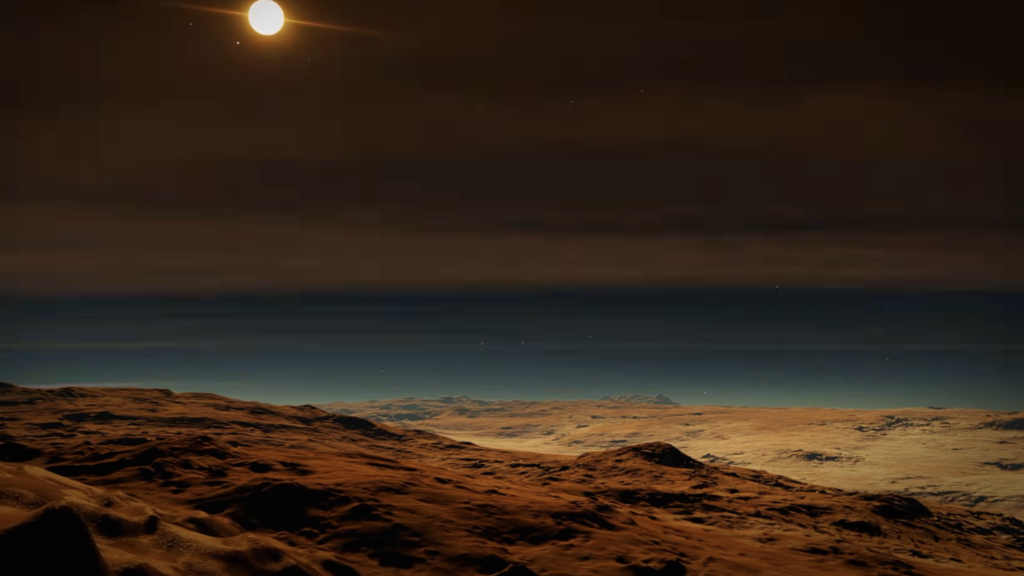
A magnetic field could also allow auroras to appear, adding another layer to the view. Several neighboring planets occupy the same compact system, meaning some could appear as bright disks in the sky. Since red dwarf stars emit much less visible light than the Sun, even daytime could seem closer to Earth’s evening.
PSR B1257+12 c
PSR B1257+12 c circles a pulsar rather than a normal star. A pulsar is a rapidly rotating neutron star that sends beams of radiation through space, so the lighting conditions on this world would be unlike any conventional sunset.
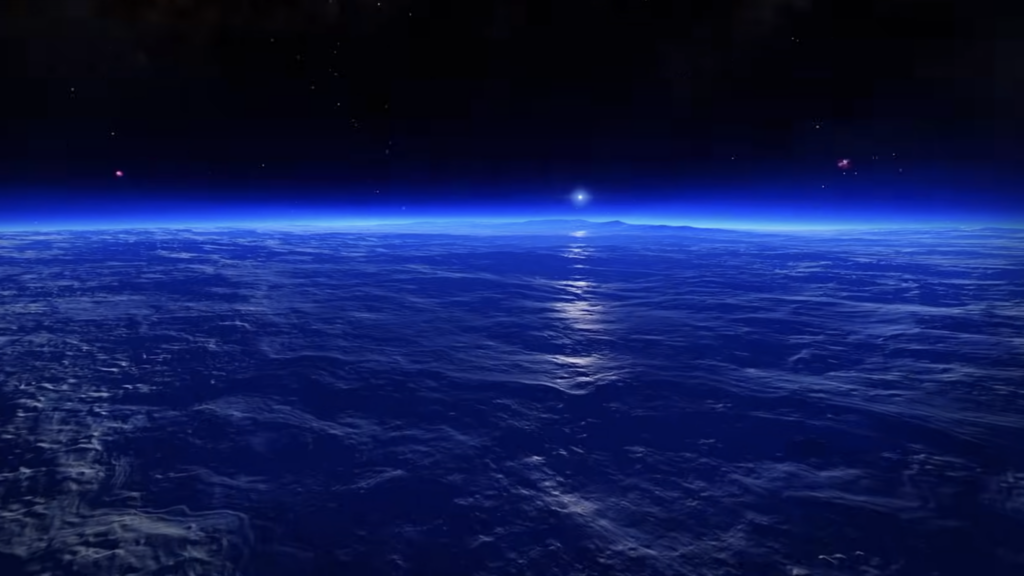
Instead of gradually fading, the illumination could appear to pulse as the neutron star’s radiation beams sweep across the planet. The effect would be more reminiscent of a distant lighthouse than a normal sunrise or sunset. Unfortunately, the intense radiation surrounding such a system would make it an extremely hostile environment for anything resembling life on Earth.
WD 1145+017 b
Few sunsets could be more unsettling than one witnessed on WD 1145+017 b. This object orbits a white dwarf and is being gradually destroyed by the intense gravitational forces of its parent star.
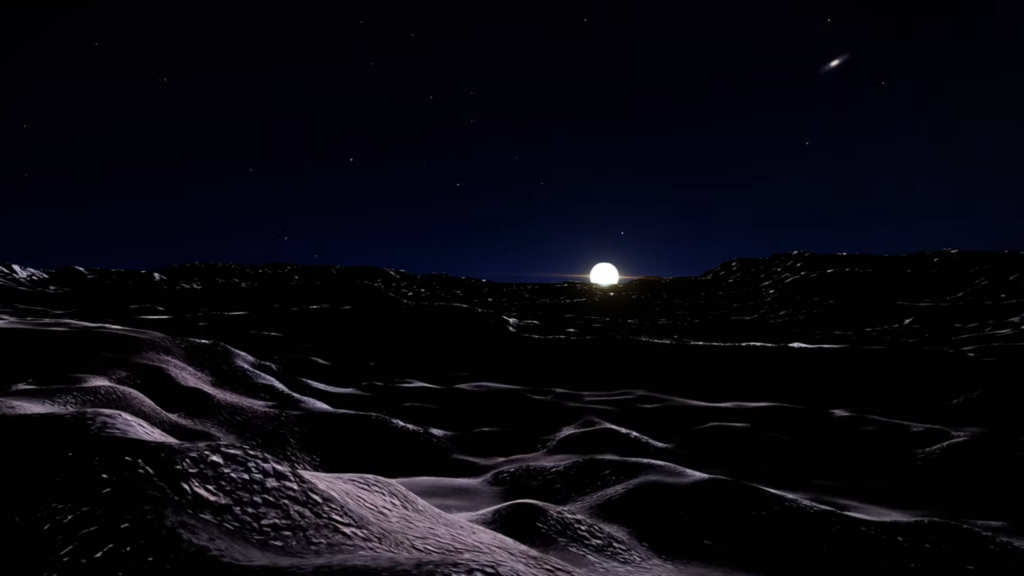
The star’s blue white light would illuminate clouds and streams of material stripped from the doomed world. Instead of simply watching a planet move into darkness, you would be looking at a world actively losing pieces of itself with every orbit. Astronomers can study that destruction by observing debris passing between the white dwarf and Earth.
Mars gives us only the first hint of how strange a sunset can become beyond Earth. Across the Universe, different atmospheres, rotations, stars, magnetic fields, and extreme environments create scenes that would make our familiar orange horizon seem almost ordinary.