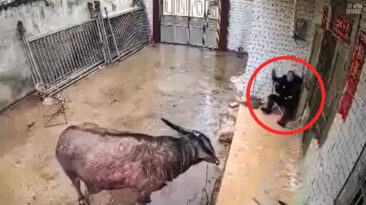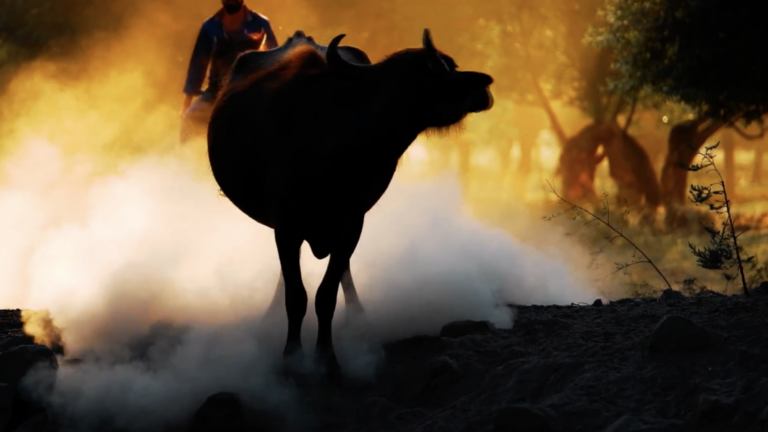
A bull can look calm one moment and become dangerously aggressive the next. During crowded festivals such as Pamplona’s famous running of the bulls, thousands of people voluntarily enter an environment where a few seconds of bad timing can have serious consequences.
These animals are far more powerful than their familiar farmyard image suggests. A mature bull can weigh hundreds of kilograms, accelerate rapidly, and use its horns with enough force to cause devastating injuries.
In 2015, tourist Benjamin Miller reportedly suffered severe injuries after encountering a bull, including a wound measuring around 40 centimeters. Stories like this raise an obvious question: if an angry bull suddenly turns toward you, what could actually help you escape?
And despite the popular image created by bullfighting, there is one important misconception to clear up first. Bulls do not become angry because they see the color red. Their vision is different from ours, and movement is far more important in attracting their attention.
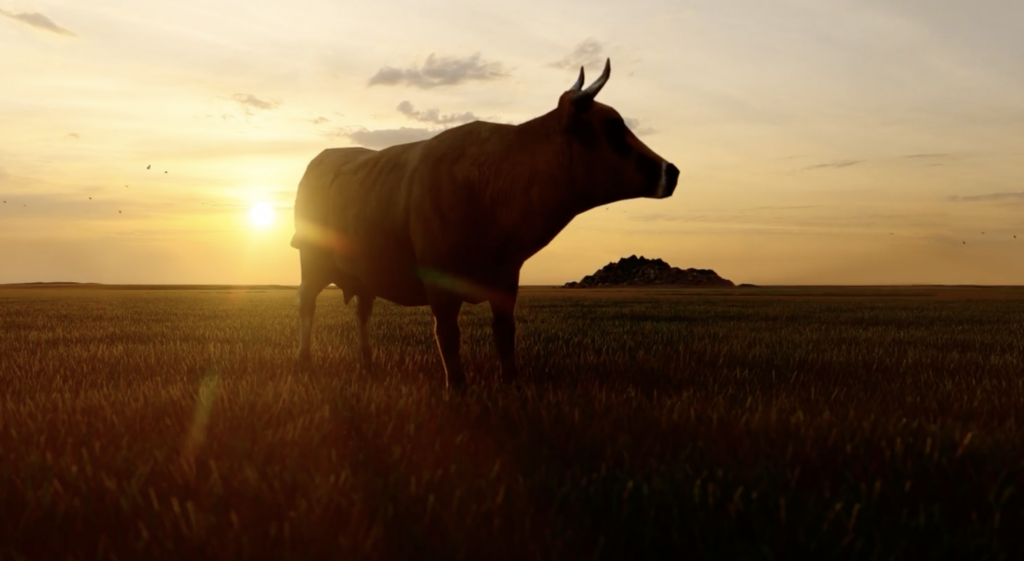
Spanish Fighting Bulls have been selectively bred for physical strength, athleticism, and temperament. In bullfighting, animals are deliberately provoked as part of the spectacle, although cattle outside that setting can also become extremely dangerous when frightened, threatened, or handled incorrectly.
If you ever find yourself near an aggressive bull, the priority should be creating distance and reaching a safe barrier rather than trying to prove that you can overpower the animal.
Step 1. Get Out of Its Path
A charging bull can reach speeds of roughly 56 km/h, making it extremely difficult for a person to outrun one in a straight line. Even an elite sprinter would have little advantage once the animal has gained momentum.
Instead of attempting a long footrace, look for an escape route that puts an obstacle between you and the animal. A sturdy fence, wall, vehicle, or elevated position can provide much better protection than relying on speed alone.
A bull can also change direction surprisingly quickly. Its horns are designed as powerful defensive and offensive weapons, and exceptionally large specimens can have horns stretching several feet from tip to tip.
Step 2. Keep Track of the Animal
Losing track of an aggressive bull creates another danger. If you turn your back without knowing where it has gone, you may accidentally move into its path.
Give the animal plenty of space and move toward a secure location without making sudden movements that could attract its attention. If it has not charged, calmly increasing the distance between you and the bull may be safer than running immediately.
The most important goal is not to confront the animal. It is to reach somewhere the bull cannot easily follow.
Step 3. Understand Its Vision
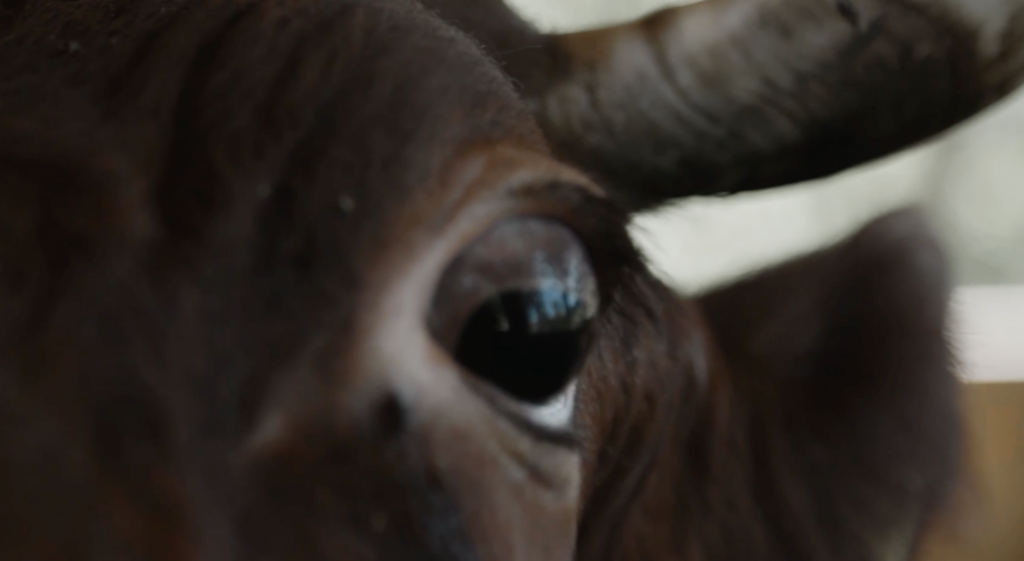
Cattle have a remarkably wide field of view because their eyes are positioned on the sides of their heads. This allows them to monitor a large area around themselves, although their vision is not as sharp or focused as human eyesight.
This is another reason the traditional red cape can be misleading. Bulls are not specifically enraged by red. The rapid movement of the cape is what attracts the animal’s attention and encourages it to follow the moving target.
Trying to sneak directly behind a bull is not a reliable escape strategy because cattle can detect movement across much of their surroundings. Getting behind a solid barrier is considerably safer than attempting to exploit a supposed blind spot.
Step 4. Put Something Between You and the Bull
An adult Spanish Fighting Bull can weigh approximately 500 to 700 kilograms. That enormous difference in mass means that attempting to physically fight the animal should never be considered a normal escape plan.
If a charge begins, the priority should be finding a substantial object that can separate you from the animal. A strong fence, vehicle, tree, wall, or other solid obstruction may give you the protection that your own body cannot provide.
Trying to attack the bull with a stick or another object can make the situation worse and should not be treated as a dependable survival technique. The safest strategy is to avoid provoking the animal while moving toward a secure barrier.
Step 5. Do Not Challenge It
Staring down an aggressive bull or deliberately provoking it can increase the danger. Cattle can respond to perceived threats, sudden movements, and unfamiliar behavior, so turning an encounter into a confrontation is a poor strategy.
Pay particular attention around cows with calves and during situations where bulls are competing or displaying territorial behavior. An animal that feels threatened can react extremely quickly.
Warning signs may include lowering the head, pawing at the ground, snorting, scraping the soil, or displaying tense and aggressive body language. If you notice these behaviors, increasing the distance should become the priority.
Step 6. Treat Bulls With Respect
The idea that a person needs to establish physical dominance over a bull is dangerous. Showing aggression is not a reliable way to control an animal weighing several hundred kilograms.
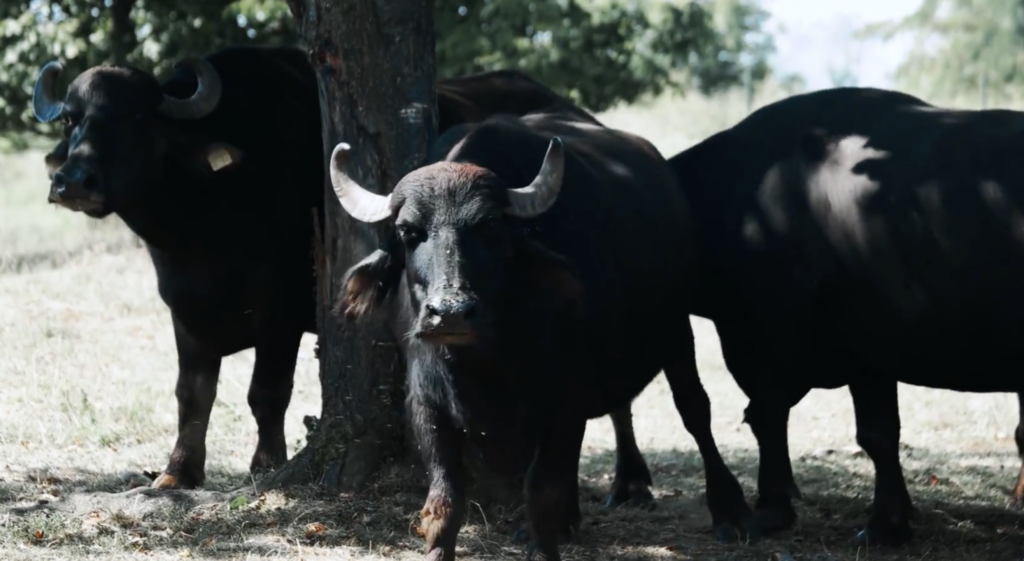
Farmers and livestock handlers should establish safe routines from an early age and avoid games that encourage young cattle to push, butt, or challenge people. Behaviors that seem harmless when a calf is small can become extremely dangerous once that animal reaches full size.
Reports from Ireland have highlighted the serious danger posed by bulls in agricultural settings, with bulls accounting for a significant share of livestock related fatalities. Their strength means that even experienced farmers can be badly injured when something goes wrong.
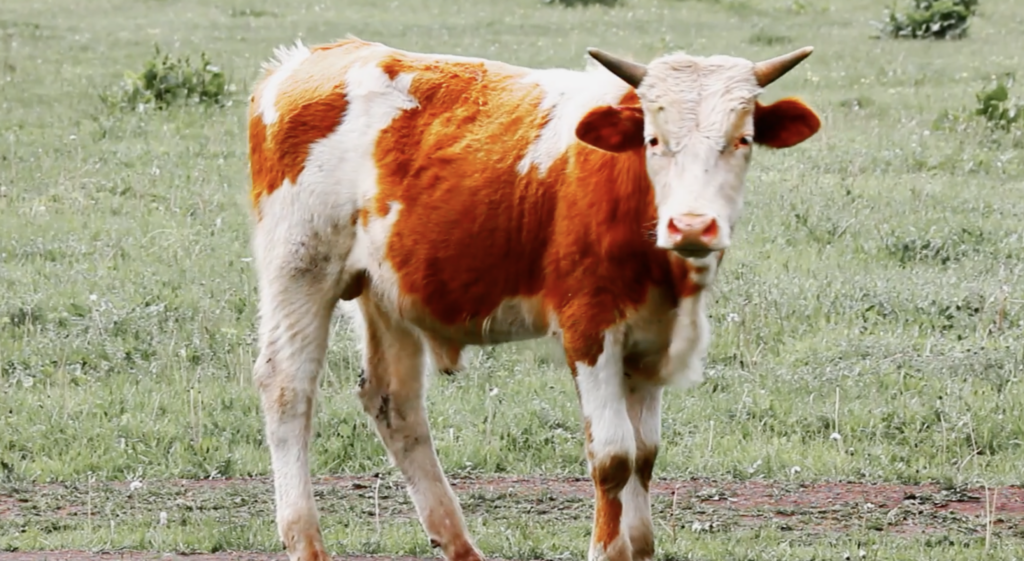
Young cattle should also be handled carefully rather than encouraged to butt people. If a calf is being touched, safer areas include the shoulder or side of the body, while children should never be allowed to approach a bull without appropriate professional supervision.
The safest encounter with an aggressive bull is the one that never becomes a confrontation. These animals are incredibly powerful, and no amount of confidence can make a person physically match several hundred kilograms of muscle moving at full speed.
If a bull becomes aggressive, create distance, avoid provoking it, and look for a solid barrier or secure enclosure. Getting away safely matters far more than trying to demonstrate control over an animal that can cause catastrophic injuries in seconds.