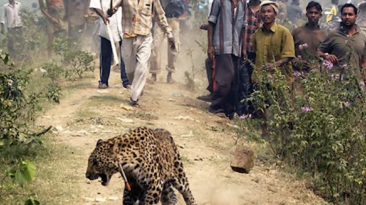
For years, people living near the forests of Nepal and northern India lived in fear of a predator that seemed to have developed a taste for human flesh. She became known as the Champawat Tiger, a Bengal tigress whose terrifying reputation eventually turned her into one of history’s most infamous man eating animals.
Her attacks began in western Nepal, where villagers started disappearing from communities near the forest. At first, people believed the deaths were isolated incidents, but the attacks continued until everyone realized that a dangerous predator was deliberately targeting humans.
Panic quickly spread through the region. Families were afraid to enter the forest, farmers abandoned their fields and some villagers reportedly fled their homes rather than risk encountering the tigress.
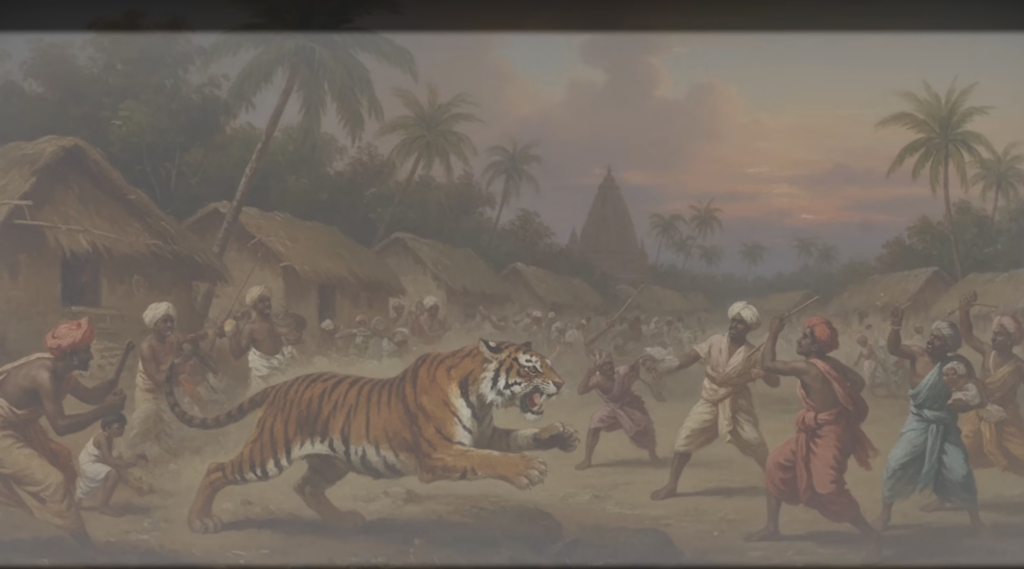
The animal was particularly frightening because she did not behave like a typical tiger. While tigers generally hunt at night, the Champawat Tiger was willing to approach people during daylight and often targeted women and children.
She also covered enormous distances while searching for victims. The tigress reportedly traveled as far as 20 miles in a single day, allowing her to terrorize communities across a surprisingly large area.
Authorities attempted to stop her, but the tigress repeatedly managed to avoid hunters. Eventually, she crossed the Sharda River and entered India, where she continued her attacks.
This was when she became known as the Champawat Tiger.

By 1907, British authorities had become desperate to end the killings and offered a reward for the animal’s capture. A renowned British hunter and conservationist named Jim Corbett decided to take on the challenge.
Corbett understood that simply searching the forest would not be enough. He organized hundreds of local villagers, studied the tigress’s tracks and searched for clues that could reveal where she was hiding.
Then the tigress killed a 16 year old girl.
The attack left behind a trail of blood, giving Corbett the evidence he needed to begin tracking her movements. He organized the villagers into a large line around the area and prepared to drive the predator toward his position.
The plan was simple but extremely dangerous. The villagers shouted and beat drums, creating enough noise to push the tigress from her hiding place while Corbett waited for his opportunity.
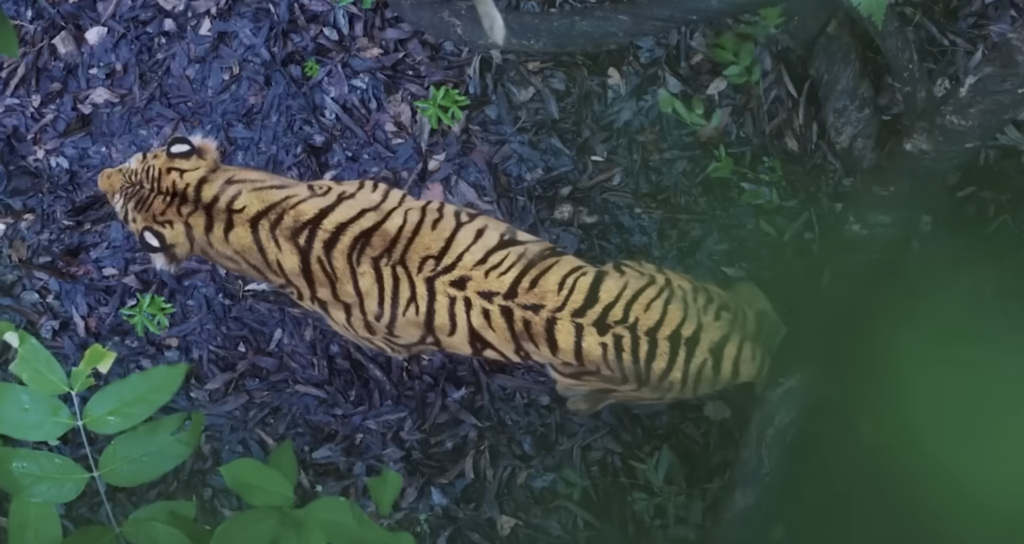
Eventually, the tiger appeared.
Corbett fired several shots and managed to hit her, but the wounds were not immediately fatal. The animal became furious, and Corbett soon found himself dangerously close to a wounded predator that was still capable of killing him.
Then he ran out of ammunition.
With the tigress still alive, Corbett grabbed a shotgun from one of the villagers and prepared for another shot. The tiger was only about 20 feet away when he finally fired and killed her.
The danger was finally over.
After examining the animal, Corbett and the villagers discovered a possible explanation for her transformation into a man eater. Several of her canine teeth on the right side of her mouth were damaged, making it much more difficult for her to bring down the animals she would normally hunt.
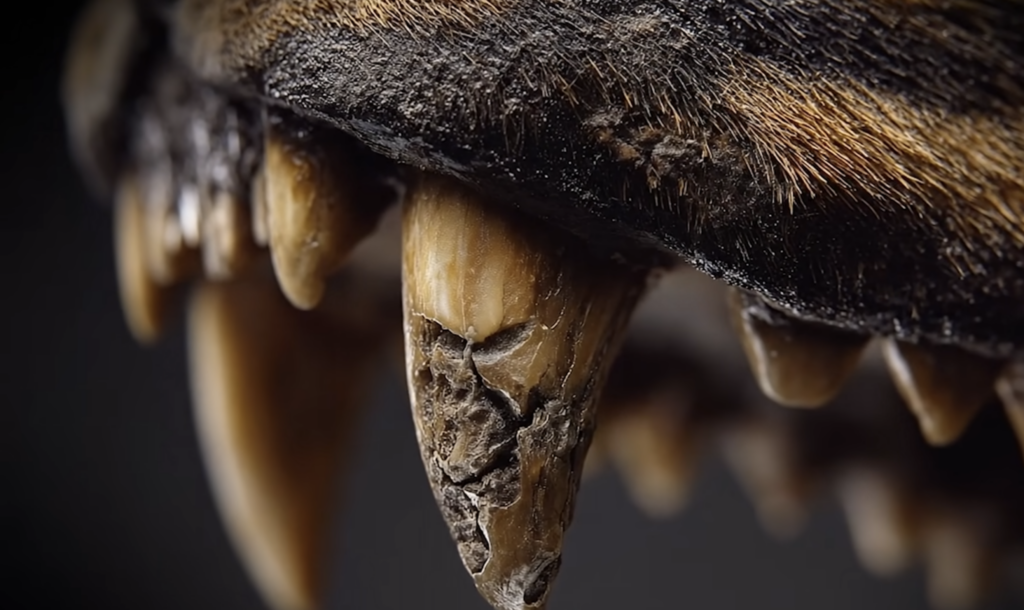
Humans were easier targets.
The Champawat Tiger is widely credited with killing 436 people, a figure that has made her one of the most notorious individual man eating animals in recorded history. While historical records can make the exact number difficult to verify, there is little doubt that the tigress caused widespread terror and a devastating loss of life.
Jim Corbett’s encounter with her became one of the stories that established his reputation for tracking dangerous man eating predators. He would later become famous for hunting other big cats that had begun targeting humans.
The Champawat Tiger’s story remains a chilling example of how an injured predator can become extraordinarily dangerous. For the villagers who lived through her reign of terror, the forest was no longer simply a place where wild animals lived, it had become a place where stepping outside could mean never coming home.