Humanity is preparing to return to the Moon in ways not seen since the Apollo era. New missions like Artemis II represent a major step forward in space exploration, but they do not mean that living on the Moon is anywhere close to becoming reality. The gap between a crewed flyby and a permanent settlement is still enormous.
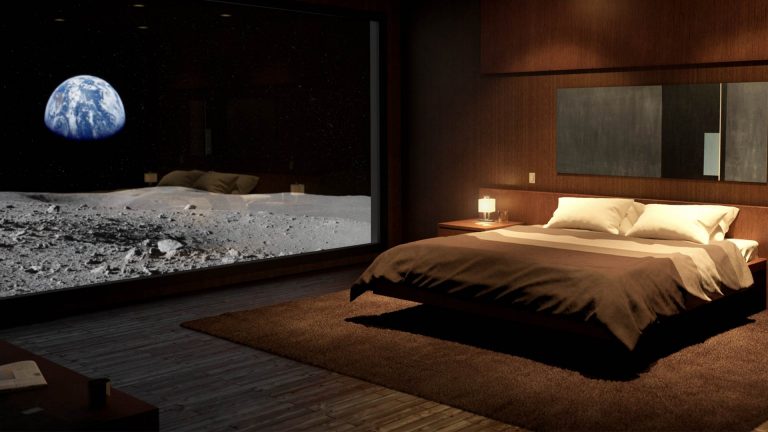
It is easy to imagine a future where people live and work on the lunar surface. The idea sounds almost exciting at first. Low gravity movement, views of Earth hanging in the sky, and the feeling of being part of a new space frontier all seem like science fiction becoming real. But the actual conditions on the Moon are far more hostile than most people realize.
Several countries are now competing to return to the Moon. The United States, China, Russia, and India are all developing missions aimed at establishing a long term presence. At the same time, private companies are investing heavily in lunar exploration, seeing both scientific and economic opportunities beyond Earth.
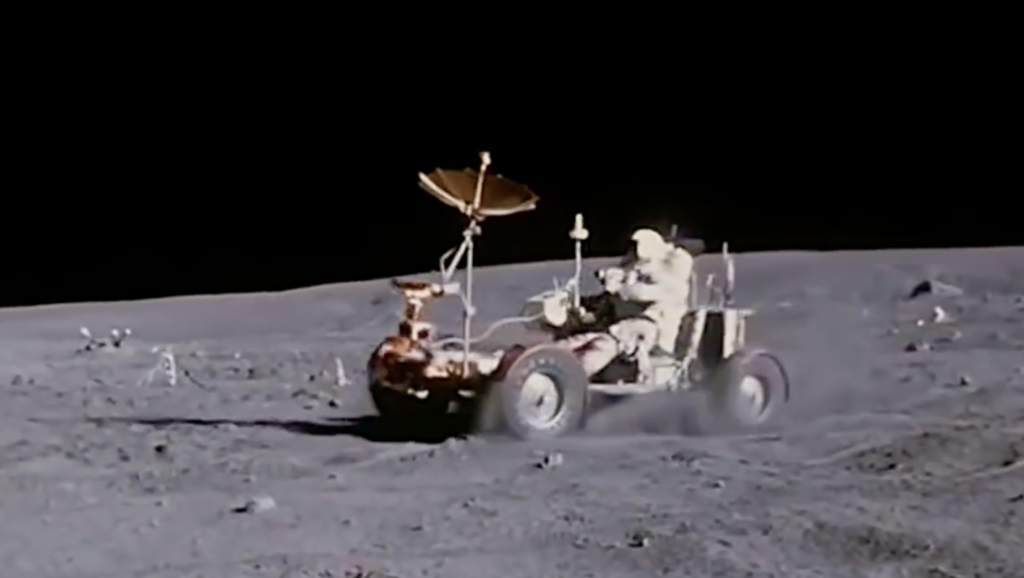
Behind much of this interest is the potential value of lunar resources. The Moon contains a wide range of materials, including metals such as titanium and iron. These resources could be used for construction in space or even transported back to Earth in future scenarios where mining becomes economically viable.
One of the most discussed lunar resources is helium three. This rare isotope is scarce on Earth but exists in larger quantities on the Moon due to long term exposure to solar wind. Some researchers have suggested it could one day be used in advanced fusion energy systems, making it extremely valuable in theory.
Estimates about its value vary widely, but the idea of an energy rich Moon has helped fuel both scientific interest and commercial speculation. However, extracting and transporting these materials would require infrastructure that does not yet exist.
Even if a base were established, ownership and governance would remain complex. International agreements such as the Outer Space Treaty state that no nation can claim sovereignty over celestial bodies. This creates a legal framework that encourages exploration but limits territorial control, raising questions about how future lunar resources would be shared or regulated.
Despite these challenges, planning for lunar bases is already underway. The most likely locations for early settlements are near the Moon’s south pole, where sunlight is more consistent and water ice is believed to exist in permanently shadowed craters.
This ice could be crucial for survival, providing both drinking water and oxygen when processed. Other regions of the Moon experience extreme cycles of darkness lasting for weeks, making them far less suitable for long term human presence.
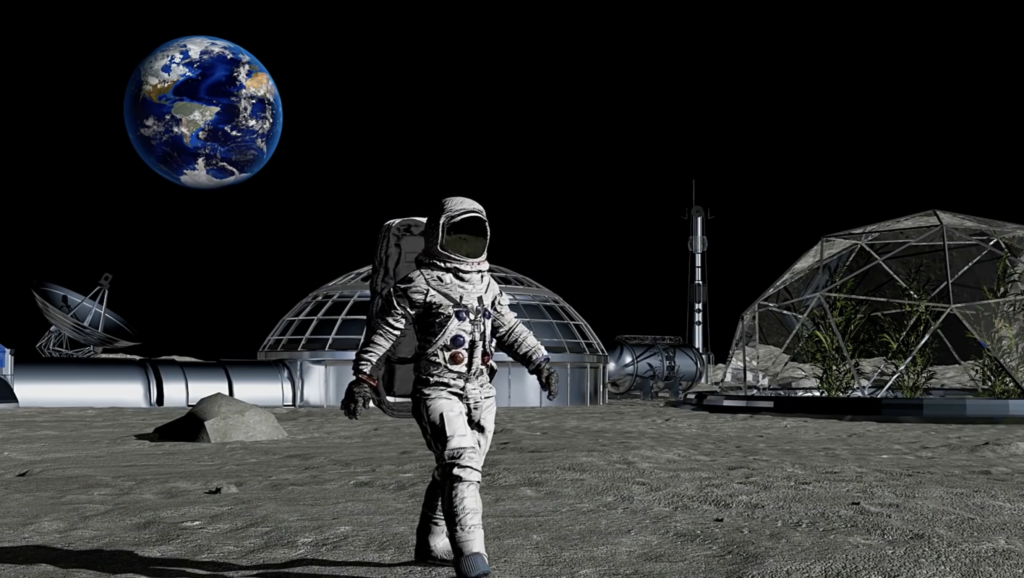
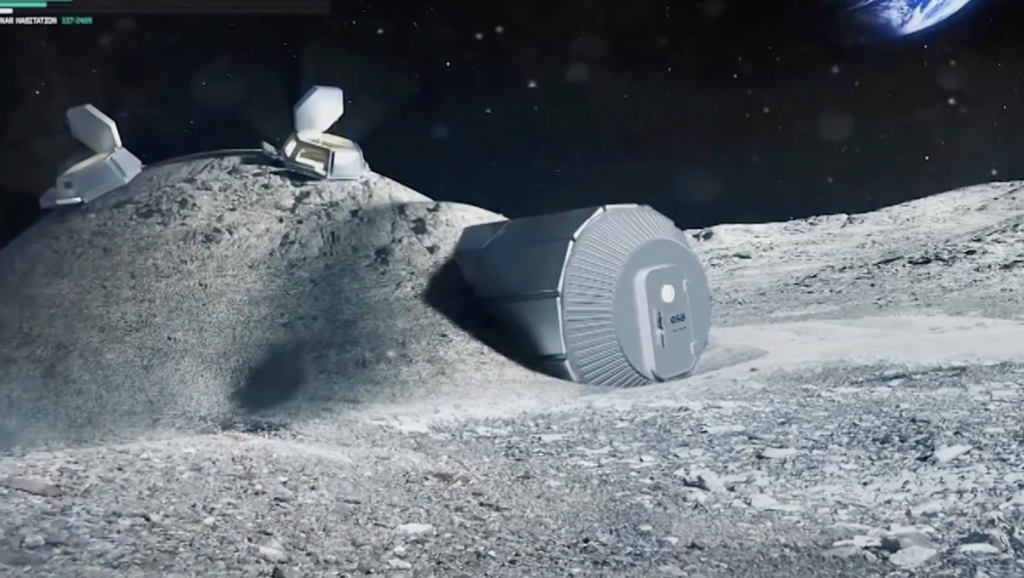
Building a lunar base will likely rely heavily on automation. Robots may be used to construct habitats using local materials such as lunar soil, reducing the need to transport everything from Earth. Structures could be formed by compressing and shaping regolith into protective walls or dome like shelters.
Even with advanced construction methods, early habitats would not resemble comfortable living spaces. They would likely be built underground or covered with thick layers of lunar material to protect against radiation and micrometeorite impacts.
Daily life inside a lunar base would also be highly controlled. Food supplies would initially consist of prepackaged astronaut meals, while more advanced systems might eventually allow small scale agriculture. Experiments have already shown that certain crops can grow in simulated lunar soil under controlled conditions.
Water would be another critical challenge. While some could be extracted from lunar ice, recycling systems would be essential for long term survival. In closed environments, nearly all water would need to be reused efficiently to reduce dependence on Earth supply missions.
Another major obstacle is lunar dust. This fine, abrasive material covers the entire surface of the Moon and behaves in a way that makes it extremely difficult to manage. It can cling to equipment, damage machinery, and even cause irritation if inhaled or brought into habitats.
Protecting both humans and technology from this dust will be one of the most important engineering challenges of any lunar settlement. Without effective solutions, long term survival on the surface would be extremely difficult.
Ultimately, missions like Artemis II are not the beginning of lunar colonization. Instead, they are steps toward understanding how to operate safely in deep space. The Moon remains a testing ground rather than a destination for permanent life.
Before humans can seriously consider settling there, many fundamental problems still need to be solved, from radiation exposure to resource extraction and sustainable living systems.
For now, the Moon represents ambition rather than habitation. It is a place we are learning to reach again, not one we are ready to call home.