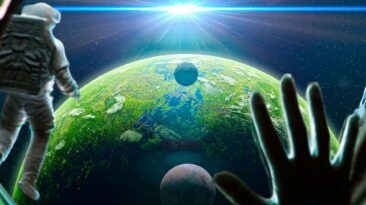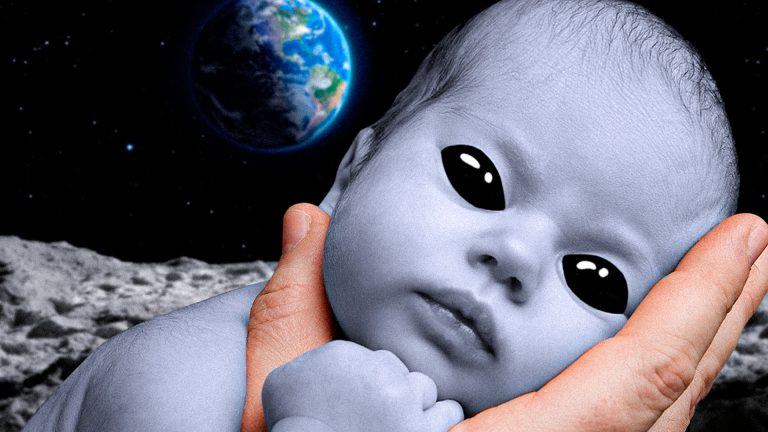
Ever wondered what it would actually mean to enter life on another world? Not as an astronaut visiting briefly, but as someone who takes their very first breath somewhere far beyond Earth. Imagine being born on the Moon, in a place where humanity is still learning how to exist.
From the start, your origin would already be unlike anything in human history. You would be 384,400 kilometers away from Earth, living in an environment that offers almost no natural protection. There is no breathable atmosphere, no liquid water on the surface, and no shield against constant space radiation. Exposure levels outside would be far beyond anything human biology evolved to handle.
The Moon also experiences extreme temperature swings. During lunar daytime, the surface can heat up to around 120 degrees Celsius, while at night it can plunge below minus 130 degrees. Outside a protected environment, survival would be impossible. That is why your first world would not be an open landscape, but a sealed, artificial habitat designed entirely for human life support.
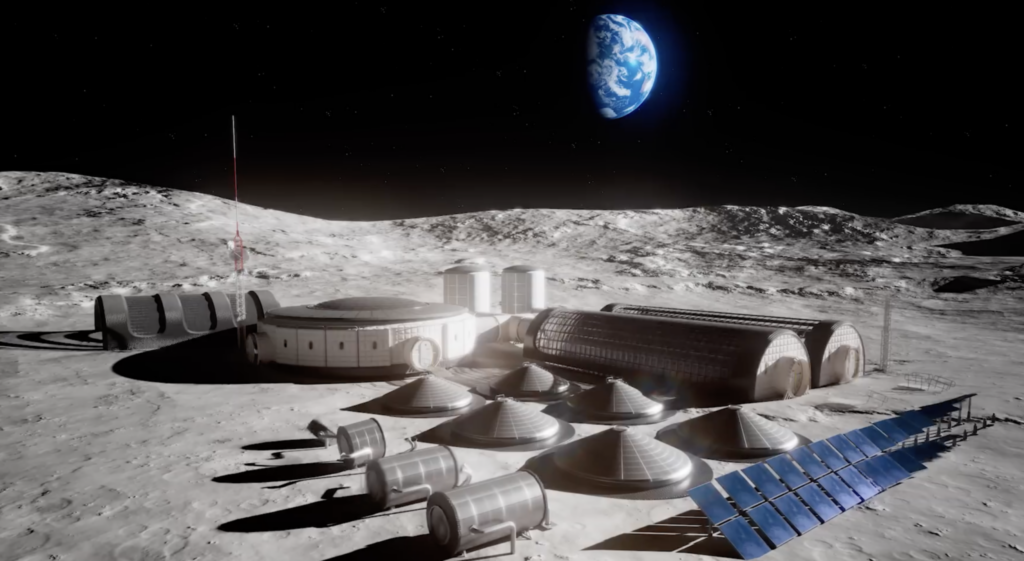
Even though no permanent lunar cities exist yet, engineers have long explored what such habitats might look like. Early concepts like Project Horizon imagined underground bases and pressurized structures that could protect humans from radiation and micrometeorites. A real lunar settlement would need to function like a closed loop system where air, water, and food are constantly recycled.
Growing up in such a place would shape the body in unusual ways. Lunar gravity is only about one sixth of Earth’s, which means bones and muscles would develop under much lighter load. Over time, this could lead to taller bodies, weaker bone density, and movement that feels effortless in low gravity but becomes difficult when returning to Earth.
Even before birth, challenges would begin. Human pregnancy in low gravity is still not fully understood, but it is expected to behave differently than on Earth. Development inside the womb could be affected by reduced gravitational force, possibly altering growth patterns and extending the duration of pregnancy. The entire process would require constant medical supervision.
Another major issue would be bone density loss in adults. In reduced gravity environments, the human body naturally weakens over time. For a pregnant individual, this would create additional risks during childbirth. The physical strain of natural delivery might be too dangerous, making surgical birth the most realistic and safest option in a lunar setting.
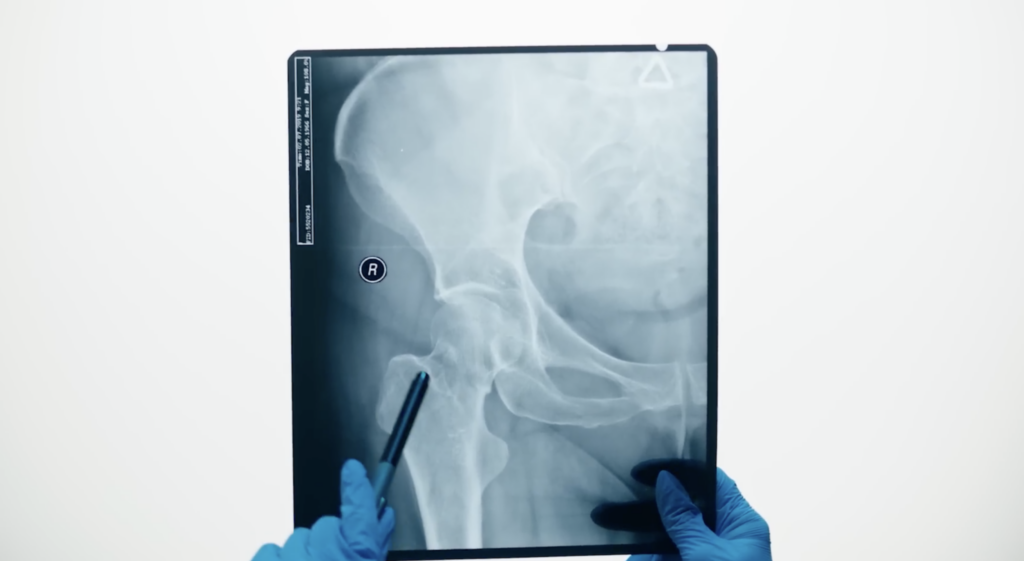
This shift in how humans are born could have long term biological effects. On Earth, the limitations of the birth canal helped shape the size and structure of human skulls over evolution. If that constraint is removed, future generations born on the Moon might develop different physical traits, potentially including larger heads or altered skeletal proportions.
Radiation exposure would also play a key role in shaping life. Without a strong atmosphere or magnetic field, the Moon is constantly exposed to cosmic rays and solar particles. While habitats would offer shielding, long term exposure risks would still exist. Over generations, this could influence genetic adaptation in ways we do not yet fully understand.
Skin pigmentation could also gradually shift depending on environment and lifestyle. On Earth, melanin provides protection against ultraviolet radiation. On the Moon, populations spending more time outside protected habitats might evolve higher levels of melanin, while those living entirely indoors could experience different evolutionary pressures.
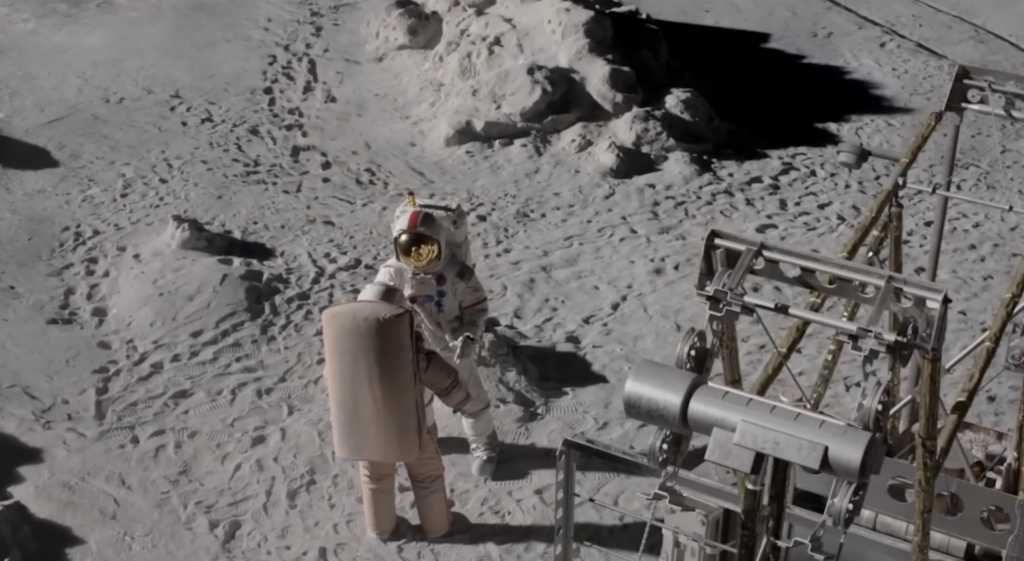
As generations pass, the gap between Earth born and Moon born humans could slowly widen, not because they are separate species, but because their environments shape them differently. Gravity, radiation, diet, and isolation would all influence development in subtle but meaningful ways.
Psychologically, the experience would be just as unique. A Moon born child would grow up seeing Earth suspended in the sky, large and unchanging. It would not rise or set like the Moon does for people on Earth. Instead, it would remain fixed in the same position, acting as a constant visual anchor in the sky.
Travel between worlds would not be simple. A body adapted to low gravity would struggle in Earth’s stronger gravitational field. Movements would feel heavier, balance would be harder to maintain, and the cardiovascular system would take time to adjust. Returning to Earth would require physical adaptation similar to recovery after long term spaceflight.
Even basic activities would feel different. Water would be a carefully controlled resource rather than something freely available. Swimming or diving would require adjustment due to changes in buoyancy and coordination under low gravity conditions. Life would be structured, efficient, and highly dependent on technology working correctly.
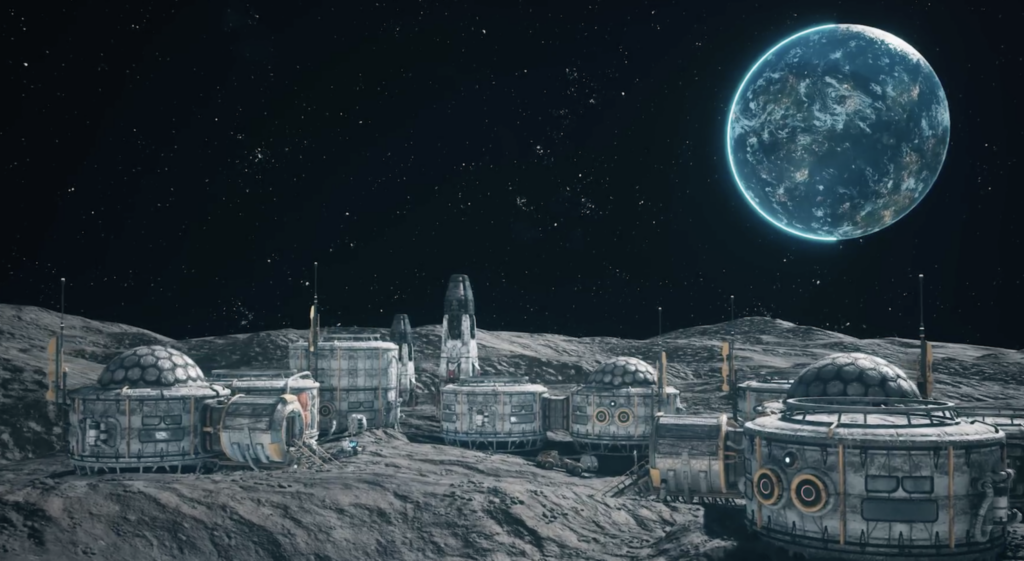
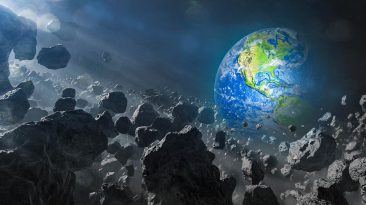
One of the most striking parts of lunar life would always be the view of Earth itself. From the Moon, Earth would appear bright and dominant in the sky, reflecting a significant portion of sunlight. For someone growing up there, it would feel less like a distant planet and more like a permanent presence watching over them.
Yet even that perspective could become overwhelming over time. The far side of the Moon would offer the opposite experience, complete darkness and a sky filled with uninterrupted stars. A place where Earth disappears entirely and the universe becomes the only view.
In the end, being born on the Moon would not just change where life begins. It would change how humanity understands what it means to be native to a world at all.