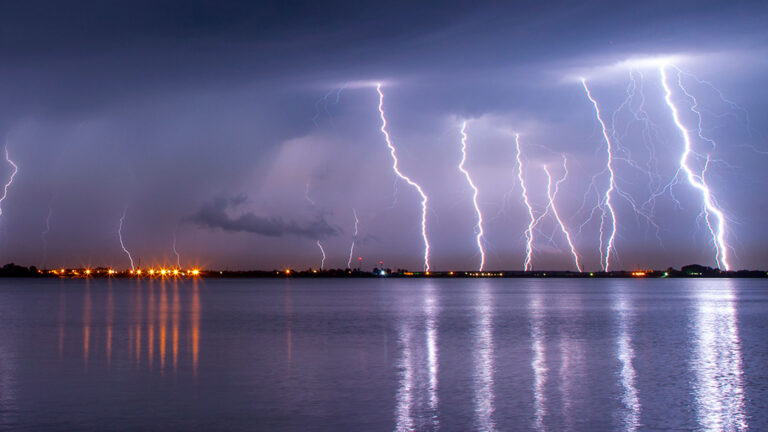
You’re sitting in a small boat in the middle of a quiet lake with your fishing line stretched out into the water. Nothing about it feels threatening.
Then the air changes. The hair on your arm starts to lift, and there’s a metallic taste in your mouth, like you’re holding a coin on your tongue. Out in the distance, dark clouds appear from nowhere.
You start reeling in faster. A second later a blinding flash hits another boat nearby, and the sound arrives with it, shaking the water underneath you.
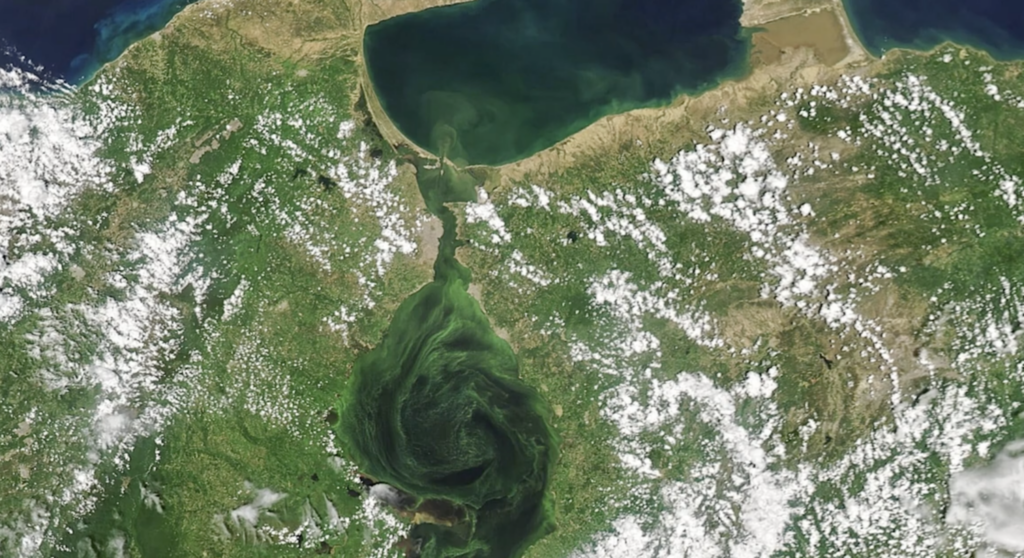
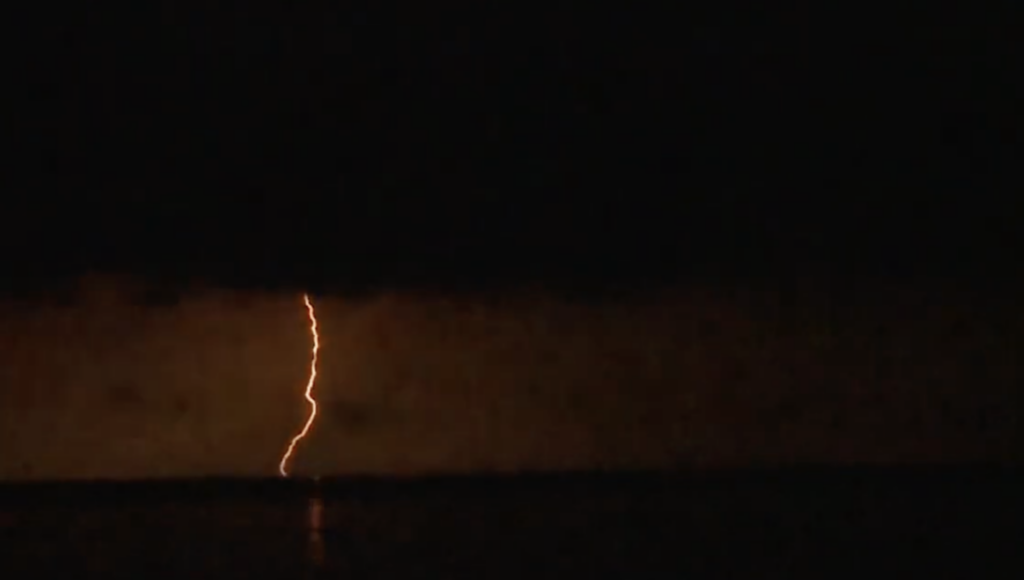
This is Lake Maracaibo in northwestern Venezuela, and it holds a Guinness World Record for the highest concentration of lightning strikes anywhere on Earth.
Calling it a stormy lake undersells it considerably. It functions more like a permanent lightning generator.
NASA estimates around 250 lightning flashes per square kilometer every year, and during the rainy season the strikes can come 20 or even 28 times per minute.
The phenomenon has a name, the Catatumbo Lightning, and it can light up the sky continuously for hours. The cause is geography.
Warm humid air rolls in off the Caribbean Sea and collides with cool air pouring down from the Andes. That clash happens constantly, right above the lake, building enormous storm systems in the same spot day after day.
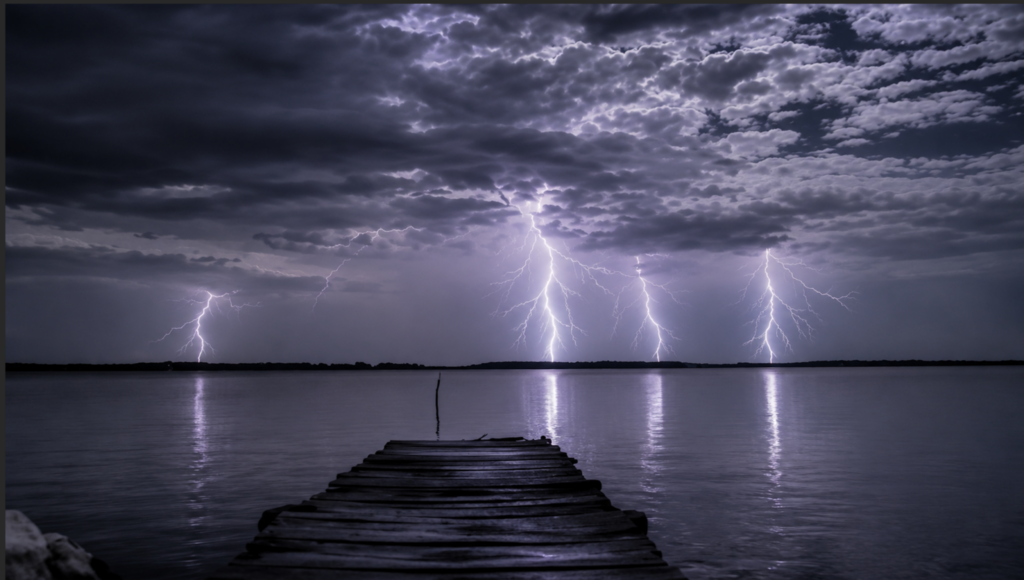
Which makes what happens below it genuinely remarkable, because more than 20,000 fishermen work these waters every single day.
For most of them it isn’t a choice. Fishing here is how you eat.
The risk never goes away, though. Lightning hits boats, water, and shoreline structures on a regular basis, and some fishermen describe near misses on almost every trip, particularly around dusk when the storms peak.
Scientists have measured that pattern, finding that activity climbs sharply in the evening and can hold at its most intense for up to nine straight hours. If you live here, reading the sky isn’t a hobby. It’s a warning system.
Surviving the lake starts before you get anywhere near a boat.
Forecasts help, but they often can’t predict the localized storm cells that build directly overhead. The reliable warnings are visual.
Tall, bright, fast forming cumulonimbus clouds usually mean a thunderstorm is developing. If the sky darkens quickly and the wind picks up, conditions are already turning against you.
Thunder is the last clear warning. If you can hear it, you’re close enough to be struck.

Then there’s the strangest part, which is how your own body reacts before anything happens.
People report tingling skin or the sensation of their hair standing on end, and that’s the atmosphere around them becoming electrically charged. Metal objects sometimes hum or vibrate. Some describe a faint chlorine like or metallic taste in the air.
None of that is folklore. Those are physical responses to intense electrical fields forming overhead, and when they appear, you may have seconds.
If you’re on the water at that point, there’s only one priority. Reach land.
Water conducts electricity efficiently, and out on an open lake your boat is usually the highest object around, which makes it an obvious target.
If shore is out of reach, experts advise dropping anchor and getting as low as possible in the center of the boat, avoiding metal surfaces entirely and keeping your body compact.
Some modern boats carry lightning protection, using tall conductive masts wired to grounding plates to steer strikes away from the people aboard. In an environment this extreme, no system is a guarantee.
Once you’re on land, the safest options are a fully enclosed building with wiring and plumbing, or a metal vehicle with the windows shut, since both redirect electrical energy safely into the ground.
With no shelter available, stay away from trees, poles, and open ground. Crouch low, minimize your contact with the earth, and cover your ears against the shockwave from a nearby strike.
Then wait. At least 30 minutes after the last sound of thunder before going back outside.
It’s worth understanding what’s actually at stake, because being struck is not automatically a death sentence.
According to the National Weather Service, roughly 10 percent of lightning strike victims die. The other 90 percent frequently live with burns, nerve damage, hearing loss from ruptured eardrums, and cardiac problems.
Which is the part people tend to miss about this place. Surviving the strike is usually where the hard part starts.