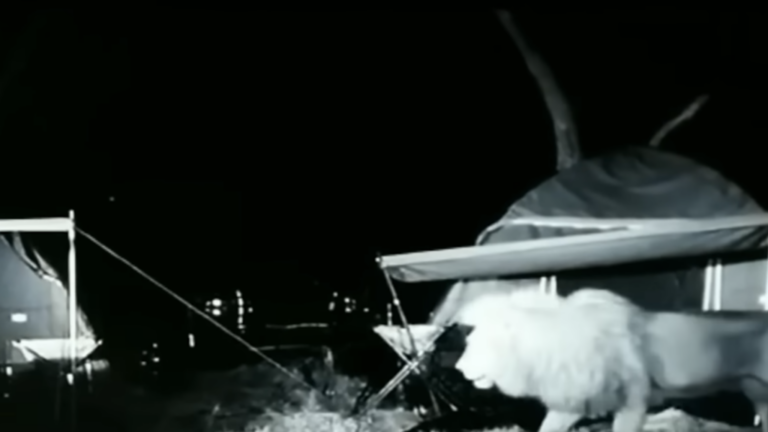
A night inside a safari tent can feel like the ultimate wilderness experience. You are surrounded by darkness, distant animal calls, and nothing but canvas separating you from the African landscape. Then imagine waking suddenly to the sound of something moving inside the tent.
Before you have time to understand what is happening, a powerful predator is already beside you. A lion does not need to chase you across an open field to become dangerous. At close range, its strength, teeth, claws, and speed give it an enormous advantage over an unarmed human.
Lions can reach impressive speeds over short distances, while their muscular bodies are built for explosive bursts of movement. Adult males can weigh well over 150 kg, with females generally smaller, and their powerful jaws and forelimbs make them formidable predators.
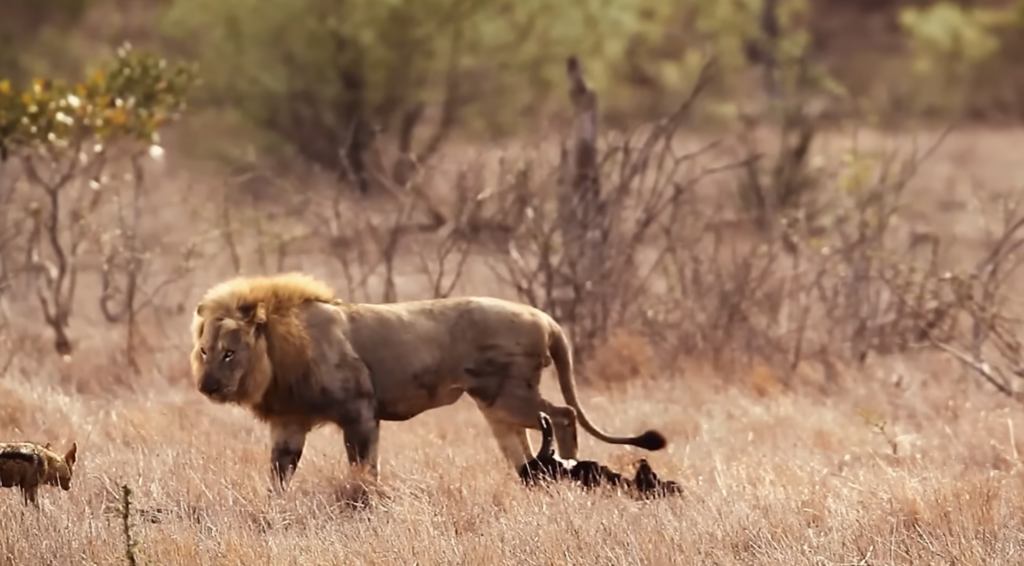
A mature lion can stand roughly 1.2 meters at the shoulder and stretch several meters from nose to tail. Unlike most wild cats, lions live socially, forming groups called prides that can contain anywhere from a few individuals to several dozen animals.
Living in a pride also means lions can cooperate when hunting or defending territory. Lionesses usually carry out much of the hunting, working together to approach and overwhelm prey, while males can play important roles in protecting the pride and its territory.
That does not mean every encounter with a lion ends in an attack. Lions constantly assess their surroundings and decide whether another animal represents food, a threat, or something they would rather avoid.
So what happens if the animal decides that you are worth approaching? And if you suddenly find yourself facing a lion during a safari, what can you do to avoid turning an encounter into an attack?
Step 1. Read the Lion’s Behavior
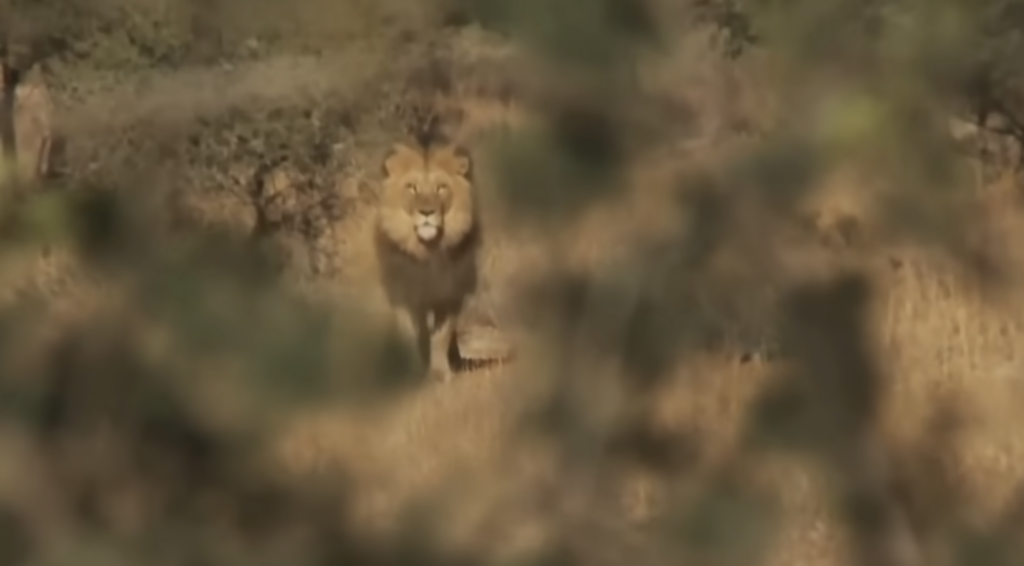
The first thing to do is pay attention to the animal rather than immediately reacting with panic. A lion that has noticed you may simply be curious, while other body positions can indicate agitation or focused attention.
Its posture, movements, ears, tail, and direction of attention can all provide clues about its behavior. A lion that appears tense and focused deserves far more caution than one that is simply passing through the area.
Step 2. Control Your Panic
Fear is an understandable reaction when a large predator is nearby, but sudden movements can make an encounter more unpredictable. Try to remain as composed as possible and avoid immediately turning the situation into a chase.
Step 3. Pay Attention to Its Approach
If the lion begins moving closer, continue watching what it does. Vocalizations such as growling, snarling, or other aggressive sounds can indicate that the animal is uncomfortable or attempting to intimidate you.
Step 4. Avoid Escalating the Encounter
There is no universal response that guarantees safety during a lion encounter, which is why following the instructions of trained safari guides and wildlife authorities is so important. Avoid sudden movements, do not turn your back, and do not attempt to approach or interact with the animal.
That advice becomes much harder to follow when the person is asleep. Patrick Fourgeaud discovered this during a safari in Tanzania, when he and his wife were staying in a luxury tent and suddenly found themselves dealing with a lion inside their sleeping area.
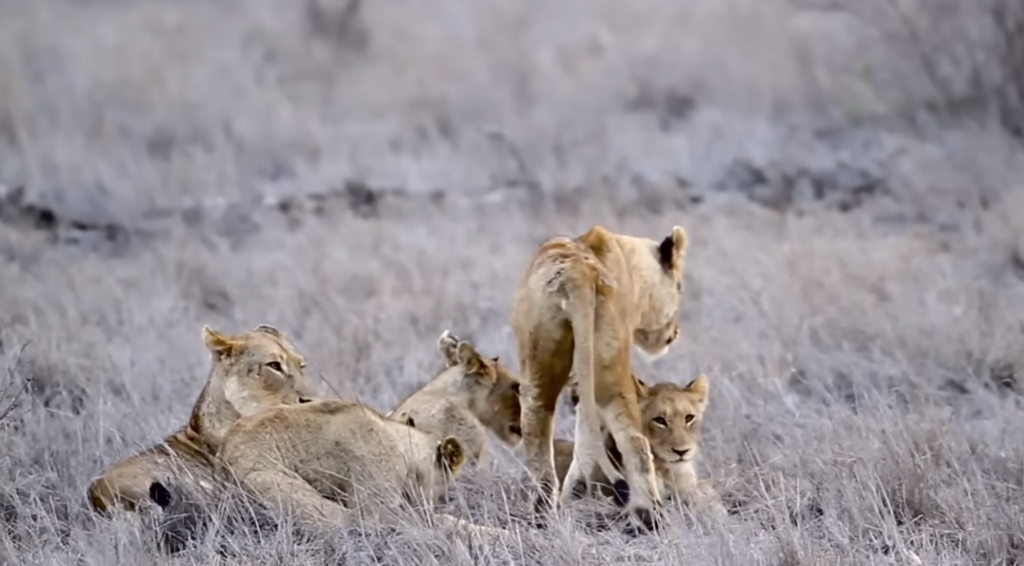
The lion reportedly approached the couple before attacking Patrick, severely injuring his arm. He eventually underwent more than ten major operations as doctors worked to reconstruct the damaged limb.
The physical injuries were only part of the aftermath. Patrick and his wife also experienced lasting psychological effects from the terrifying encounter, demonstrating how quickly a peaceful wildlife vacation can become a life changing event.
Step 5. Make Yourself Difficult to Target
When a lion is assessing a person, appearing vulnerable can make the situation more dangerous. If there is enough distance and the animal has not attacked, remaining upright and making yourself appear larger may discourage it from approaching.
Depending on the circumstances, a person may raise a jacket, backpack, or another object to increase their apparent size. Firm vocalization can also communicate confidence, although people should avoid blindly following generic advice when a trained guide is present.
If the lion is not attacking, slowly creating distance may be safer than suddenly running. Keep the animal in view and avoid movements that could trigger a chase.
Step 6. Do Not Run
Running from a lion can trigger its pursuit instinct. A person who turns and sprints away may appear to be prey attempting to escape, while the lion has the speed and agility to close the distance extremely quickly.
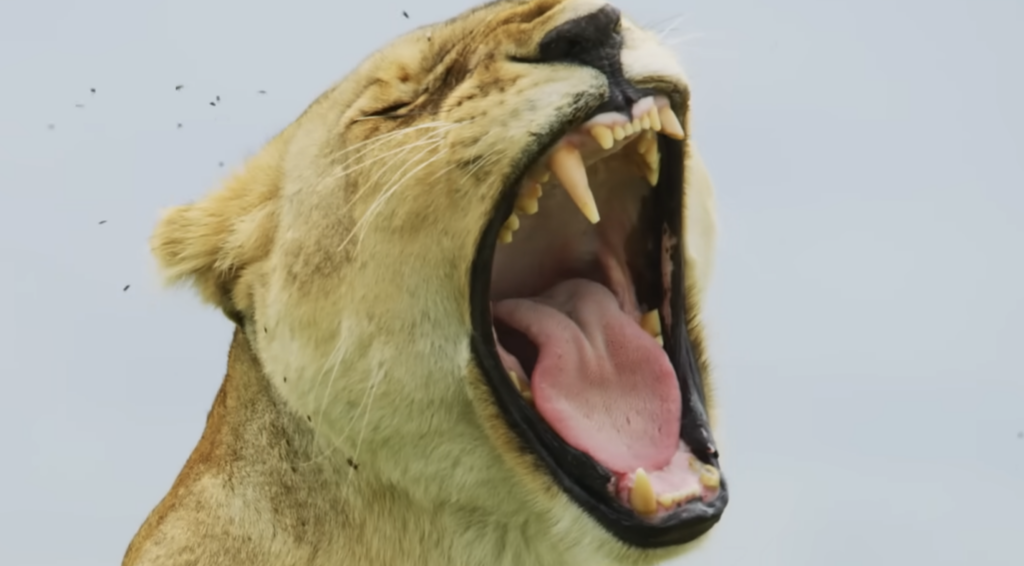
Lions can also use surprise and concealment when approaching prey, which means simply reaching for a nearby tree is not a reliable escape plan. The safest choice is to follow professional guidance, remain calm, and avoid turning the encounter into a chase.
Step 7. Protect Yourself During an Attack
If a lion actually makes contact, the situation becomes extremely dangerous. The animal’s claws and jaws can cause devastating injuries within seconds, and its physical strength is vastly greater than that of a human.
Protecting vulnerable areas of the body becomes critical. The head, neck, and face are particularly important to shield if possible. Using clothing, a backpack, or another object between yourself and the animal may provide some protection while you attempt to survive the attack.
Step 8. Remember That Darkness Changes the Situation
Nighttime can make wildlife encounters harder to predict because visibility is reduced and many animals become more active after dark. Research has also examined relationships between lunar conditions and lion attacks, with some studies reporting differences in human attack patterns around the full moon.
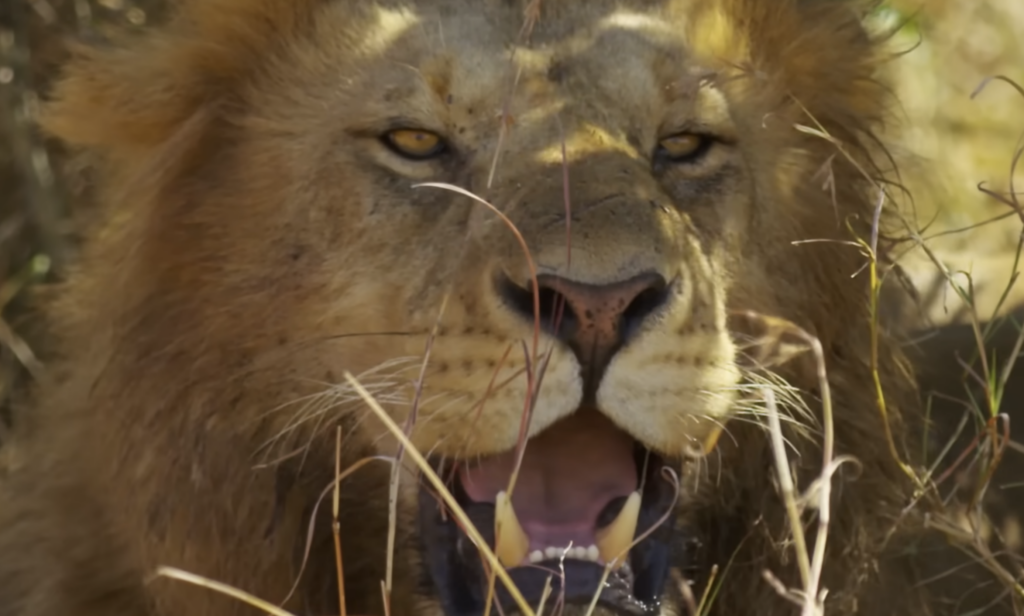
One study from the University of Minnesota reported that lion attacks on humans were more frequent during a particular period following a full moon. Researchers have suggested that changing nighttime visibility and human activity could influence when encounters occur.
For travelers, however, the simplest lesson is to avoid wandering through lion habitat without proper supervision, particularly after dark. Wildlife reserves exist because these animals are powerful predators living in environments where humans are visitors.
Lions once occupied far larger parts of Africa, Asia, and Europe than they do today, but their historical range has dramatically declined. Modern wild populations are concentrated primarily in sub Saharan Africa, with a small population also surviving in India’s Gir Forest.
For most people, encountering a wild lion is extremely unlikely. But for someone sleeping in a safari tent, the wilderness can be much closer than it appears. A thin canvas wall may separate a peaceful night’s sleep from one of the most frightening encounters imaginable.