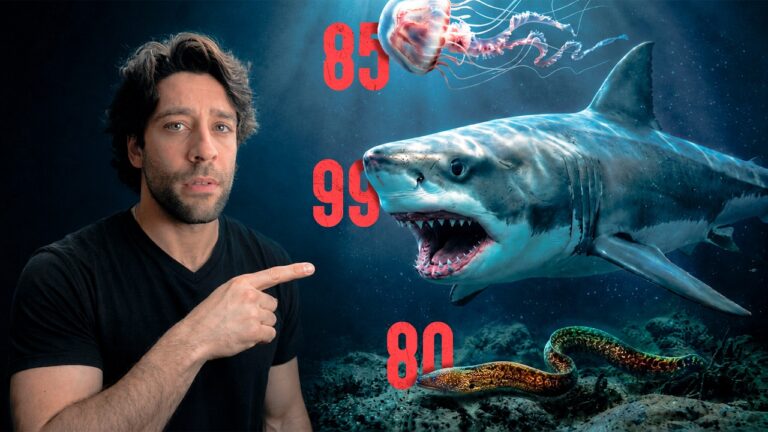
The ocean may look peaceful from the shore, but beneath the surface lives an entire world of deadly predators. Some are massive hunters capable of tearing apart large prey in seconds, while others are tiny venomous creatures you might accidentally step on without even noticing.
From powerful sharks to nearly invisible killers hiding in coral reefs, these animals possess deadly adaptations designed for survival. Sharp teeth, crushing bite forces, paralyzing venom, and lightning fast attacks make them some of the most dangerous creatures on Earth.
Here are some of the ocean’s most terrifying predators and what makes them so deadly.
Saltwater Crocodile: The Ultimate Ambush Predator
The Saltwater Crocodile is the largest reptile alive today and one of the deadliest predators found near the water.
Most adults measure between 7 and 11 feet long, but massive males can exceed 20 feet and weigh more than a ton. Found throughout Southeast Asia, Northern Australia, and parts of India, these reptiles thrive in rivers, swamps, estuaries, and coastal waters.
What makes them especially terrifying is their bite force, which is the strongest ever recorded in the animal kingdom at roughly 3,700 PSI.
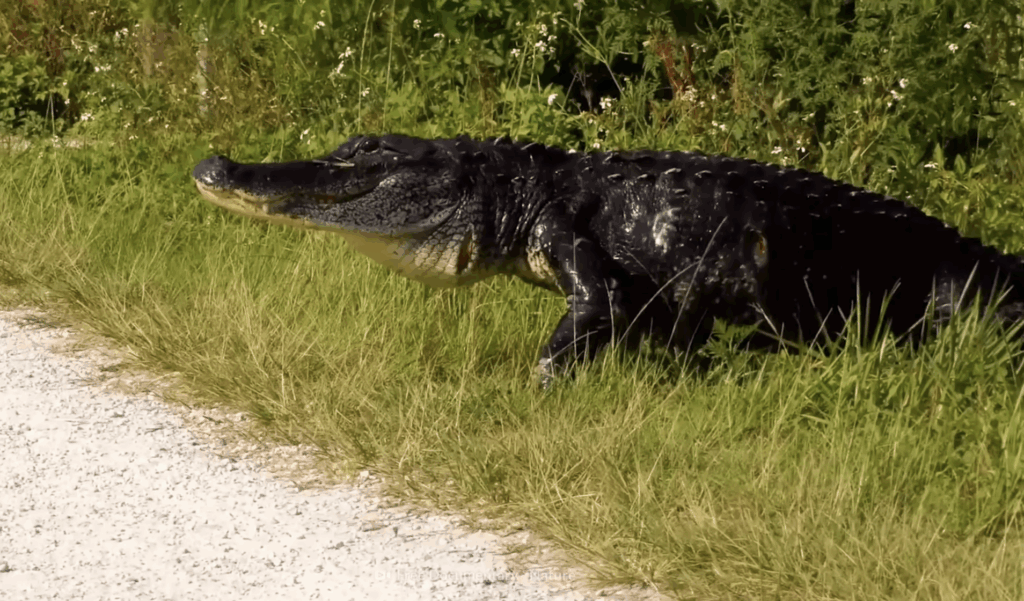
Once they grab prey, crocodiles perform a violent maneuver known as the death roll, spinning their bodies to tear flesh apart and drag victims underwater.
Saltwater crocodiles kill hundreds of people every year, often ambushing victims near riverbanks or shallow water.
If you ever encounter one, experts recommend staying calm and slowly retreating without splashing. In an attack, targeting the eyes or nostrils may increase your chances of escape.
Bull Shark: The Aggressive River Hunter
Bull Shark are considered among the most aggressive sharks in the world.
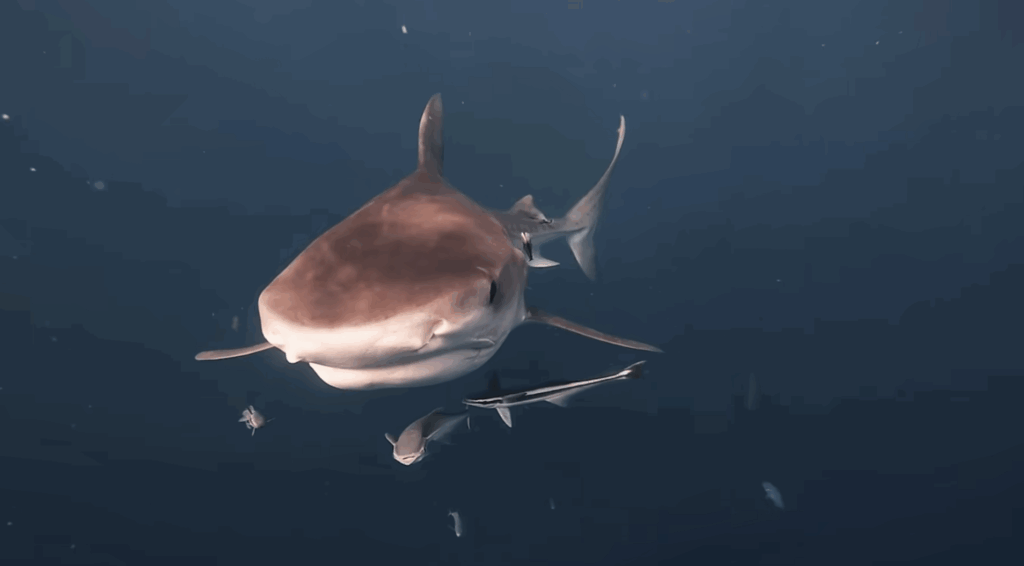
Unlike most sharks, bull sharks can survive in both saltwater and freshwater, allowing them to travel far inland through rivers and lakes. They have even been found in the Amazon River and Lake Nicaragua.
Growing up to 11 feet long, these sharks are muscular, territorial, and incredibly unpredictable. Their blunt snouts are often used to ram prey before attacking, and their powerful bite can crush flesh and bone with ease.
Bull sharks are responsible for numerous attacks on humans because they frequently inhabit shallow coastal waters where people swim.
If confronted, avoiding panic is critical. Sudden movements can trigger their predatory instincts.
Cone Snail: Tiny But Lethal
The beautiful shell of the Cone Snail hides one of the most dangerous weapons in the ocean.
These small sea snails live near coral reefs throughout the Pacific and Indian Oceans. Despite their harmless appearance, they use a harpoon like tooth to inject venom into prey.
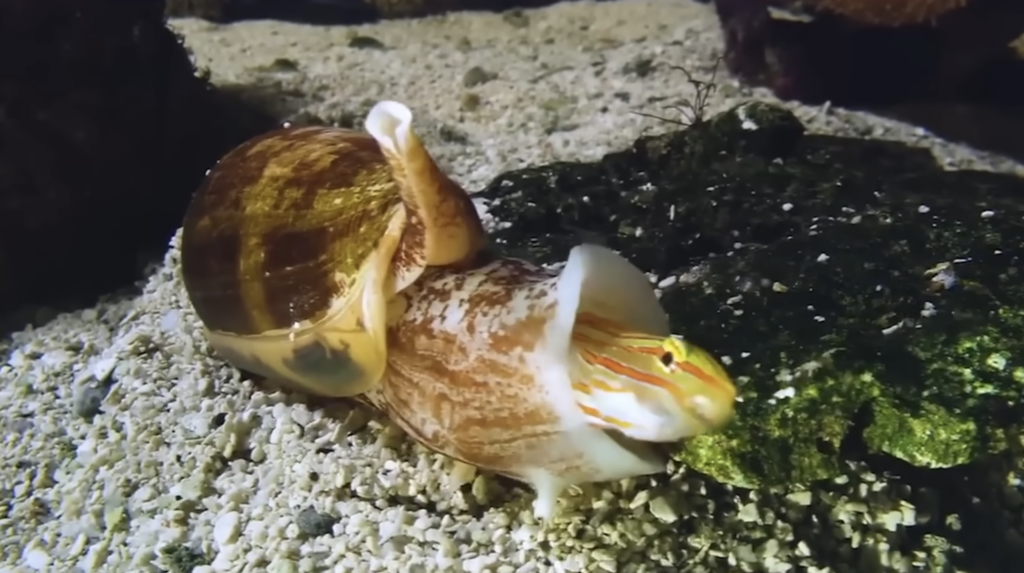
Their venom contains powerful neurotoxins capable of causing paralysis, respiratory failure, and death.
Some larger species are so venomous that there is no known antidote.
Victims may initially feel only mild pain before symptoms rapidly worsen. Because of this, divers and beachgoers are warned never to pick up unfamiliar shells in tropical waters.
Box Jellyfish: The Silent Killer
The Box Jellyfish is often considered the most venomous marine animal on Earth.
Unlike ordinary jellyfish that drift with currents, box jellyfish actively swim and hunt prey. Their tentacles can stretch several meters and are covered in millions of microscopic stingers.
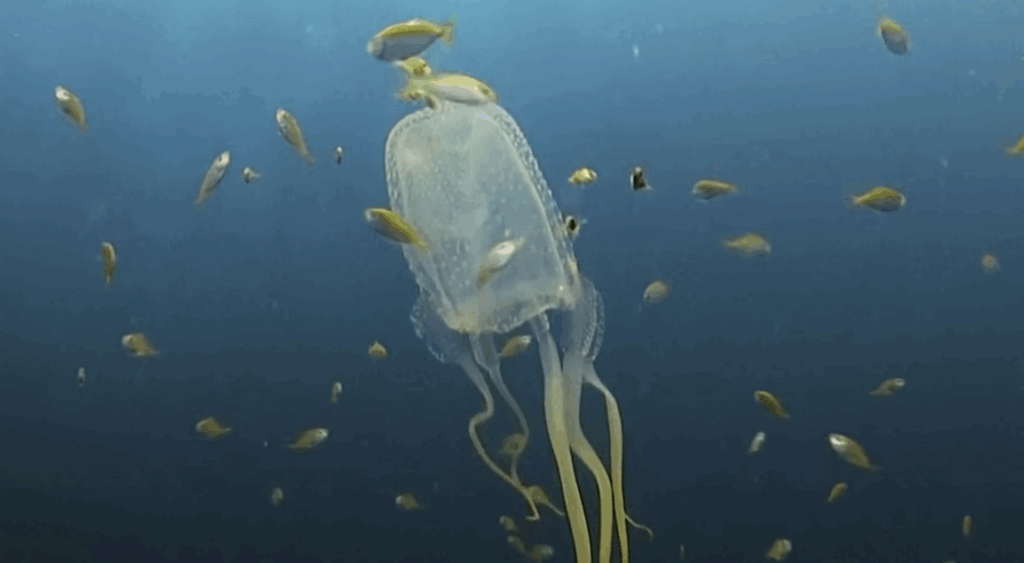
The venom attacks the heart, nervous system, and skin cells simultaneously, causing unbearable pain and, in severe cases, cardiac arrest within minutes.
These deadly jellyfish are most commonly found in waters near Australia, Thailand, and the Philippines. Even brief contact can be fatal without immediate treatment.
Blue Ringed Octopus: Small Enough To Fit In Your Hand
The Blue Ringed Octopus may look small and harmless, but it carries enough venom to kill dozens of humans.
When threatened, glowing blue rings appear across its body as a warning signal.
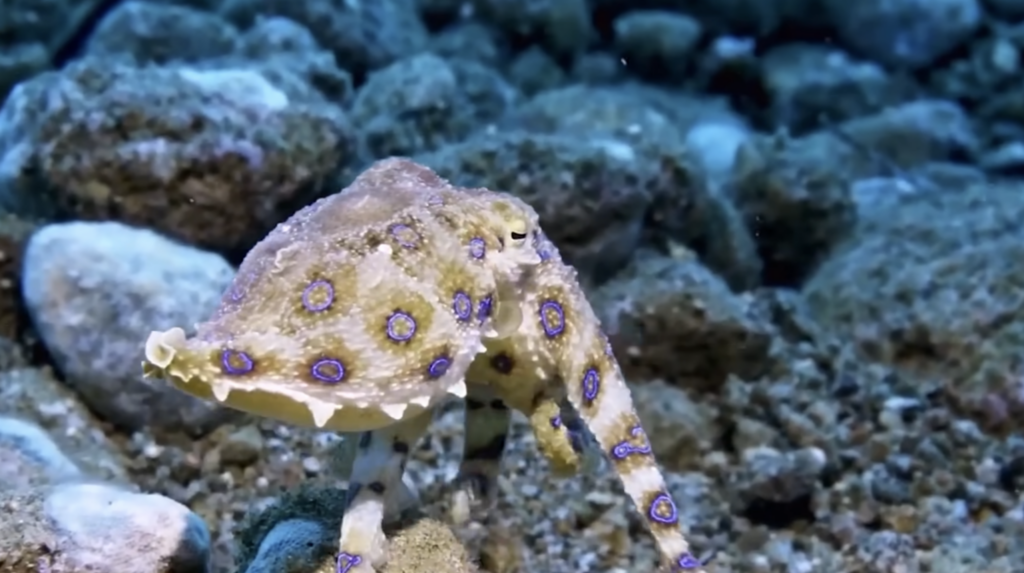
Its venom contains tetrodotoxin, a powerful neurotoxin that causes paralysis and respiratory failure. The frightening part is that bites are often painless at first, meaning victims may not realize they are in danger until symptoms begin.
There is no antidote.
Survival usually depends on receiving artificial breathing support until the toxin leaves the body.
Stonefish: The Ocean’s Perfect Trap
The Stonefish is one of the best camouflaged predators in the sea.
Blending perfectly with rocks and coral, stonefish are nearly impossible to spot underwater. Their venomous dorsal spines release toxins when stepped on, delivering excruciating pain almost instantly.
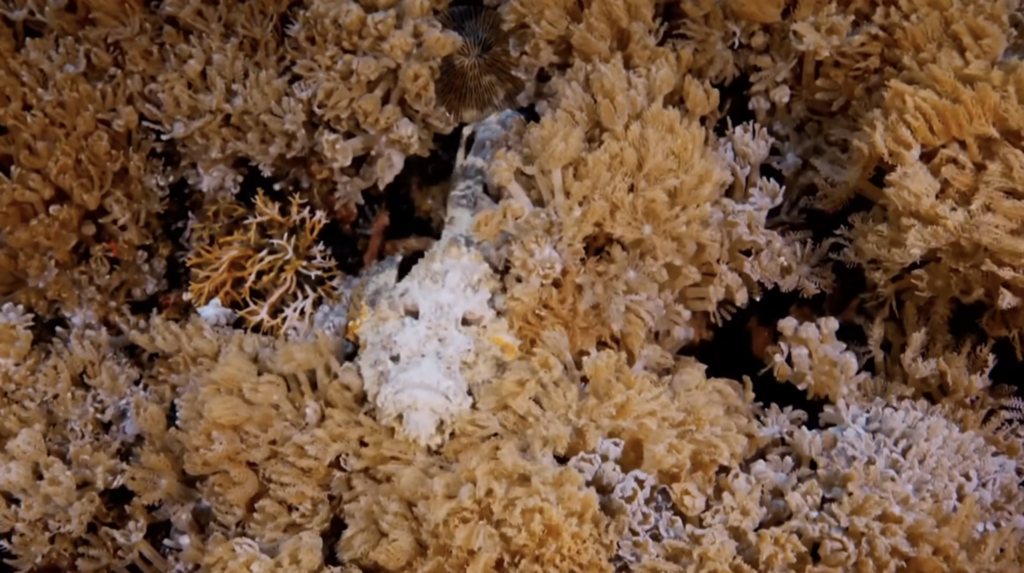
In severe cases, the venom can cause paralysis, tissue damage, shock, and death if untreated. Hot water immersion and rapid medical treatment are essential after a sting.
Tiger Shark: The Ocean’s Garbage Disposal
Tiger Shark are massive opportunistic predators known for eating almost anything they encounter. Fish, turtles, birds, garbage, and even license plates have been found inside tiger shark stomachs.
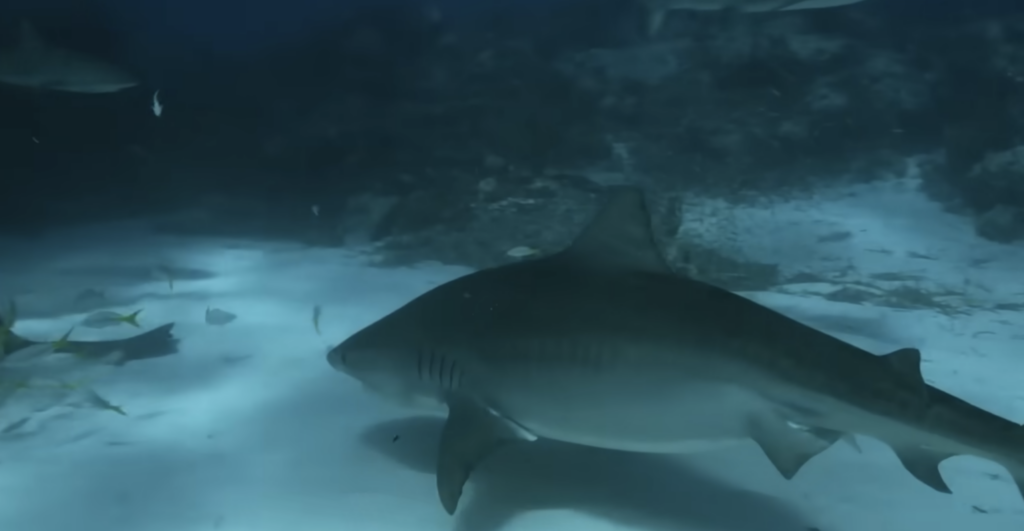
Growing up to 18 feet long, these sharks patrol tropical and temperate waters worldwide and are responsible for one of the highest numbers of shark attacks on humans.
Their curiosity and willingness to bite unfamiliar objects make them especially dangerous.
Portuguese Man o’ War: Not Actually A Jellyfish
Though often mistaken for a jellyfish, the Portuguese Man o’ War is actually a colony of organisms working together as one.
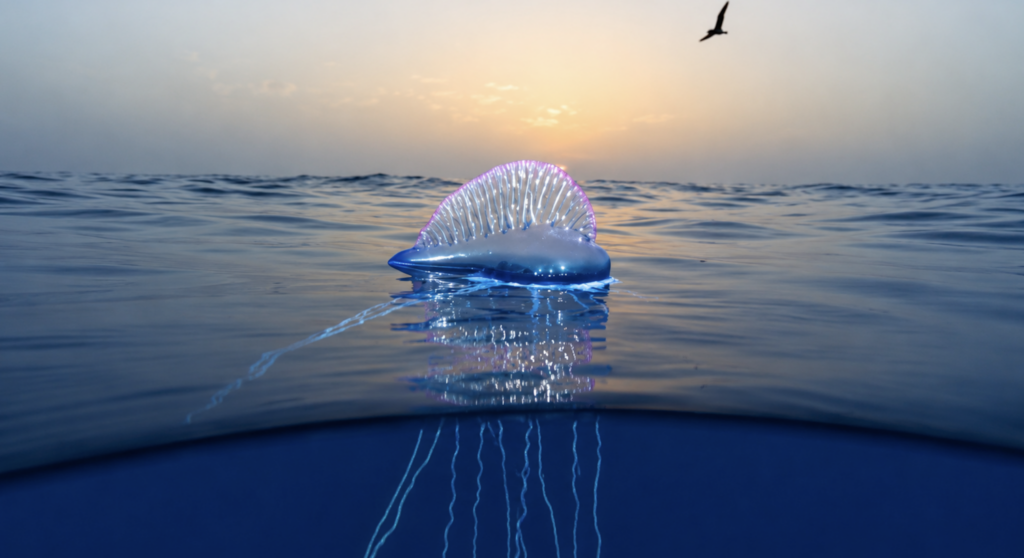
Its tentacles can stretch over 150 feet long and remain venomous even after washing ashore.
Stings cause intense pain and can sometimes trigger fever, shock, breathing problems, or heart complications. Even dead specimens should never be touched.
Leopard Seal: Antarctica’s Hidden Predator
The Leopard Seal may appear playful, but it is one of Antarctica’s top predators.
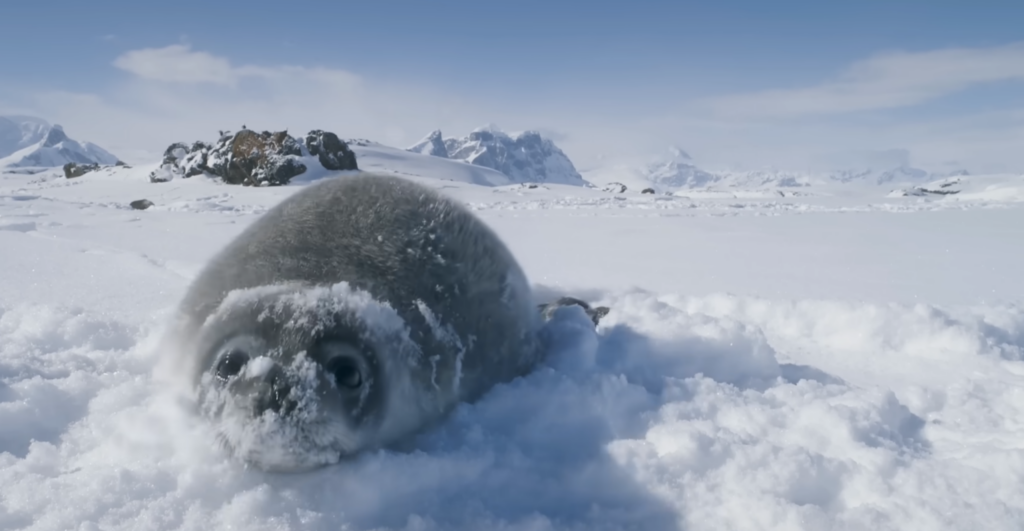
Armed with massive jaws and sharp teeth, leopard seals hunt penguins, fish, and even smaller seals. Though attacks on humans are rare, they have occurred, particularly near icy waters where seals may become territorial.
Keeping a safe distance is the smartest survival strategy.
Great White Shark: The Apex Predator
Few animals inspire fear like the Great White Shark.
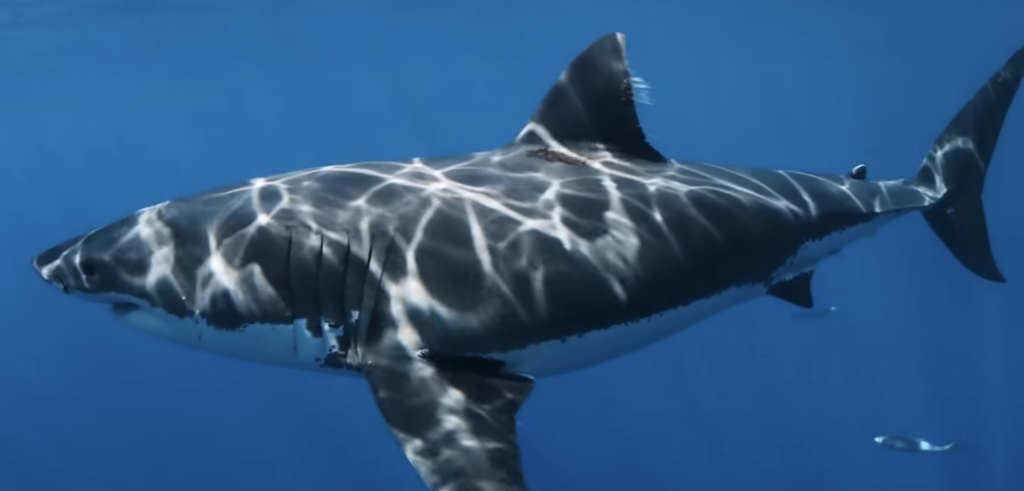
Reaching lengths of up to 20 feet and weighing several tons, great whites dominate the ocean food chain. Their powerful senses allow them to detect blood, vibrations, and even electrical signals produced by prey hiding beneath the surface.
These sharks can launch explosive attacks at speeds approaching 25 mph, often striking with bone crushing force.
Despite their terrifying reputation, great whites are vital to marine ecosystems because they help regulate prey populations and maintain balance within the ocean.
Still, if you ever see one circling nearby, it is probably time to leave the water immediately.