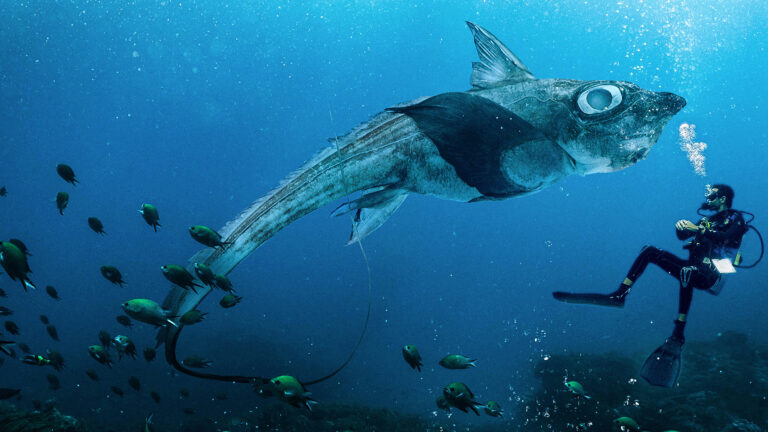
At first glance, it looks like something straight out of a horror movie. Pale, translucent, and equipped with eerie glowing eyes, the ghost shark is one of the strangest creatures lurking in the depths of the world’s oceans. Despite its unsettling appearance, this mysterious fish is far more fascinating than frightening.
Known scientifically as a chimaera, the ghost shark is a deep sea fish with a skeleton made entirely of cartilage, the same flexible tissue found in human ears and noses. This unusual feature gives it remarkable flexibility and links it distantly to sharks and rays.
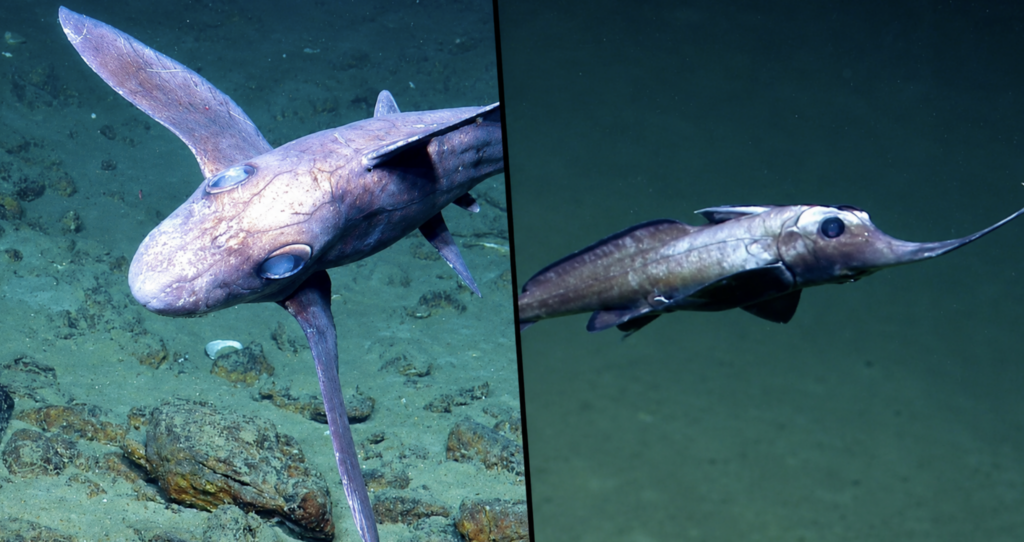
More than 50 species of chimaeras exist today, inhabiting oceans around the world at depths ranging from around 200 to 2,600 meters beneath the surface.
The name “chimaera” comes from ancient Greek mythology, where the Chimera was a legendary creature composed of parts from different animals. Modern chimaeras certainly live up to that reputation. Depending on the species, they may possess duck like snouts, rat like tails, or even trunk shaped noses that resemble those of tiny elephants.
Their bizarre appearance has made them one of the most unusual fish ever discovered.
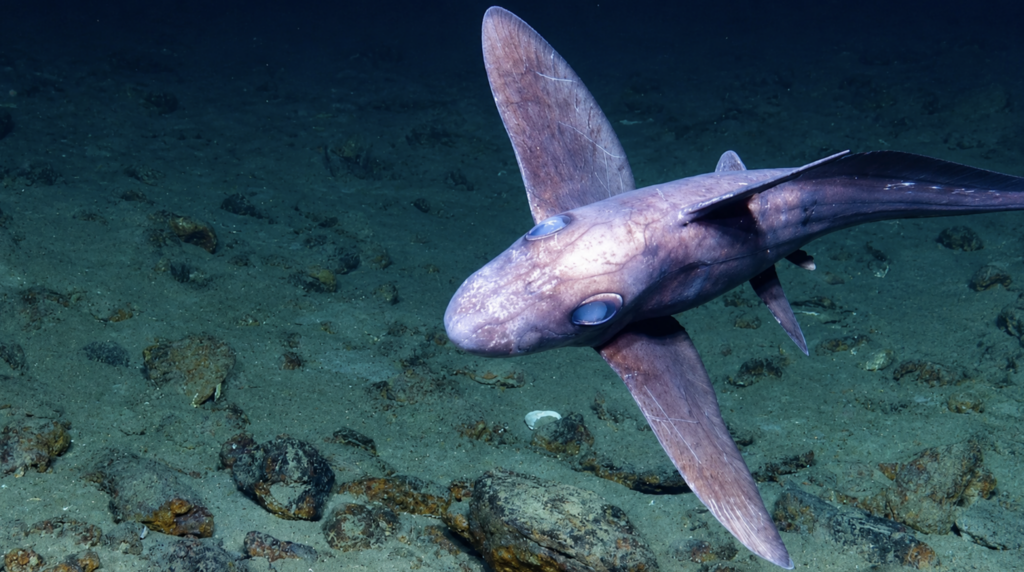
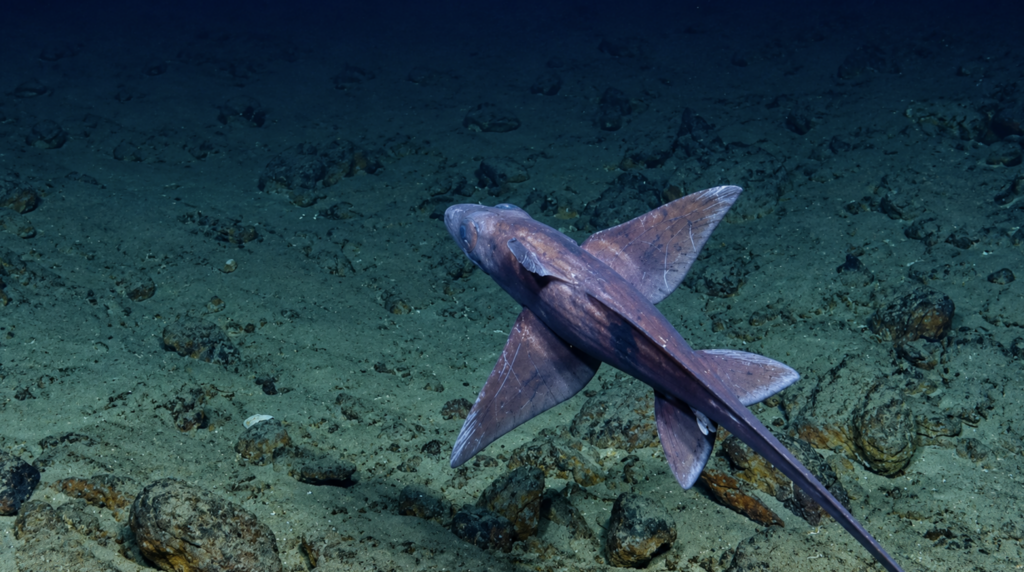
Most ghost sharks measure between 0.3 and 1.5 meters in length and spend their lives gliding silently over the ocean floor. Their broad pectoral fins resemble flowing cloaks, helping them move gracefully through the dark waters.
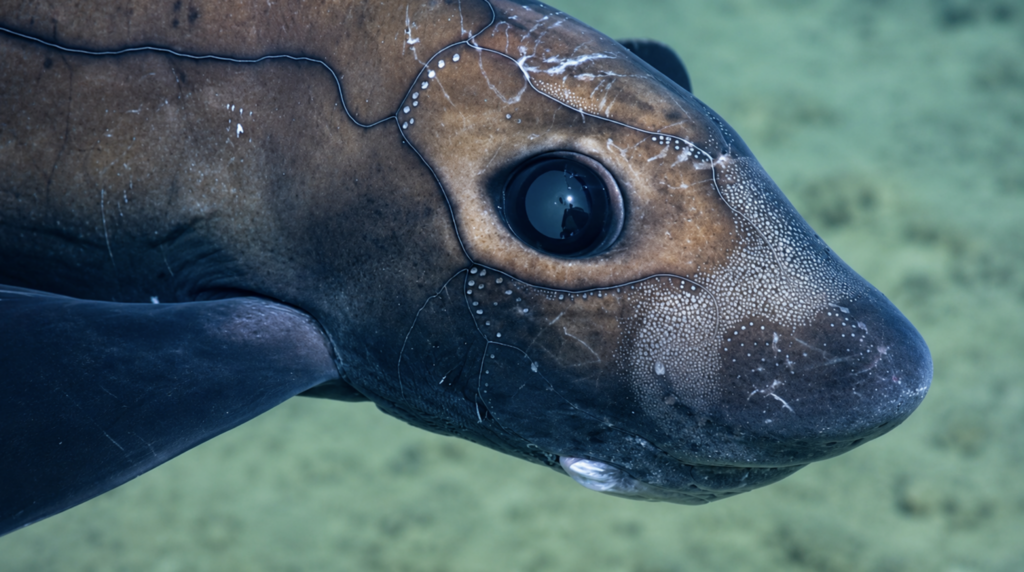
Along their bodies are specialized sensory structures that allow them to detect movement and locate prey in environments where sunlight never reaches.
One of the ghost shark’s most striking features is its large, cloudy eyes. These eyes often appear to glow in the darkness, giving the fish its haunting nickname. The effect is caused by a reflective layer located behind the retina.
This layer bounces incoming light back through the eye, allowing the fish to make the most of the tiny amount of light available in the deep sea. Rather than glowing on their own, the eyes are highly adapted tools that help the ghost shark survive in one of Earth’s most challenging environments.
Although commonly called a ghost shark, the animal is not actually a true shark. While both groups possess skeletons made of cartilage, chimaeras branched off from their shark relatives hundreds of millions of years ago and followed a very different evolutionary path. Today, they are considered one of the most distinctive groups of fish living in the oceans.
Ghost sharks feed primarily on smaller fish, crustaceans, and other invertebrates. Instead of rows of sharp teeth, they possess powerful tooth plates that are designed for crushing hard shelled prey. These specialized feeding structures allow them to consume animals that many other predators would struggle to eat.
For all their frightening looks, ghost sharks pose little threat to humans. They live far below the depths where people swim and dive, making encounters extremely rare. Some species possess a venomous spine near their dorsal fin, but it is used mainly for defense. While a sting can be painful, it is generally not considered dangerous to humans.
Despite their ability to survive in the harsh conditions of the deep ocean, ghost sharks face growing threats from human activity.
Deep sea commercial trawling can accidentally capture these fish, damaging populations that scientists still know very little about. Because they are not considered valuable catches, many are discarded after being brought to the surface.
Researchers continue to study these mysterious animals in hopes of learning more about their behavior, reproduction, and life cycle. The discovery of young specimens in recent years has provided valuable clues, but much of the ghost shark’s existence remains hidden beneath the waves.
As scientists explore deeper parts of the ocean, creatures like the ghost shark serve as a reminder of how much of our planet remains unexplored. Strange, ancient, and unlike almost anything else in the sea, this eerie fish continues to captivate researchers and reveal new secrets about life in the darkness below.