These feisty marsupials are making an unexpected comeback in one of the most remarkable wildlife developments in recent history.
But why are they called Tasmanian devils? And what makes their jaws so powerful that they have become one of the most unique predators in the animal kingdom?
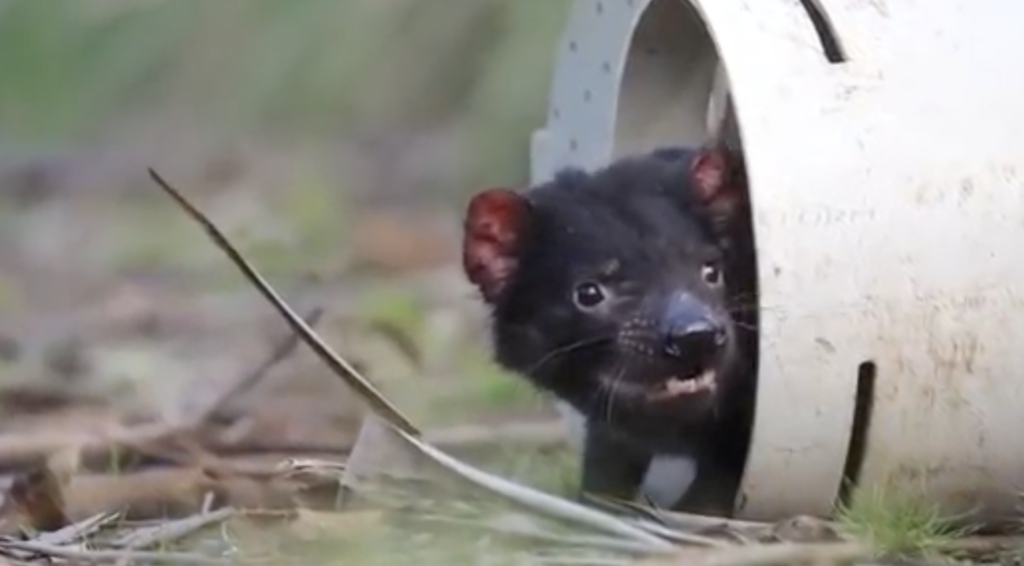
For the first time in 3,000 years, wild Tasmanian devil babies have been discovered on mainland Australia.
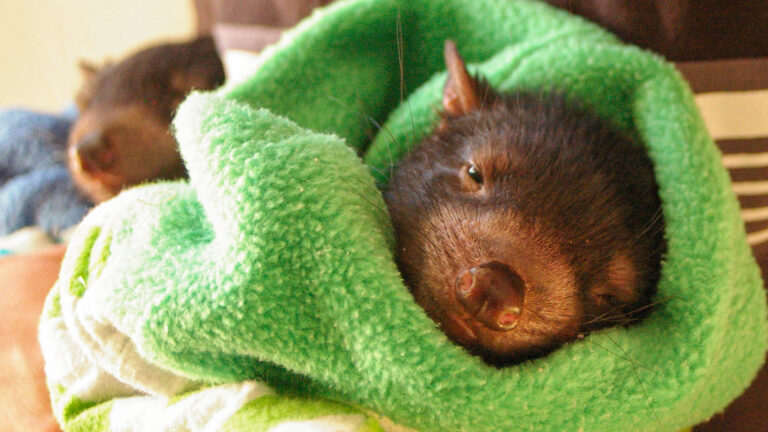
Tasmanian devils are often compared to small bears when they are young. For centuries, they were only found on the island of Tasmania, although evidence shows they once roamed mainland Australia until about 400 years ago. Their return marks a major moment in conservation history.
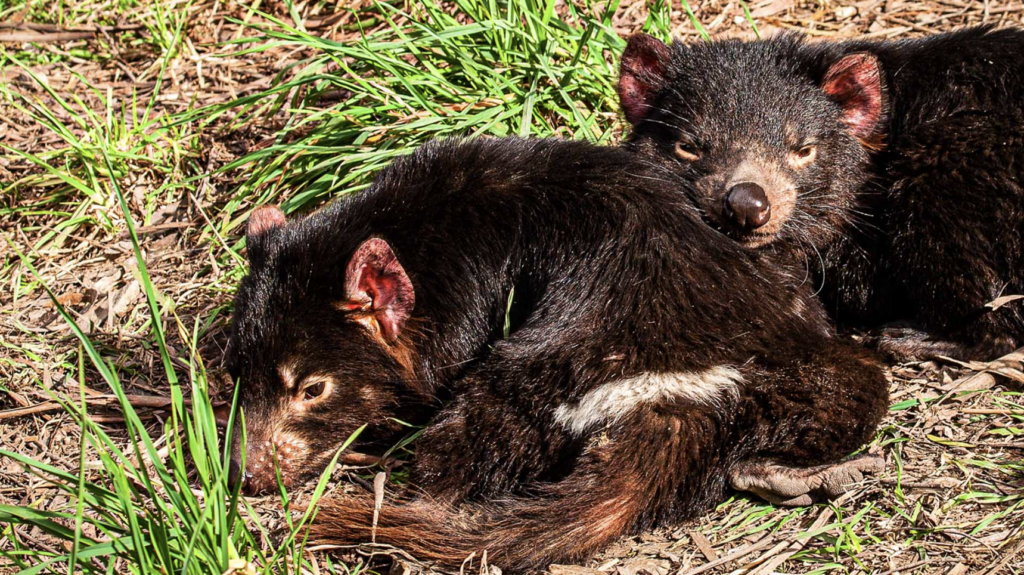
These animals have coarse black or dark brown fur, often marked with a white patch or stripe on the chest. They typically weigh around 12 kilograms, or 26 pounds, and one of their most noticeable features is their oversized head compared to their body.
That unusual head shape is not just for appearance. It plays a major role in one of their most famous traits.
But first, where does the name “Tasmanian devil” come from?
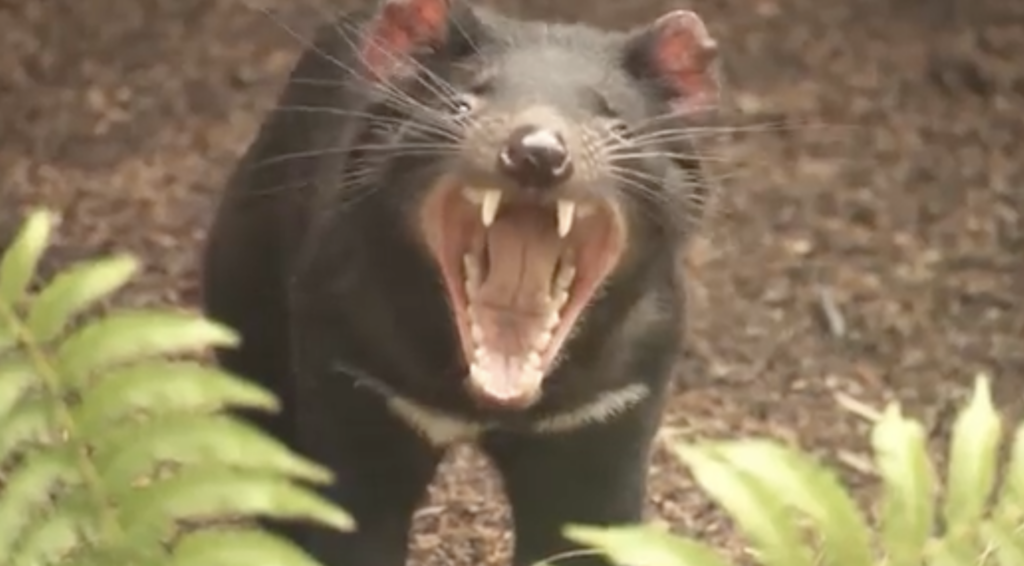
When early European settlers arrived in Tasmania, they heard terrifying screams and growls coming from the bush at night. These sounds, combined with the animals’ aggressive feeding behavior and fierce displays of teeth and lunging, led settlers to believe they were facing something almost demonic. That is how the name Tasmanian devil was born.
Despite the frightening name, these animals are not dangerous to humans unless provoked.
What truly makes them extraordinary is their bite. Tasmanian devils have one of the strongest bite forces relative to body size of any living mammal. Their jaws are powerful enough to crush bones, allowing them to consume nearly every part of their prey. This is made possible by their large skull structure, which lets them open their mouths up to 80 degrees.
They are also known for their extreme eating habits. A Tasmanian devil can consume up to 40 percent of its body weight in a single feeding session, leaving almost nothing behind. In the wild, waste is not part of their survival strategy.
Even more remarkable, their teeth continuously grow throughout their lives, an adaptation that helps them handle a diet full of bones and tough material without wearing down their teeth completely.
However, life for Tasmanian devils has not been easy.
Since the mid 1990s, populations have been heavily impacted by a contagious cancer known as devil facial tumor disease. This illness spreads through biting and has devastated many populations across Tasmania.
Human activity has also played a role in their decline over centuries. Early hunting reduced much of Australia’s megafauna, shrinking the devils’ food supply. Later, European settlers often viewed them as pests and further reduced their numbers.
For a time, it seemed possible that Tasmanian devils could disappear entirely.
But recently, there has been a shift. Some populations are showing signs of adaptation, and the spread of the facial tumor disease appears to be slowing in certain areas. Conservation efforts are also playing a crucial role.
A wildlife organization known as Aussie Ark has been working to protect and reintroduce Tasmanian devils, leading to the birth of the first wild mainland population in more than 3,000 years.
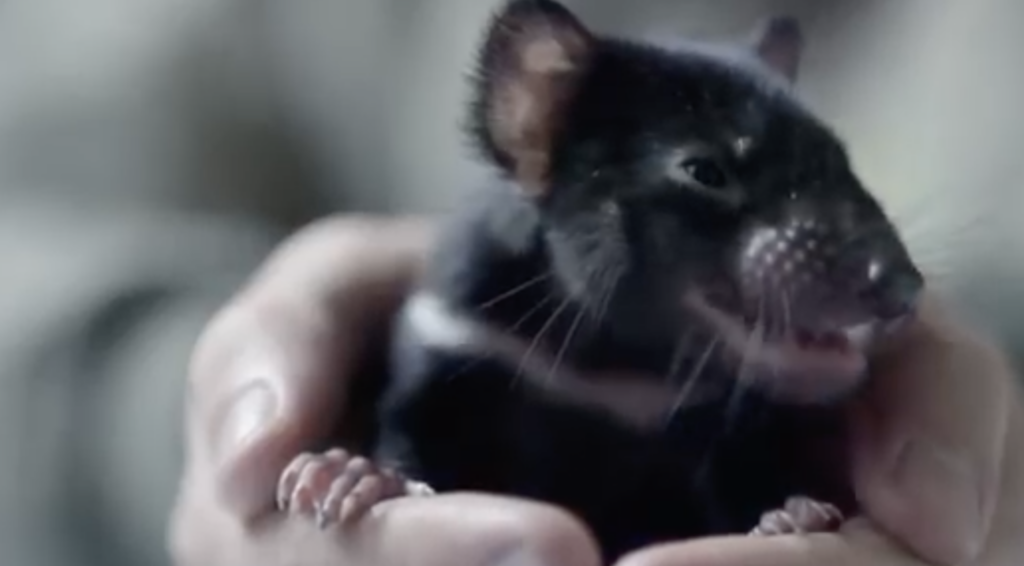
This discovery is more than symbolic. If successfully reestablished, Tasmanian devils could help restore balance to Australia’s ecosystems. As scavengers, they play a vital role in cleaning up dead animals and preventing the spread of disease in the environment.
In the end, these misunderstood marsupials are far more than their intimidating name suggests. They are powerful, essential, and surprisingly vulnerable creatures that may now be writing a new chapter in their long history on the Australian mainland.