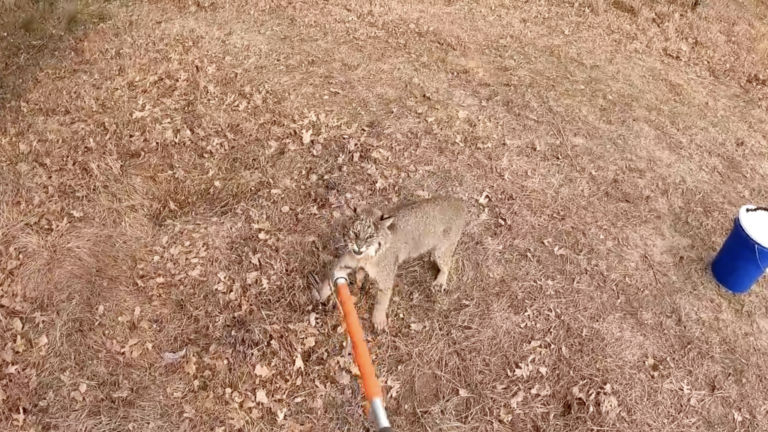
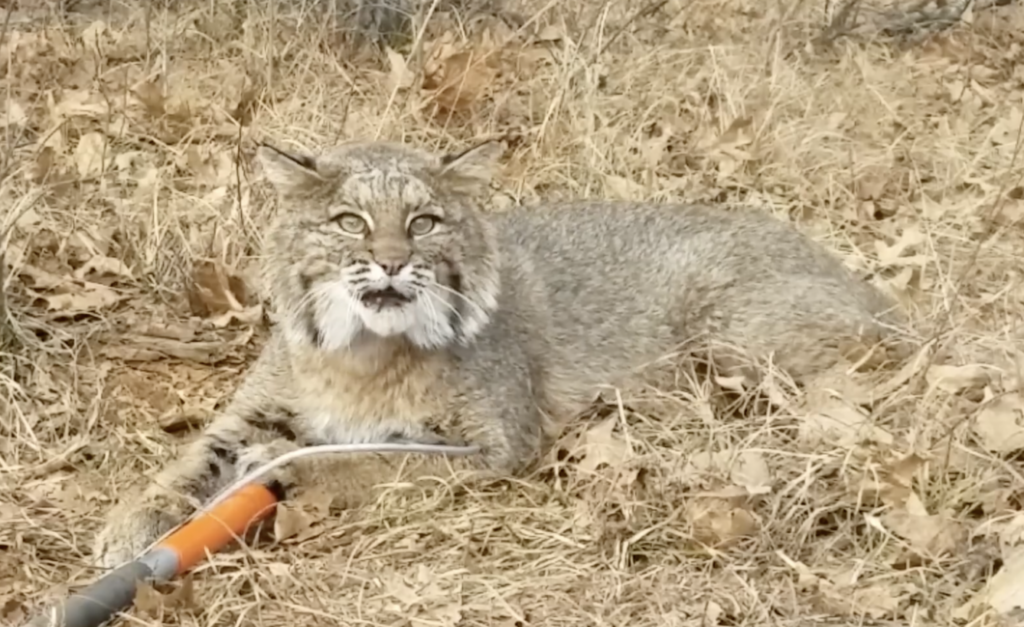
This might look like a larger, cuddly version of your domesticated house cat. But it’s a large, fierce predator that can severely injure you. Bobcats are sometimes called wildcats, and they’re related to the Canadian lynx. They may look similar, but they’re not the same animal.
They have long legs, sharply pointed ears and large paws. Their name, bobcat, comes from their tails looking like they were cut short or bobbed.
These versatile cats are native to North America. They live in forests, swamps and deserts. They can even wander into suburban areas, which is why you need to be on your toes.
Step 1: Do Not Approach
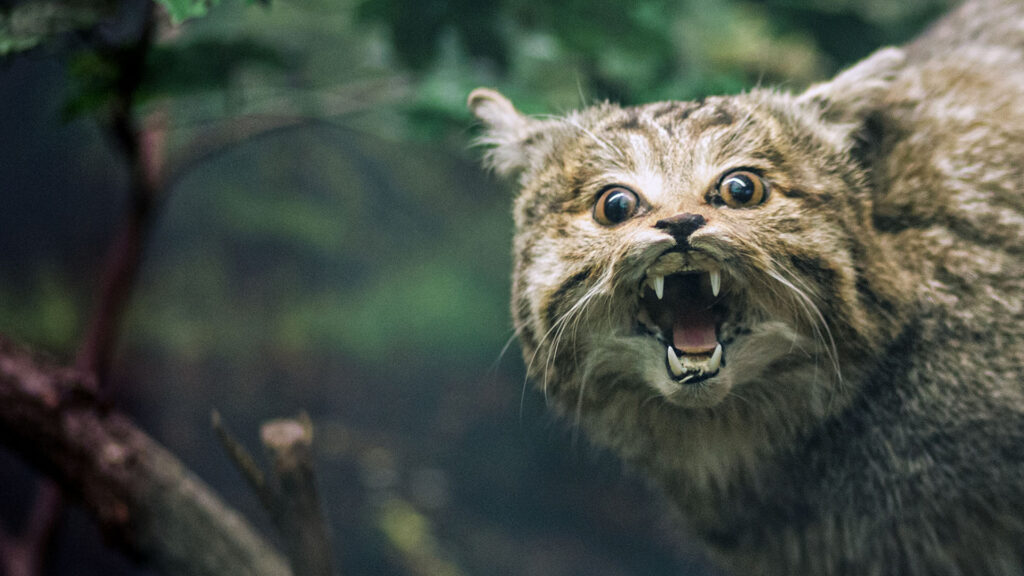
If you see a bobcat, stay away, especially if there are any bobcat kittens nearby. Back away slowly. Don’t turn your back or take your eyes off the animal.
And don’t try to hide. Instead, try to look large and scary.
Do not run away. Bobcats can run at speeds up to 48 km/h (30 mph), and they can pounce and kill prey from 3 m (10 ft) away.
Step 2: Make Some Noise
If you’re alone, be as noisy as you can. These cats mostly hunt squirrels, birds, rabbits and mice. But they are strong hunters and can kill animals much larger than themselves, so you need to be careful.
If you’re in a group, stick together and continue making noise. Try to scare it off. Give the bobcat a chance to leave. But if it doesn’t go, make more noise. Try banging pots or pans or whatever you have around you to scare it away.
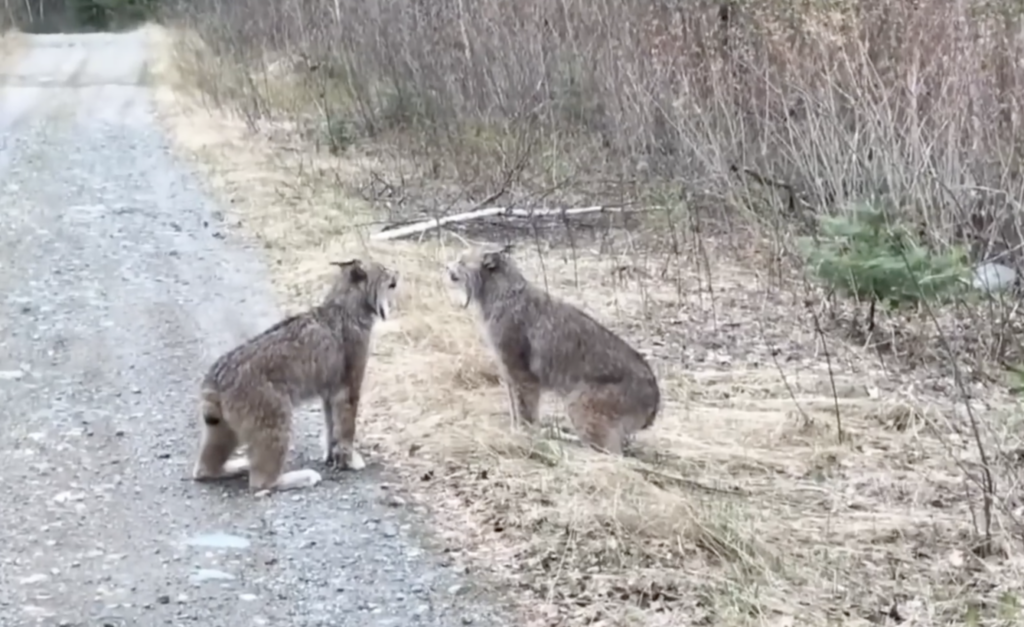
Most likely, a healthy bobcat won’t attack you. But if the bobcat has rabies, it will.
Step 3: Watch Out for Rabid Bobcats
If the bobcat seems to have rabies, it’s crucial to avoid getting bitten or scratched. Take cover inside a building or somewhere the cat cannot reach you, and call for help.
If you have no other choice, you might have to humanely kill it using a firearm or whatever you have around you. Typically, authorities can only confirm rabies after the animal has been caught and put down. However, if a bobcat attacks you, there is a good chance it has rabies. If you have bite wounds or scratches, get medical help as soon as possible. And be sure to get a rabies vaccine immediately to prevent catching it.
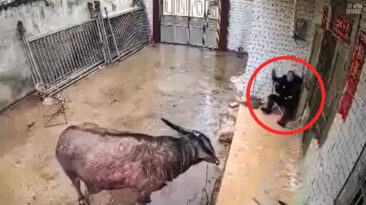
In 2021, Kristy and Happy Wade, a North Carolina couple, were unloading groceries from their car when their home security camera recorded a bobcat attacking Kristy.
Happy grabbed the bobcat and threw it across the yard. Then he shot the animal. Tests confirmed that the bobcat had rabies, so Kristy and Happy were given rabies vaccines.
Step 4: Watch Your Pets
Don’t go for walks with unleashed dogs. They could easily pick a fight with an unsuspecting bobcat. Or worse, an aggressive or rabid bobcat could attack your dog.
And be careful if you own livestock. Bobcats are nocturnal animals and hunt mostly at night, so you probably won’t see them during the day.
It might be a good idea to invest in motion sensing lights and a good fence.
Bobcats do not typically attack people, mainly because these cats are reclusive and nocturnal. And there aren’t many stats on how often bobcats attack humans.
But they do, and these attacks can be dangerous.